Since the end of World War II, the trajectory of the nude has accelerated into a whirlwind of radical reinvention. No longer bound by the quest for ideal beauty, the contemporary nude reflects a world grappling with the trauma of war, the rise of mass media, and the fiery critiques of feminist and identity politics.
In this final chapter, we explore how the body was deconstructed, commodified, and finally transformed into the very canvas of art itself.
After 1945, the human form could no longer be painted with the serene confidence of the past. The horrors of the conflict left the body appearing fragile, distorted, and existentially burdened.
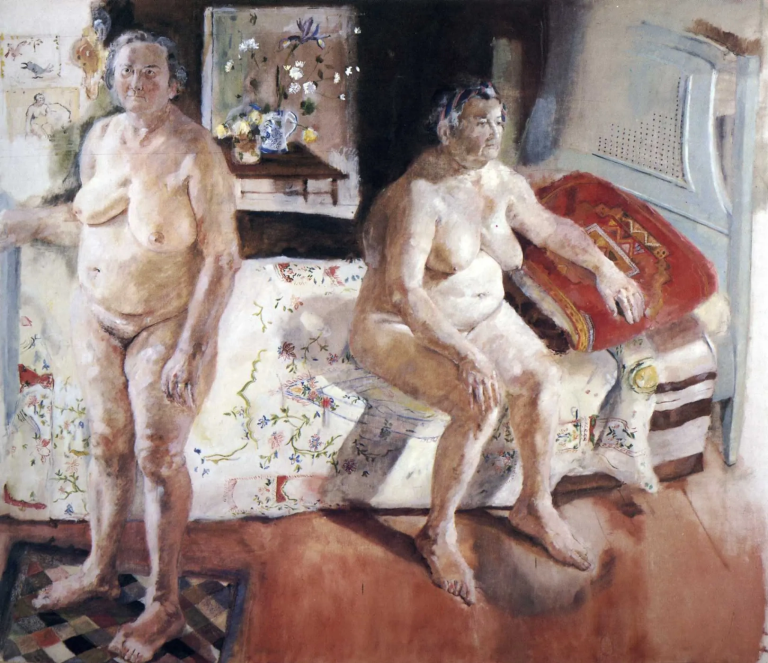
Larry Rivers, Double Portrait of Berdie, 1955
Informalism and the Raw Form
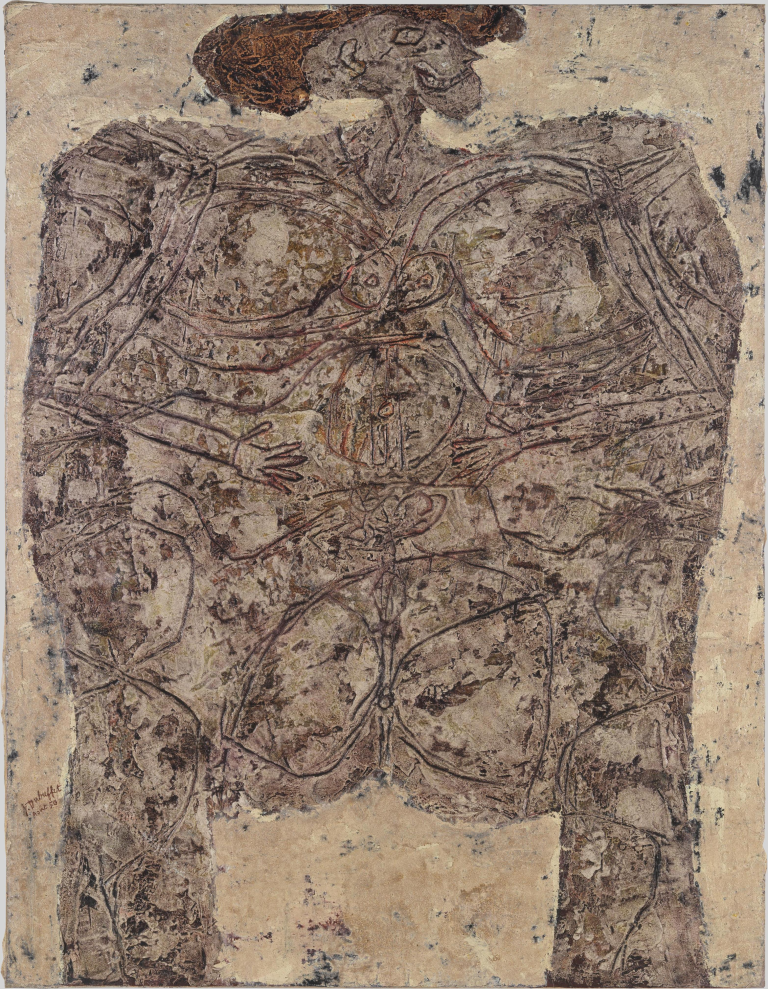
Movements like Art Brut (Jean Dubuffet) and Informalism rejected Western “beauty” as a lie. They turned to mud, sand, and plaster to create crude, primitive figures that mirrored a shattered civilization.
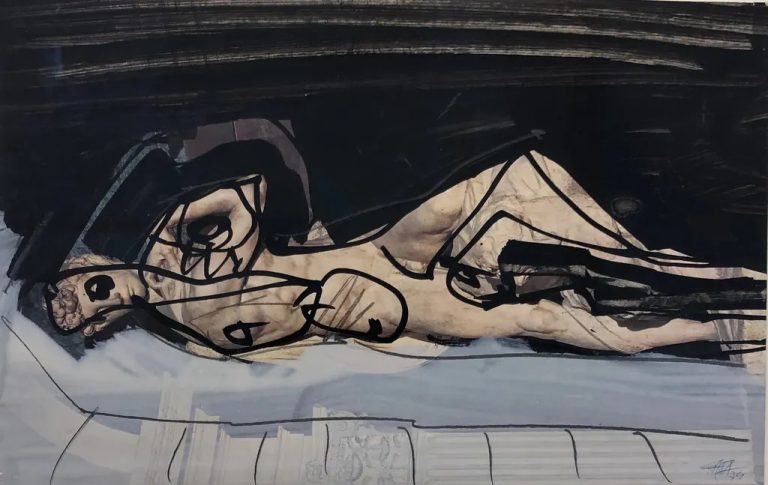
In Spain, Antonio Saura used violent, gestural strokes to twist the figure into expressions of psychological anguish.
Jean Dubuffet, The Métafizyx, 1950
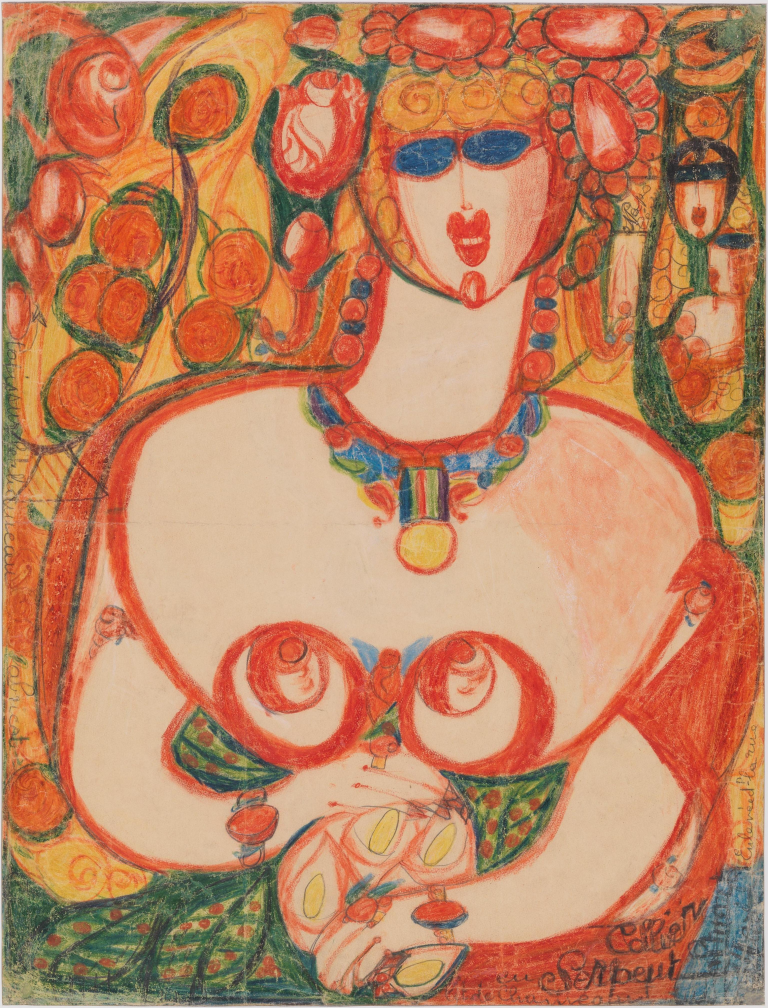
Aloïse (Aloïse Corbaz), Snake Necklace, 1956
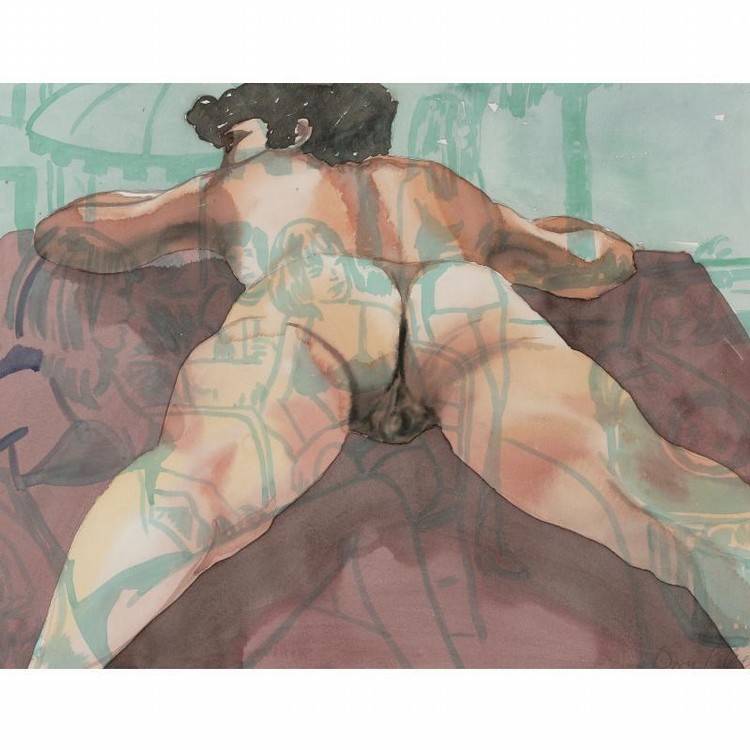
Antonio Saura, Superposition (Reclining Nude), 1974
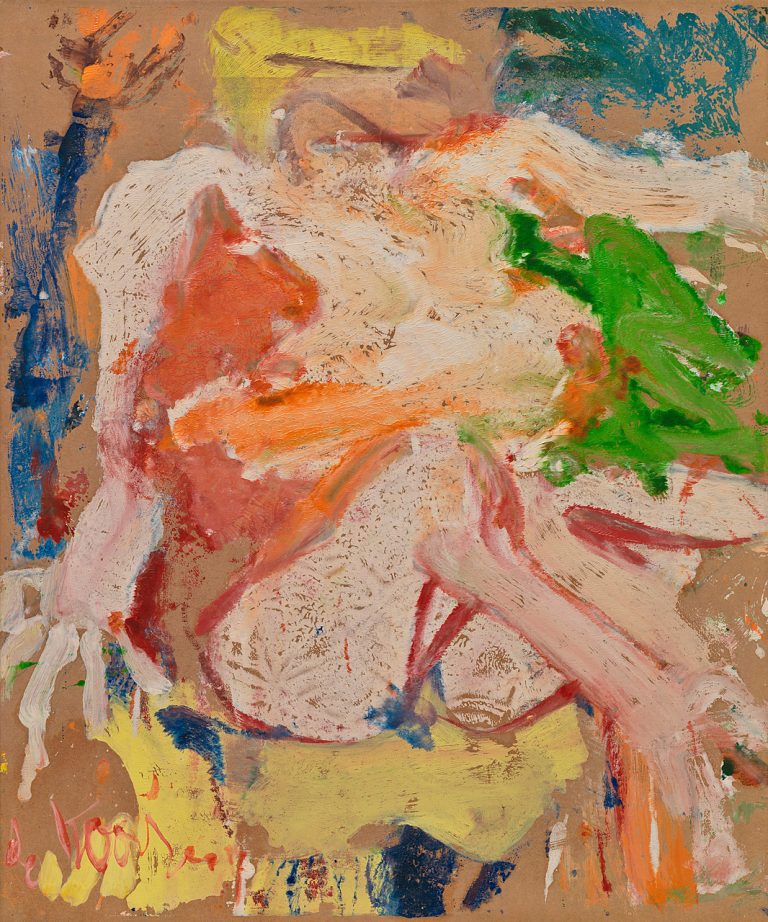
Between Abstraction and Flesh: Willem de Kooning
In his scorched-earth Women series, Willem de Kooning dissolved the female nude into aggressive patches of color. These figures are simultaneously seductive and predatory, capturing the post-war ambivalence toward the human form.
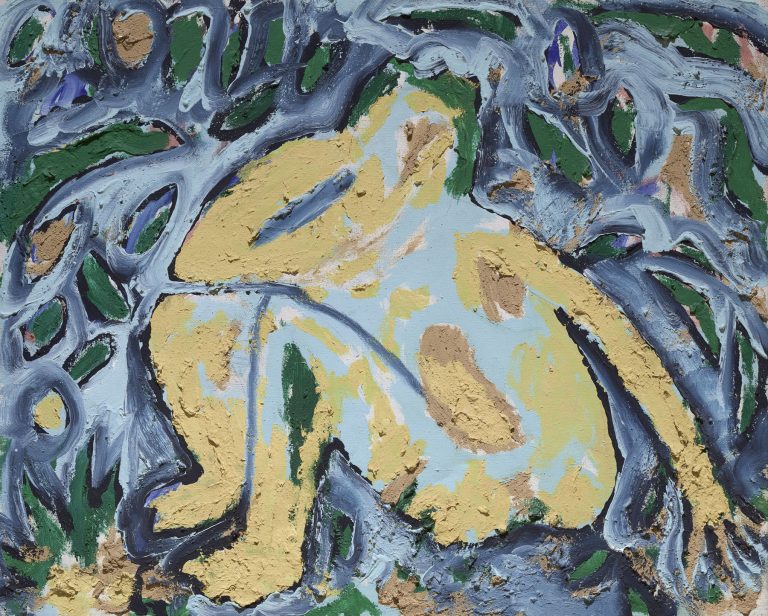
New Figuration emerged as a visceral response to abstraction, with artists like Miquel Barceló, reclaiming the human form through raw, expressive energy.
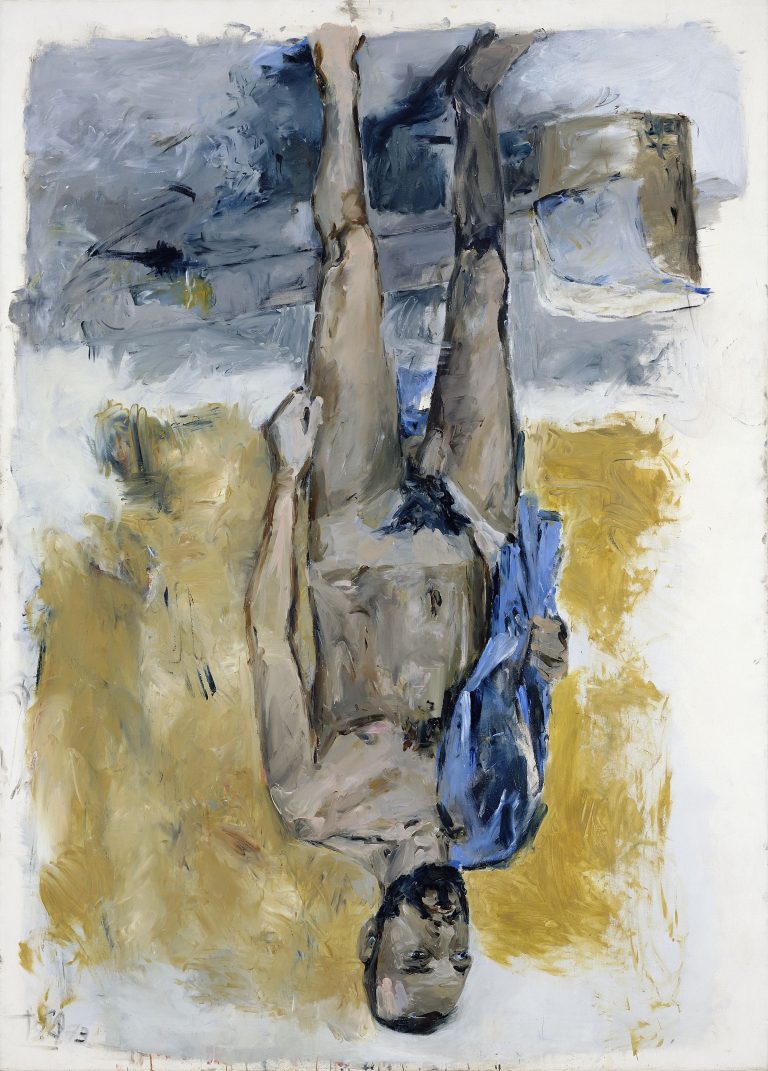
Georg Baselitz revolutionized the genre by inverting his figures, a radical shift that prioritized the physical act of painting over the identity of the body itself.
Willem de Kooning, Nude Figure-Woman on the Beach, 1963
Miquel Barceló, Seated brute Venus, 1982
Georg Baselitz, Nude, 1973
Existential Realism: Bacon and Freud
Two British masters redefined the “real” body:
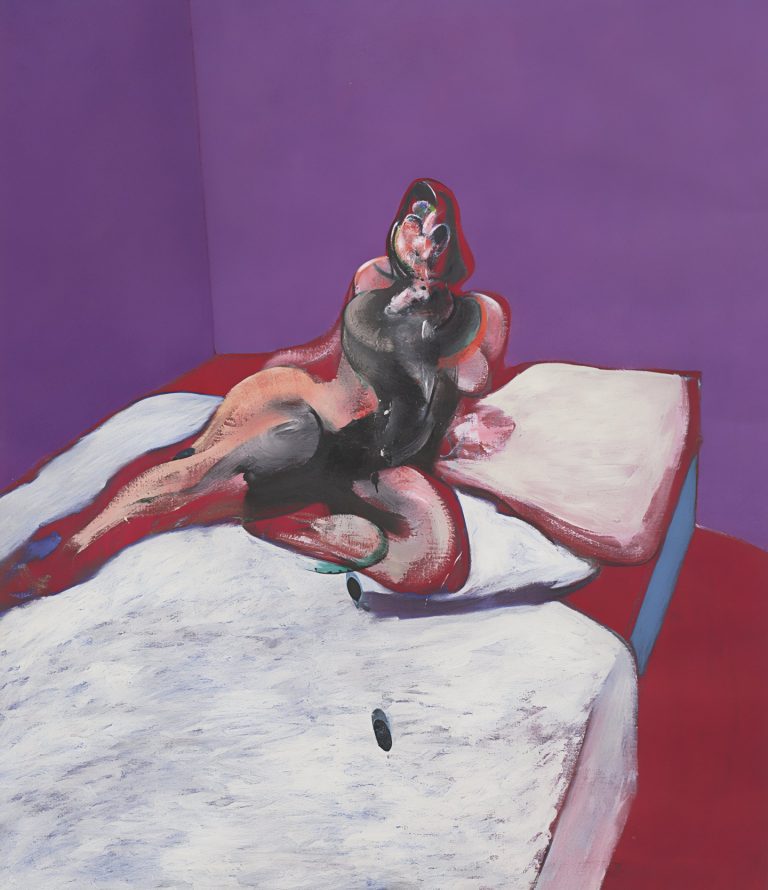
Francis Bacon: His nudes are amorphous masses of “butchered meat.” Contorted and oily, they confront the viewer with the raw violence of mortality.
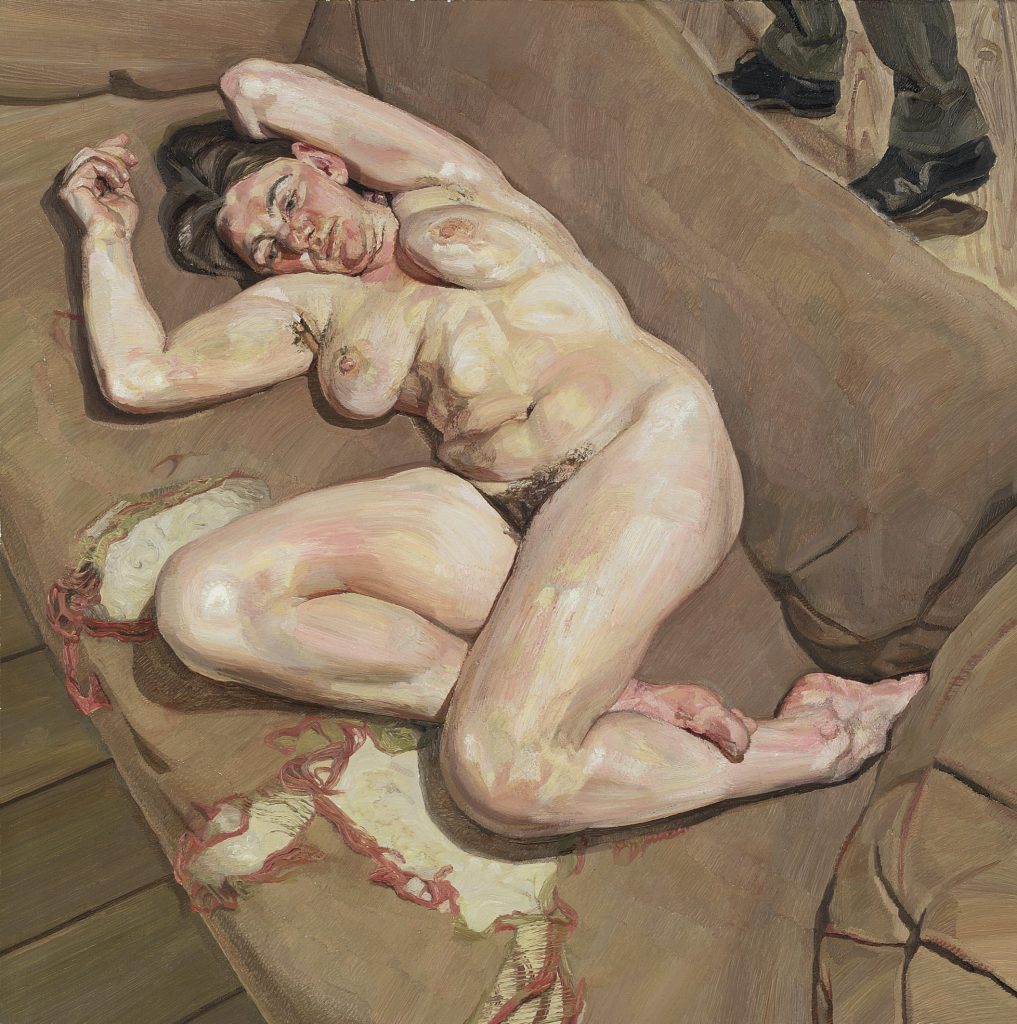
Lucian Freud: Freud’s gaze was unsparing. By rendering every vein, sag, and imperfection with thick, tactile paint, he stripped the nude of all fantasy, reminding us of the inevitable decay of the flesh.
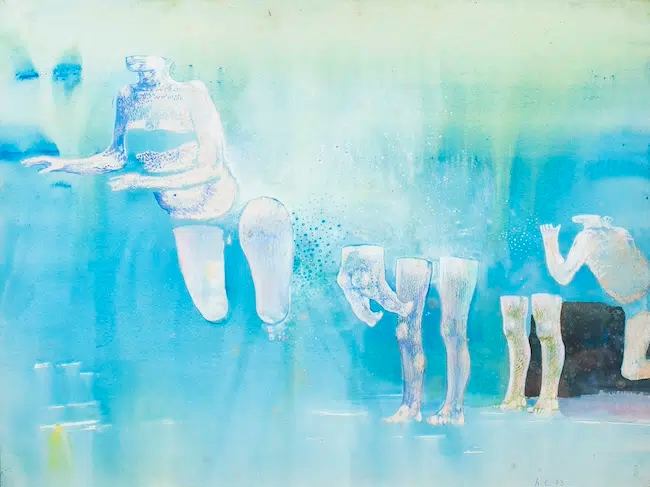
Several European contemporaries shared their unflinching vision, including Leonardo Cremonini, whose figures drift in anonymous, ambiguous spaces — bodies half-seen, half-lost — conveying a diffuse but persistent existential unease.
Francis Bacon, Portrait of Henrietta Moraes on the Bed, 1963
Lucian Freud, Portrait nude with reflection, 1980
Leonardo Cremonini, Bodies in Water, 1973
Pop Culture: The Body as Consumer Product
By the 1960s, the “Sexual Revolution” and the rise of advertising turned the nude into a polished icon of consumption.
The Commodification of Desire
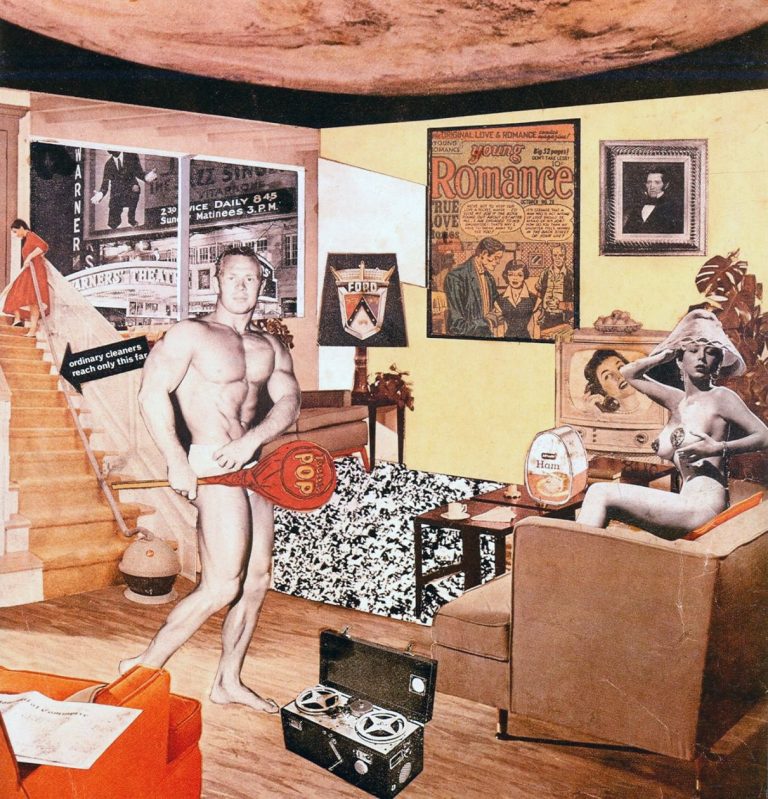
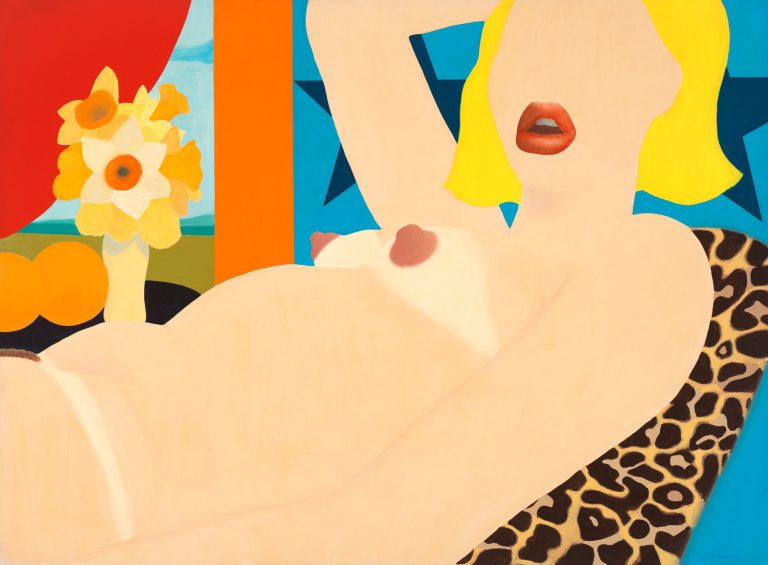
Richard Hamilton and Tom Wesselmann (with his Great American Nude series) used the aesthetics of billboards and Playboy to portray the body as a decorative object. These nudes are flat, artificial, and emotionally detached—they are products to be bought and sold.
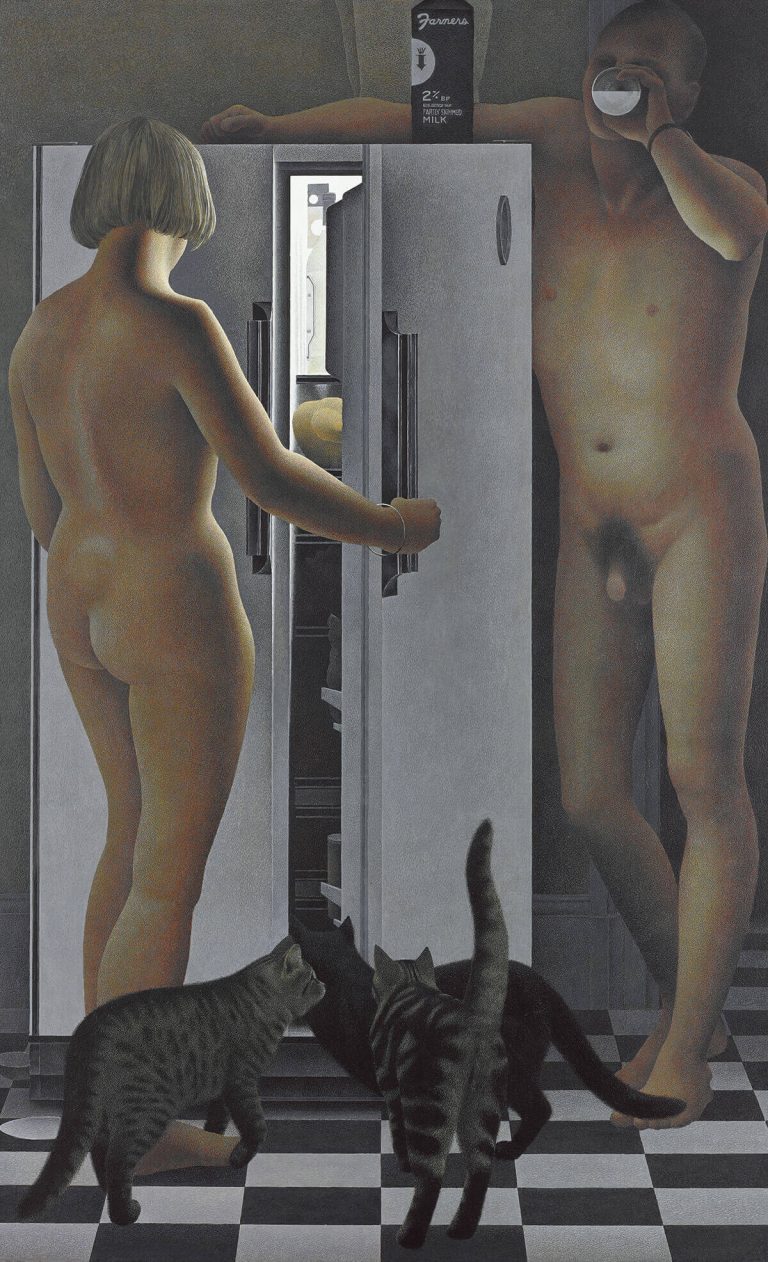
Alex Colville, however, infused this modern domesticity with a chilling sense of suspense. In Refrigerator, the naked body is caught in a mundane, nocturnal act, yet the sterile light and rigid composition suggest a deep, underlying anxiety.
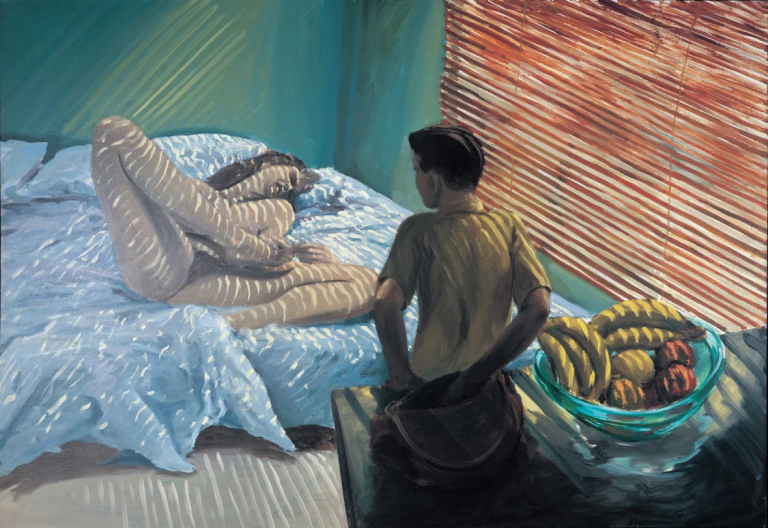
More expressive and provocative, Eric Fischl frequently explores sexual or dramatic narratives within suburban settings.
In the United States, David Salle’s postmodern “Bad Painting” utilized fragmented, appropriated nudes to explore the cold, detached nature of the contemporary gaze.
Richard Hamilton, Just what is it that makes today’s homes so different?, 1956
Tom Wesselmann, Great American Nude #57, 1964
Alex Colville, Refrigerator, 1977
Eric Fischl, Bad Boy, 1981
David Salle, Untitled (nude of a man), 1984
Irony and Appropriation
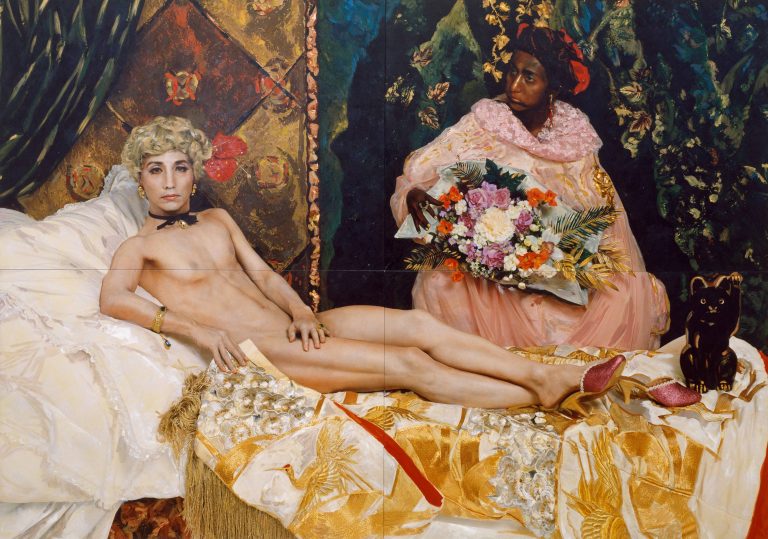
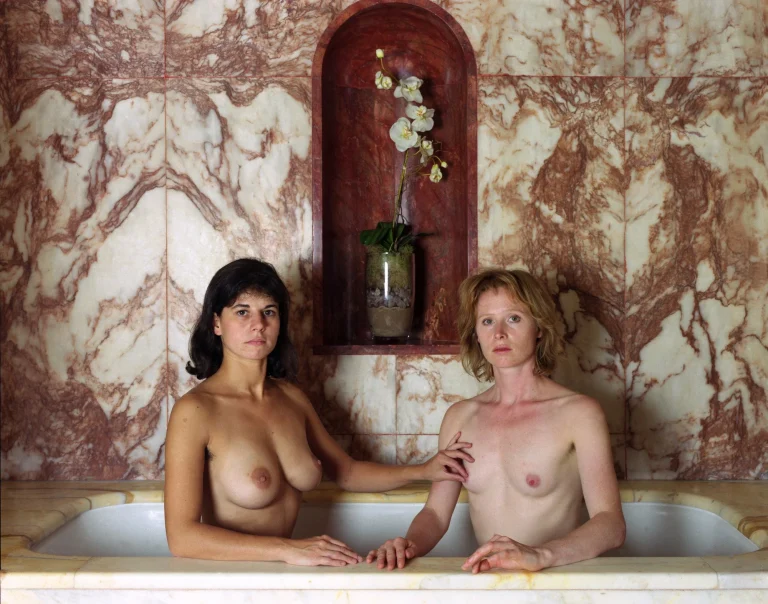
Later artists began to “remix” art history. Yasumasa Morimura or Mélanie Manchot inserted their own body into classical masterpieces.
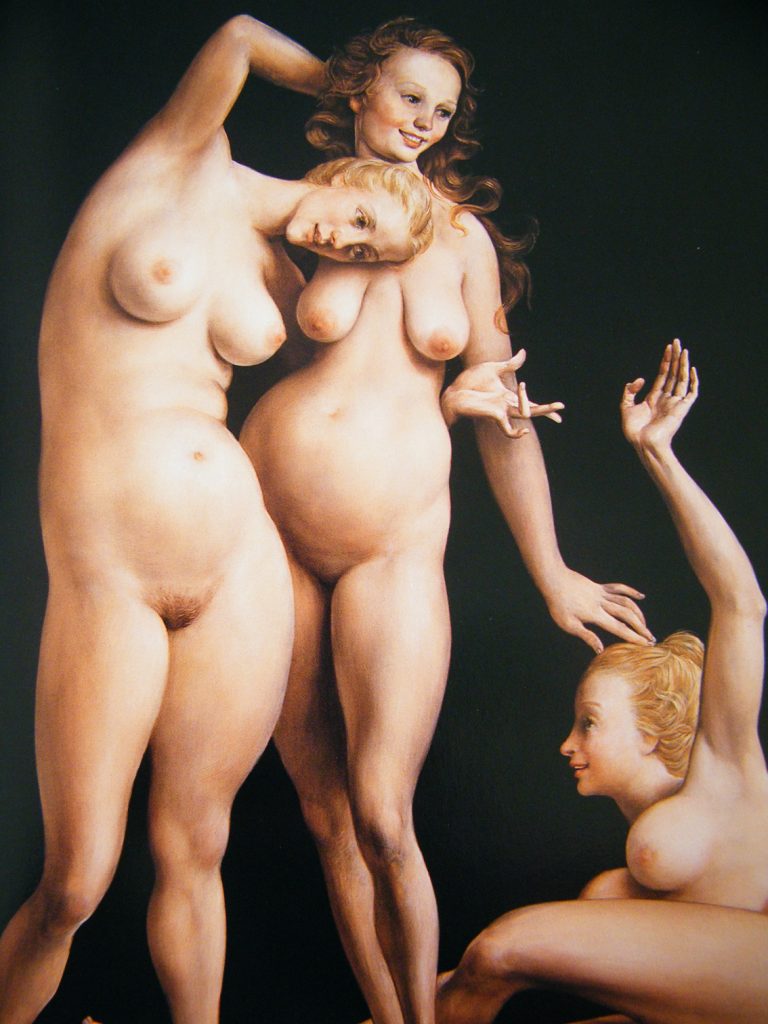
John Currin pushed this irony into the realm of the grotesque. Currin’s Three Friends uses the technical mastery of the Old Masters to depict distorted, hyper-sexualized figures that satirize our obsession with “perfection.”
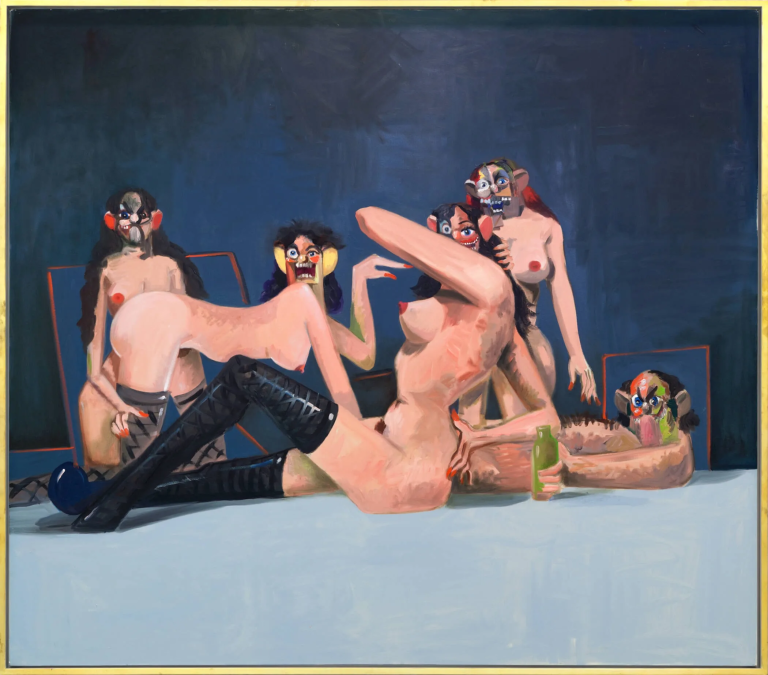
George Condo: Blending Old Master techniques with cartoonish distortions, Condo’s “Artificial Realism” creates a frenzied, psychological nude that satirizes the grand traditions of Western painting.
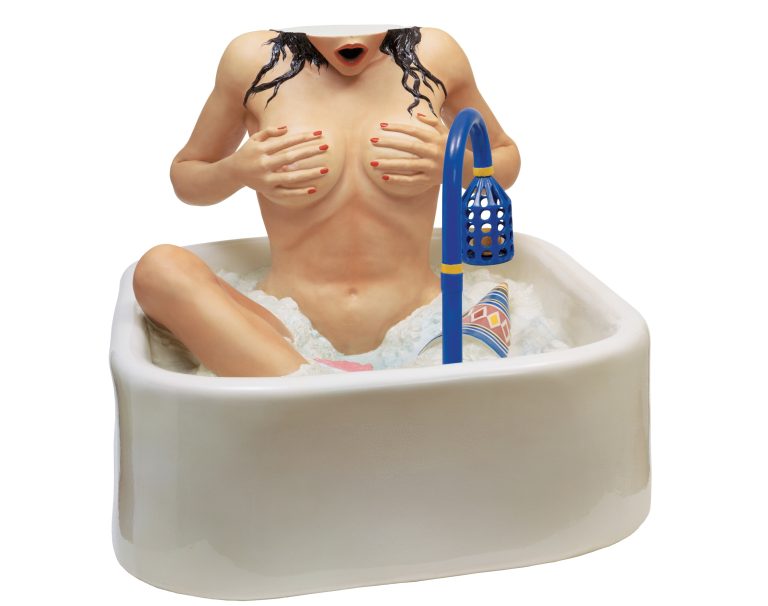
Jeff Koons pushed the nude into the realm of high-gloss kitsch, blurring the line between art, porn, and consumerism.
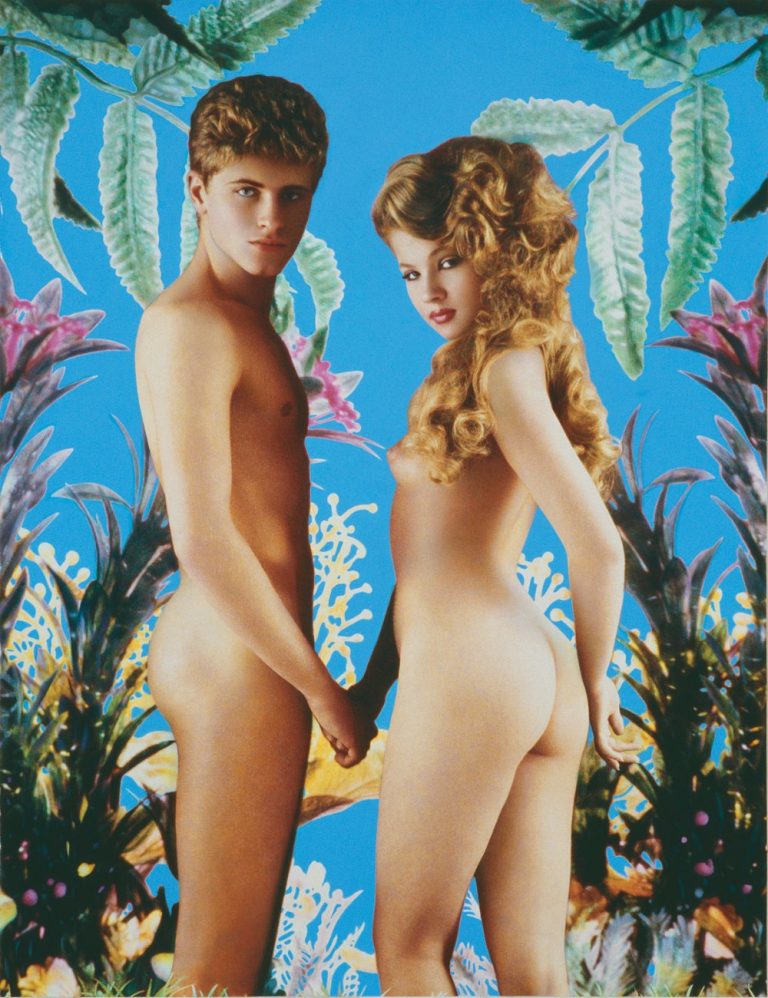
Blending photography and painting, Pierre et Gilles elevated the nude to the level of a religious icon through a kitsch, hyper-saturated lens.
Yasumasa Morimura, Portrait (Futago), 1988
Mélanie Manchot, The Fontainebleau Series, 2001
John Currin, Three Friends, 1998
George Condo, Orgy Composition, 2008
Jeff Koons, Woman in Tub, 1988
Pierre et Gilles, Adam and Eve, 1981
A New Gaze: Reclaiming the Body
From the mid-1960s, the most significant shift in the history of the nude occurred: the rise of the female perspective and the systematic deconstruction of the “Male Gaze.”
Hyperrealism and the Uncanny
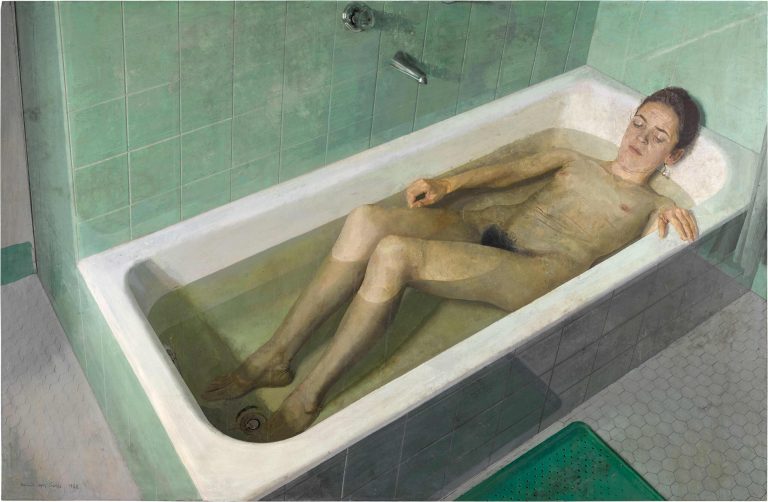
Antonio López García: The Spanish hyperrealist painter applied the same merciless patience to the aging body in its most mundane settings — a woman in a bathtub, skin and time rendered with quiet, devastating precision.
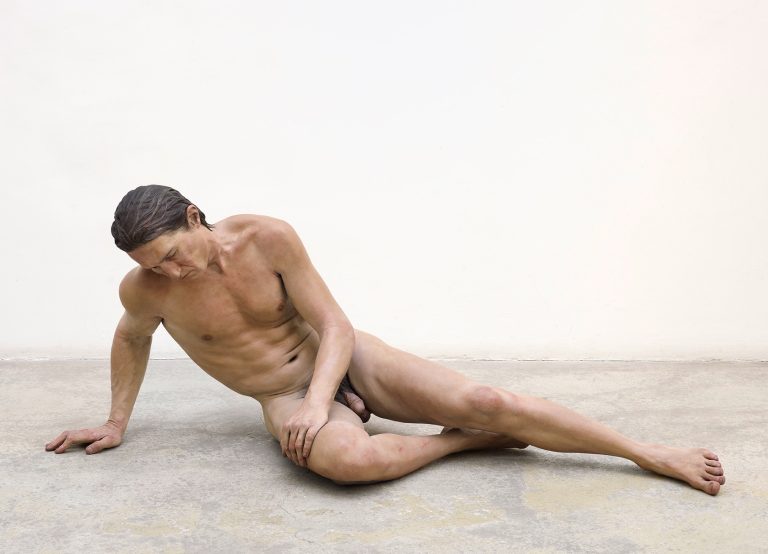
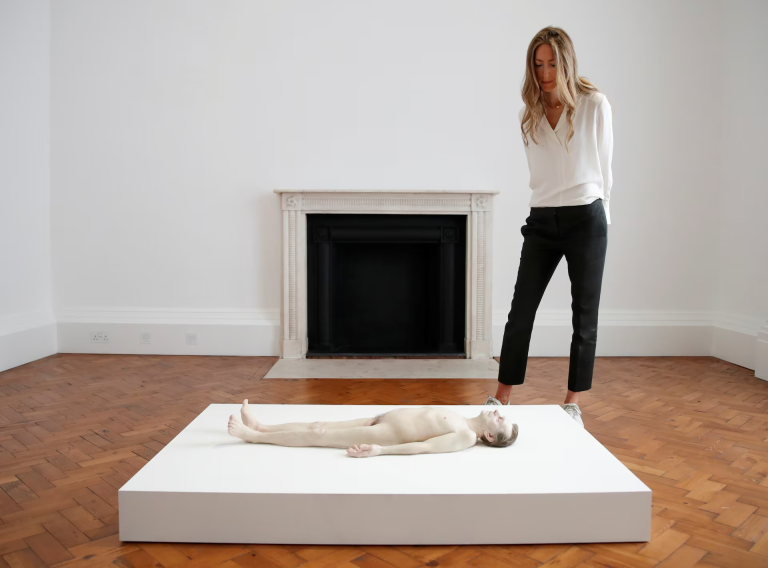
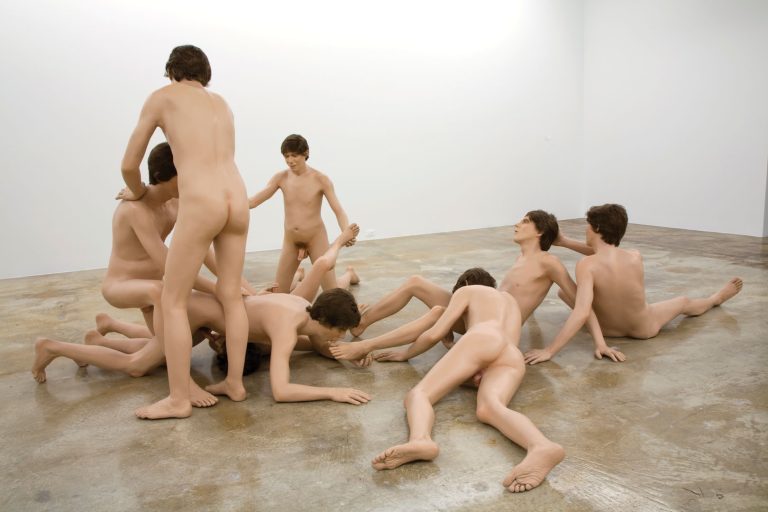
Artists like John DeAndrea and Ron Mueck pushed realism to an unsettling extreme. Their life-sized (or giant) sculptures capture every pore and hair, forcing an intimate, sometimes uncomfortable confrontation with our own physicality.
Charles Ray: By utilizing industrial fabrication to replicate the human form, Ray strips the nude of its traditional warmth, transforming the body into a sterile, unsettling object that challenges our spatial and psychological relationship with the self.
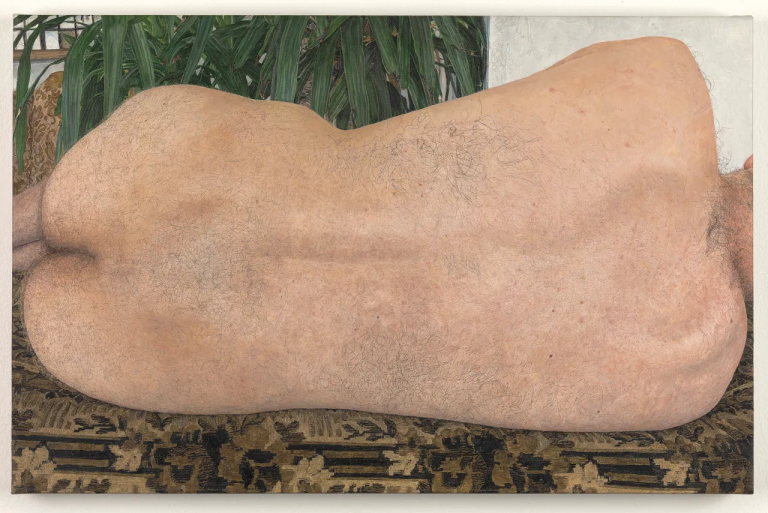
In a similar vein of scrutiny, Ellen Altfest treats the body like a landscape. The Back is rendered with such extreme detail that the skin becomes a topographical map of hair, pores, and freckles, forcing a meditative, non-sexualized gaze.
Antonio López García, Woman in the Bathtub, 1968
John DeAndrea, Dying Gaul, 2010
Ron Mueck, Dead Dad, 1996-1997
Charles Ray, Oh! Charley, Charley, Charley…, 1992
Ellen Altfest, The Back, 2008-2009
The Feminist Revolution
Women artists began to ask: Who controls the image?
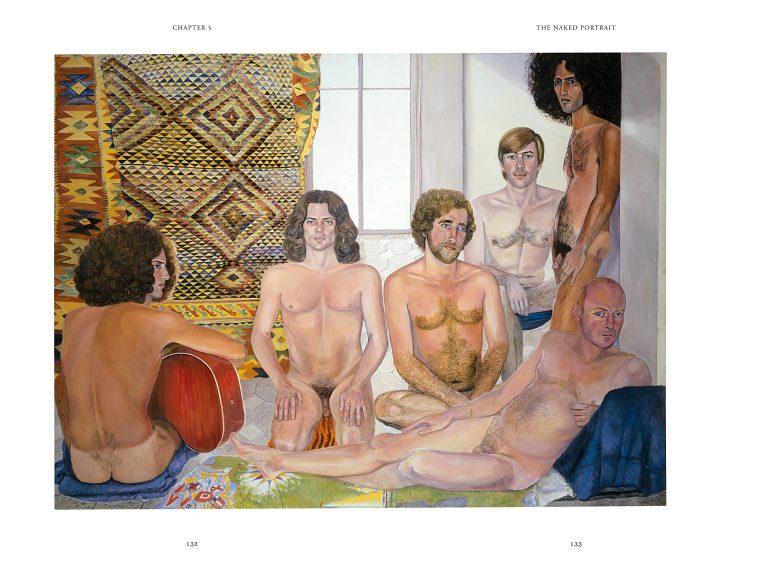
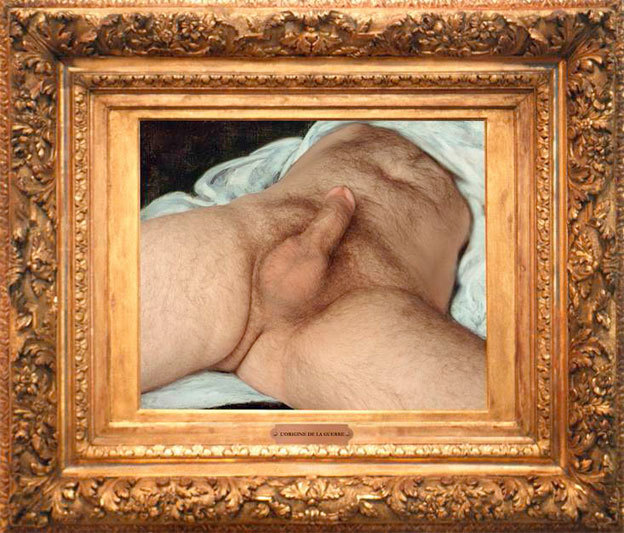
Sylvia Sleigh & ORLAN: They systematically flipped the script. Sleigh painted men in the “Venus” poses traditionally reserved for women, while ORLAN’s L’Origine de la Guerre subverted Courbet’s famous work by replacing the female anatomy with a phallic male torso, linking masculinity to power and violence.
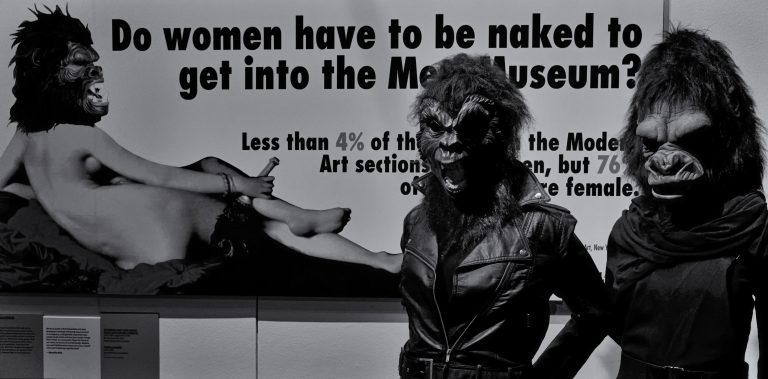
The Guerrilla Girls: Using sharp humor and statistics, they famously challenged museums: “Do women have to be naked to get into the Met. Museum?” (citing that while 85% of the nudes were female, only 5% of the artists were).
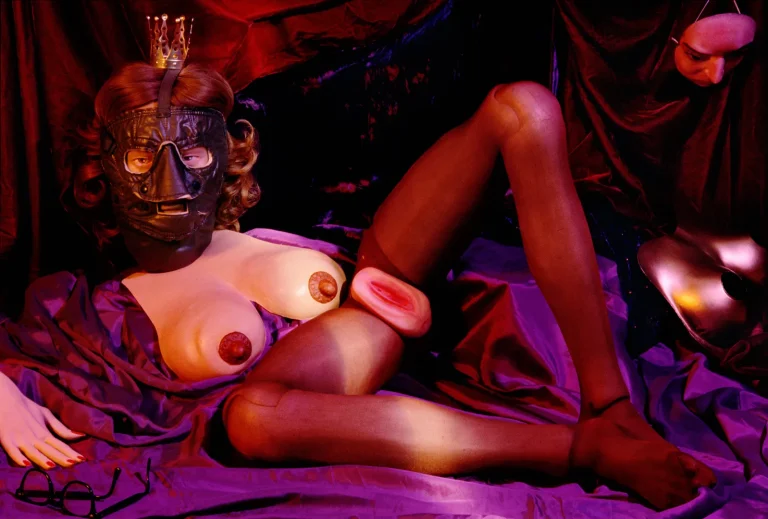
Cindy Sherman: By using grotesque prosthetics and mannequins, Sherman bypassed the traditional female nude to expose the artifice of gender and the disturbing ways the body is staged for the male gaze.
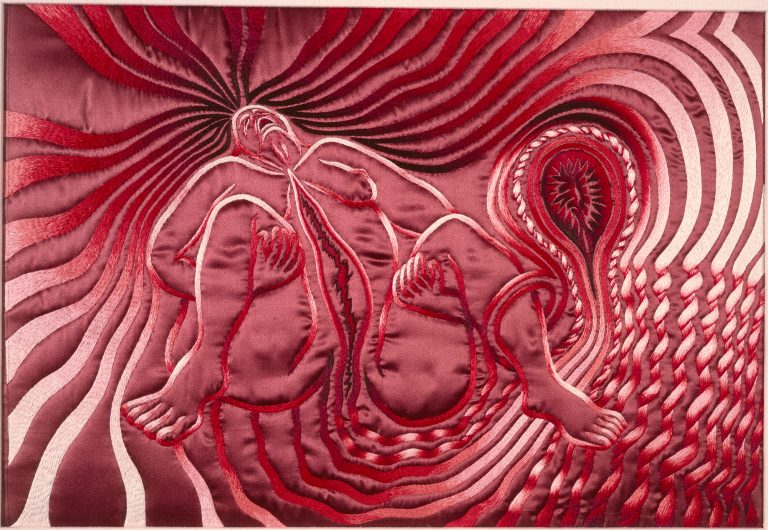
Judy Chicago and Jane Gaddie Thompson broke the ultimate taboo by depicting the raw reality of childbirth. Birth Tear uses embroidery to give a tactile, visceral presence to a fundamental human experience long ignored by the traditional “Fine Art” nude.
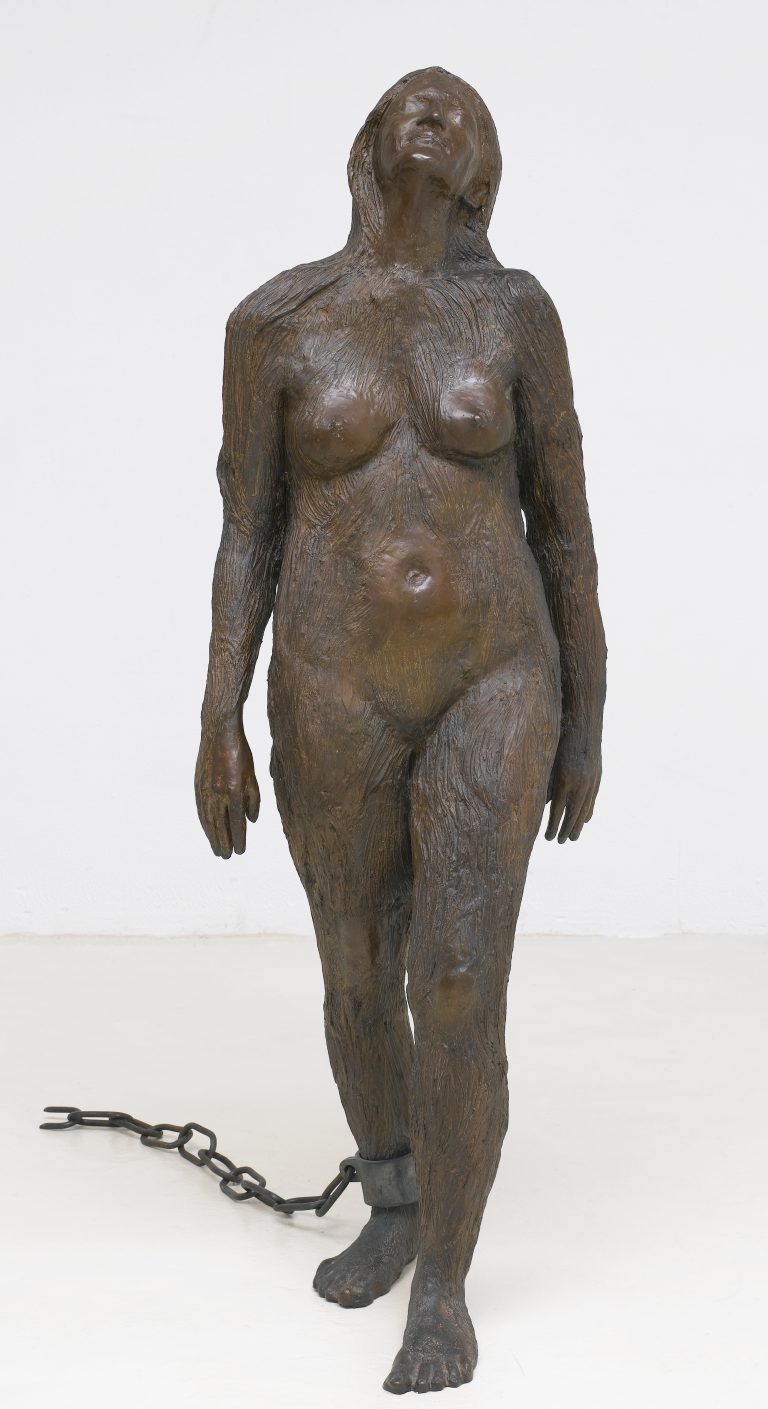
Kiki Smith took this further by exploring the “abject” body—the body that leaks, decays, and suffers. Her Mary Magdalene is a wild, unrefined figure, covered in hair and stripped of all traditional religious grace, reclaiming a primal femininity.
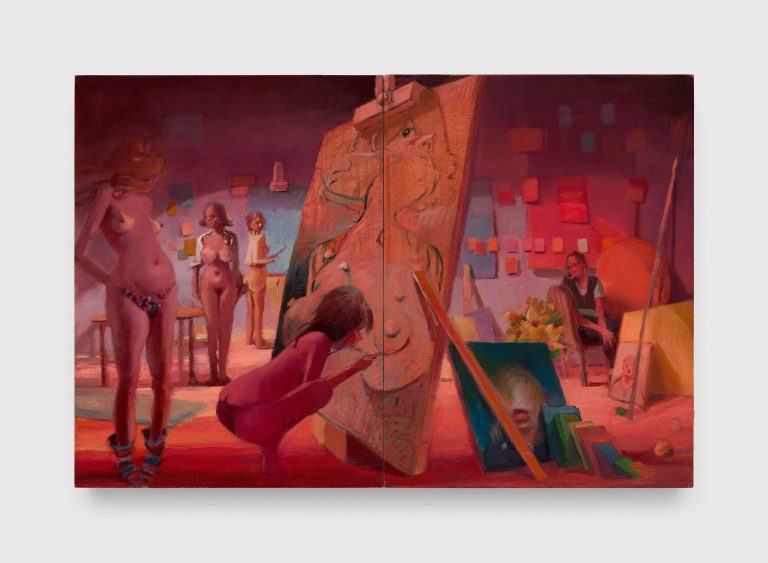
Lisa Yuskavage : Her lush scenes place the female nude in a space between cartoonish caricature and classical grandeur, questioning how we “consume” the female form.
Sylvia Sleigh, The Turkish Bath, 1973
ORLAN, The Origin of the War, 1989
Guerrilla Girls at the Victoria and Albert Museum, London, 1980’s
Cindy Sherman, Untitled #264, 1992
Judy Chicago and Jane Gaddie Thompson, Birth Tear (Embroidery), 1982
Kiki Smith, Mary Magdalene, 1994
Lisa Yuskavage, Fives Nudes a Painter and a Pieface, 2024
Challenging the Standard
Today, the “Standardized Body” of advertising is being dismantled.
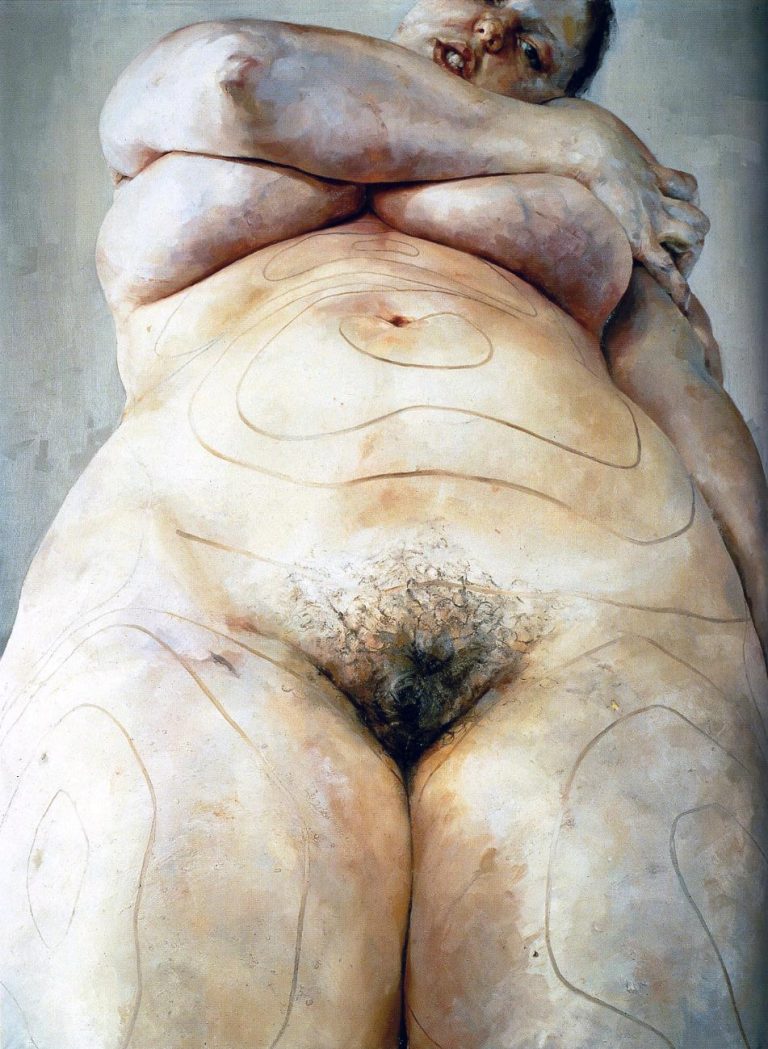
Jenny Saville painted monumental, “obese,” or bruised bodies that overwhelmed the viewer with their sheer mass and reality.
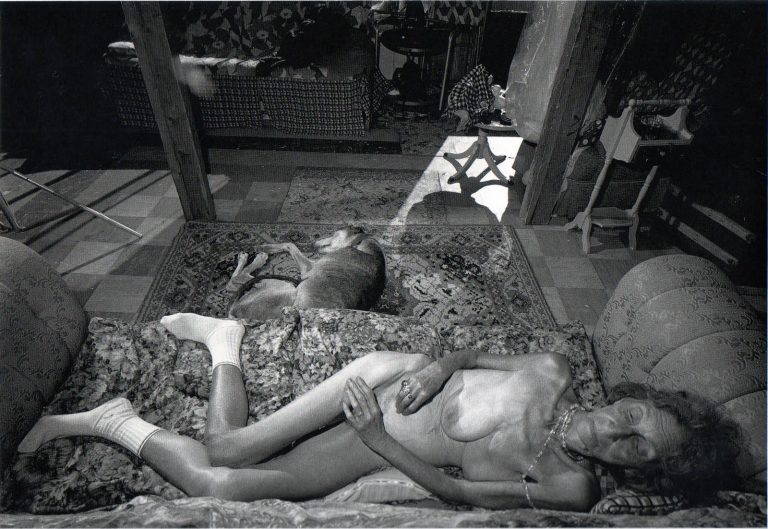
Donigan Cumming documented the aging, naked body of his friend Nettie Harris, stripping away the social taboos surrounding elderly nudity to reveal a profound, unvarnished humanity.
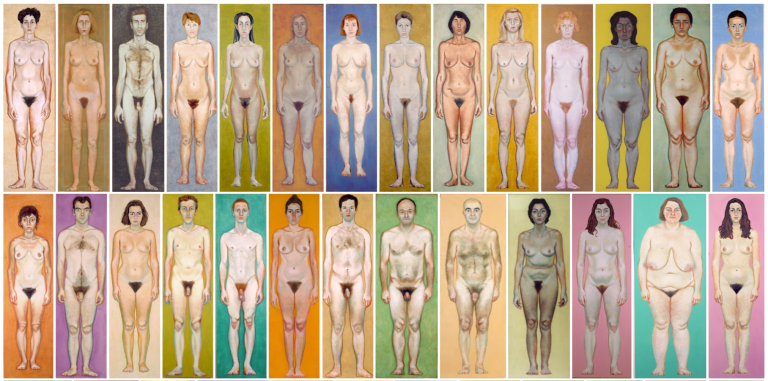
Vincent Corpet spent decades cataloging the human form with almost scientific rigor. His series Nudes serves as an exhaustive anatomical inventory, stripping the subject of any social context to focus on the raw mechanics of the flesh.
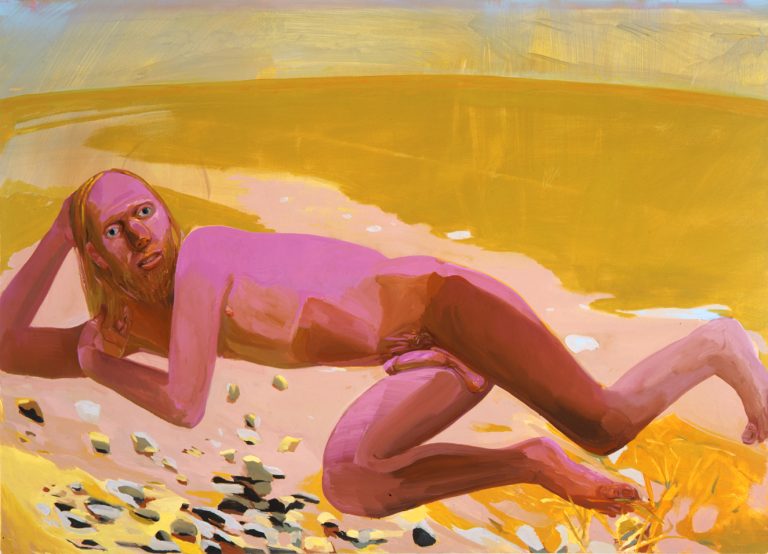
Dana Schutz questioned traditional beauty standards, exploring the body in all its diversity and imperfection and confronting conventional notions of beauty, presenting alternative ways of seeing and valuing the human form.
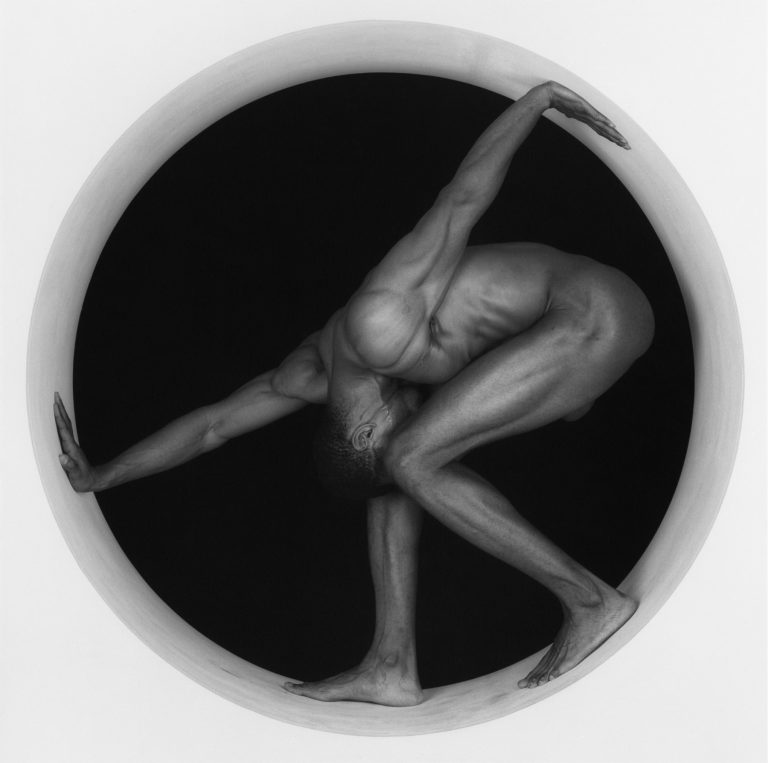
Robert Mapplethorpe and Zanele Muholi use the photographic lens to reclaim the nude as a powerful tool for identity and visibility. By centering Black and queer bodies, they challenge the historical “standard” of Western art.
Dana Schutz, Reclining Nude (Frank from Observation series), 2002
Robert Mapplethorpe, Thomas, 1987
Zanele Muholi, Caitlin and I, 2009
The Body as Art: Performance and Action
In the most radical turn of the 20th century, the artist’s body stopped being the subject and became the medium.
Living Brushes: Yves Klein
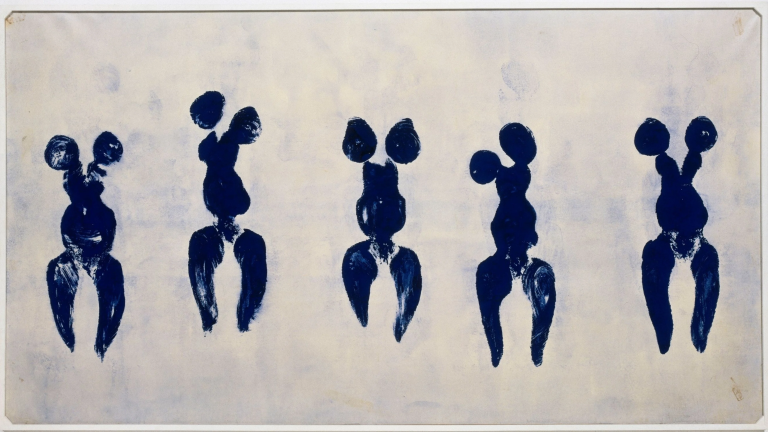
In his Anthropometries, Yves Klein used nude female models as “living brushes,” directing them to imprint their blue-covered bodies onto canvases. This turned the creation of a nude into a public spectacle and a performance.
Yves Klein, Anthropometry from the Blue Period, 1960
Living Canvases
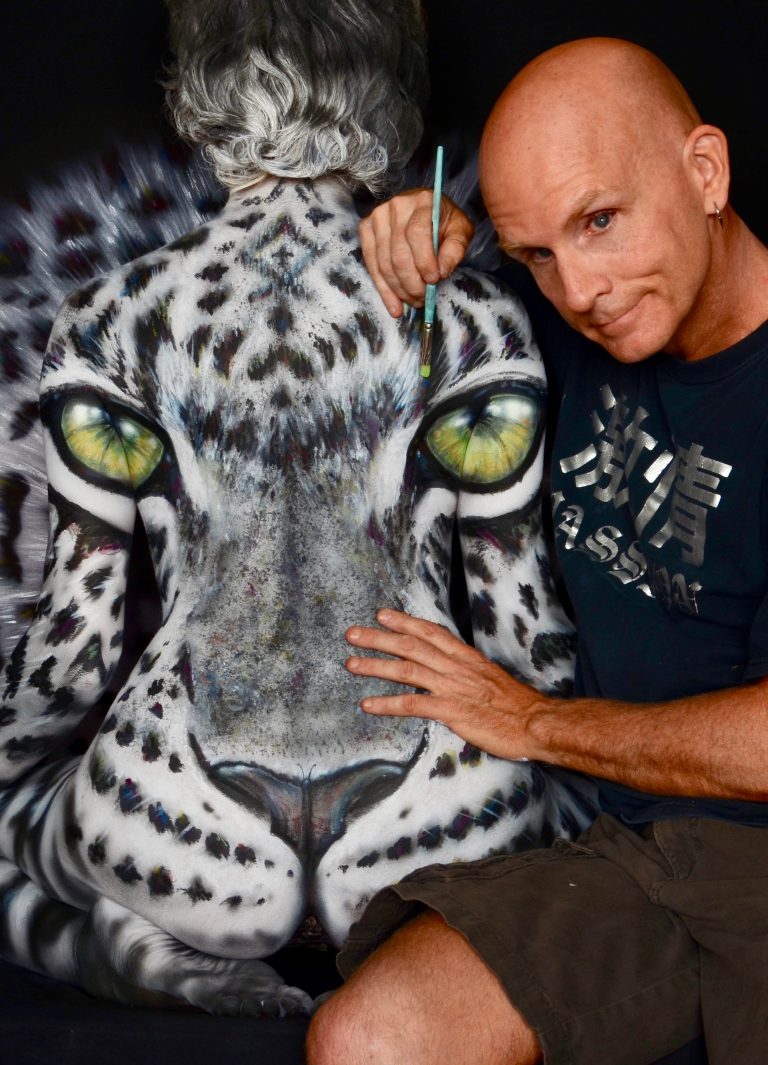
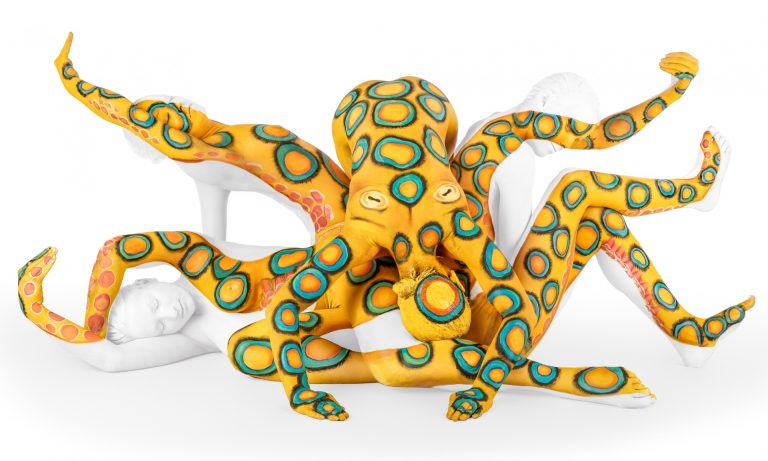
Contemporary body painters like Craig Tracy and Emma Fay use the human form as a living canvas to create illusionistic landscapes or animals that blurred the boundaries between the body and the natural world.
Craig Tracy, Feral, 2013
Emma Fay, Octopus, 2015
Pushing the Limits: Marina Abramović
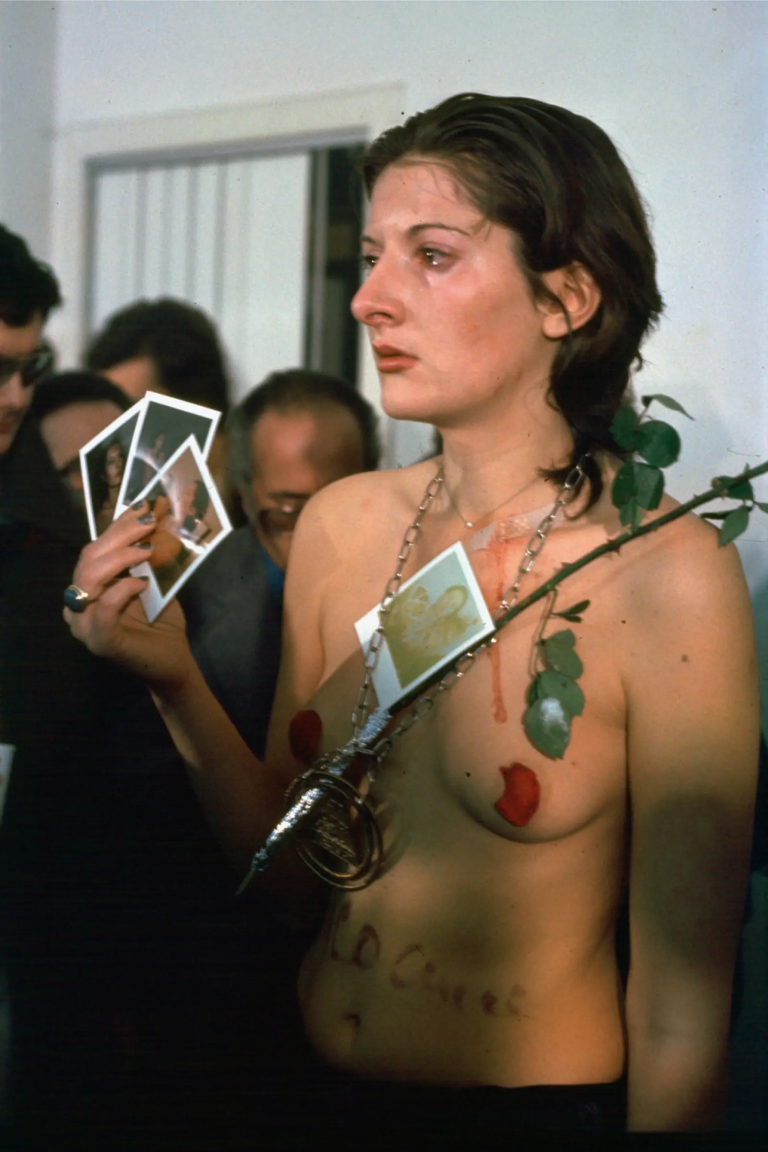
Body Art explored pain, endurance, and vulnerability. In her terrifying performance Rhythm 0, Marina Abramović stood still for six hours, allowing the public to use 72 objects—from a rose to a loaded gun—on her naked body. It was a harrowing exploration of human cruelty and the vulnerability of the nude.
Marina Abramović, Rhythm 0, 1974
The Human Landscape: Spencer Tunick
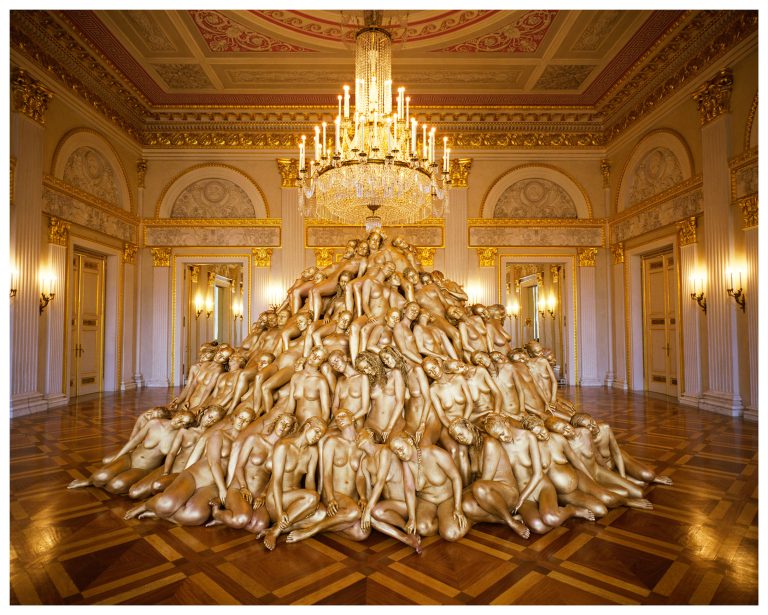
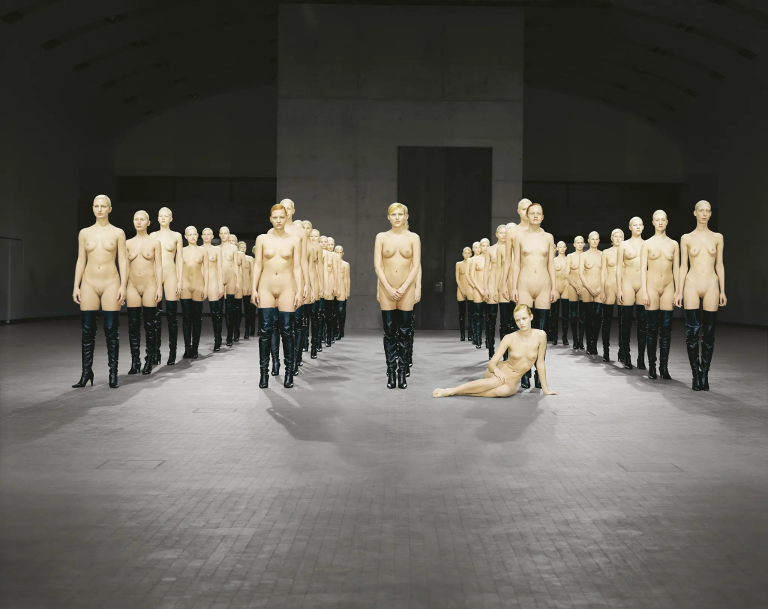
Today, the nude often appeared in large-scale installations. Spencer Tunick and Vanessa Beecroft both worked with numerous nude models to transform the individual body into a collective element.
Spencer Tunick, Munich 5 (Bavarian State Opera House), 2012
Vanessa Beecroft, at the Kunsthallie Wien, 2001
Conclusion: The Mirror of the Self
Throughout this series, we have seen the nude evolve from a prehistoric idol of fertility to a digital-age symbol of protest. It is never neutral. Whether it is hidden, celebrated, or weaponized, the naked body remains the most powerful mirror in Western art. It reveals not just the “ideals” of a society, but its deepest fears, desires, and power struggles.