

Today, we’re diving into a world of fabric, fashion, and fine art.
More than just clothing, dresses in paintings are powerful storytellers. They whisper secrets about power, personality, culture, and sometimes… rebellion.
From medieval Madonnas to modern icons, we’re exploring how artists have painted dresses that do way more than just look good.
👉 Watch the complete video on YouTube.
The Dress as Status Symbol
Let’s rewind to the 15th century. Back then, the fabrics, patterns, and colors artists used were anything but random. Blue — especially when worn by the Virgin Mary — stood for purity. But it was also wildly expensive. In Madonna of the Rose Bower by Stephan Lochner (1442), Mary’s robe is a deep, luminous blue — a visual shorthand for divinity, yes, but also a sign of serious money behind the commission.
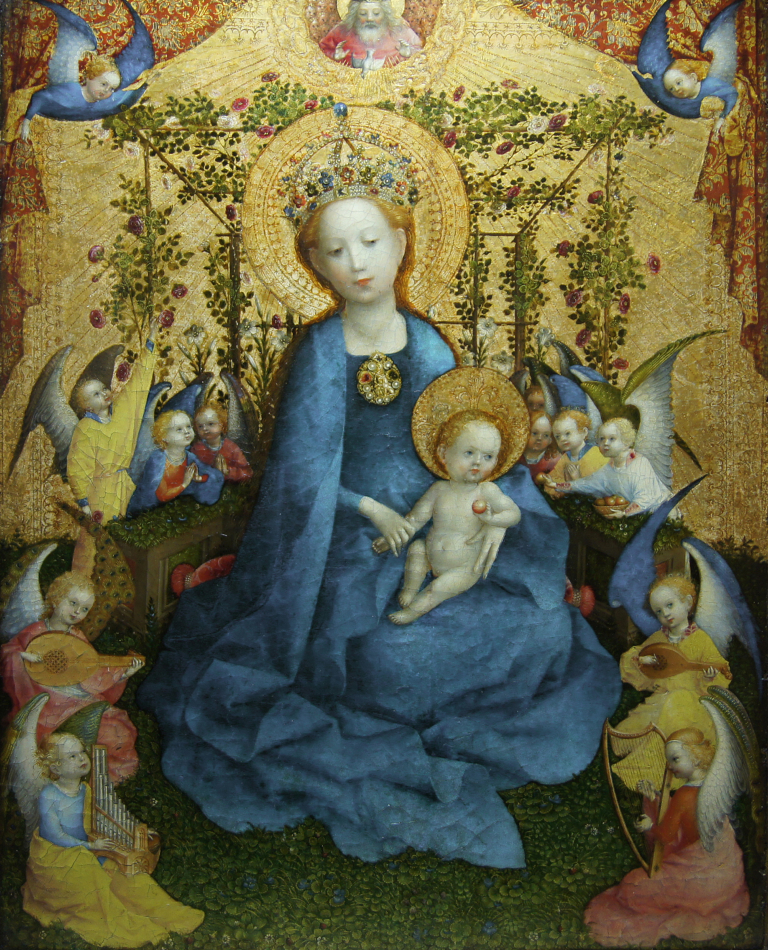
Stephan Lochner,
Madonna of the Rose Bower,
1442
Fast forward a bit to Leonardo da Vinci’s Lady with an Ermine. The sitter is Cecilia Gallerani, a noblewoman — and the Duke of Milan’s mistress. No jewelry, no crown… yet everything about her sleek dress, with its square neckline and tight sleeves, tells us she’s elite, educated, and totally on trend. The fabric? Likely velvet or silk. The minimalist style? A smart way to highlight her grace and intellect, not just her wealth.
And that ermine in her arms? Sure, it’s a symbol of purity. But it’s also a clever nod to Ludovico Sforza — known as “The White Ermine.” Her outfit is doing a lot of quiet talking.
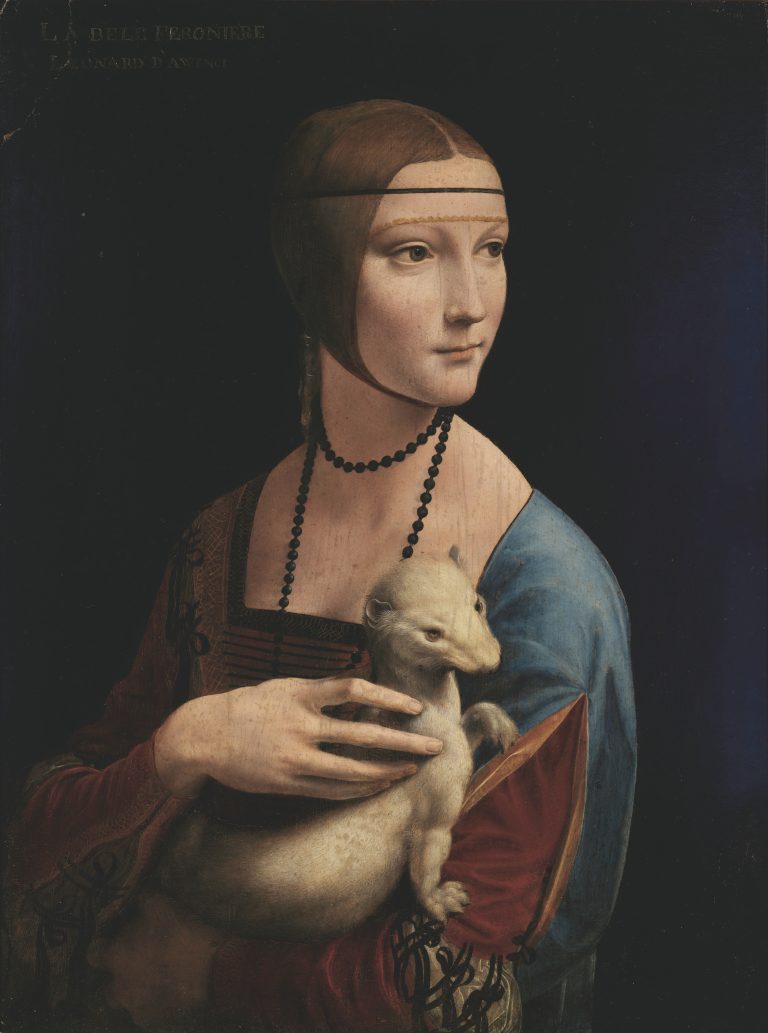
Leonardo Da Vinci,
Lady with an Ermine,
c. 1488
Throughout history, fashion in painting has been closely tied to status. In the 16th century, it got political. Look at Titian’s portrait of Isabella d’Este — puffed sleeves, rich fabrics, Renaissance-level power dressing. Or the British School portrait of Helena Snakenborg, where the elaborate embroidery and stiff silhouette show she was definitely someone important at court.
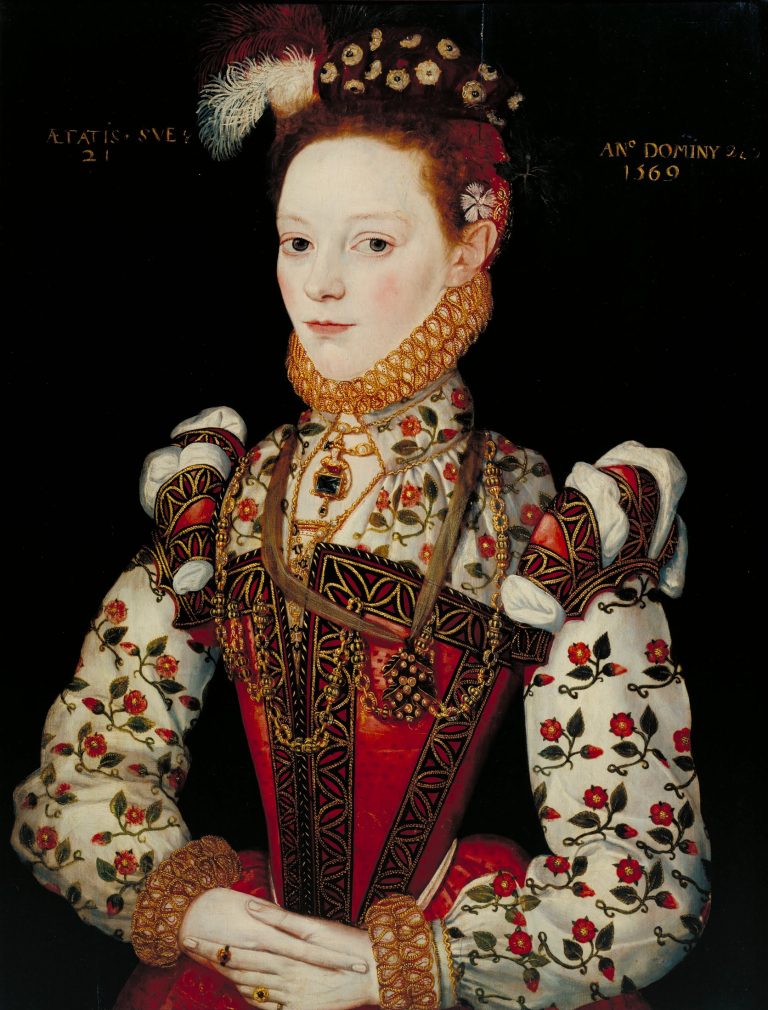
Britannic School of the 16th c.,
A Young Lady Aged 21, Possibly Helena Snakenborg, Later Marchioness of Northampton,
1569
Royal Elegance & Court Fashion
By the 1600s, court fashion took things to the next level.
Royal portraits weren’t just about likeness. Portraits of queens showcase lavish gowns to reinforce their power and public image.
Frans Pourbus the Younger painted queens like Maria de’ Medici and Elisabeth of France in gowns that looked more like royal armor: heavy brocade, towering collars, intricate detail. These weren’t just clothes. They were political statements and propaganda.
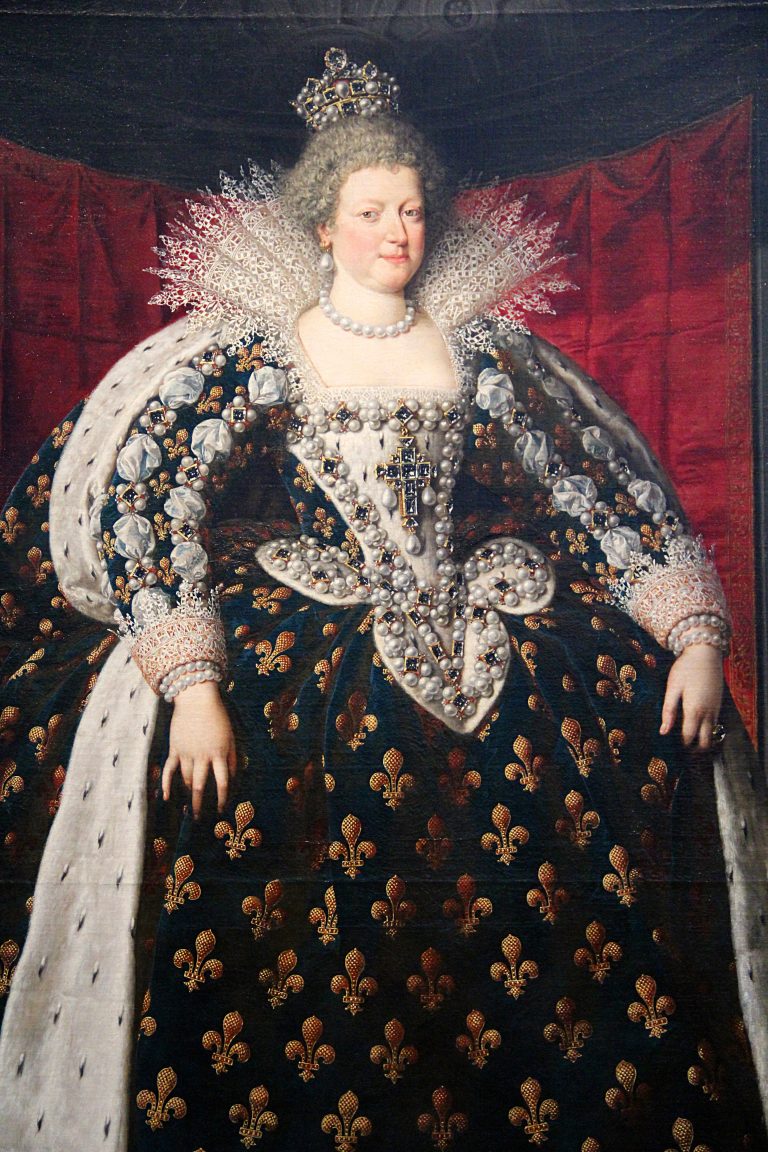
Frans Pourbus the Younger,
Portrait of Maria de’ Medici,
1610
Rubens painted Charlotte-Marguerite de Montmorency in luxurious fabrics, glowing skin and all. Meanwhile, in Spain, Juan Carreño de Miranda wrapped Inés de Zúñiga in velvet and lace, like a baroque dream.
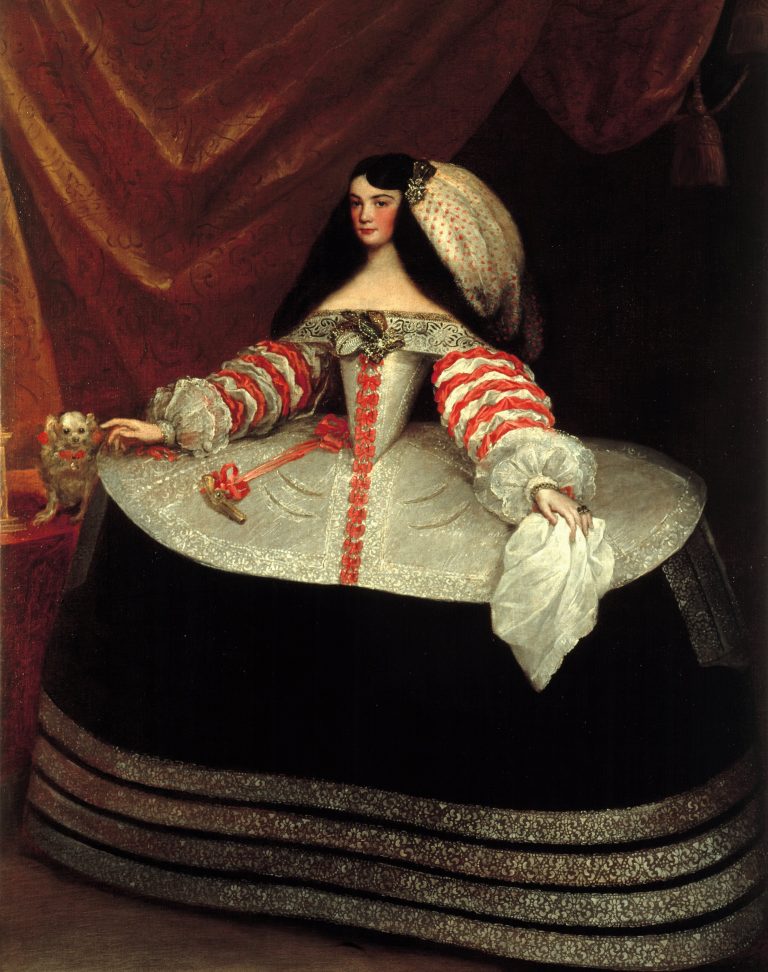
Juan Carreño de Miranda,
Inés de Zúñiga, Countess of Monterrey,
c.1665
Then came the 18th century, and things got fancy. François Boucher gave us portraits of Madame de Pompadour and Madame Bergeret, full of pastel tones, silk, ribbons, lace… Rococo excess at its peak.
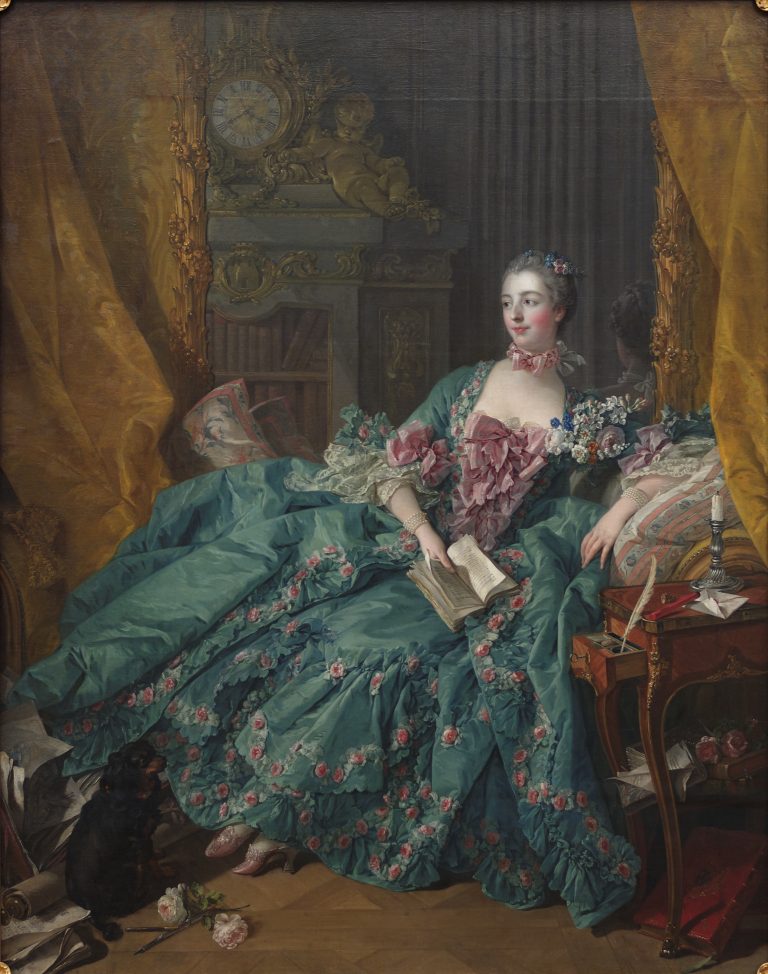
François Boucher,
Portrait of Madame de Pompadour,
1756
Vigée Le Brun painted Marie Antoinette with a rose — but her first version sparked scandal because the queen was wearing a white muslin dress, simple and soft. Too relaxed. Too nightgown-y. It didn’t fit the image people expected. So, Vigée Le Brun quickly repainted it — this time with a more formal gown, more in line with court expectations.
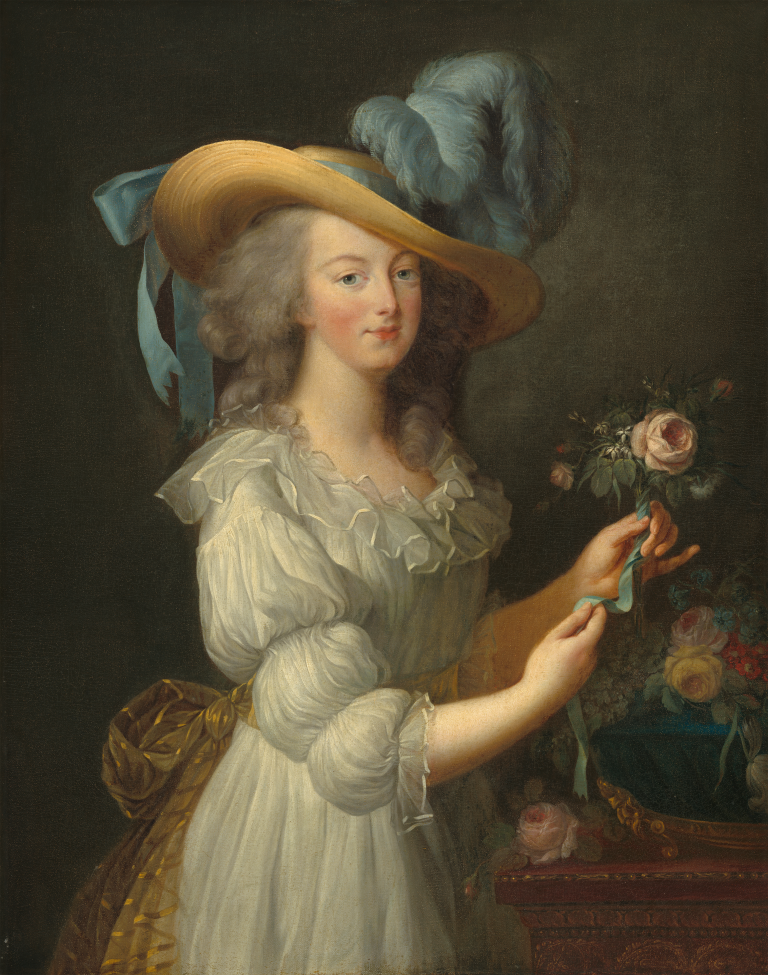
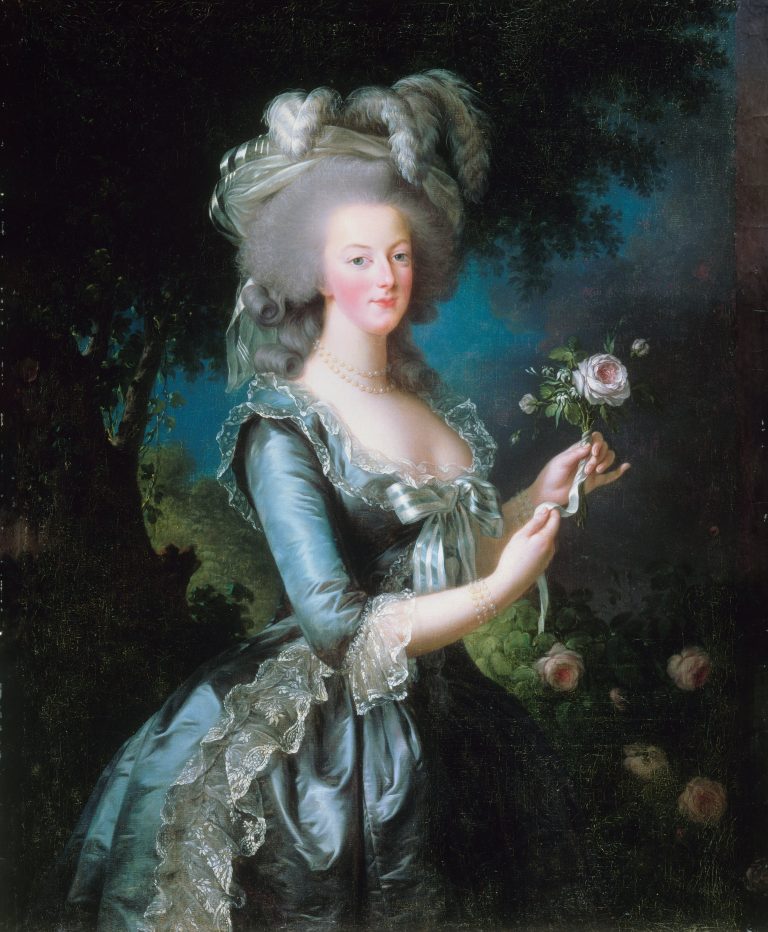
Élisabeth Vigée Le Brun,
Marie Antoinette in Muslin dress,
1783
Élisabeth Vigée Le Brun,
Marie Antoinette with a Rose,
1783
And then there’s Fragonard’s The Swing. Not a royal portrait, just pure fantasy. A pink dress flares mid-air, full of flirtation and fun. Still totally extravagant, totally Rococo.
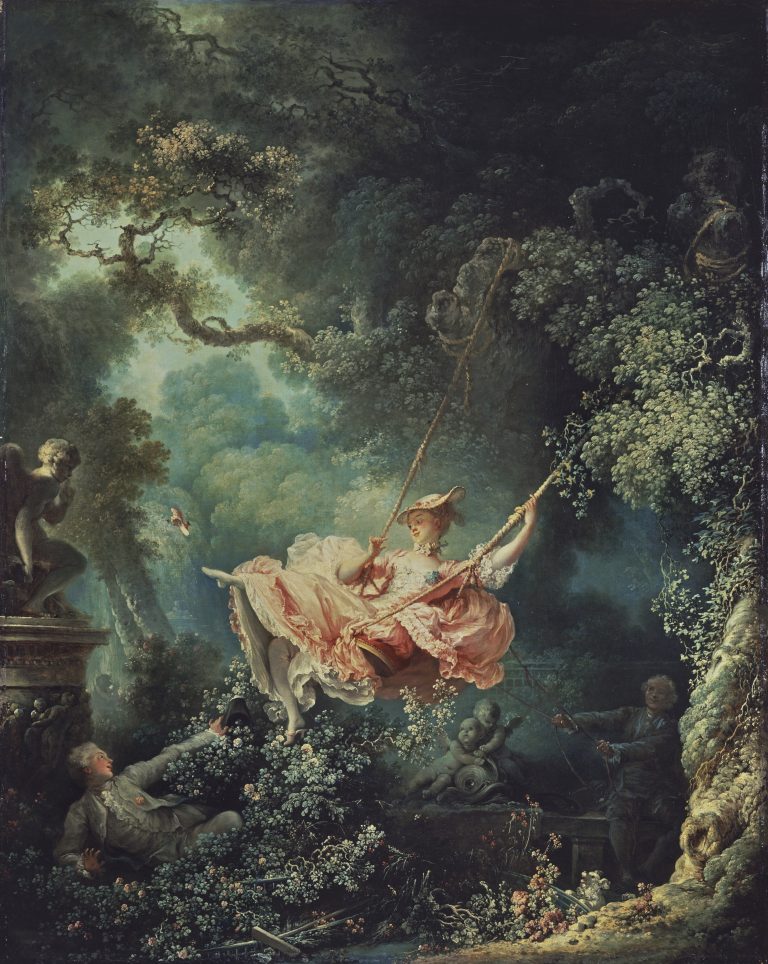
Jean-Honoré Frangonard,
The Swing,
1768
Romanticism, Realism & Impressions
In the 19th century, painted dresses started to feel more personal and emotional.
Gainsborough’s Queen Charlotte is still formal, but softened by his light brushwork. Goya’s Countess of Chinchon wears an understated dress, but her expression is haunting — there’s tenderness and quiet sadness in the color and brushstrokes.
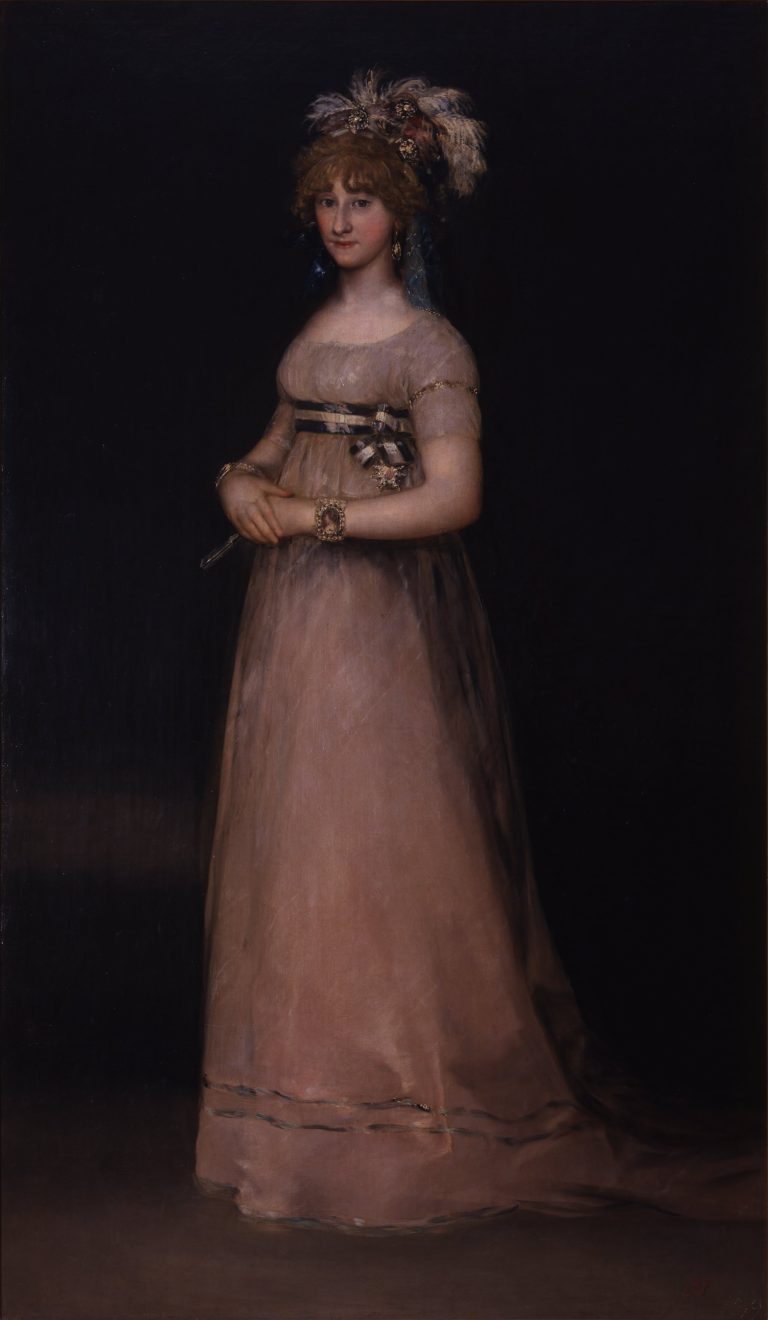
Francisco de Goya,
Portrait of the Countess of Chinchon,
c.1800
In Lefèvre’s The Empress Joséphine (1805), fashion goes Neoclassical. High-waisted, flowing gowns inspired by Roman tunics. Gérard’s Marie Leczinska (1810) brings back the royal drama — gold embroidery, heavy fabrics, full-on regalia.
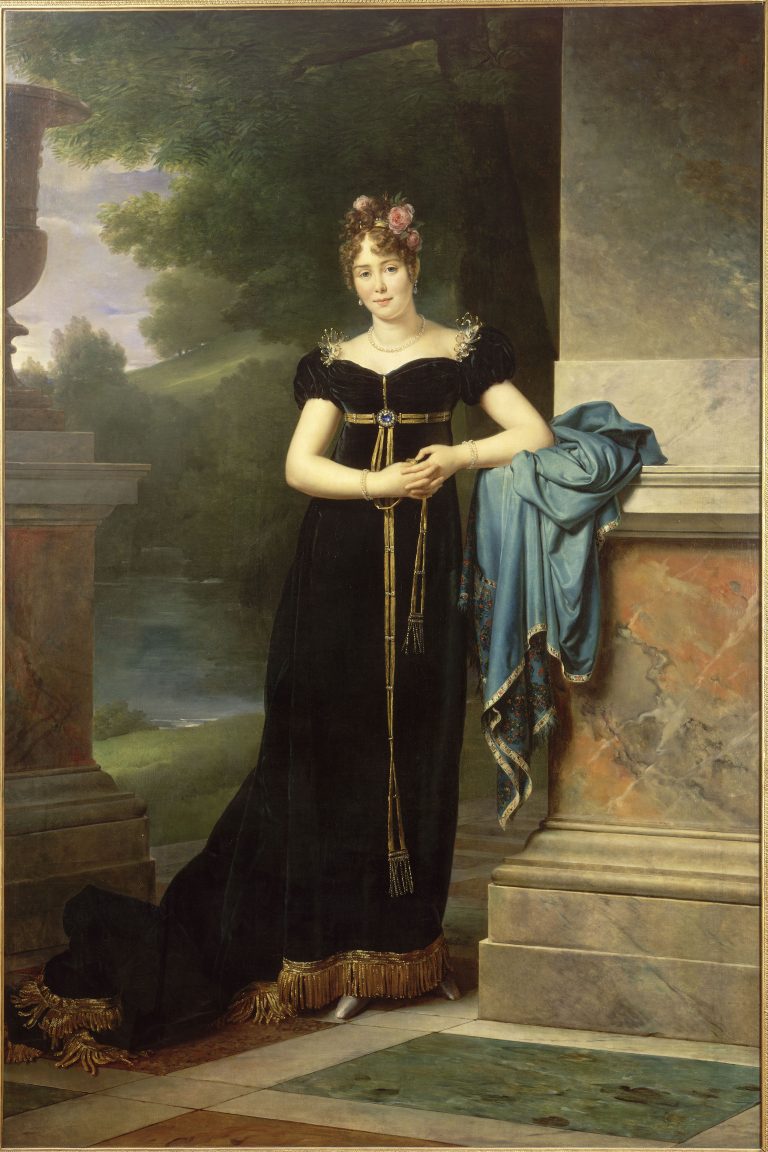
François Gérard,
Marie Leczinska,
1810
How could we talk about dresses without mentioning Winterhalter’s stunning gowns? His portraits of Empress Eugénie, Princess Leonilla, and Sissi shimmer with light, fabric so delicate it feels like it’s floating.
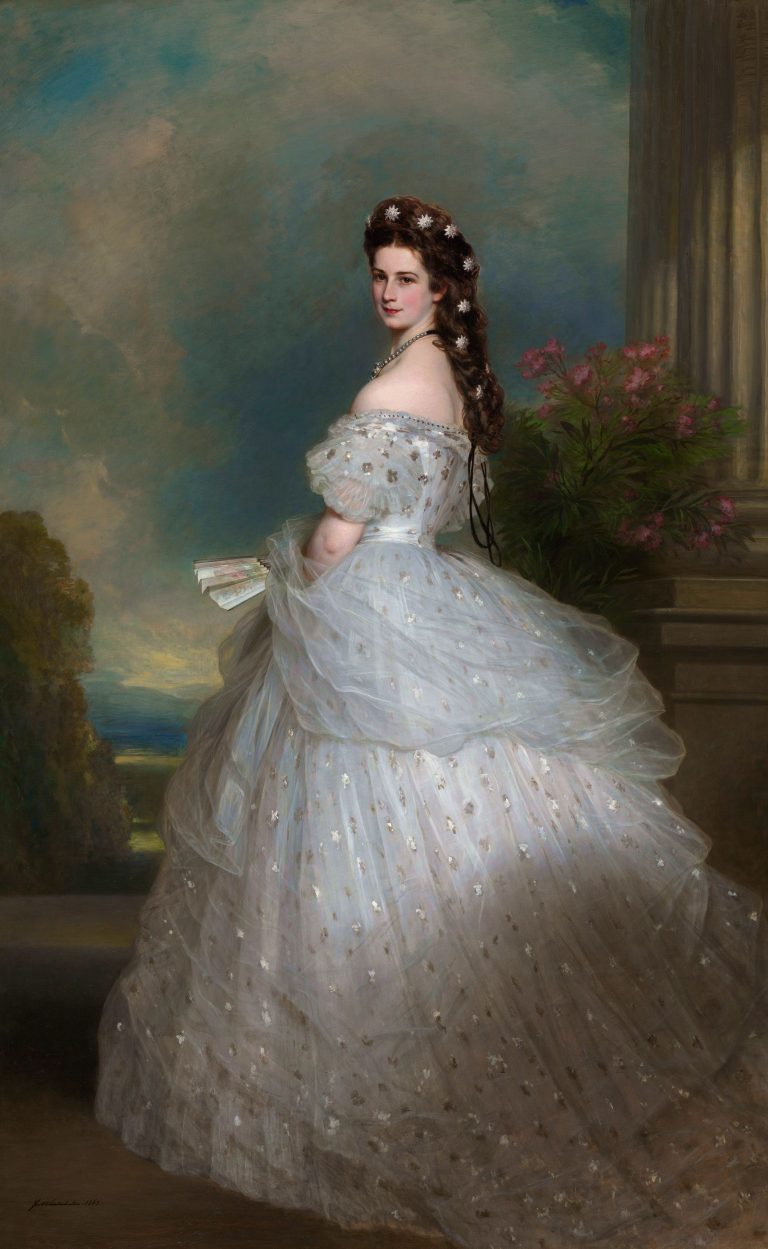
Franz Xaver Winterhalter,
Portrait of Elisabeth of Austria (Sissi),
1865
Ingres, the master of precision, shows off with Madame de Moitessier and Princesse de Broglie — those fabrics are rendered with such detail they practically outshine the sitter.
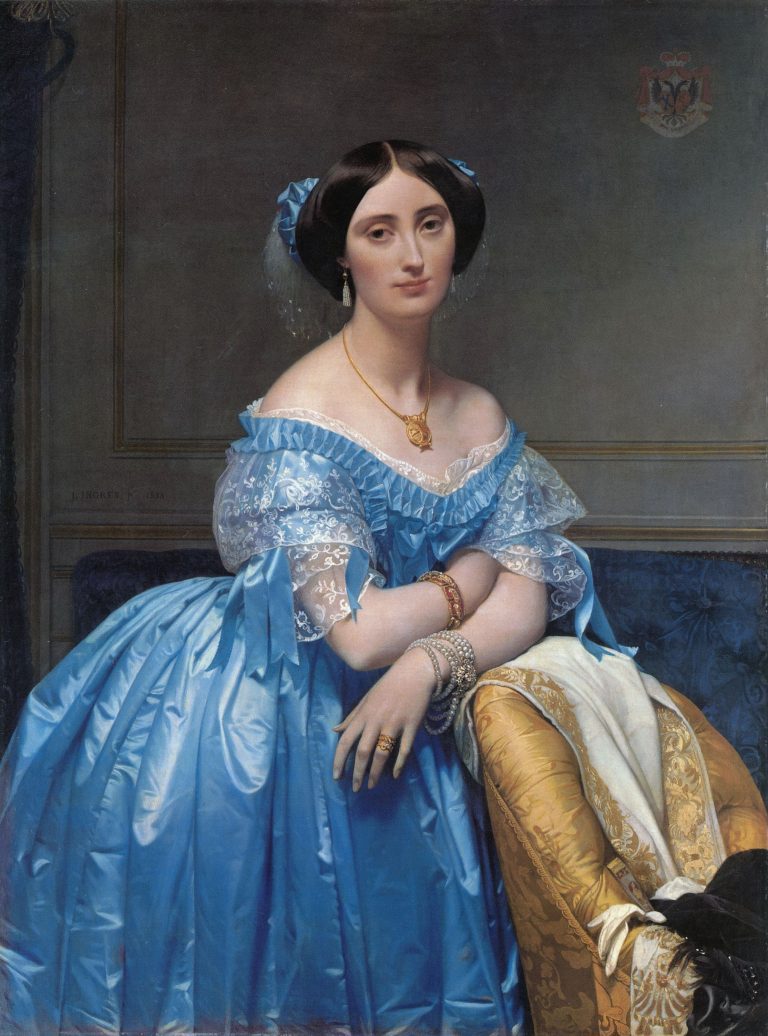
Jean-Auguste-Dominique Ingres,
The Princesse de Broglie,
1853
Federico de Madrazo does the same in Spain. His Amalia de Llano and Isabel II as Countess of Barcelona are wrapped in luxurious fabrics, with embroidery so detailed you can almost feel it.
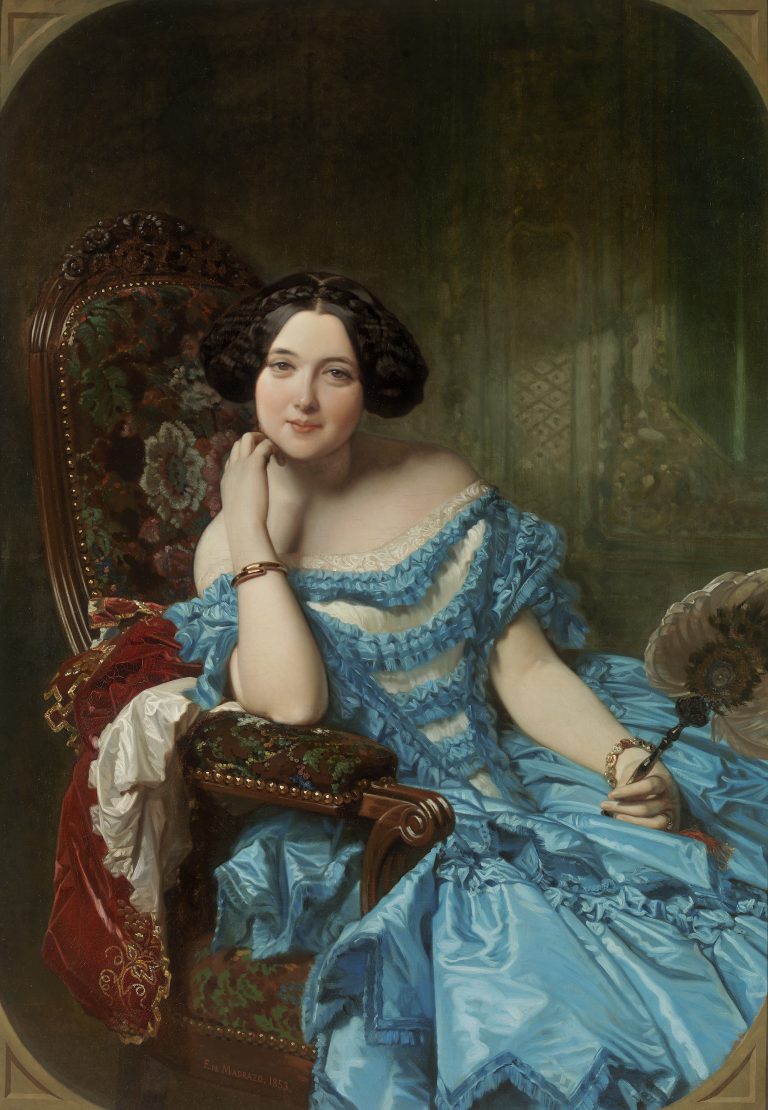
Federico de Madrazo,
Portrait of Amalia de Llano, Spanish countess and author,
1853
Pre-Raphaelites like Millais (Mariana) and Waterhouse (The Lady of Shalott) went the gothic, tragic route — long flowing gowns, medieval settings, emotionally charged.
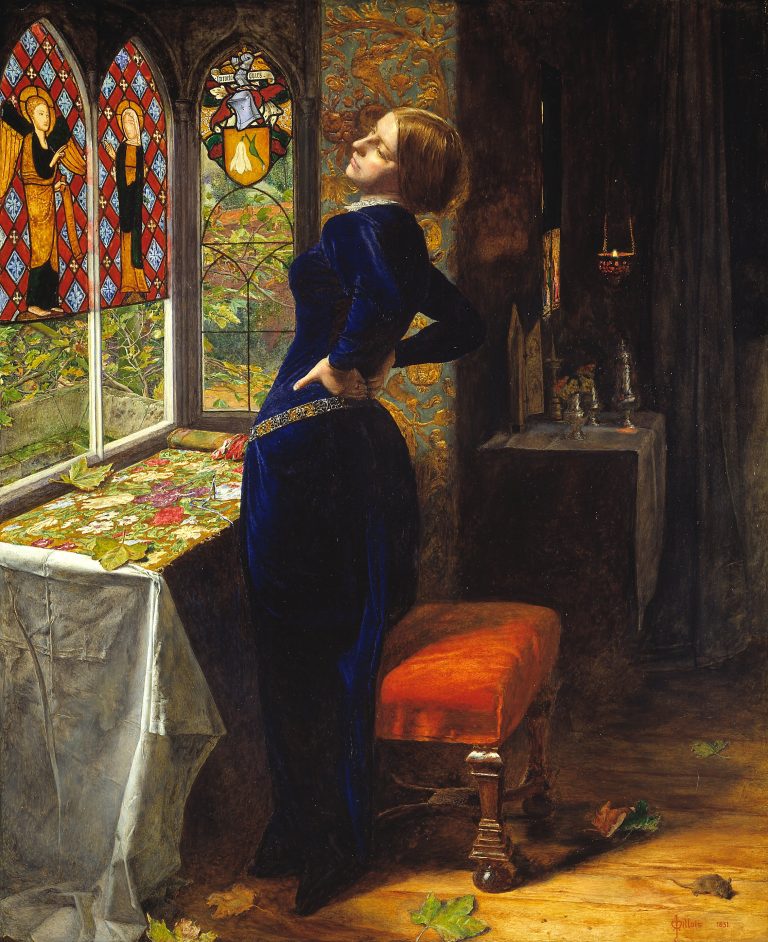
John Everett Millais,
Mariana,
1851
Then Impressionism came in and shook things up.
Monet’s Women in the Garden is all about light — dresses blend into nature, transparent, fleeting. Renoir’s La Promenade and The Theatre Box (1874) show women in elegant but relaxed poses. The fashion becomes more casual, more lived-in.
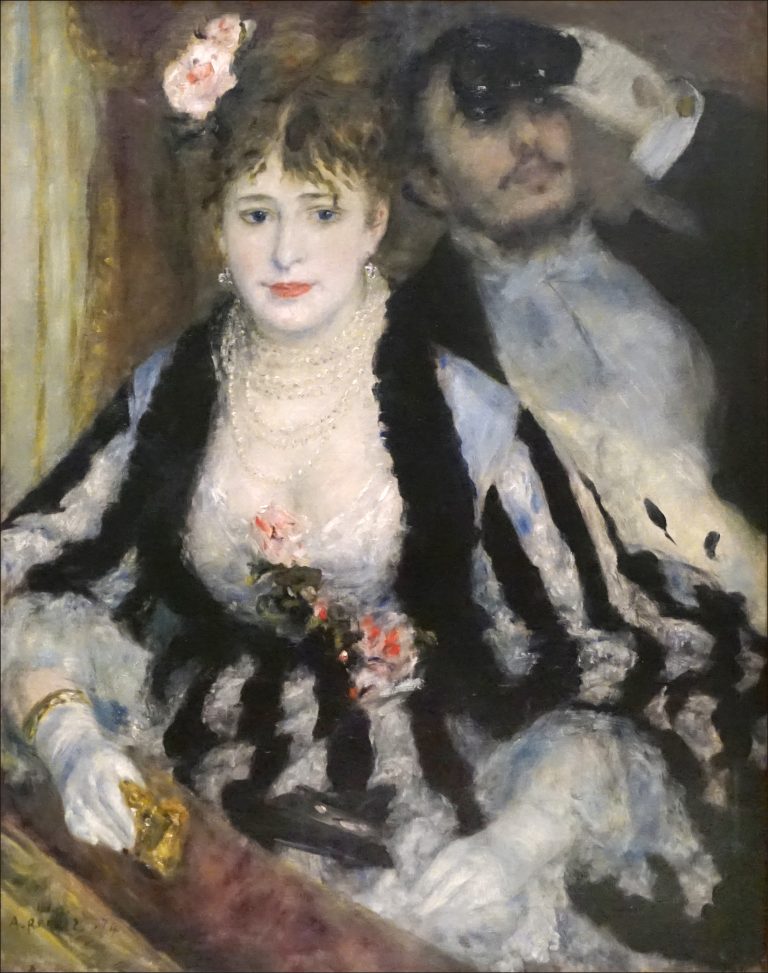
Pierre-Auguste Renoir,
The theatre Box,
1874
In Spain, Raimundo de Madrazo y Garreta (son of Federico) painted women in stunning gowns, but with a looser, more natural vibe. Manuela Errazu (1870), Señora Clotilde de Cándamo (1874), and Masqueraders (c. 1875) show the shift — fashion as elegance, but also as fun and freedom.
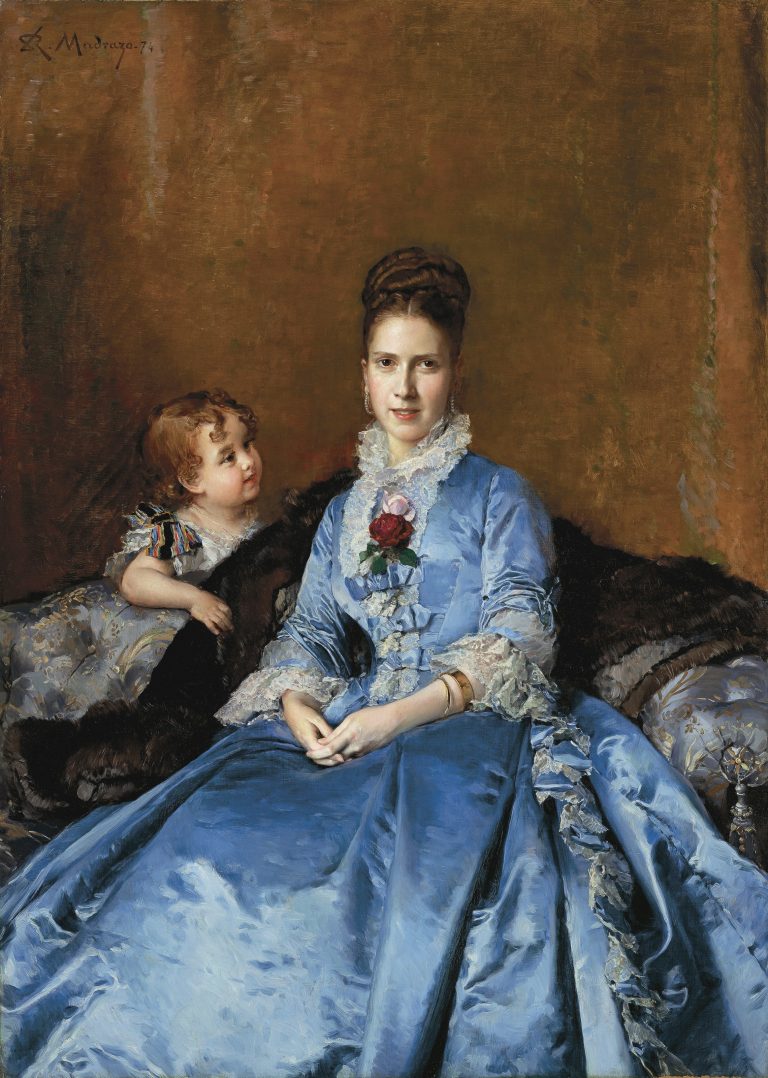
Raimundo de Madrazo y Garreta,
Portrait of Señora Clotilde de Cándamo and her Son Carlos,
1874
Then Monet paints Madame Monet in a Japanese Kimono (1876) — a sign of Japonism, the Western obsession with Japanese aesthetics after Japan opened to the West. The fusion of cultures shows in the patterns, asymmetry, and bold colors.
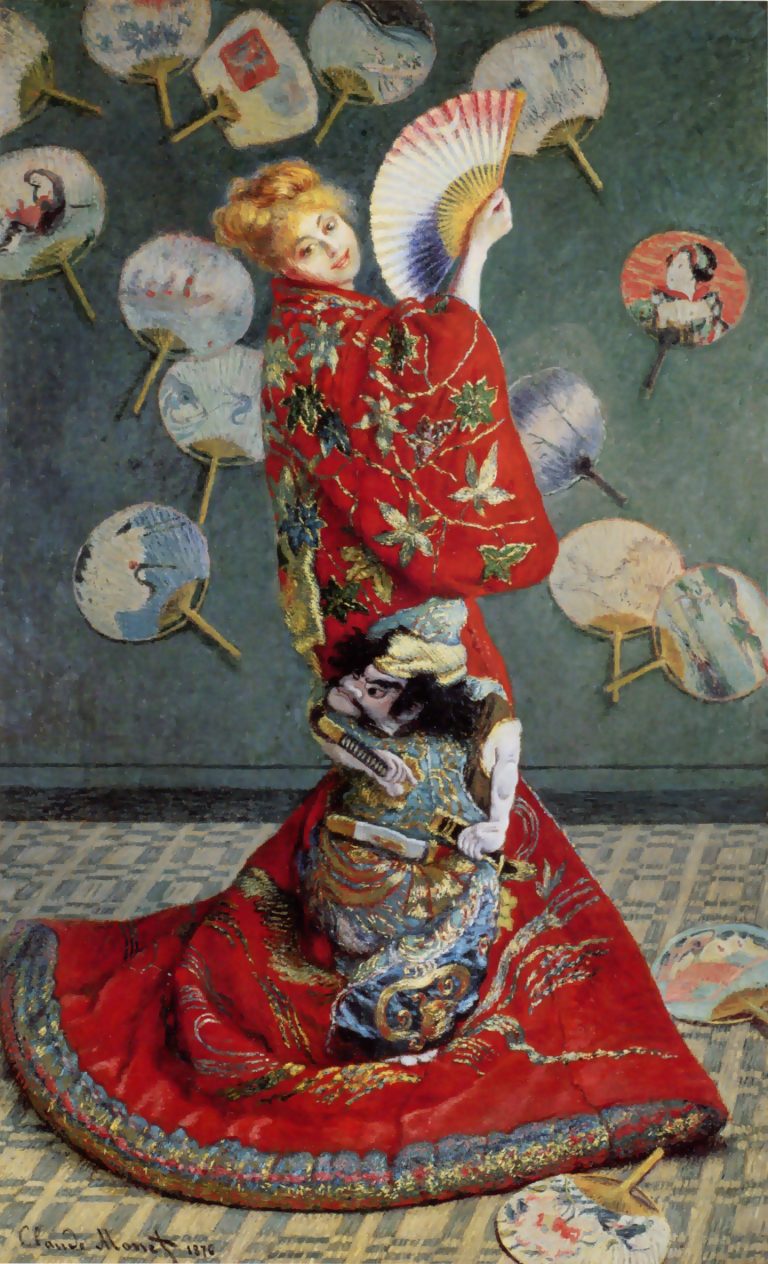
Claude Monet,
Madame Monet in a Japanese Kimono,
1876
Elsewhere, John Singer Sargent uses dresses to flirt with scandal. Take Madame X. The original had a strap slipping off her shoulder — too suggestive for the time. Public outcry forced him to repaint it. But the controversy stuck, and the damage was done.
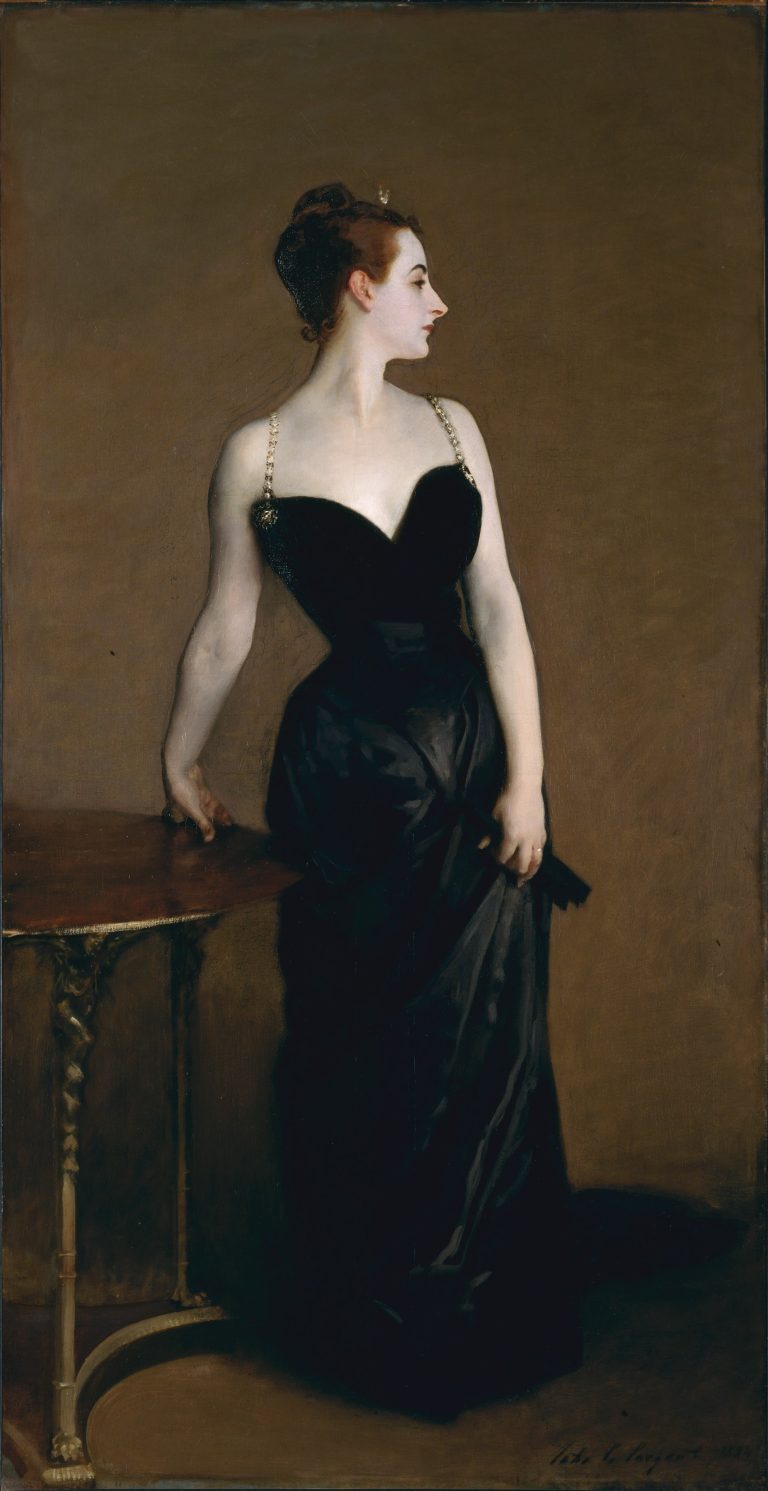
John Singer Sargent,
Portrait of Madame X,
1884
Around that time, Frederic Leighton painted Flaming June (1895). A woman sleeping in a sheer orange gown — no real story, just beauty. It faded into obscurity for years, then was rediscovered in the 1960s and is now housed at the Museo de Arte de Ponce in Puerto Rico and known as the “Mona Lisa of the Southern Hemisphere.”
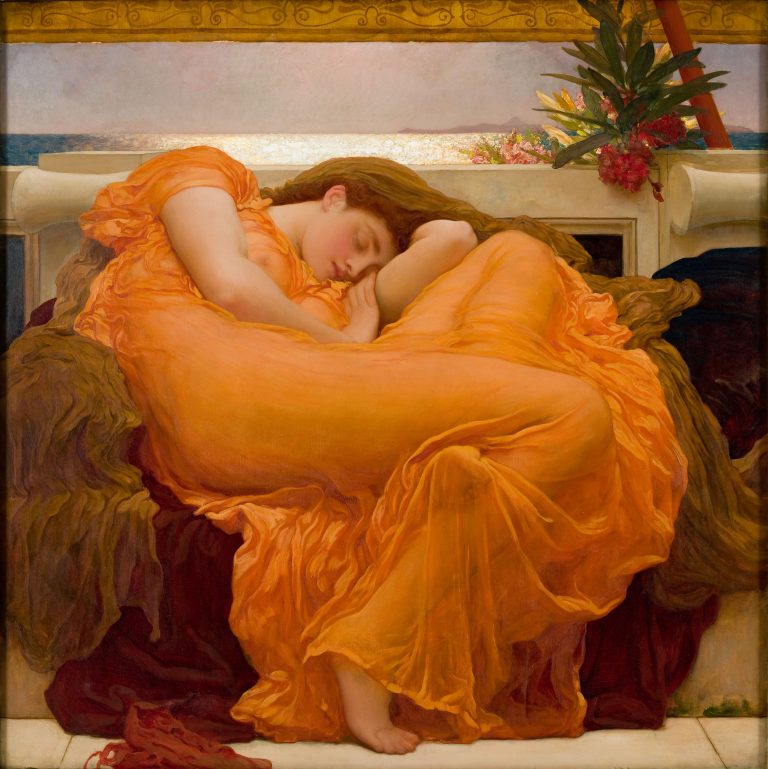
Frederic Leighton,
Flaming June,
1895
From the 20th Century to Now
In the 20th century, everything changes.
Alfons Mucha, poster king of Art Nouveau, was inspired by actress Sarah Bernhardt. His female figures wear flowing, decorative gowns — almost mystical, full of floral curves and intricate patterns.
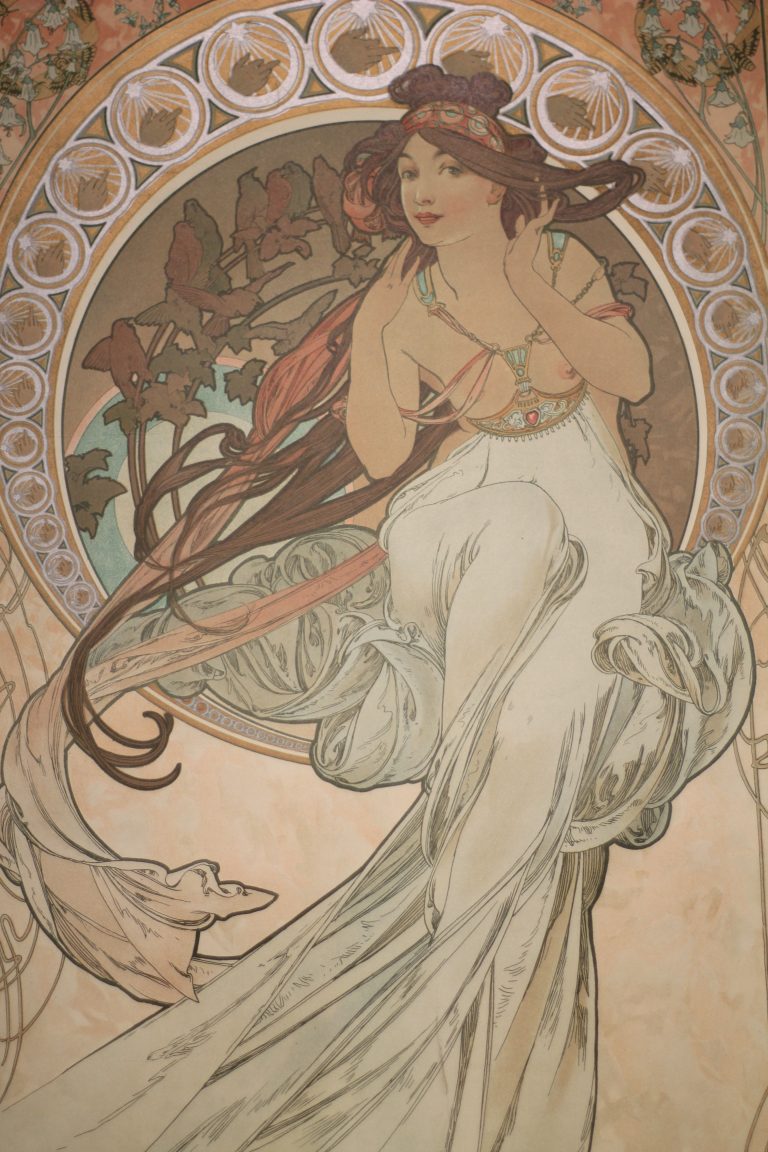
Alfons Mucha,
Art Nouveau Illustration,
c.1900
Then there’s Klimt. His Portrait of Adele Bloch-Bauer I — also known as The Lady in Gold — turns a dress into a mosaic. It’s not just fabric anymore, it’s pure symbolism. Klimt blends figure and pattern into a golden vision that feels part Egyptian, part Byzantine, all brilliant.
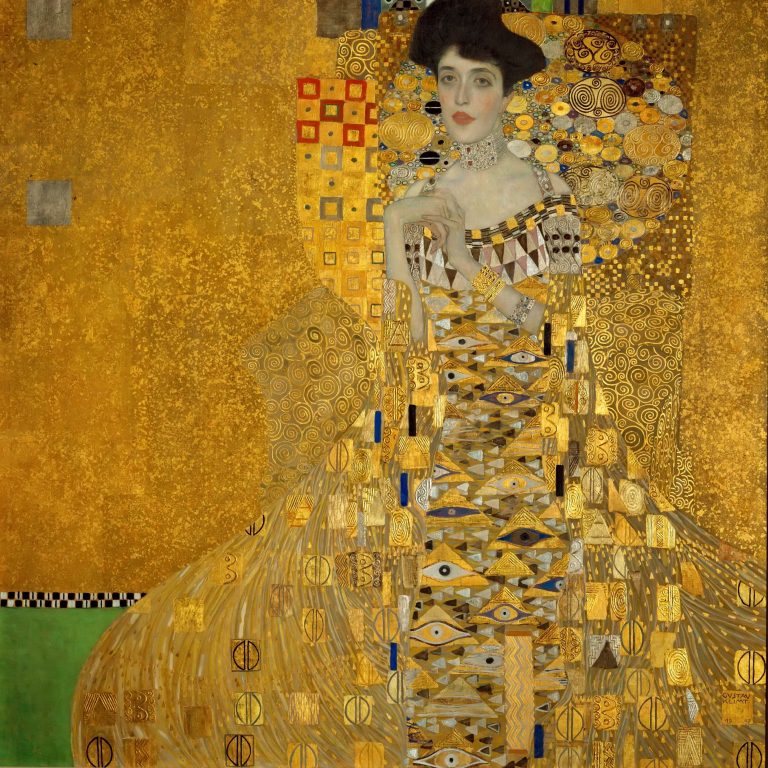
Gustav Klimt,
Portrait d’Adele Bloch-Bauer I (The Lady in Gold),
1907
Hermen Anglada Camarasa’s Woman from Granada (c. 1914) explodes with color — bold flowers on rich purple fabric, a blend of Spanish tradition and the influence of Diaghilev’s Russian Ballet.
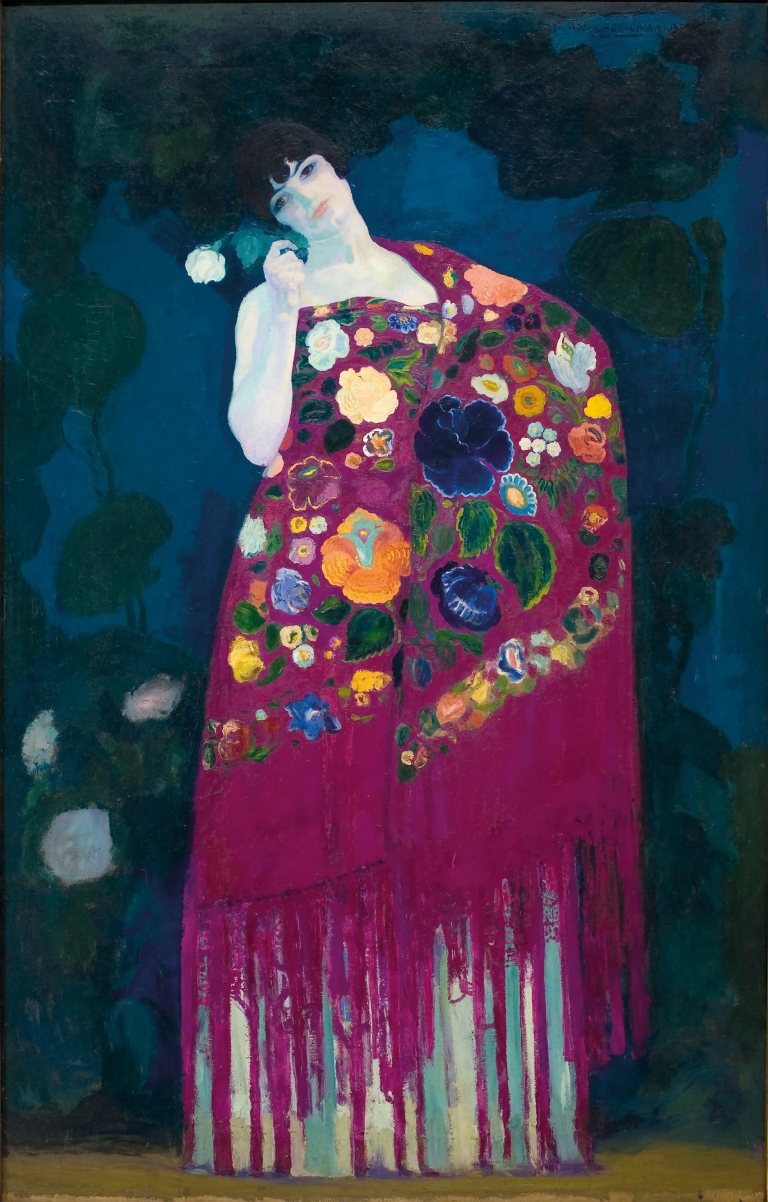
Hermen Anglada Camarasa,
Woman from Granada (Granadina),
c.1914
Tamara de Lempicka gives us angular, sculptural glamour. In Young Girl in Green, the folds of the dress shine like chrome — Art Deco in fabric form.
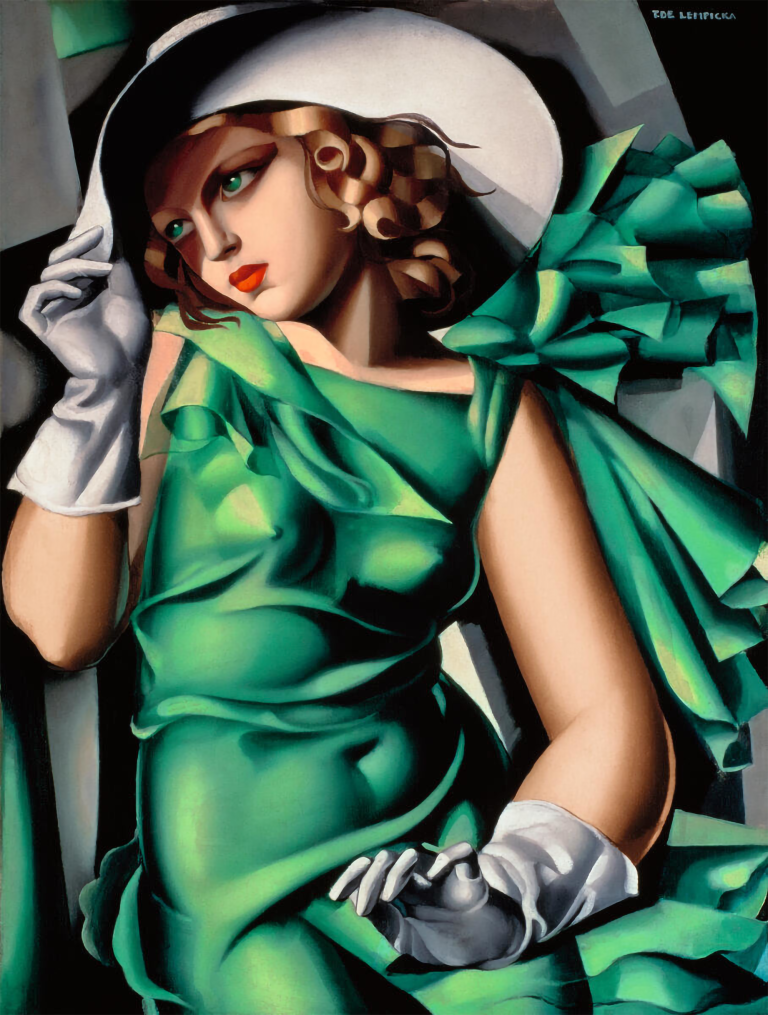
Tamara de Lempicka,
Young Lady with Gloves (Young Girl in Green),
1927
Meanwhile, Otto Dix captures the gritty fashion of 1920s Germany in Metropolis, showing how style shifted with society after World War I. Shorter dresses, bolder looks, harsher truths.
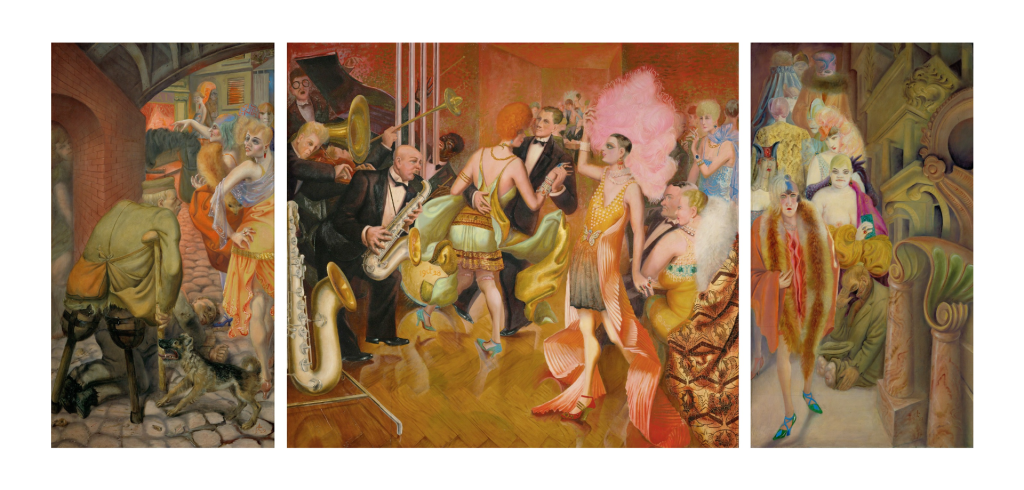
Otto Dix,
Metropolis,
1928
Matisse takes it even further — not realism, but color and form. Dresses become abstract expressions of mood and modernity. Fashion changes too: corsets disappear, patterns go wild, silhouettes loosen up.
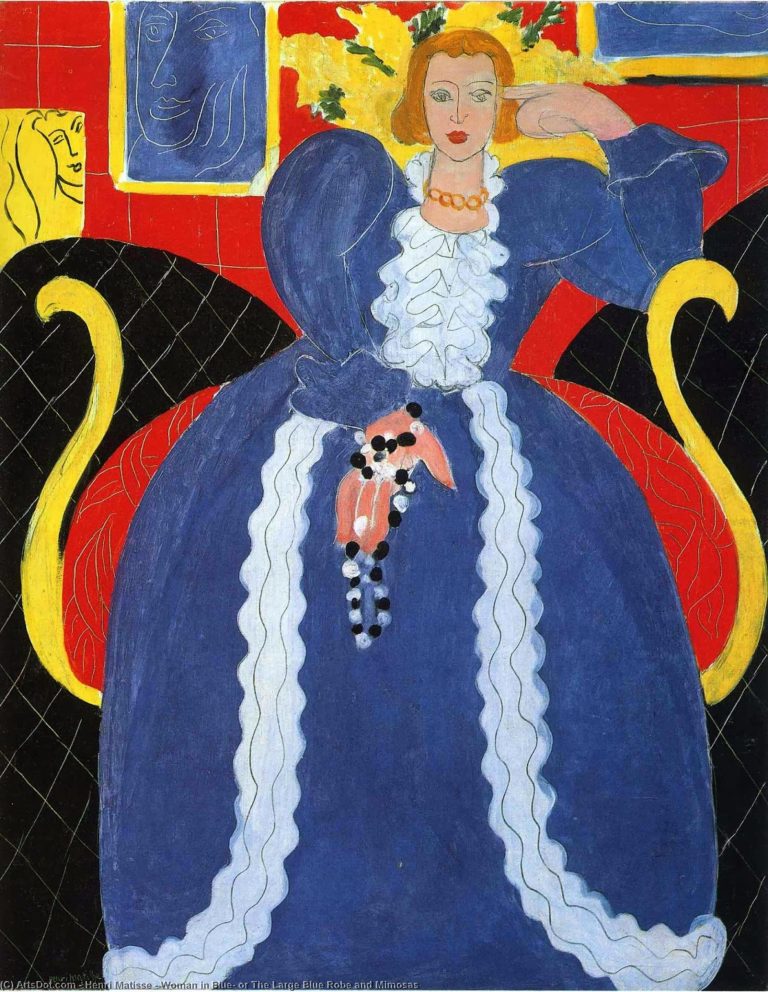
Henri Matisse,
Woman in a Blue Dress,
1937
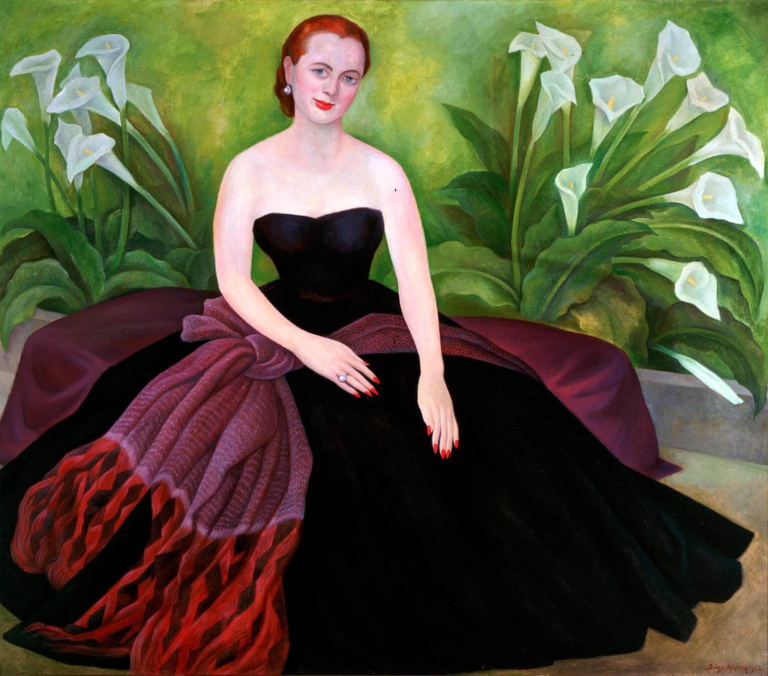
Diego Rivera,
Retrato de la señora Amparo Rugarcía de Espinosa,
1952
By the 1950s, dresses in painting mostly fade away. The art world was embracing abstraction, and photography and fashion illustration were now the go-to mediums for capturing clothes.
Still, some contemporary artists bring them back — with a twist.
Kehinde Wiley reimagines classic portraits, like Princess Victoire of Saxe-Coburg-Gotha, but with modern Black subjects in powerful poses and dramatic outfits. Amy Sherald paints Michelle Obama in a bold, graphic gown — contemporary, striking, unforgettable.
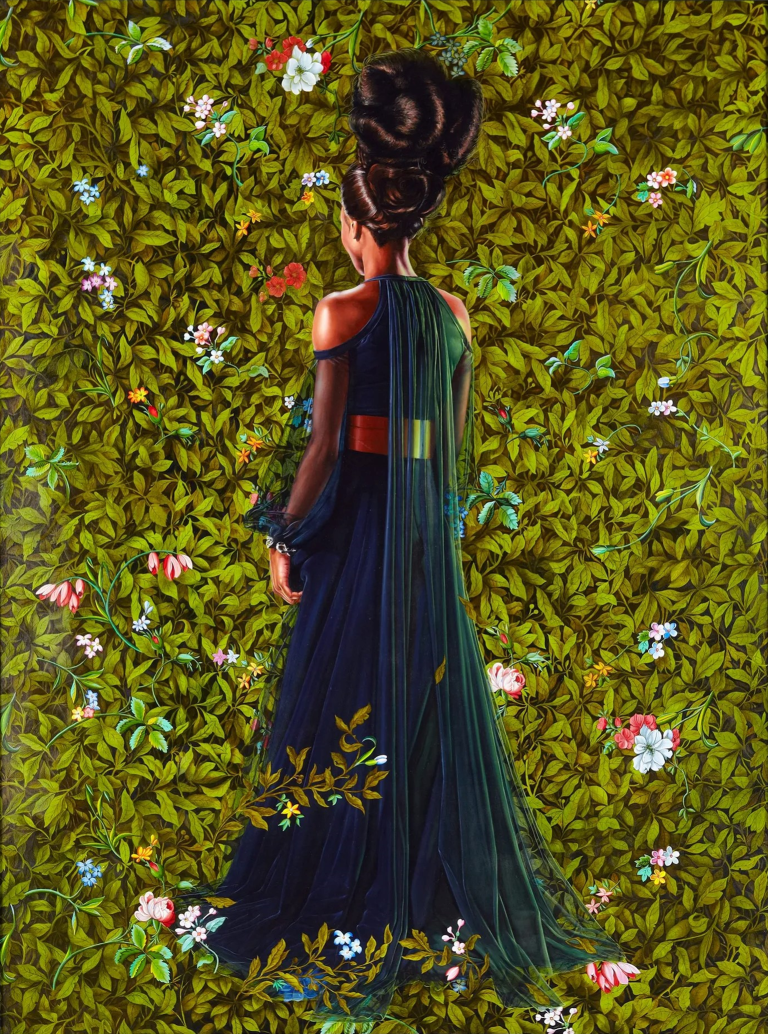
Kehinde Wiley,
Princess Victoire of Saxe-Coburg-Gotha,
2012
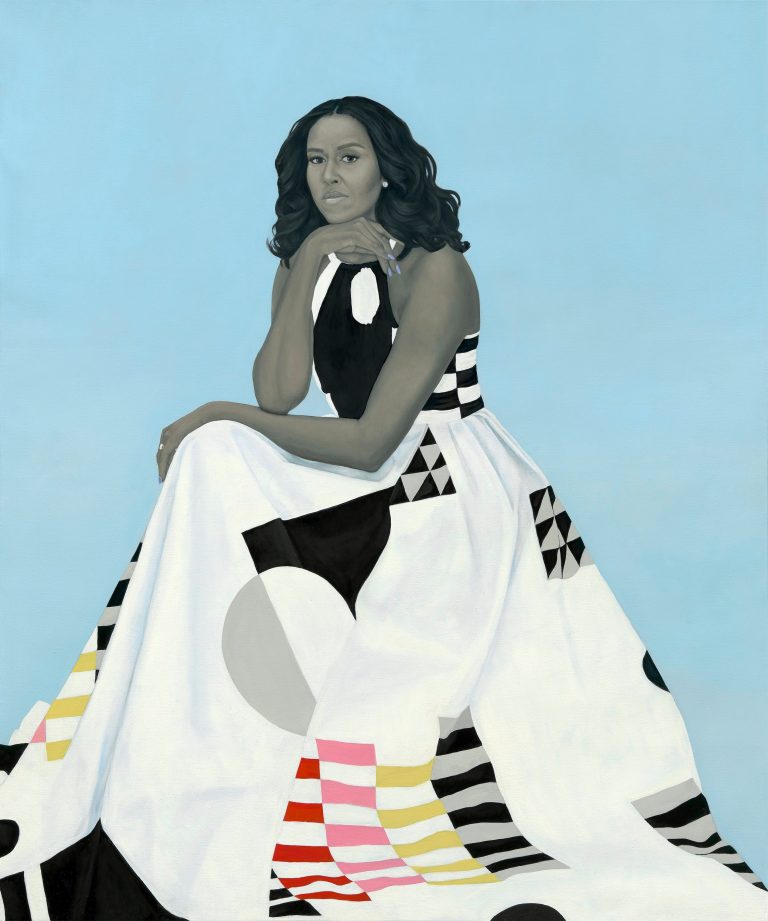
Amy Sherald,
First Lady Michelle Obama,
2018
In the End...
Dresses in art aren’t just beautiful — they’re layered with meaning. they reveal power, individuality, and history. Whether they conceal or highlight, each dress carries a deeper meaning.
So… which painting had your favorite dress? Let me know in the comments — and don’t forget to check out the full video on YouTube for even more stunning dresses and hidden stories.
Sources
Books
-
Symboles et Allégories, Hazan
- Le Petit Larousse des symboles
Web
Artnews, Wikipedia, Google Arts & Culture, Museum websites