
Have you ever gazed at the stars and wondered about the stories they tell? Long before astrology apps and Instagram horoscopes, artists from various cultures were already capturing the zodiac in their paintings, sculpting planets, and embedding celestial secrets in their works. Today, we’re exploring the fascinating connection between western astrology and art!
👉 Watch the complete video on YouTube.
WHATS IS THE ZODIAC ?
To start, let’s quickly revisit what the zodiac actually is. The word “zodiac” comes from the Latin zodiacus, derived from the Greek zōdion, meaning “little figure of an animal.” Interestingly, over half of the zodiac constellations resemble animals.
The zodiac is a belt-shaped region of the sky aligned with the ecliptic, the sun’s apparent path throughout the year. It’s divided into twelve sections, each named after a constellation: Aries, Taurus, Gemini, etc. In astrology, these signs are linked to specific dates, personality traits, and meanings, helping to interpret how celestial bodies influence our lives based on their positions.
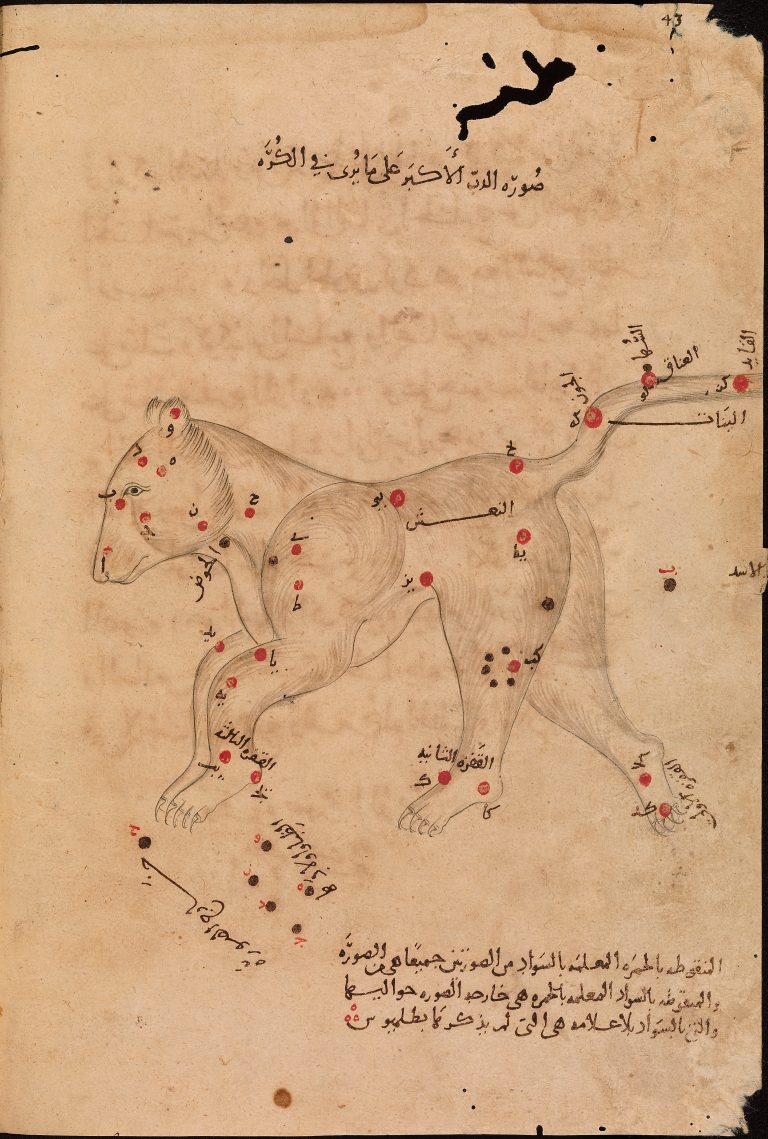
Abd al-Rahman al-Soufi,
The Great Bear, in The Book of Fixed Stars,
c.964
ANCIENT BEGINNINGS
Humans have always observed the stars, but Babylonian astrology, emerging in the second millennium BCE, was the first organized system. In Babylon and Assyria, it was used by priests to interpret the gods’ will. By the 16th century BCE, astrology was widespread, as seen in the Enuma Anu Enlil, a collection of celestial omens.
In ancient Egypt, the Zodiac of Dendera is one of the earliest depictions of astrology, with 12 zodiac signs carved into a stone ceiling. This includes symbols still in use today, like Leo as a lion and Taurus as a bull, as well as “Serpentarius,” a possible 13th sign.
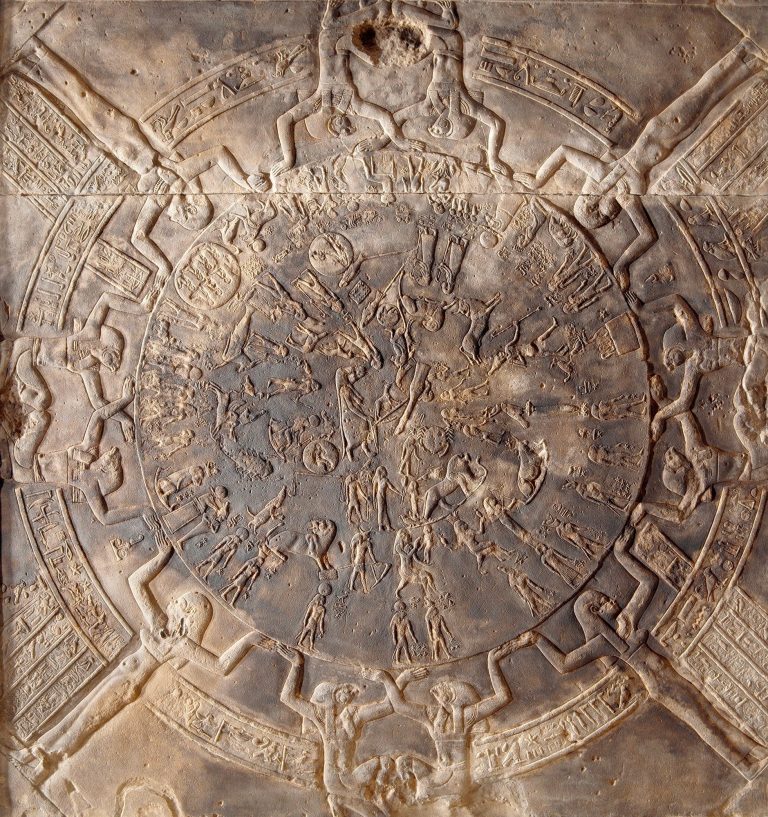
Anonymous,
Dendera zodiac,
c.50 BCE
By the 5th and 4th centuries BCE, Jewish synagogues like the Hammat Tiberias or Tzippori featured mosaics blending astrology and religion, with zodiac signs linked to Hebrew months and Helios, the sun god, at the center.
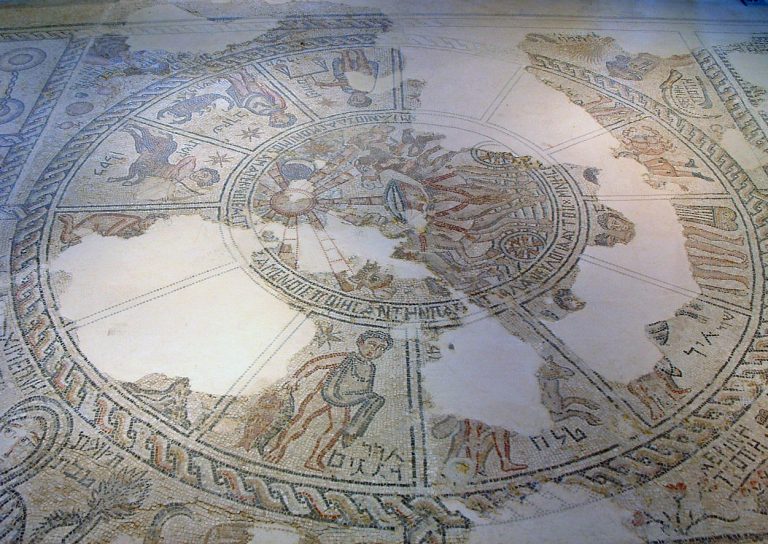
Anonymous,
Mosaic floor, Tzippori (Sepphoris) synagogue, Israel,
6th century CE
ASTROLOGY AS A GUIDE
In the Middle Ages, astrology was closely linked to medicine, religion, and agriculture. It arrived in Western Europe in the 12th century through Spain, where Arabic and Jewish scholars preserved and expanded on ancient knowledge.
One notable example is the Otranto Zodiac, one of the largest zodiac mosaics, with twelve circles depicting the zodiac signs and the monthly tasks of everyday people. It holds moral and social meaning, highlighting manual labor as both punishment and spiritual redemption. The design also reflects Islamic mosaic patterns, though the Arabic characters are decorative.
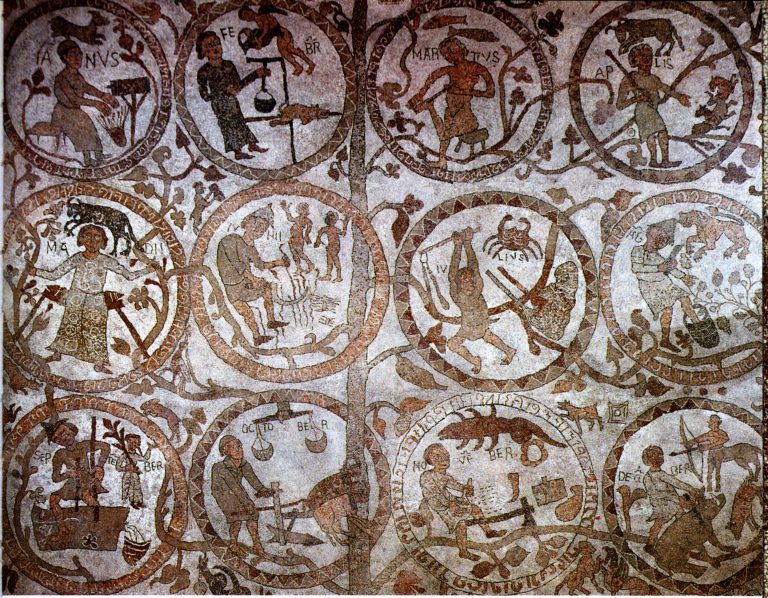
Anonymous,
Mosaics in Otranto Cathedral,
1163-1166
In France, Chartres Cathedral features a stained glass window pairing zodiac signs with agricultural activities for each month.
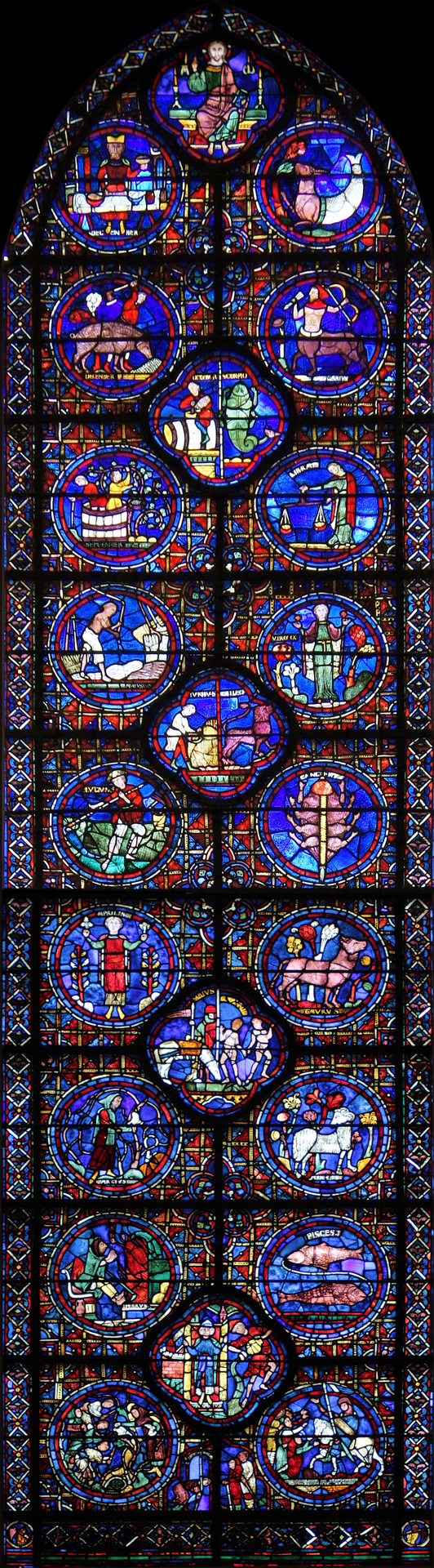
Anonymous,
Zodiac Stained Glass (Chartres),
1217-1220
By the 14th century, astrology was taught at European universities, and by the 15th century, artists in Florence began integrating astrology more precisely in their works. The Medici family used astrological imagery for public image and protection, a practice also adopted by the Pazzi family.
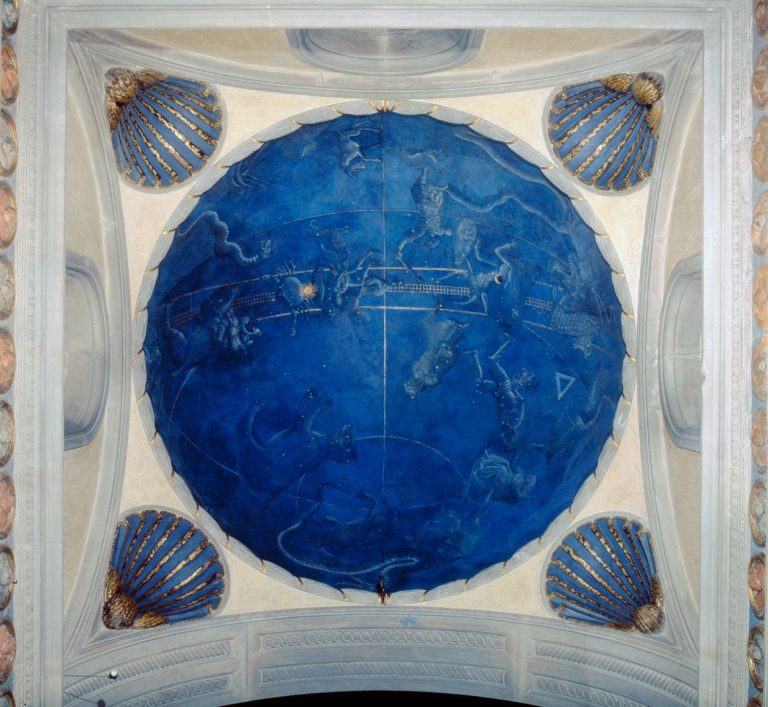
Giuliano d’Arrigo, aka Pesello (attr.),
smaller dome above the altar,
Old Sacristy of San Lorenzo,
Florence,
1422-1439
The Très Riches Heures du Duc de Berry features zodiac signs and planetary alignments alongside daily life scenes. These illuminated manuscripts guided farming, rituals, and royal decisions. A “Zodiac Man” in the book linked body parts to zodiac signs, influencing medical treatments.
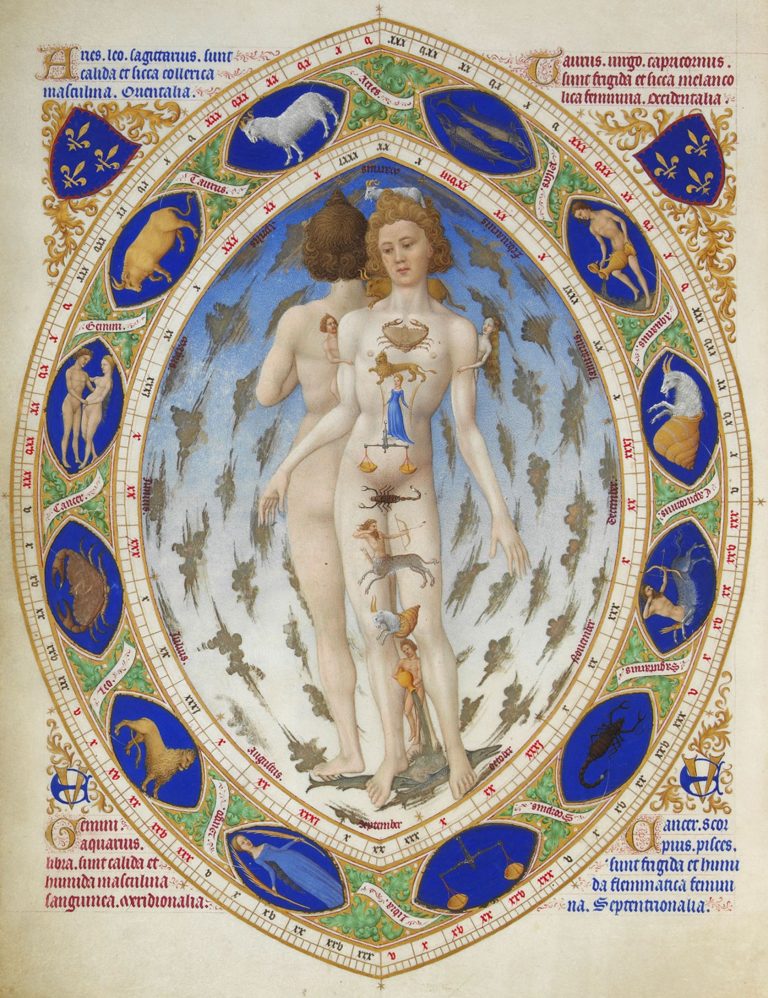
Limbourg brothers,
Zodiacal Man in The Très Riches Heures du Duc de Berry,
1411-1489
Astrology also appeared in architecture, like the Prague Astronomical Clock, built in 1410. The clock’s zodiac ring tracks the Sun’s position, reflecting medieval beliefs in astrology and astronomy as interconnected. It represents the mystical order of the universe and the power of Prague.
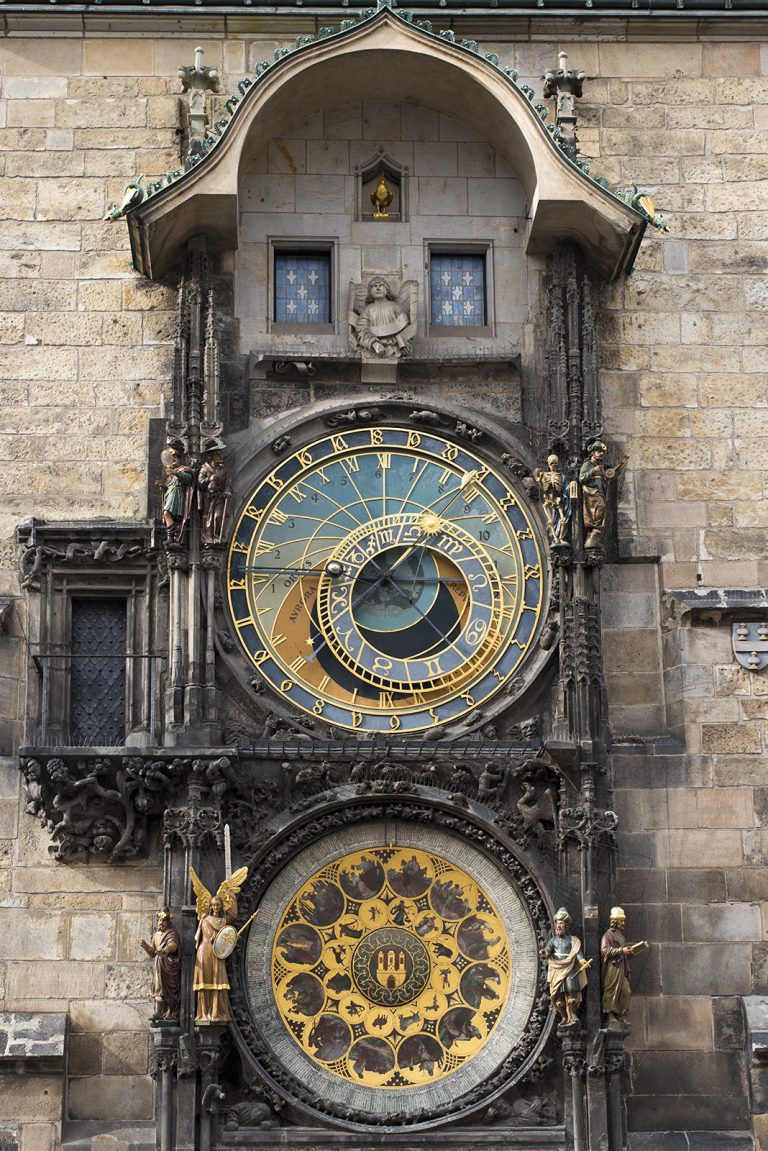
Mikuláš of Kadaň and Jan Šindel,
Prague astronomical clock,
1410
ASTROLOGY AS A POWER SYMBOL
During the Renaissance, astrology became a symbol of power. It was no longer just for prediction but offered a complete worldview, influencing personal matters, politics, medicine, and agriculture.
Its symbolic richness inspired artists and architects, with zodiac motifs appearing in buildings and artworks. Raphael’s Allegory of Astronomy shows the sky on October 31, 1503, the day Giuliano della Rovere became Pope Julius II, linking the artwork to the concept of the “Primum Mobile,” the outermost sphere of the cosmos.
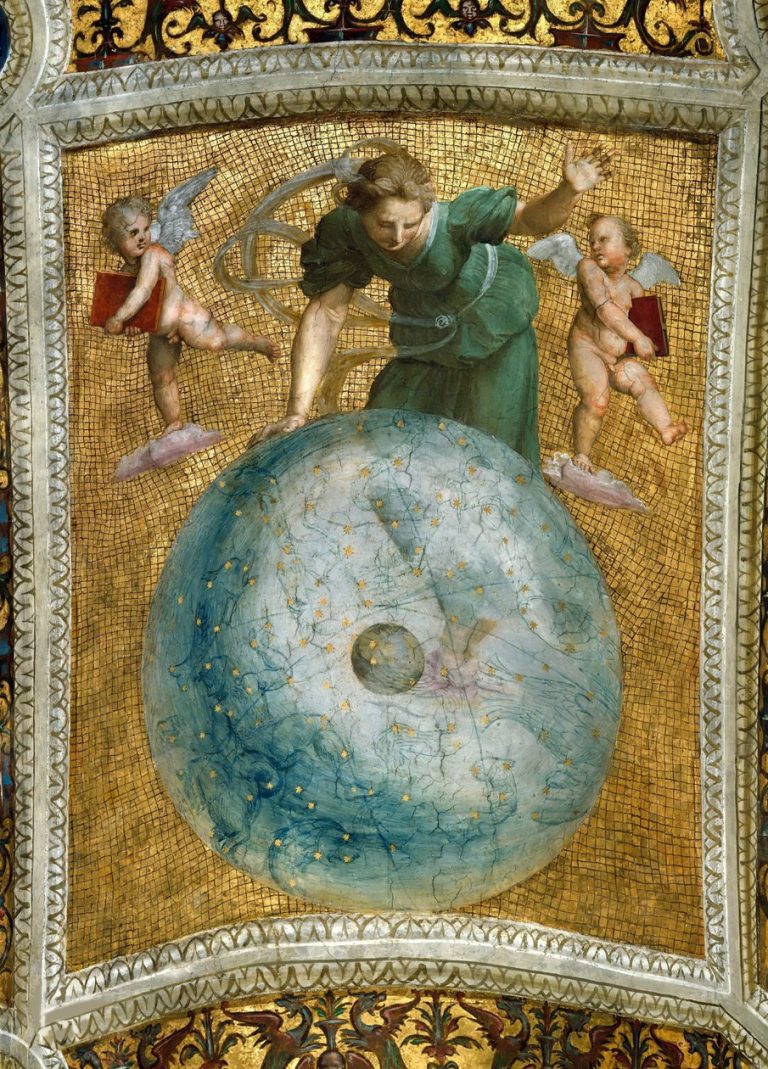
Raphael,
Astronomy, The Primum Mobile, Ceiling Fresco in Stanza della Segnatura, Apostolic Palace, Vatican Museums,
1508
In Venice, the Torre dell’Orologio (Clock Tower), built in 1499, features a zodiacal clock displaying time, the moon phases, and the zodiac signs. Like Prague’s clock, it symbolized Venice’s power and knowledge.
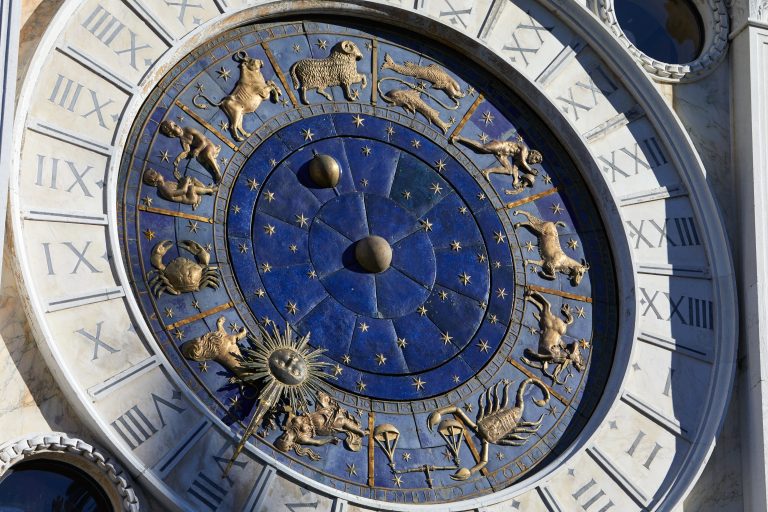
Giampaolo Rainieri,
St Mark’s Clocktower, Venezia,
1496-1499
In Rome, Pope Alexander VI Borgia commissioned Pinturicchio to decorate the Hall of the Sibyls, featuring planetary children, gods, and zodiac signs, symbolizing astrological influence.
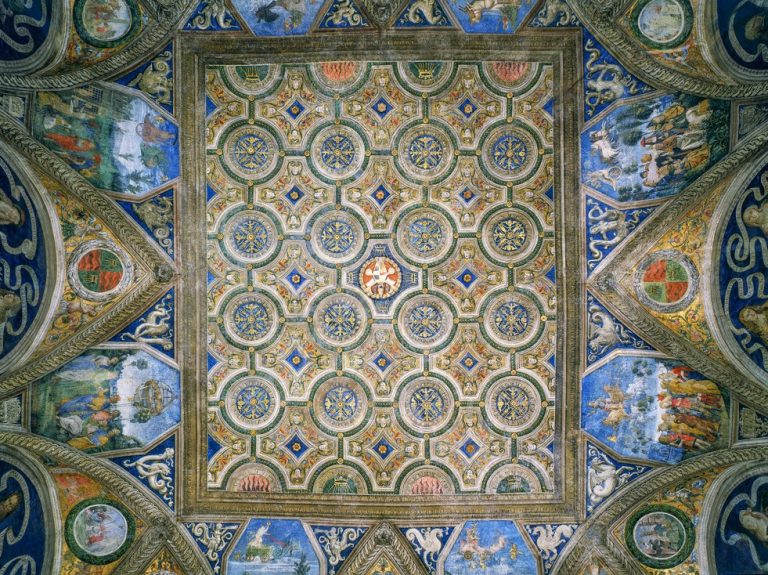
Pinturicchio,
Hall of the Sibyls in the Borgia Apartments,
1492-1494
The Zodiac Room in the Ducal Palace of Mantua, decorated in 1579-1580, features Diana’s chariot among the zodiac signs, reflecting the Duke’s horoscope.
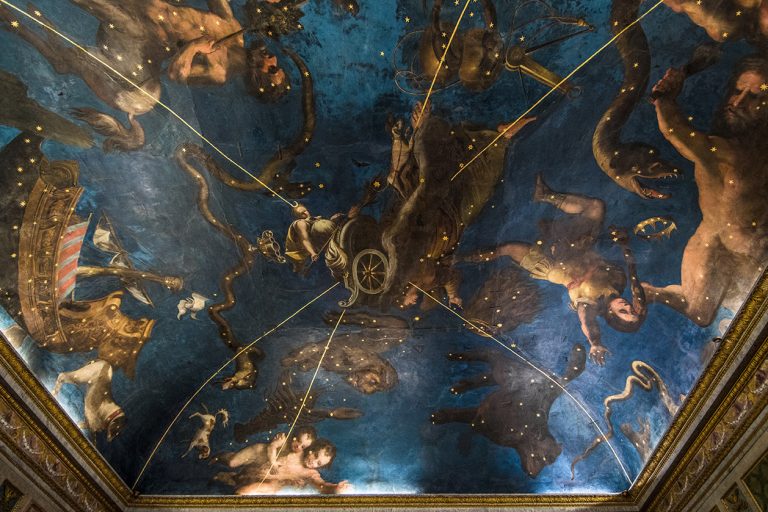
Lorenzo Costa the Younger,
Hall of the Zodiac in the Ducal Palace, Mantua,
1579
The Farnese Palace Zodiac Room (1573-1575) showcases a celestial map with gold stars and zodiac signs, highlighting the astronomical knowledge of the time. This room later inspired Pope Gregory XIII to commission the Vatican’s Hall of Maps.
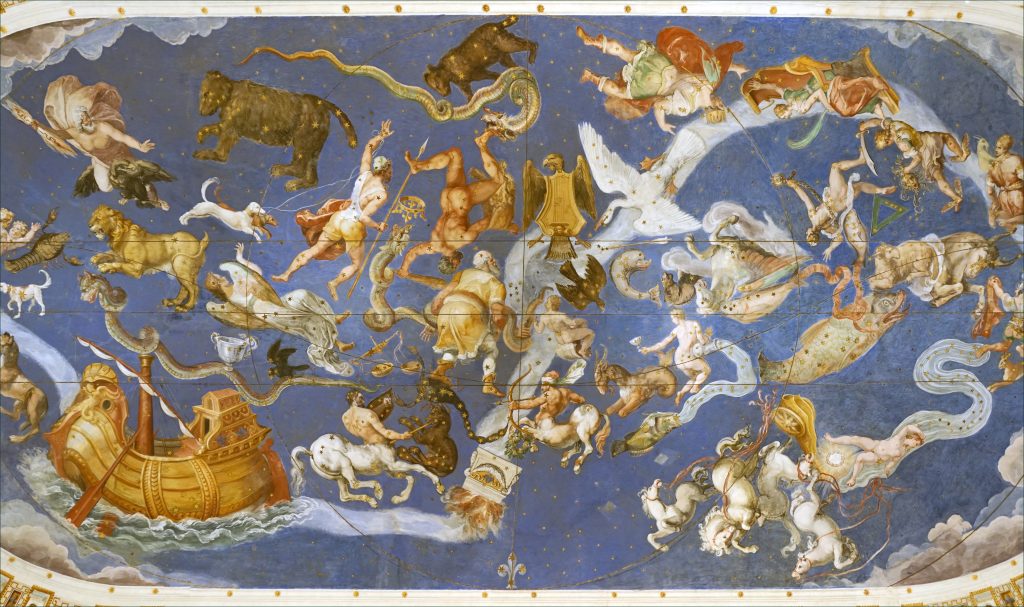
Giovanni De’ Vecchi and Raffaellino da Reggio,
Hall of Maps in Villa Farnese,
1573-1575
THE HIGHEST SPHERES OF POWER
In the 17th century, astrologers held significant positions in European courts, advising rulers on matters like politics and military strategy. Marie de’ Medici, a strong believer in astrology, relied on it, which later contributed to the discipline’s discrediting.
Astrology also played a prominent role in the arts, particularly in decorative programs. At the Luxembourg Palace, commissioned by Marie de’ Medici, Peter Paul Rubens created a series of twenty-four paintings depicting her life, with many references to astrology. The zodiac circle appears in The Apotheosis of Henry IV and The Proclamation of the Regency of Marie de’ Medici, reinforcing the divine legitimacy of her regency.
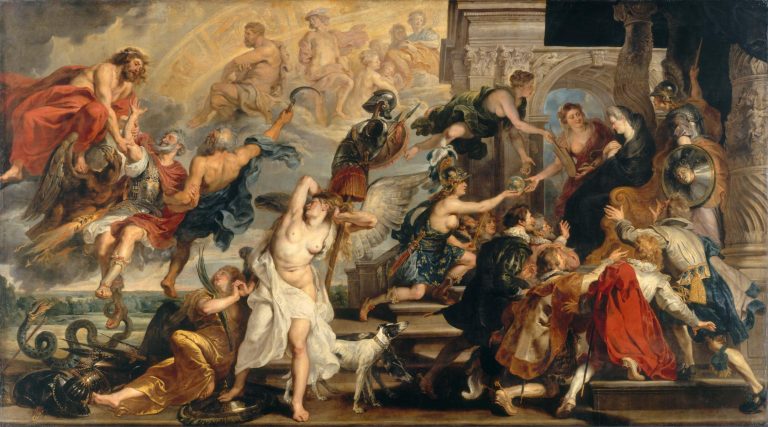
Peter Paul Rubens,
The Apotheosis of Henry IV and the Proclamation of the Regency of Marie de Médicis on May 14,
1610
At the same palace, Jacob Jordaens painted a zodiac cycle of twelve allegorical works around 1640 for his private residence.
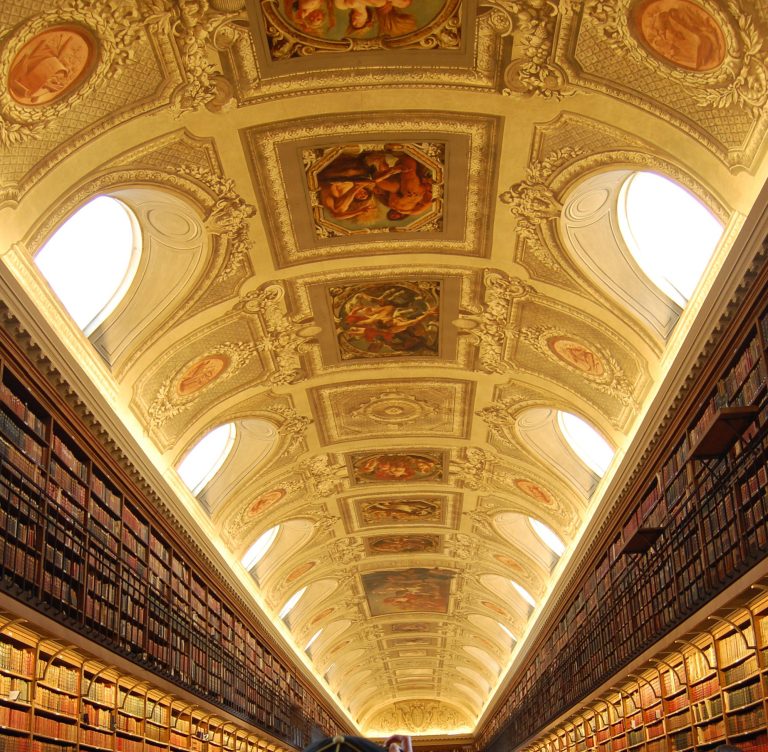
Jacob Jordaens,
The Signs of the Zodiac,
1640
At the Louvre, Charles Le Brun’s Galerie d’Apollon features Apollo’s chariot across the sky, with symbols of time, seasons, zodiac signs, and continents. This cosmic order, driven by the sun, glorifies the power of the Sun King.
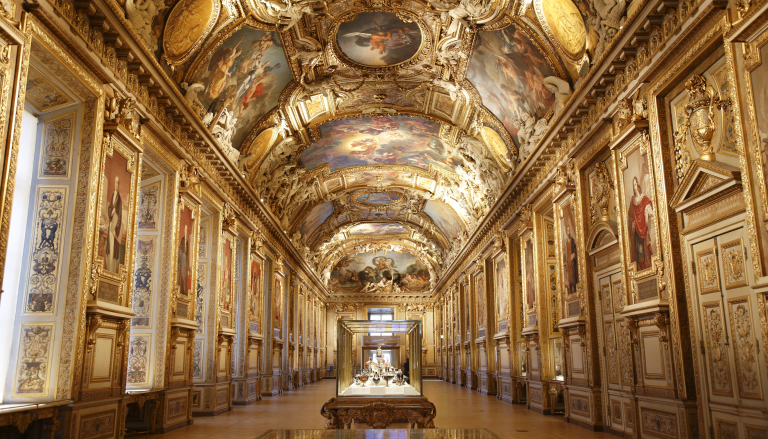
Charles Le Brun,
Galerie d’Apollon, Louvre, Paris
1663
ASTROLOGY VS SCIENCE
However, in the 17th century, there was an unprecedented enthusiasm for science, encouraged by European monarchs. Indeed, scientific advances, popularized by a lead, led to improvements in navigation, cartography, and the military field.
Both astrology and science relied on math, but they had very different goals: astrology looked for hidden, symbolic meaning in the stars, while science was all about observing nature and figuring out how it works.
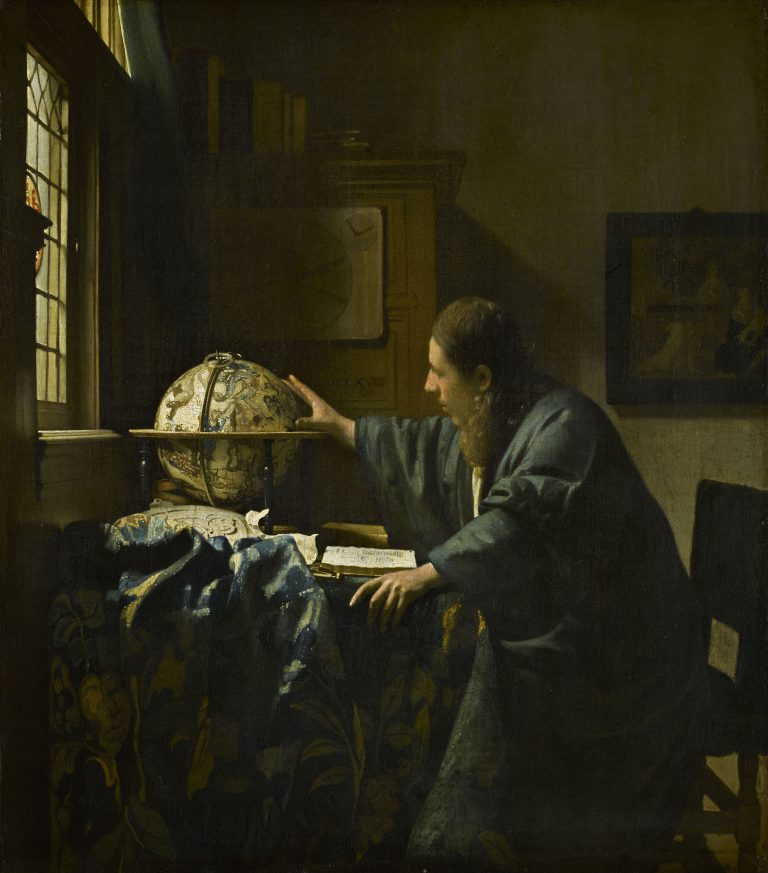
Johannes Vermeer,
The Astronomer,
1668
In the 16th century, Copernicus introduced the idea that the Earth moves around the Sun, challenging the long-held view of a fixed Earth at the center of the universe. Though heavily criticized at first, Copernicus’ theory was confirmed a century later by Kepler, Galileo, and Newton. It also undermined astrology’s core idea, since constellations turned out to be mere perspective illusions, not fixed cosmic patterns.
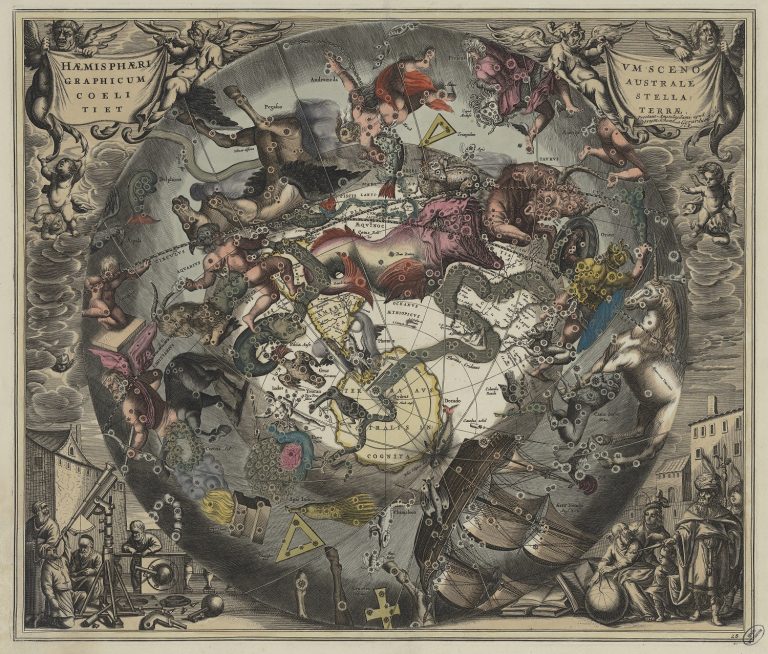
Andreas Cellarius,
Harmonia Macrocosmica,
1660
Even so, astrology actually boomed during the 17th century. The printing press helped spread almanacs and horoscopes everywhere, making astrology more popular than ever across all classes. The Shepherds’ Almanac was a huge hit throughout Europe.
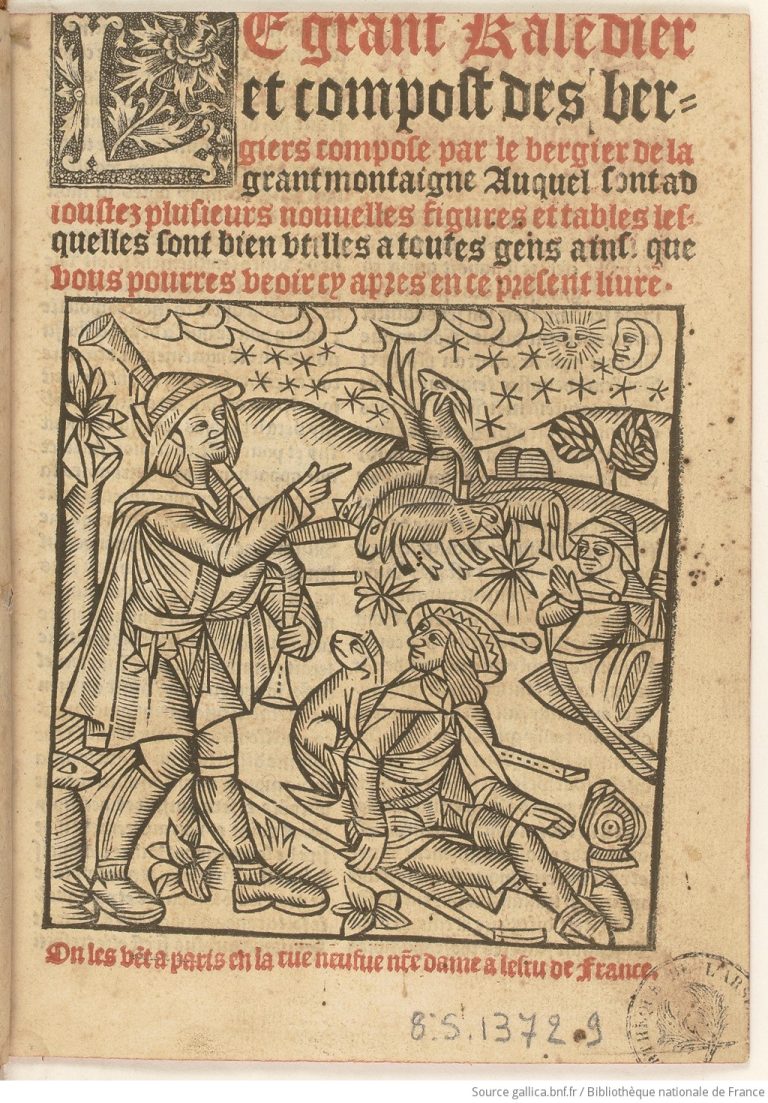
Anonymous,
Kalender of Shepherdes,
1512-1519
Meanwhile, zodiac symbols popped up in Eastern European synagogues, especially wooden ones. Because of religious rules, artists avoided full human figures and used symbolic shapes or gestures instead—still keeping astrology alive in a different form.
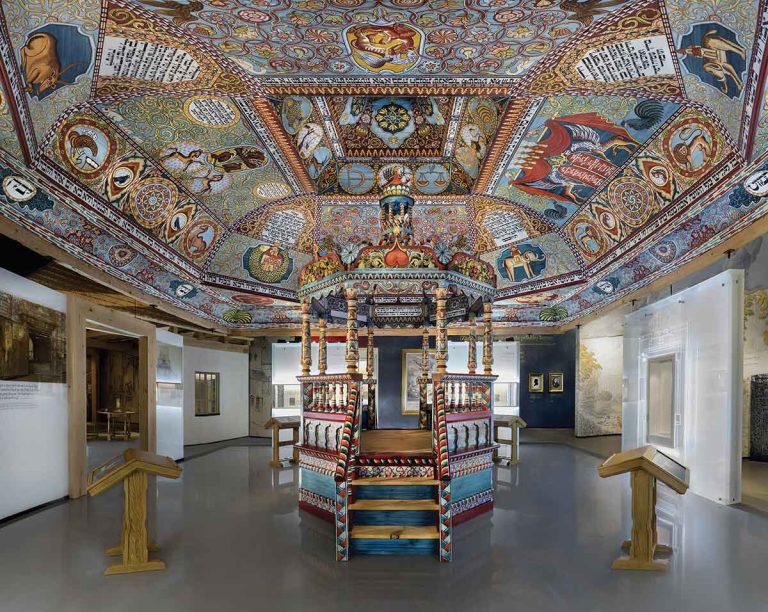
Anonymous,
Zodiac polychromies reproduced in the rebuilt Hvizdets synagogue ceiling,
c.1740
UNDER THE RADAR
In the early 17th century, astrology was still respected by scholars and tolerated by the Church. But scandals like Marie de’ Medici’s case and the Affair of the Poisons damaged its reputation, leading to its rejection by both religious and scientific authorities. Astrologers were pushed out of royal courts, and the discipline lost credibility.
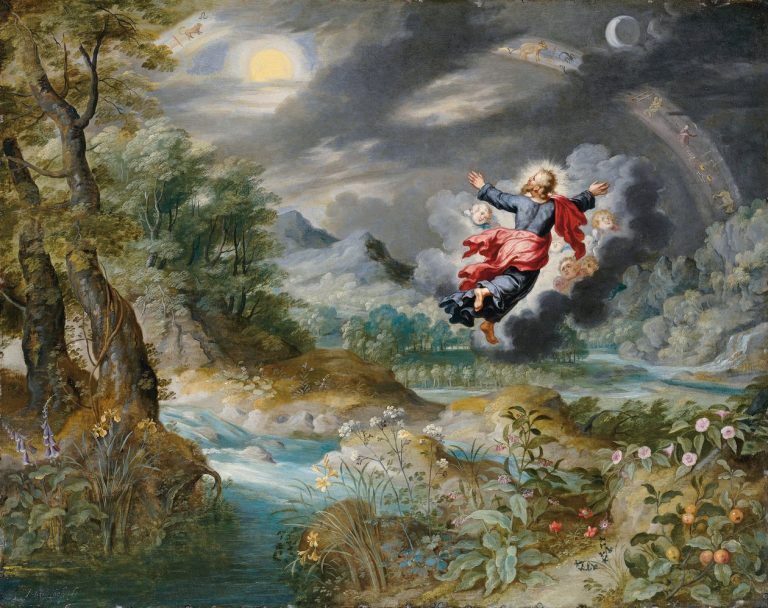
Jan Brueghel the Younger,
God Creating the Sun, the Moon and the Stars in the Firmament,
1650
Still, zodiac imagery remained popular in art, now more symbolic or decorative than rooted in belief. It became a private, aesthetic choice, as seen in places like the Zodiac Room of the Château de Long, blending astrology with genre painting styles of the time.
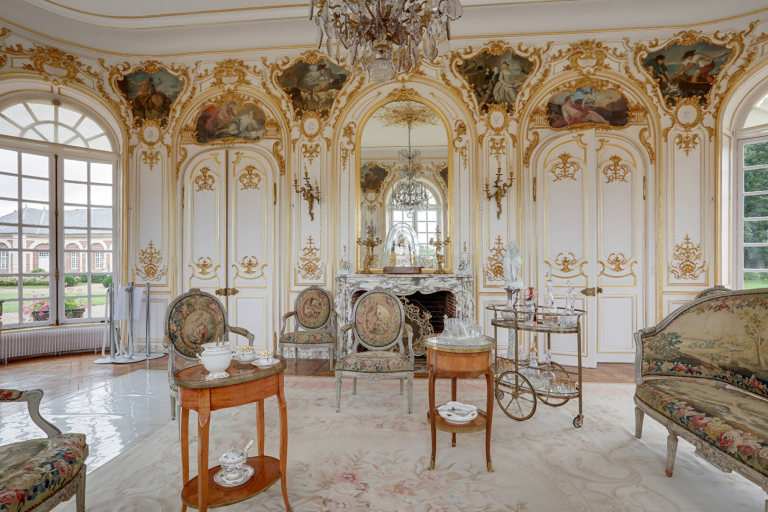
Anonymous,
Room of the Zodiac, Château de Long, Somme department, France,
c.1765
MODERN MYSTICISM
In the 19th century, astrology faded from the spotlight in art but didn’t vanish. It survived in two main areas. First, in Symbolist and esoteric art, with artists like Moreau and Khnopff weaving in zodiac and celestial references as part of a mystical, symbolic language. Second, in popular decorative imagery—posters, almanacs, and objects—where astrology became more playful or ornamental, as seen in Mucha’s famous Zodiac design.
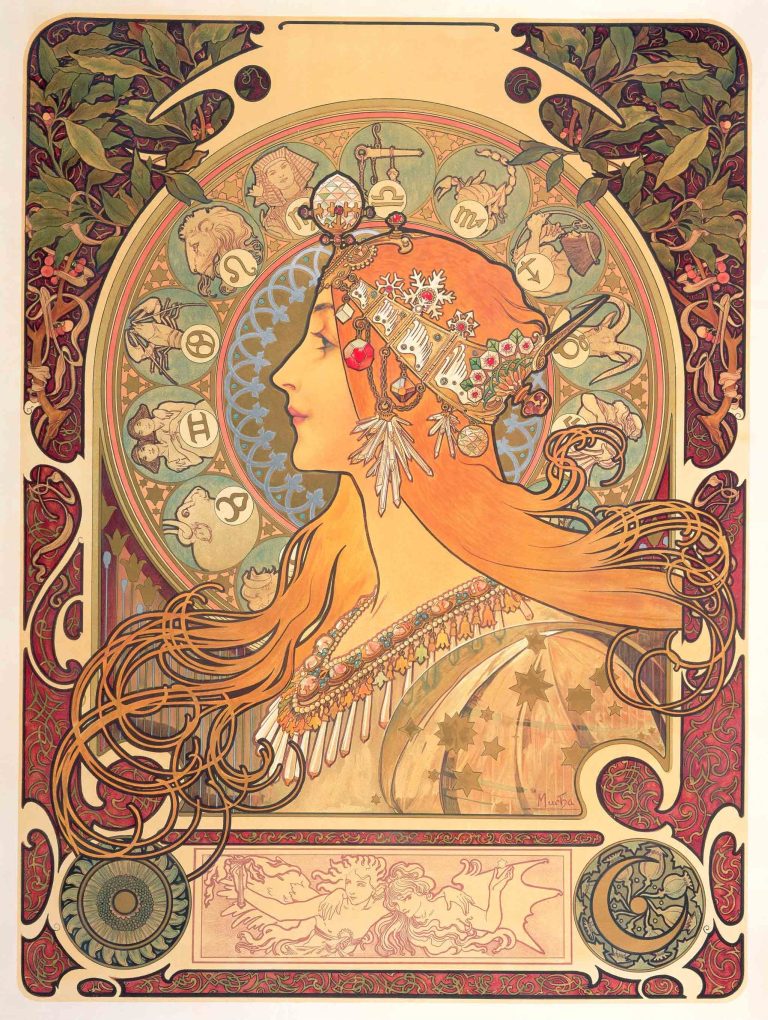
Alfons Mucha,
Zodiac,
1896
Astrology also left traces in architecture. Sargent’s mural Pagan Gods in the Boston Public Library includes the goddess Neith with a zodiac necklace. The Quirinal Palace’s Zodiac Room in Rome features starry ceilings and furniture themed around the zodiac signs.
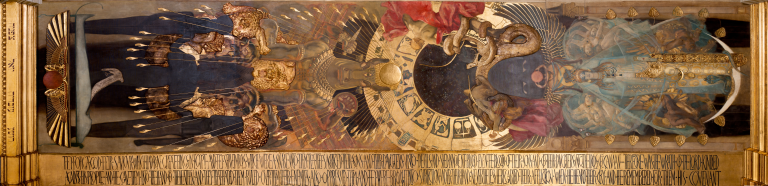
John Singer Sargent,
Pagan Gods pannel in The Triumph of Religion,
1895
By the early 20th century, artists explored astrology through both figurative and abstract forms. Ernest Procter leaned toward representational images, while Hilma af Klint used spiritual abstraction, blending symbols, spirals, and astrological signs. Paul Klee struck a balance between the two, hinting at the spiritual without being explicit.
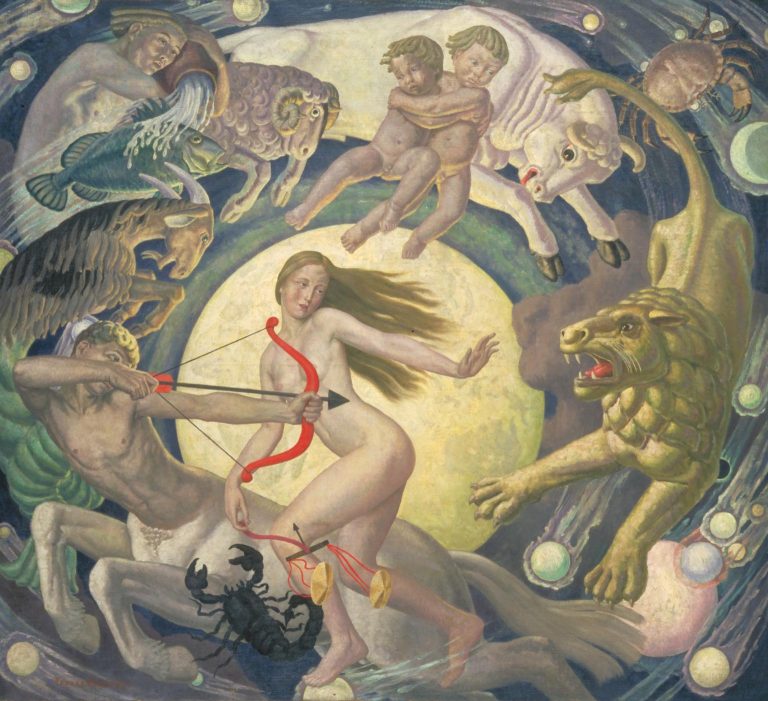
Ernest Procter,
The Zodiac,
1925
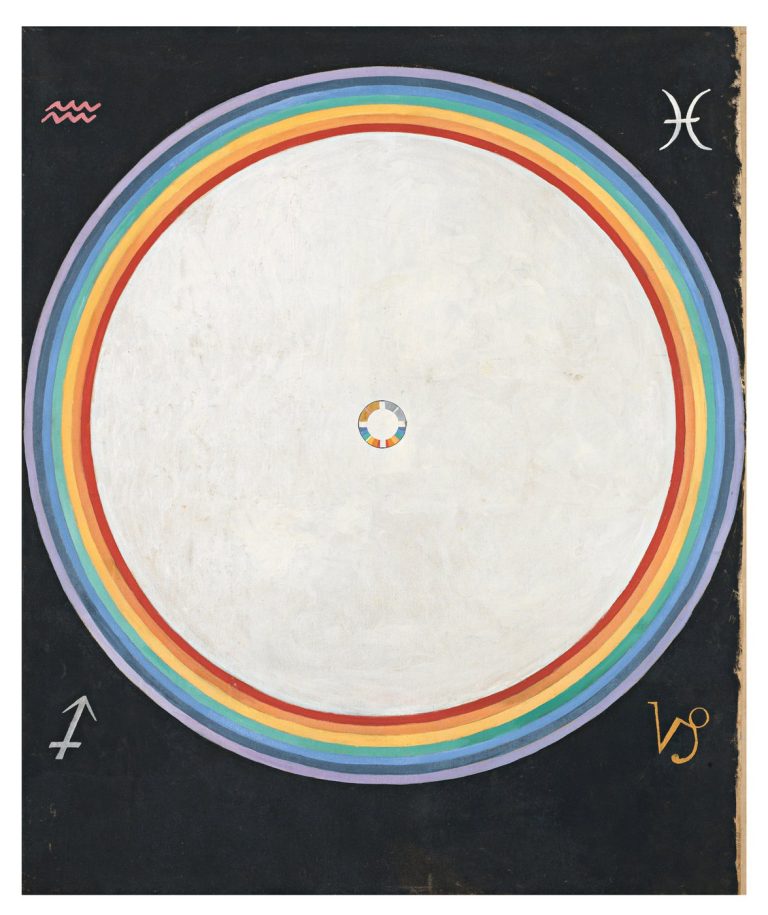
Hilma af Klint,
Group IX/UW, The Dove, No. 14,
1915
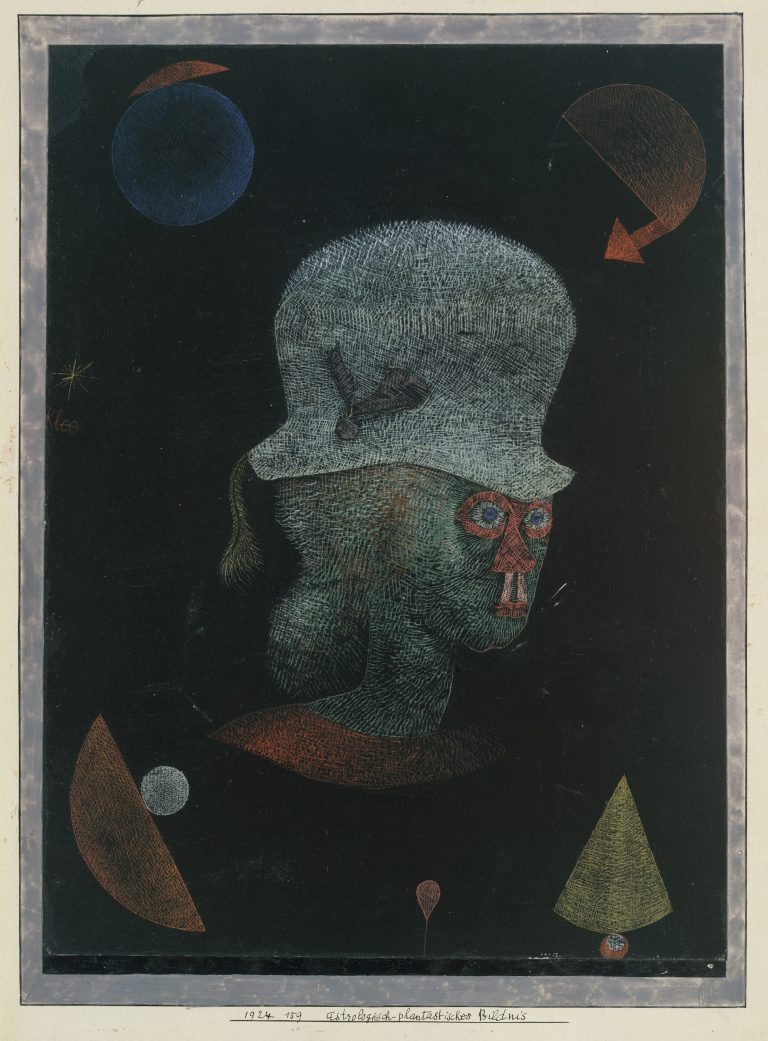
Paul Klee,
Astrological Fantasy Portrait,
1924
This era also saw the rise of modern planetariums, starting in 1923 with the Zeiss projector in Munich. These new spaces often included symbolic zodiac designs on their domes, continuing astrology’s visual presence in a cosmic setting.
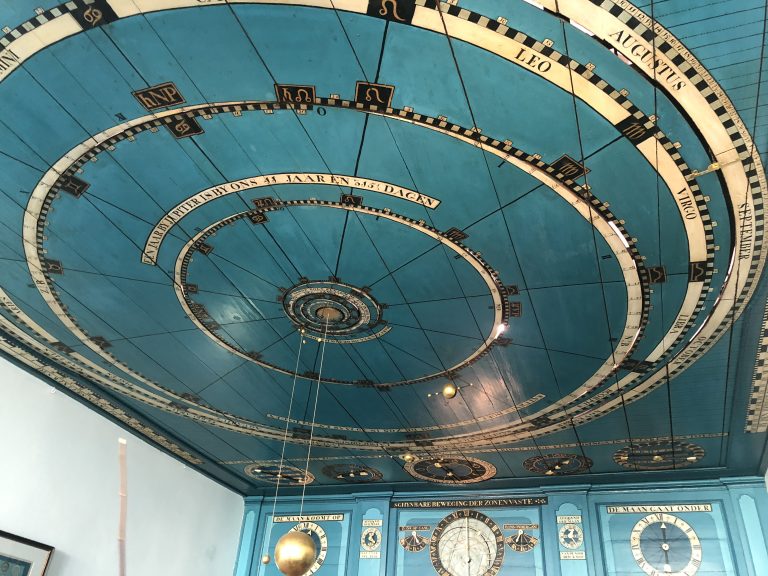
Anonymous,
Eise Eisinga Planetarium ceiling,
1781
At Palazzo Venezia in Rome, a celestial ceiling featuring golden zodiac signs circling a sun was added under Mussolini. This fascist-era restoration used astrological imagery to project cosmic authority, echoing medieval and Renaissance symbolism in a modern, stylized form.
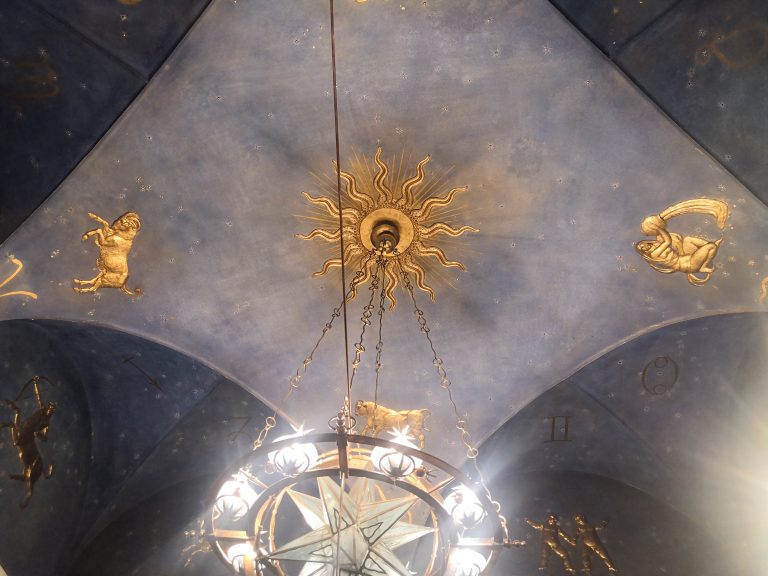
Anonymous,
Room of the Zodiac, Palace of Venice, Rome,
c.1920-1940
Artists across various movements also embraced astrology. Surrealist Joseph Cornell mixed star charts and zodiac signs into poetic assemblages. Betye Saar, blending mysticism and identity, used Leo motifs and spiritual symbols in her piece Mystic Window. Dalí reimagined the Zodiac in a surreal 1974 series, and Peter Max’s psychedelic posters brought astrology into pop culture in the 1970s.
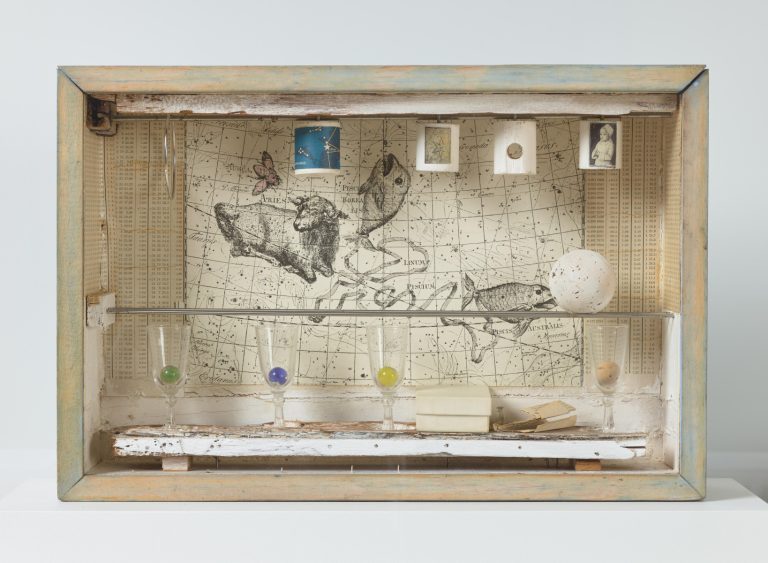
Joseph Cornell,
Untitled (Constellations),
1958
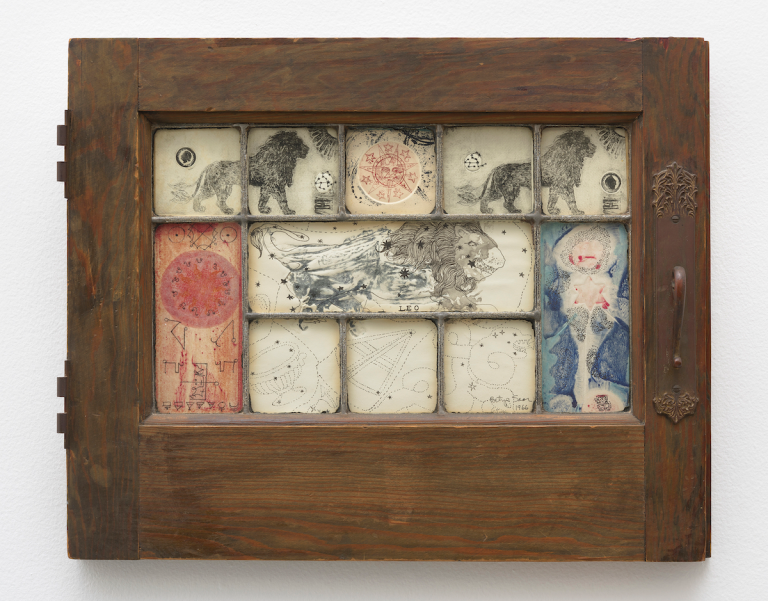
Betye Saar,
Mystic Window for Leo,
1966
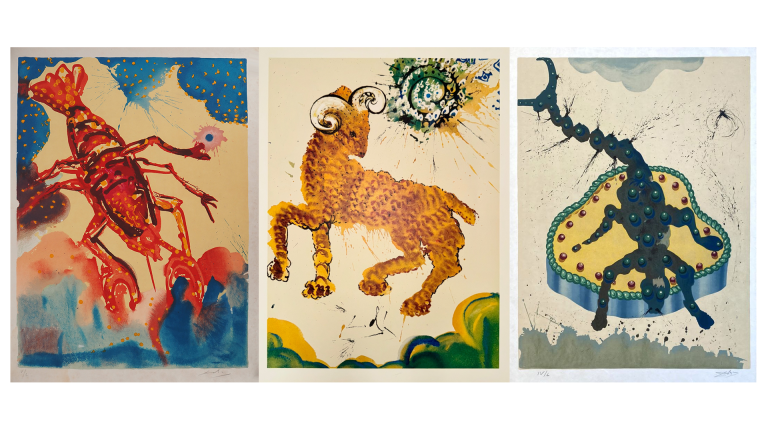
Salvador Dalí,
Zodiac engravings,
1967
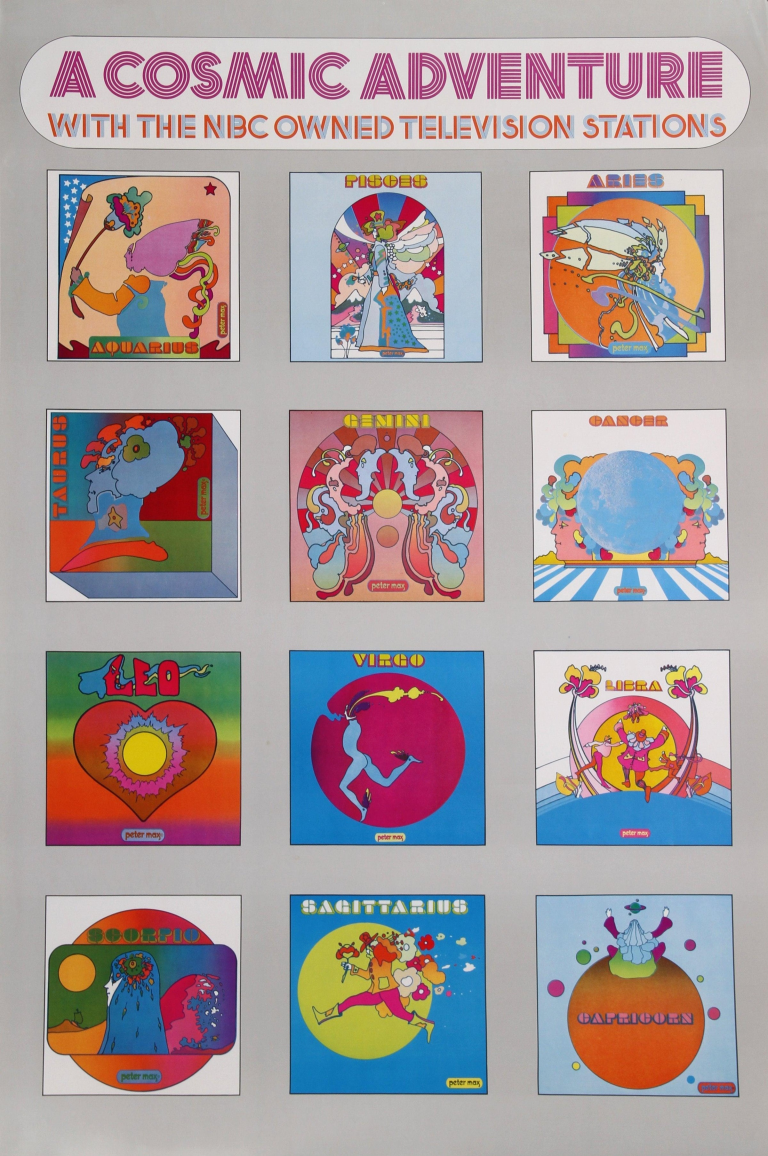
Peter Max,
A Cosmic Adventure (Astrological Signs),
c.1970
Later, artists gave astrological themes new personal and political dimensions. Martin Wong’s Gemini fused zodiac symbolism with intimate urban storytelling. Nolan Oswald Dennis created Ecliptic (Black Liberation Zodiac), reworking the Western zodiac with symbols of Black liberation, linking cosmic ideas to cultural resistance.
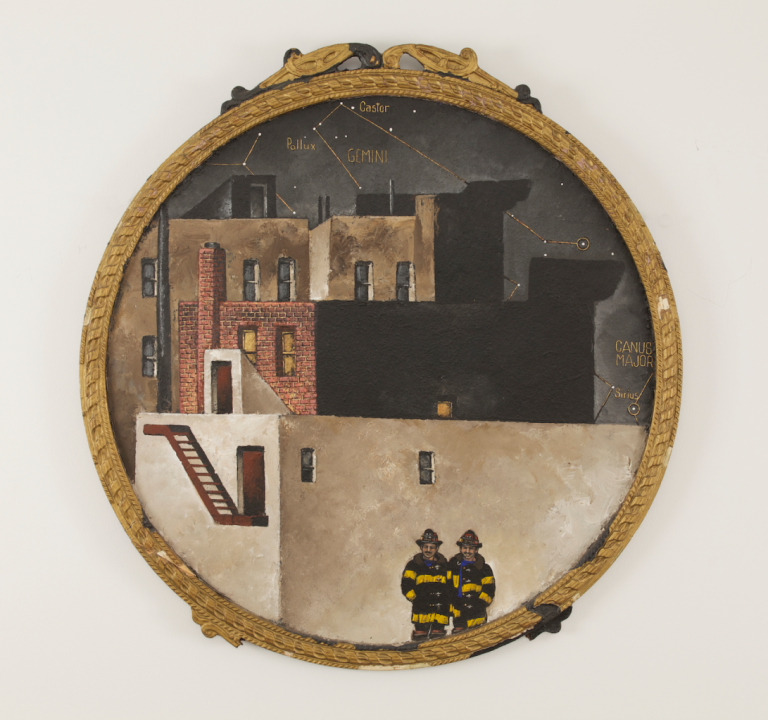
Martin Wong,
Gemini,
1985
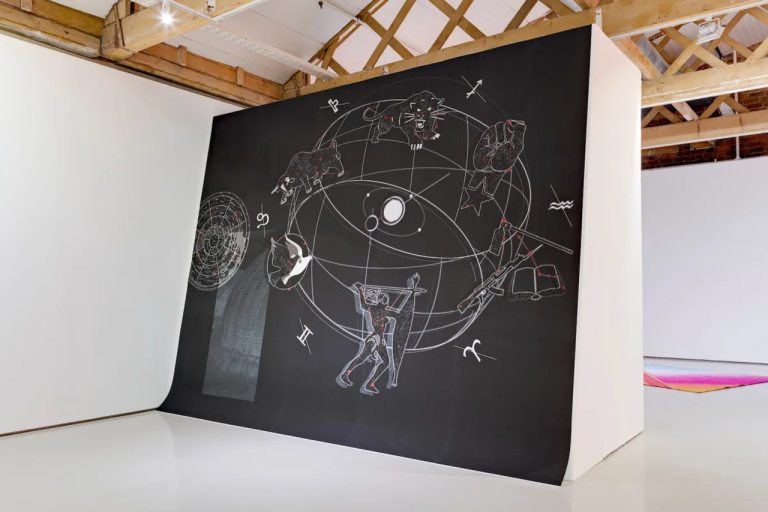
Nolan Oswald Dennis,
Ecliptic (Black Liberation Zodiac),
2017
In the End...
Today, artists are still reinventing astrology. The language of the stars is all around us! And that’s what makes astrology in art so captivating: it’s both universal and deeply personal.
So… what about you? Have you ever spotted your sign in a painting, a sculpture, or even a mural? Let me know in the comments — and don’t forget to check out the full video on YouTube for even more celestial artworks and hidden stories.
Sources
Books
Symboles et Allégories, Hazan
Mesures du temps et de l’espace, Office du Livre
Le Petit Larousse des symboles
General Articles on Astrology and Art
Artnews, Smithsonian Associates, New Acropolis Library, Artadvisor, Conceptual Fine Arts
Academic or Specialist Articles
Persée, Raphael Global Philosophy – PDF, DUMAS – Master’s Thesis, Cogent Arts & Humanities
Places and Artworks Related to Astrology or the Zodiac
Quirinale – Zodiac Room, Quirinale – Painted Zodiac, Quirinale – PDF, Très Riches Heures, Vatican Museums – Sibyls Room, Harmonia Macrocosmica, MET Museum, Château de Long, History of Château de Long, Palazzo Venezia – Mappamondo Room, Peter Max – Cosmic Adventure, Hammer Museum – Mystic Window for Leo, MoMA – Astrology and Art, Swiss Institute – Nolan Oswald Dennis, Grand Orrery – Wikimedia, Histories Arch – Twitter, DailyArt Magazine
Specific Works Mentioned
Lascaux cave paintings, Al-Sufi – Book of Fixed Stars, Brueghel – God Creating the Firmament, Mucha – Zodiac, Hilma af Klint – Paintings for the Temple, Gustave Moreau – Night, Horoscope drawing – Digital Commonwealth, Libra detail – Google Arts
Wikipedia (from general to specific)
Babylonian astrology, Zodiac, Zodiac signs, Enuma Anu Enlil, Book of Fixed Stars, Zodiac mosaics in ancient synagogues, Zodiac of Dendera, Hammath Synagogue, Tzippori Synagogue, Sepphoris, Otranto, Otranto Cathedral mosaic, Zodiac window – Chartres, Prague astronomical clock, Sagrestia Vecchia, Medici Chapels, Très Riches Heures (fr), Très Riches Heures (en), Borgia Apartments, St. Mark’s Clocktower, Kalender of Shepherdes, The Astrologer Who Fell into a Well, Johannes Hevelius, Ducal Palace – Mantua (fr), Palazzo Ducale – Mantova (it), Ducal Palace – Mantua (en), Palazzo Venezia, Federico Hermanin, Surrealism, Primum Mobile, Affair of the Poisons, Château de Long