

The human body is the oldest subject in the history of art. For tens of thousands of years, artists have stripped away the veil of clothing to reveal something deeper: a reflection of the soul, a mathematical ideal, or a social scandal. Across the centuries, the genre of the nude has functioned as a visual barometer for the shifting tides of Western morality and philosophy.
In this first part of our series, we trace the trajectory of the naked form from the dawn of civilization through the rigorous academicism of the 18th century.
👉 Watch the complete video on YouTube.
Prehistory and the Ancient World: The Nude as Power and Nature
The Dawn of the Figuration: Fertility and the Paleolithic
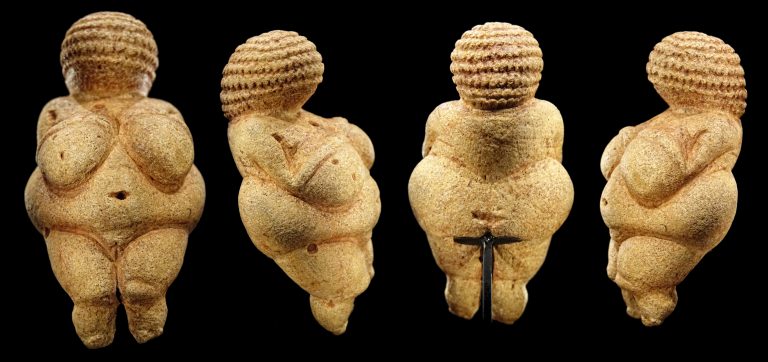
The story begins in the dark. Tens of thousands of years ago, in the Paleolithic era, the first representations of the human form were almost exclusively female and naked. These “Venus” figurines (such as the Venus of Willendorf) were not portraits of individuals. With their exaggerated breasts, hips, and bellies, they were symbols of fertility and survival. The nudity here is functional and sacred—it represents the life-giving force of nature.
Paleolithic,
Venus of Willendorf,
c. 30,000-20,000 BCE
Ancient Egypt: The Naturalistic Nude
In the Nile Valley, the climate dictated a different relationship with the body. To the Egyptians, nudity was not inherently shameful; it was a reflection of status and nature.
- Everyday Life: In tomb paintings, we see peasants, craftsmen, and fishermen depicted in their natural state of work.
- The Divine and the Royal: While pharaohs were often draped in symbolic linen, gods and goddesses frequently appeared semi-nude. Nudity here emphasized the perfection of the divine form, frozen in a rigid, eternal symmetry.
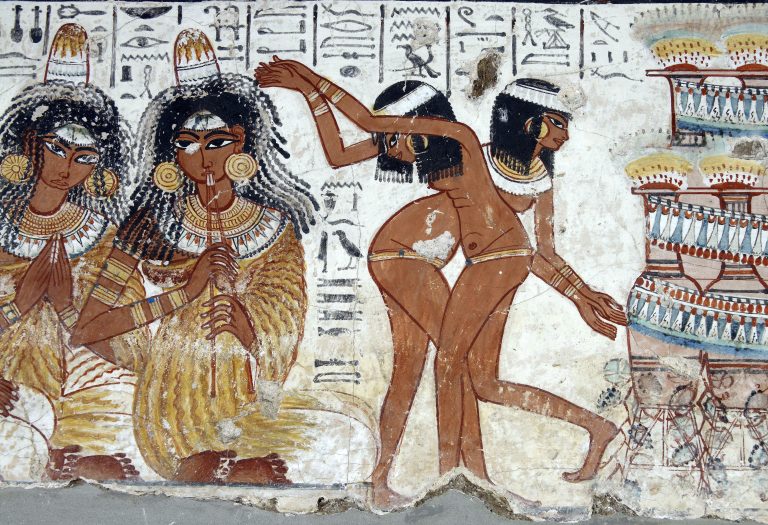
Ancient Egypt,
Musicians and dancers on fresco at Tomb of Nebamun,
c. 1420-1375 BCE
Ancient Greece: The Invention of the Ideal
It was in Greece that the nude became the “official” language of Western art.
- The Heroic Male: The Greeks viewed the male body as a manifestation of Arete (virtue). Athletes competed naked in the Olympic Games, and sculptors sought to capture this physical excellence. The transition from the rigid Kouros (Archaic period) to the fluid Contrapposto (Classical period) marked a revolution in anatomy, which ultimately evolved during the Hellenistic period into a style focused on heightened dynamism, complex torsions, and the expression of intense emotions.
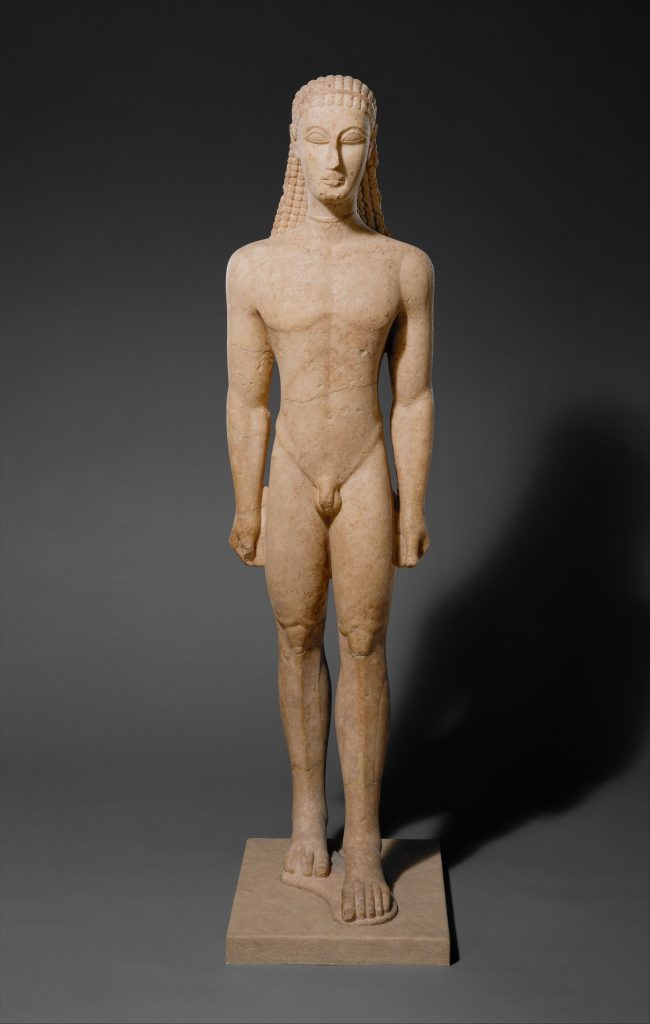
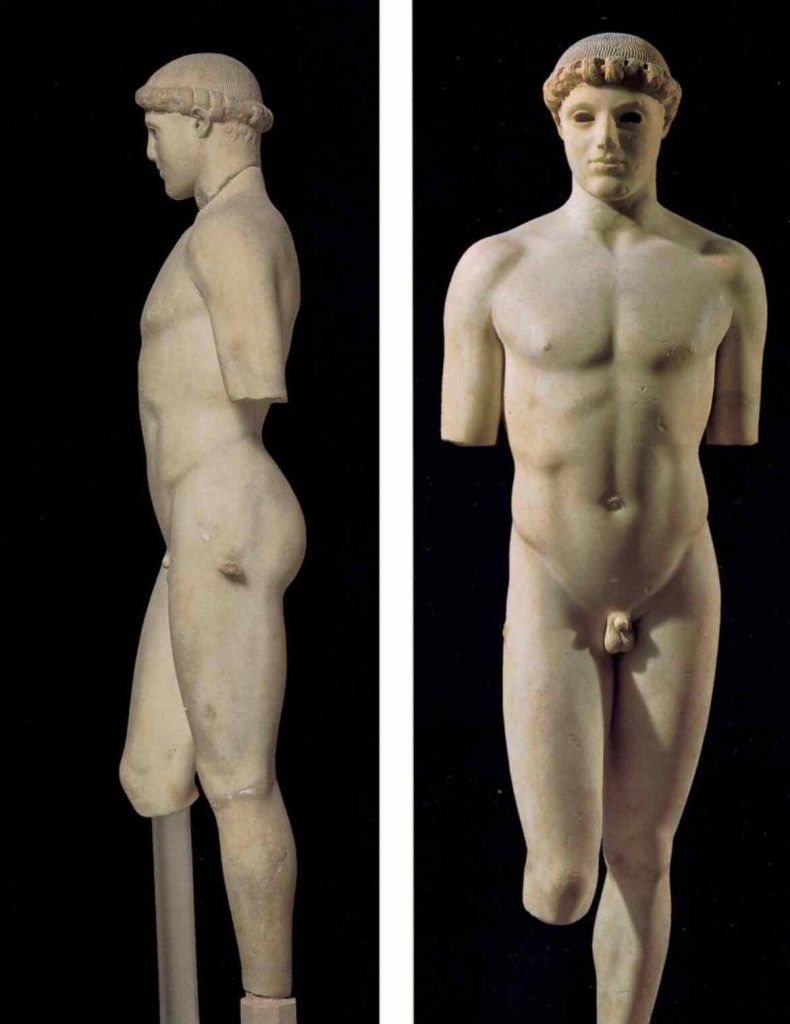
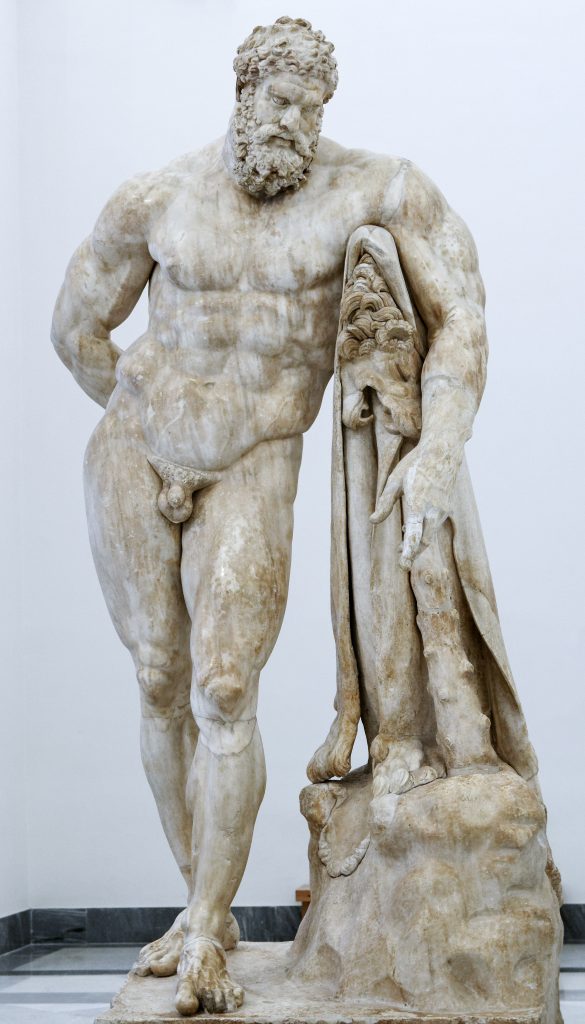
Archaic Greece,
Marble statue of a kouros,
c. 590–580 BCE
Classical Greece,
Ephebe of Kritios,
c. 480 BCE
Glycon of Athens,
Hercules Farnese,
3rd century
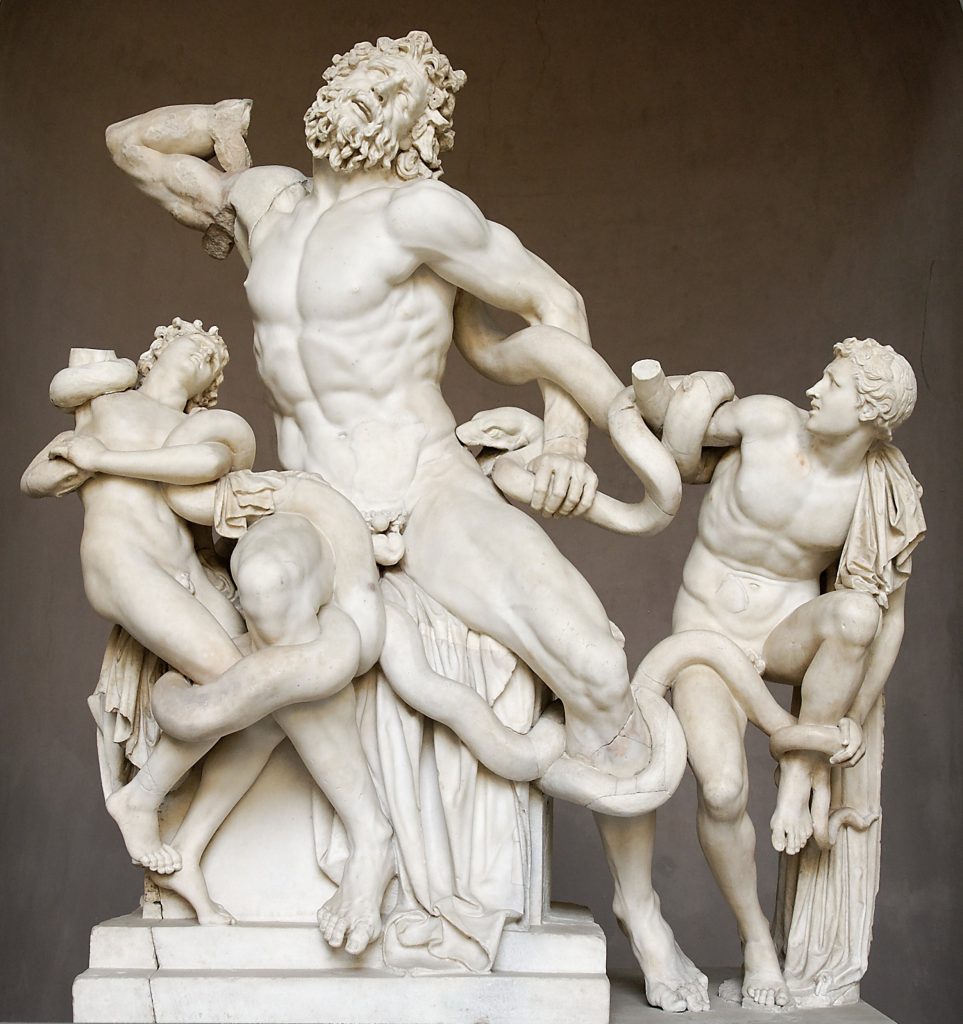
Laocoön Group, copy after an Hellenistic original from ,
c. 200 BCE
- The Discobolus by Myron: This work represents a milestone. For the first time, an artist captured a “pregnant moment”—the peak of tension before action. It was a coordinated dynamic effect that moved beyond static parts to a unified whole.
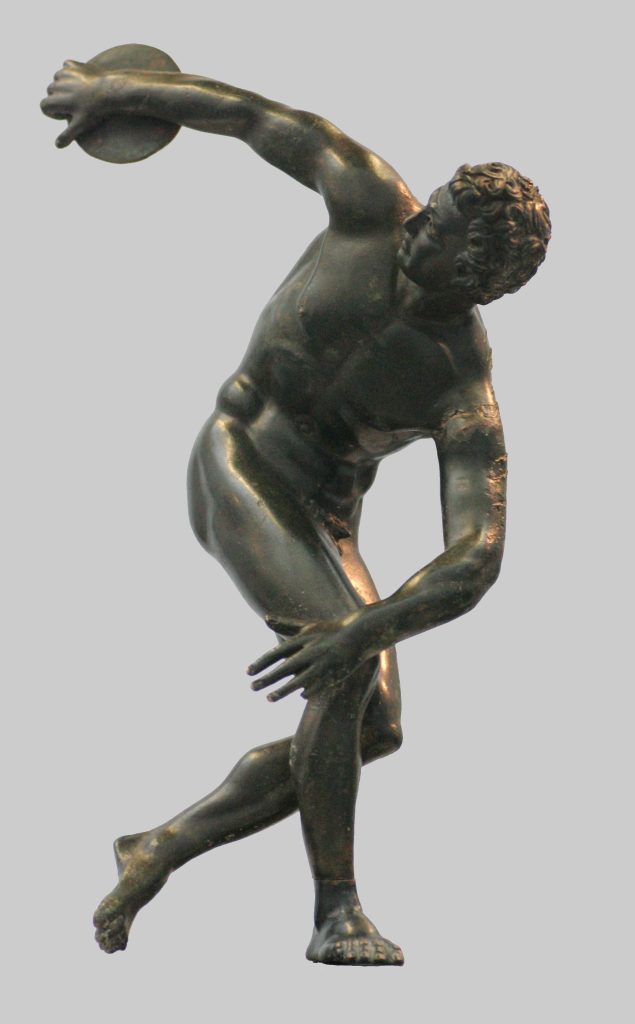
Myron,
Discobolus,
c. 450 BCE
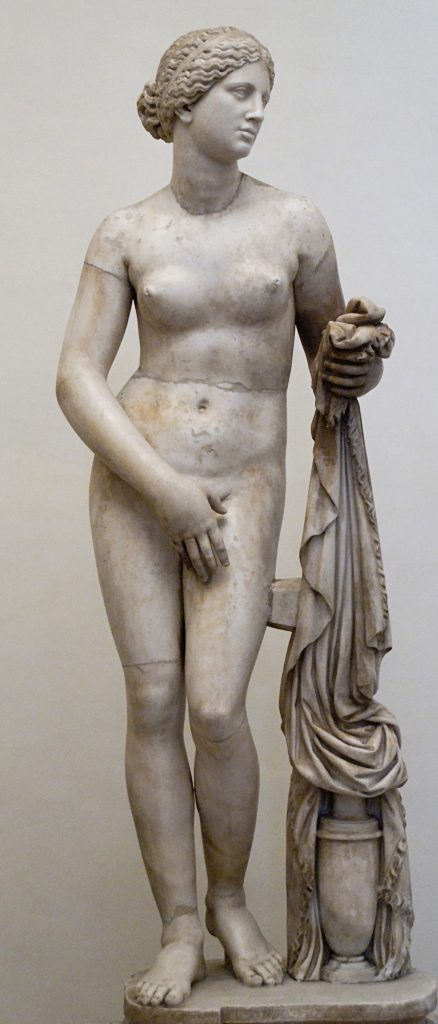
- The Female Nude and the “Venus Pudica”: While men were heroes, women were initially “Korai” (clothed). It wasn’t until the 4th century BCE that Praxiteles shocked the world with the Aphrodite of Cnidus. By depicting the goddess stepping into her bath, he justified her nudity through narrative. This led to the Venus Pudica (Modest Venus) motif, where the subject covers her breasts and groin—a pose that would define female depiction for two millennia.
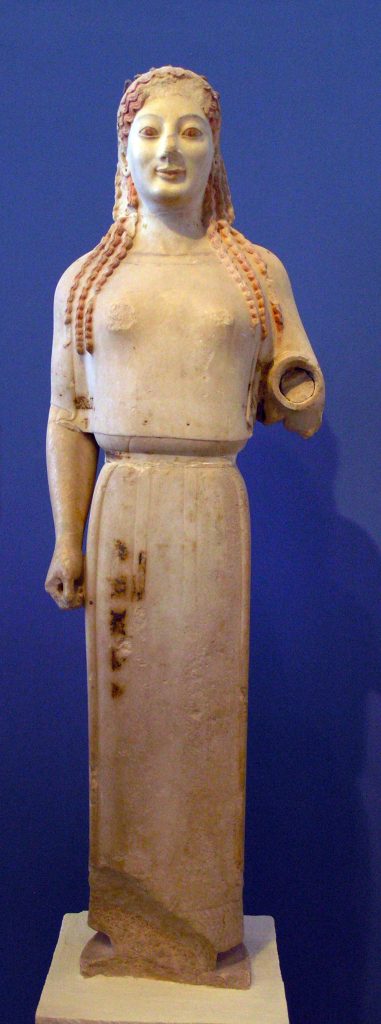
Peplos Kore,
c. 530 BCE
Roman copy of Praxiteles,
Aphrodite of Cnidus (Roman copy 2c. CE),
c. 350 BCE
Rome: Realism and Eroticism
Rome inherited the Greek ideal but added a layer of naturalism. While their statues of emperors often used idealized Greek bodies, Roman painting—especially in Pompeii and Herculaneum—embraced a more unrestrained, often eroticized nudity in domestic mosaics and frescoes.
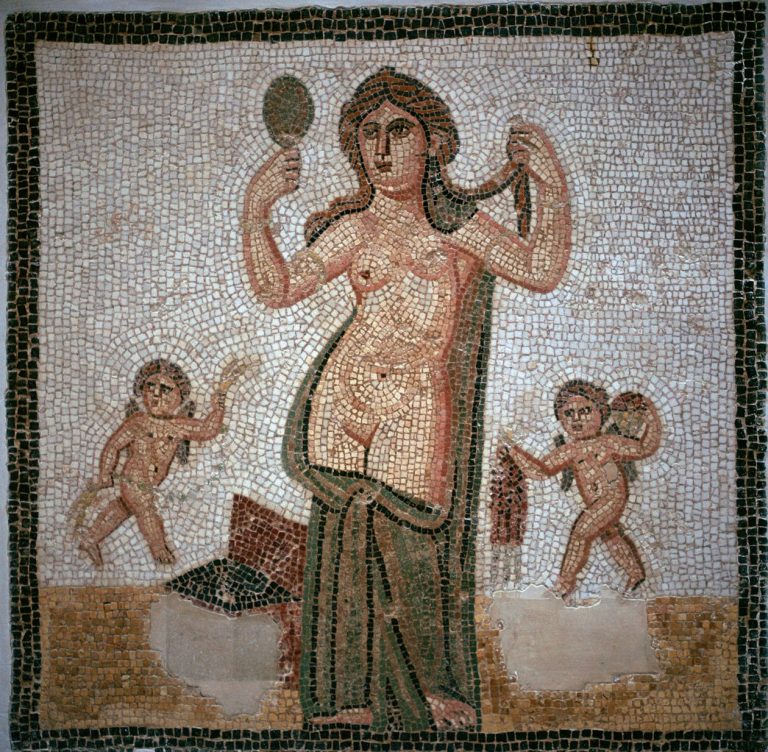
Roman mosaic showing the toilette of Venus,
3rd century
The Middle Ages: The Body as a Vessel of Sin
With the fall of Rome and the rise of Christianity, the status of the body underwent a radical inversion. The classical “temple of the soul” became a “perishable vessel” prone to sin.
The Justified Nude
During the Medieval period, nudity was permitted only in specific biblical contexts:
- The Fall (Adam and Eve): Nudity symbolized shame and the loss of grace.
- The Last Judgment: The naked body represented the vulnerability of the soul before God.
- The Passion of Christ: Nudity emphasized the humanity and suffering of the Savior.
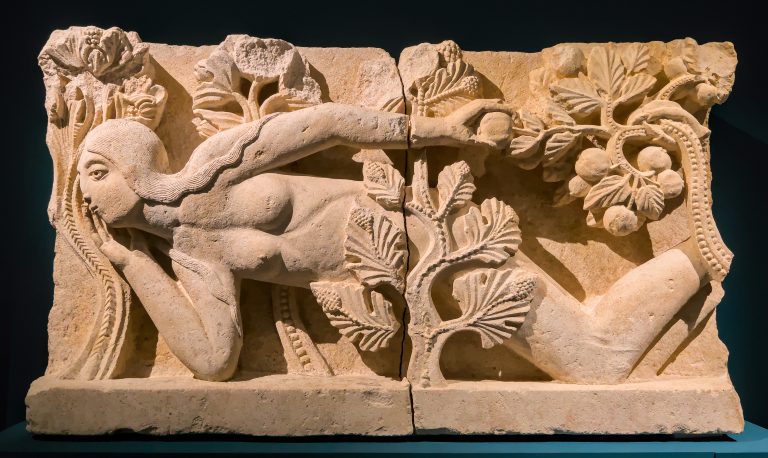
Gislebertus,
Temptation of Eve, Part of a lintel from the Autun Cathedral (France),
c.1130
The Gothic Aesthetic
In Northern Europe, the “International Gothic” style (c. 1400) introduced a specific anatomical canon. In works like The Very Rich Hours of the Duke of Berry by the Limbourg Brothers, we see the “Gothic Nude”: elongated limbs, small breasts, and protruding bellies. These were not based on anatomical study but on symbolic elegance. The scene of the Fall and Expulsion shows Eve adopting the Venus Pudica pose—not as a tribute to Greek beauty, but as a sign of her newfound shame.
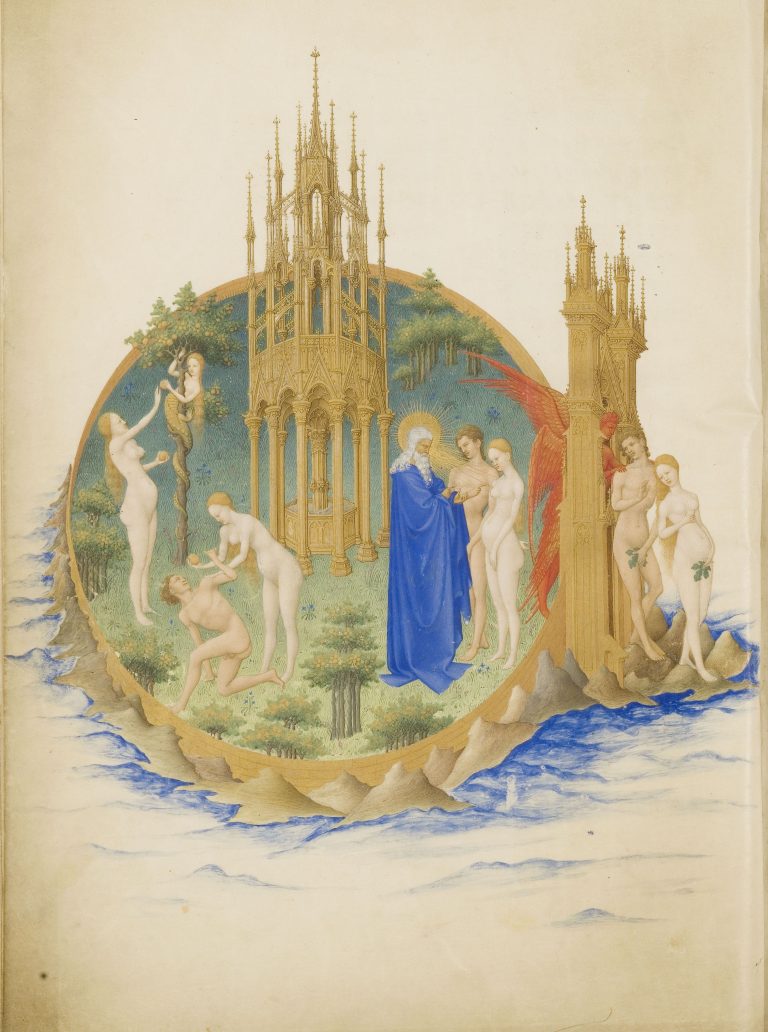
Limbourg brothers,
Très Riches Heures du duc de Berry, The Garden of Eden,
1411-1416
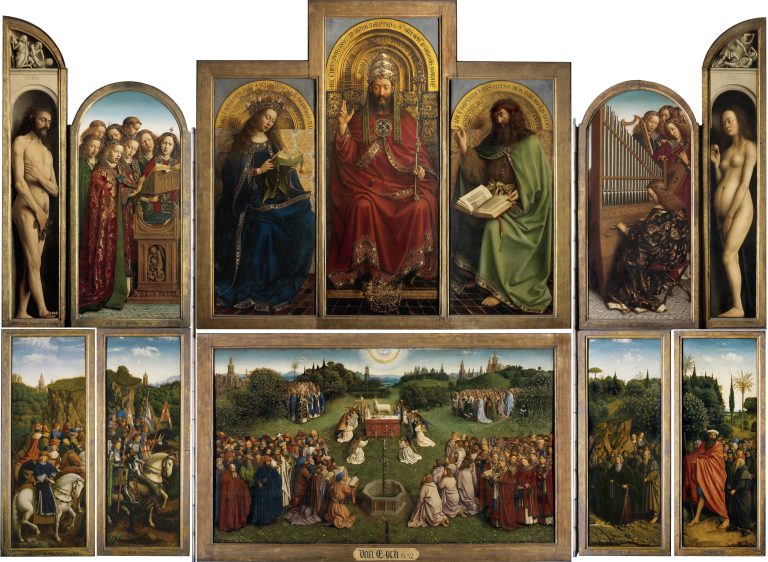
Jan Van Eyck,
The Ghent Altarpiece,
1432
The Renaissance: The Resurrection of the Body
The 15th century witnessed the “rebirth” of classical values, fueled by Humanism and scientific curiosity.
The Early Pioneers: Donatello and Botticelli
- Donatello’s David: This was the first free-standing bronze nude since antiquity. Interestingly, Donatello chose to depict David not as a muscular titan, but as a slender, almost feminine adolescent, emphasizing that his victory was divine, not physical.
- Botticelli’s Birth of Venus: Botticelli moved away from sculptural weight to focus on line and allegory. His Venus is a Neoplatonic ideal—a symbol of “Divine Love.” Her floating, weightless form set the standard for the “Classical Ideal” that would endure for centuries.
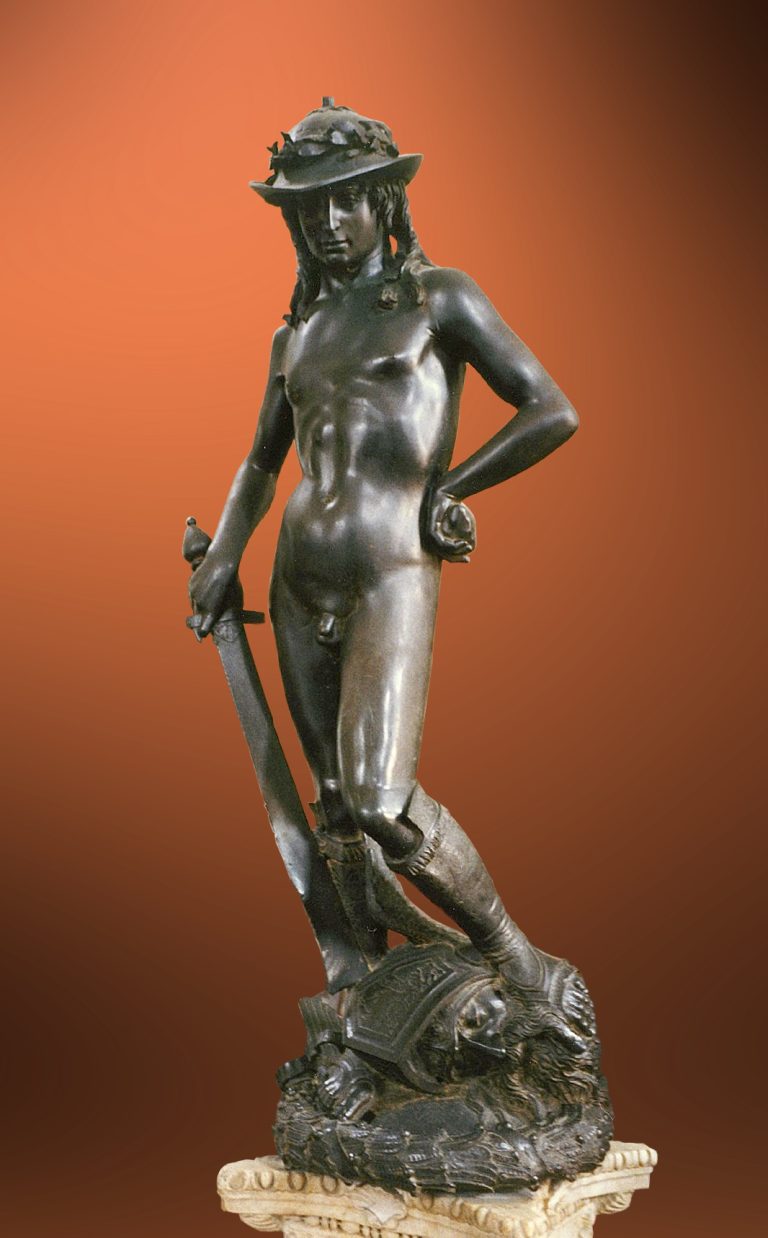
Donatello,
David,
1440
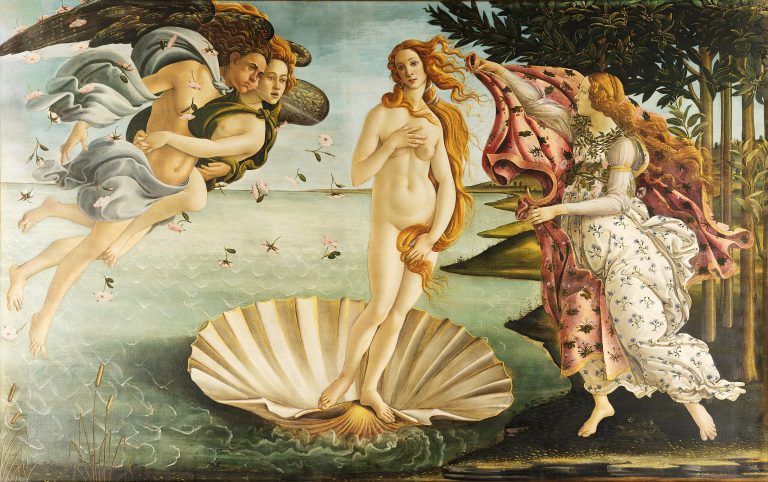
Sandro Botticelli,
The Birth of Venus,
1485
The High Renaissance: Leonardo and Michelangelo
- Leonardo da Vinci: For Leonardo, the nude was a scientific frontier. His hundreds of anatomical drawings were tools to understand the “mechanics” of man. Even when his final subjects were clothed, the underlying anatomy was perfectly calculated.
- Michelangelo: To Michelangelo, the body was divine. He famously said, “The soul cannot be seen but by the body.” His figures in the Sistine Chapel or his David are hyper-muscular and “terribilità” (emotionally intense). He moved beyond classical balance into a realm of spiritual tension and exaggerated proportions that foreshadowed Mannerism.
- Titian: With the Venus of Urbino, Titian shifted the focus toward a warm, tactile sensuality through the Venetian mastery of color and light. While he retained the classical Venus pudica pose, he placed the nude in a contemporary domestic interior, bridging the gap between mythology and reality. This composition established the reclining nude as a lasting standard in Western painting.
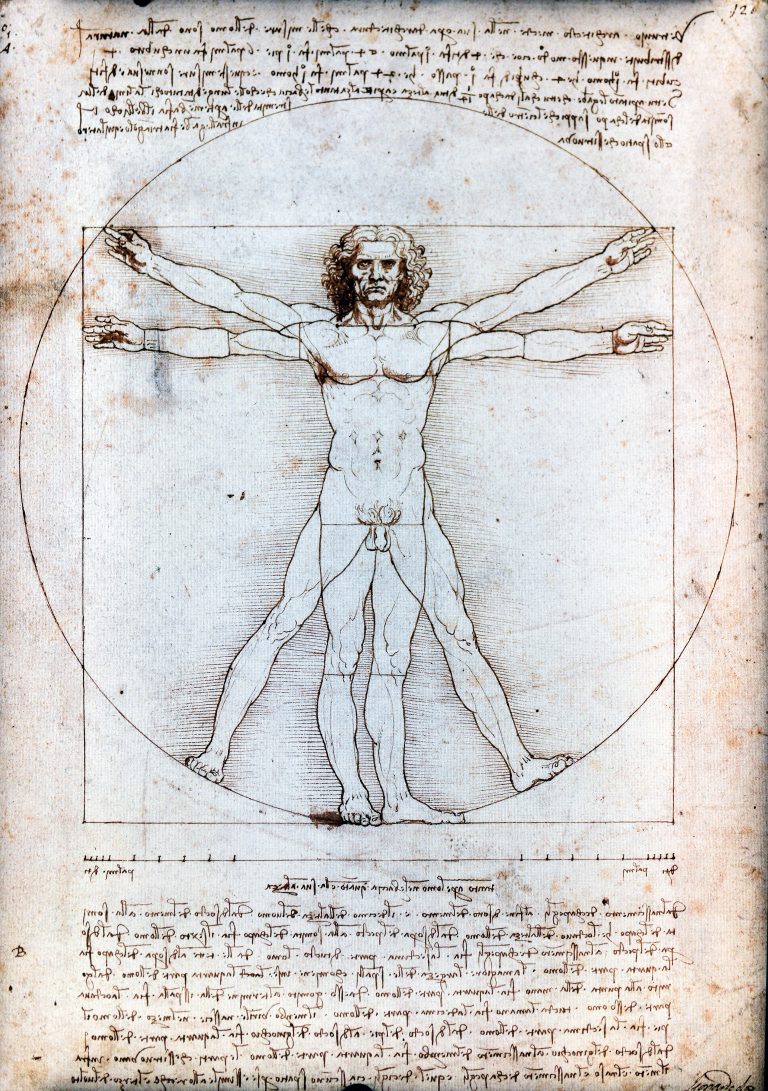
Leonardo da Vinci,
Vitruvian Man,
1490
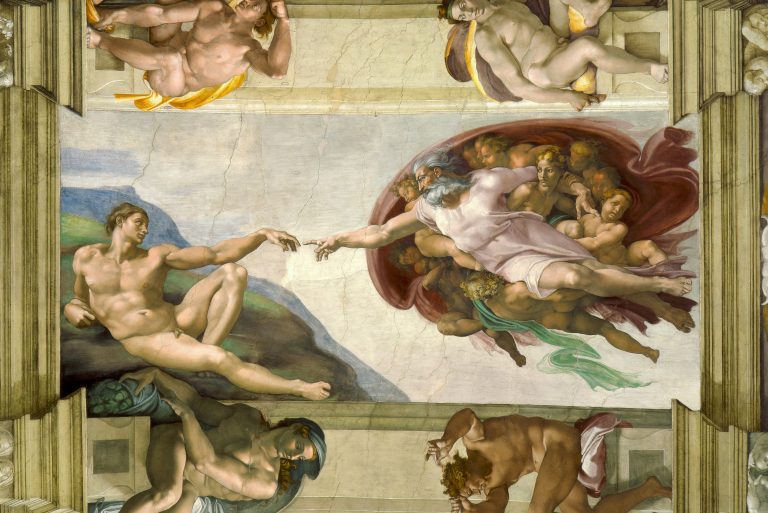
Michelangelo,
The Creation of Adam, from the Sistine Chapel ceiling,
1511
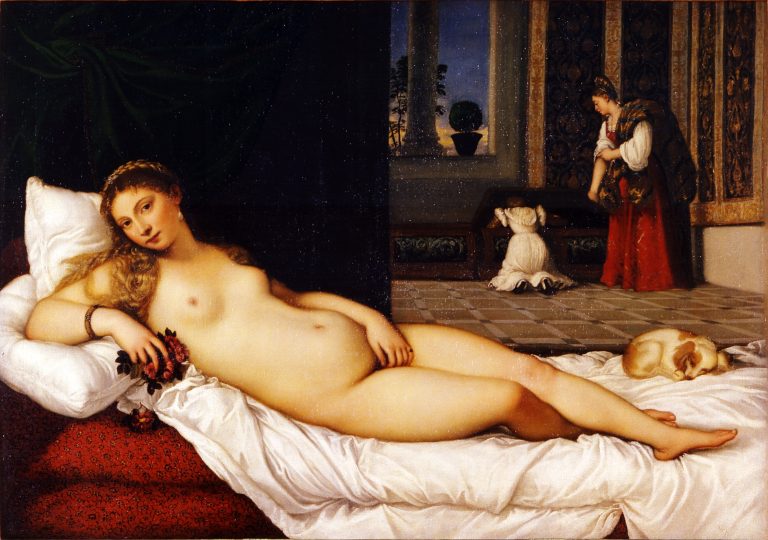
Titian,
Venus of Urbino,
1538
The Northern Perspective
While Italy looked to Rome, the North looked to nature.
- Hieronymus Bosch: In The Garden of Earthly Delights, nudity is a chaotic, swarming mass of humanity, symbolizing lust and the fragility of the human condition.
- Albrecht Dürer: Dürer attempted to bridge the two worlds, traveling to Venice to study the proportions of Titian and Bellini, eventually creating a synthesis of Northern detail and Italian harmony.
- Lucas Cranach the Elder: He developed a unique, almost stylized nude—lithe, provocative, and rooted in a courtly Gothic tradition.
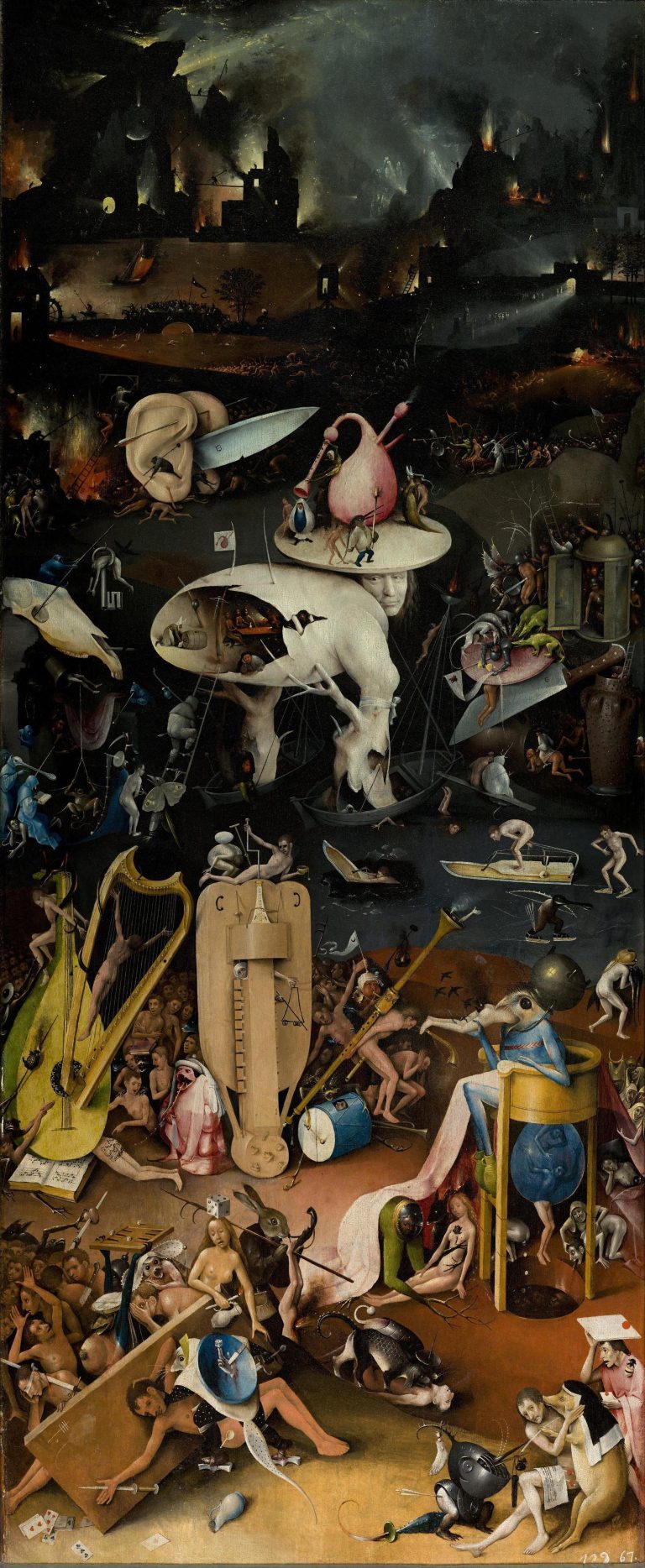
Hieronymus Bosch,
The Garden of Earthly Delights, Hell,
1480-1505
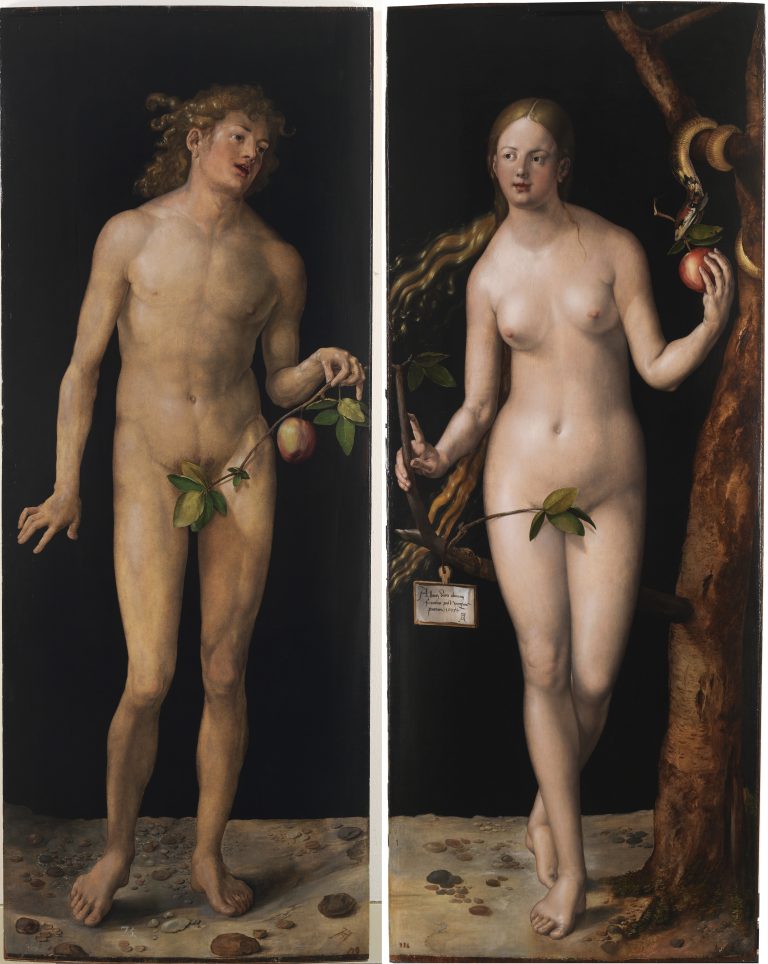
Albrecht Dürer,
Adam and Eve,
1507
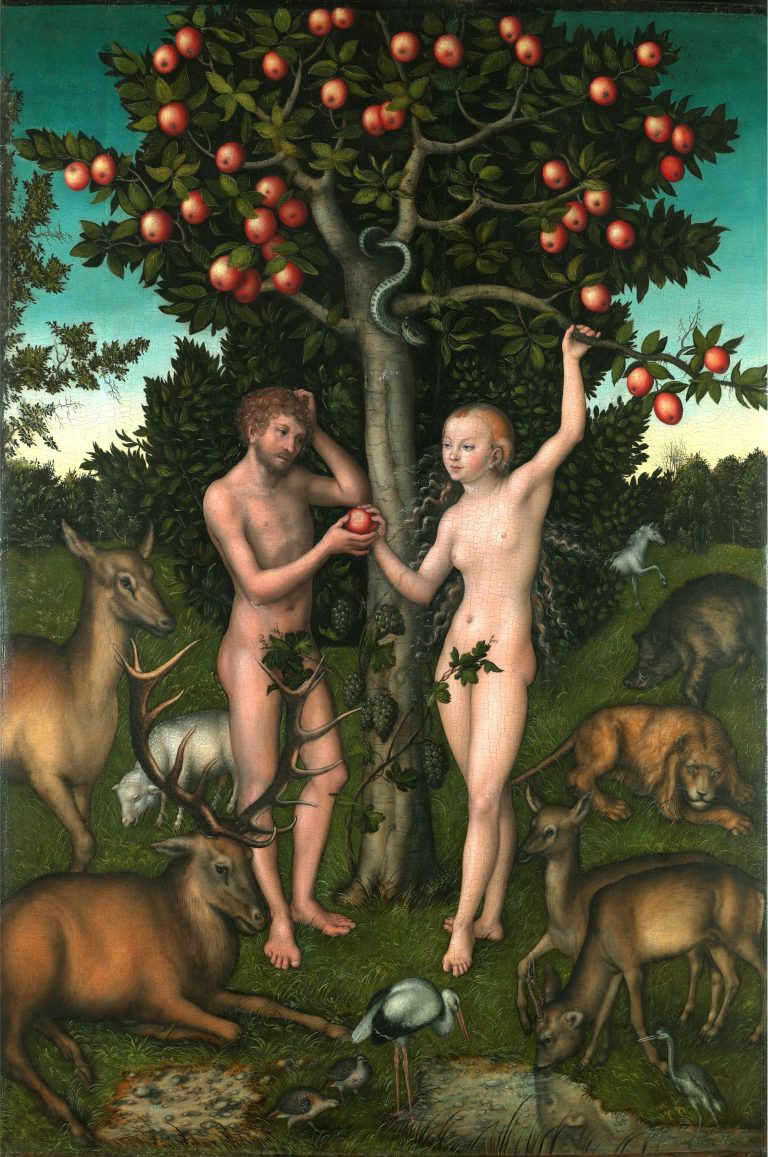
Lucas Cranach The Elder,
Adam and Eve,
1526
Mannerism: Artifice and Elongation
By the mid-sixteenth century, Mannerism emerged as a reaction to the harmonious perfection of the High Renaissance, favoring artifice, complex symbolism, and distorted proportions.
- Angelo Bronzino: In Venus, Cupid, Folly and Time (1540), Bronzino exemplifies Florentine Mannerism. The work is characterized by elongated limbs, artificial and complex poses (the figura serpentinata), and a palette of cold, acidic colors that emphasize a polished, enamel-like surface.
- The School of Fontainebleau: Works such as Gabrielle d’Estrées and One of Her Sisters (1594) define the French Mannerist style. This movement is distinguished by sophisticated eroticism, stretched bodily forms, and a decorative precision tailored to the courtly tastes of the Valois and Henri IV.
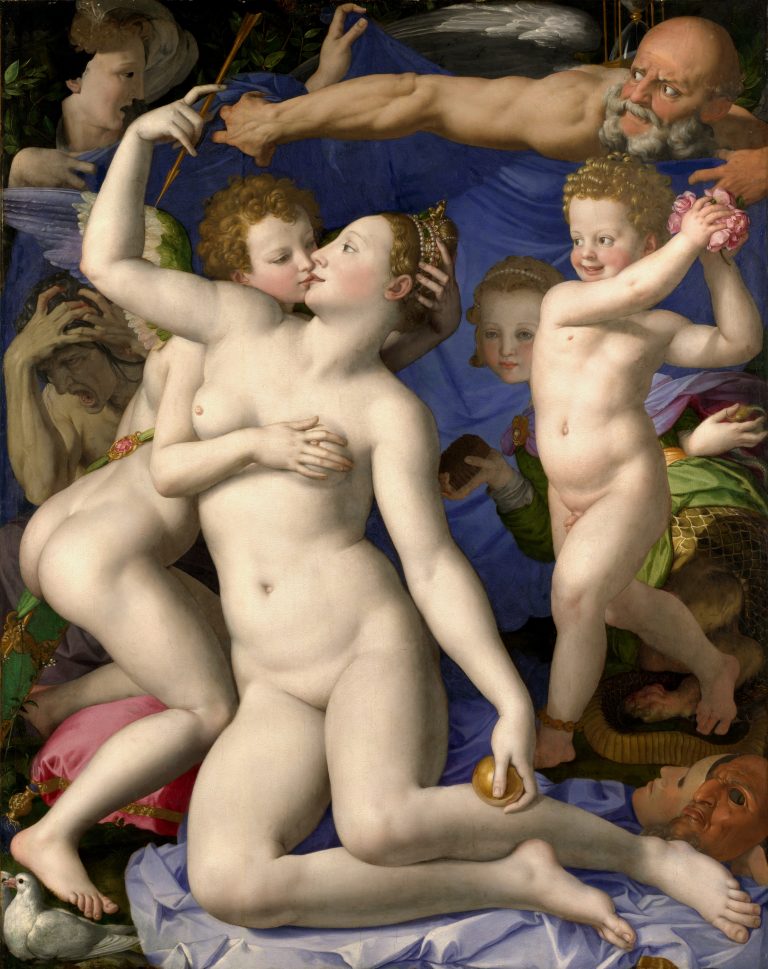
Angelo Bronzino,
Allegory of the Triumph of Venus,
1540-1545
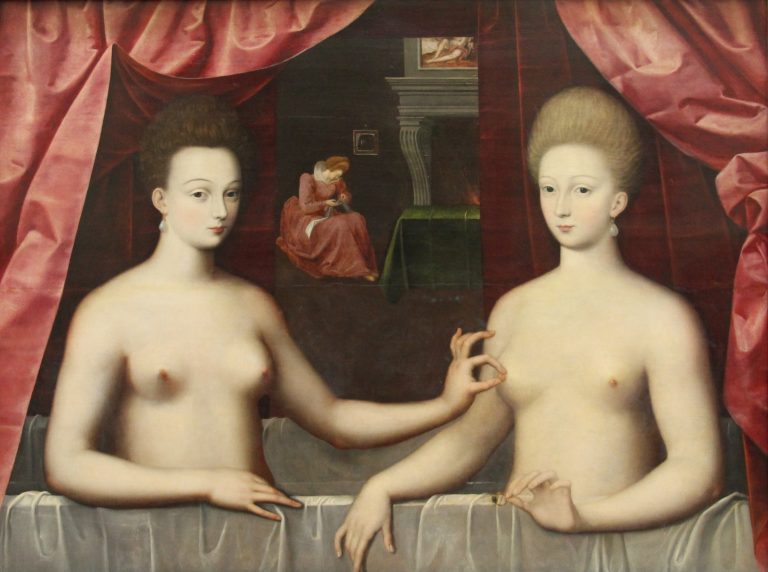
School of Fontainebleau,
Portrait of Gabrielle d’Estrées and her sister,
1594
Baroque and Rococo: Flesh, Drama, and Light
In the 17th century, the “Heroic Diagonal” replaced the stable Renaissance triangle. The nude became a tool for drama, sensuality, and political power.
The Masters of Flesh and Drama
- Peter Paul Rubens: The “Rubensian” woman is the pinnacle of Baroque sensuality. His nudes are robust, vibrant, and tactile. He mastered the “spiral” composition, giving his figures a sense of weight and unceasing motion.
- Annibale Carracci: In Bologna, Carracci spearheaded a reform of painting by moving away from Mannerist artifice toward a “Classicist Baroque.” He combined a rigorous study of nature and anatomy with the balanced ideals of the Renaissance, as seen in his frescoes for the Farnese Gallery. His nudes are muscular and monumental, yet governed by a sense of order and clarity.
- Guido Reni: Represented the idealist side of the Bolognese school. Inspired by Raphael, he sought divine grace through soft lighting, noble elegance, and idealized proportions, avoiding the harshness of realism.
- Rembrandt van Rijn: Rembrandt took a revolutionary path by rejecting the “ideal” entirely. His nudes, such as Bathsheba at Her Bath, show aging skin, stretch marks, and the weight of real life. For Rembrandt, there was more “truth” in a wrinkled body than in a marble statue.
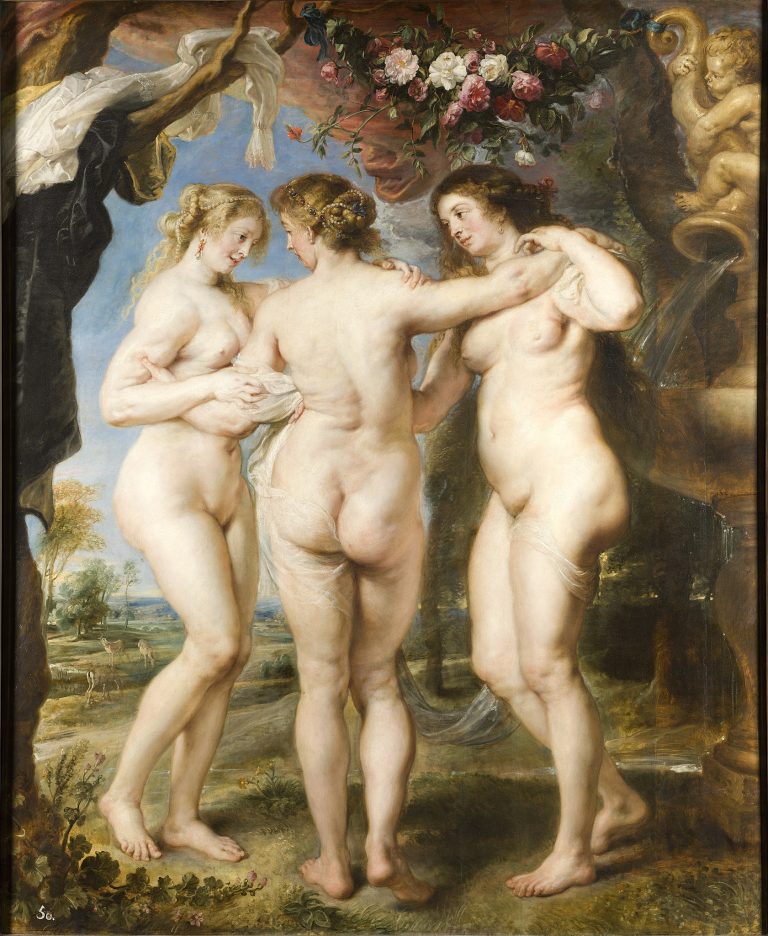
Peter Paul Rubens,
The Three Graces,
1630-1635
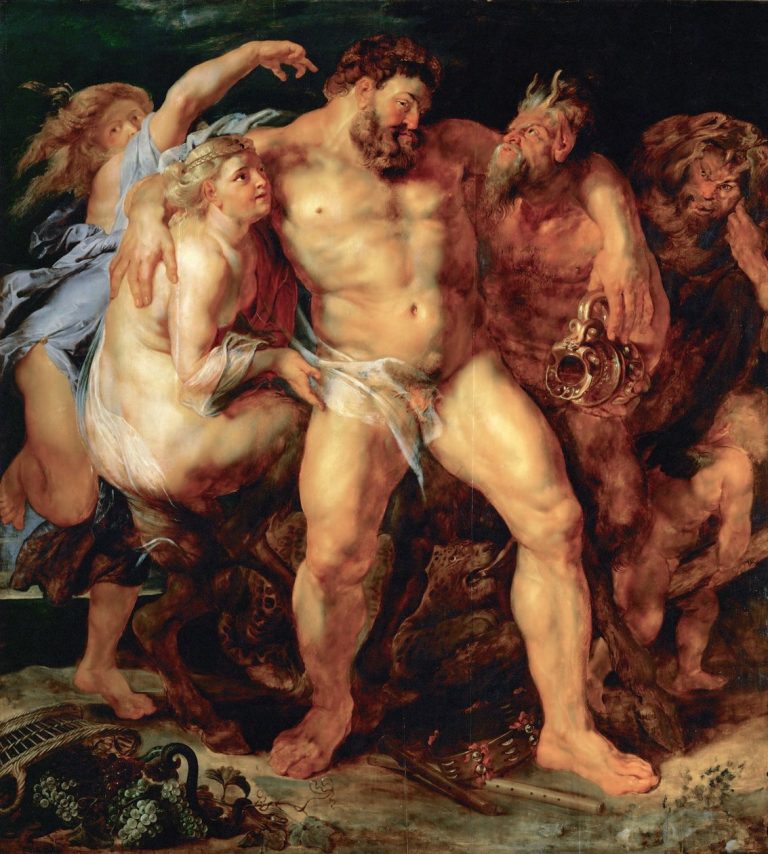
Peter Paul Rubens,
The drunken Hercules, led by a Nymph and a Satyr,
c.1614
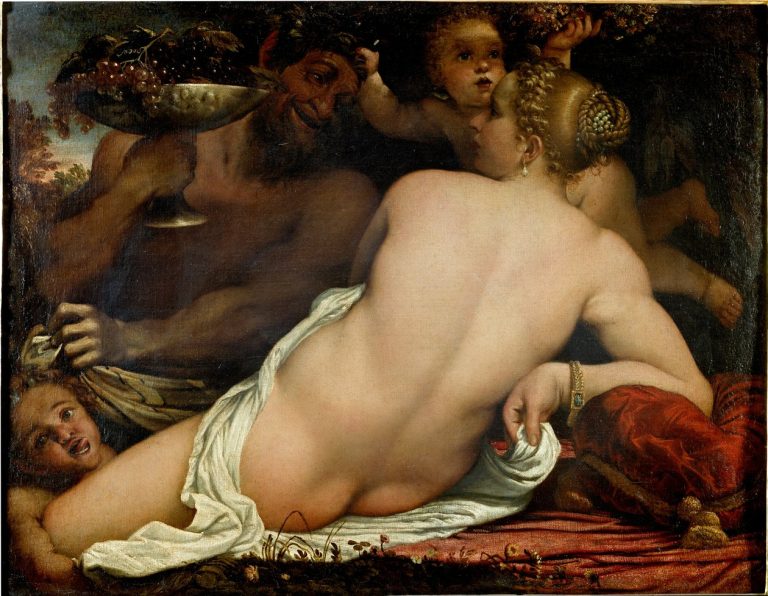
Annibale Carracci,
The bacchante, Venus, satyr and two cupids,
c.1588
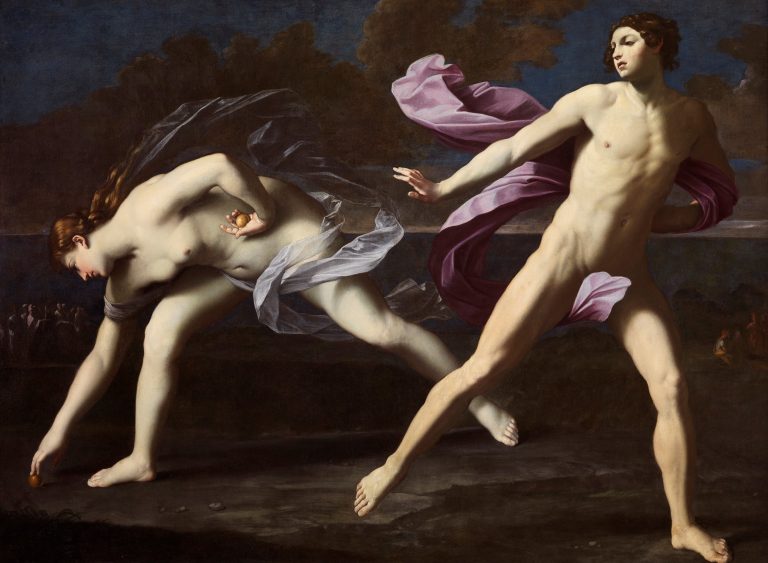
Guido Reni,
Atalanta and Hippomenes,
c. 1620-1625
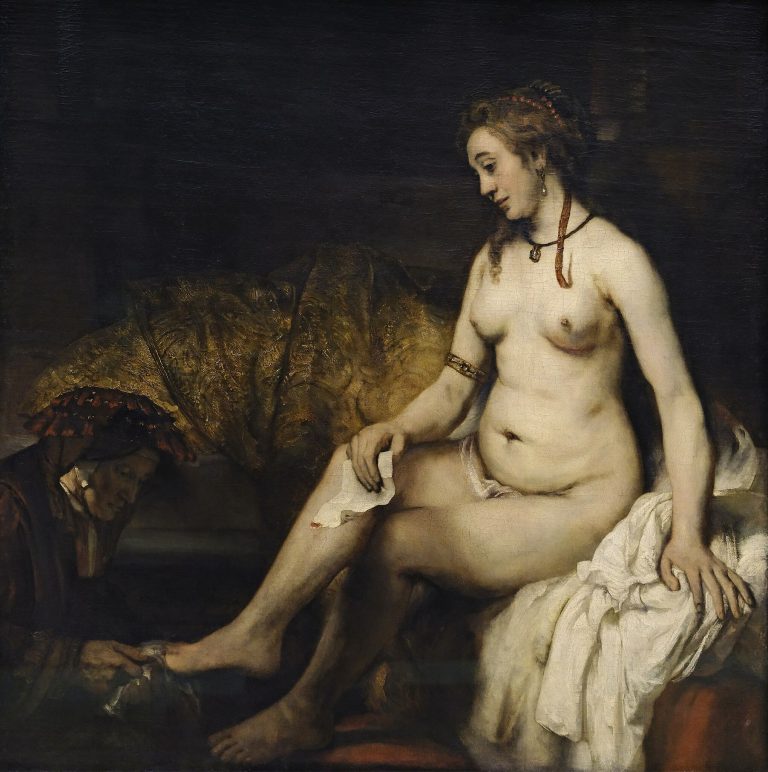
Rembrandt van Rijn,
Bathsheba at Her Bath,
1654
The Naturalist Rebellion: Caravaggio
- Caravaggio introduced Tenebrism—a violent contrast of light and shadow. Unlike Carracci’s balanced classicism, Caravaggio’s nudes were not painted from imagination but from live models taken from the streets. This “dirty realism” brought a shocking, physical presence to biblical themes, emphasizing the vulnerability and mortality of the human form.
- Artemisia Gentileschi: As a leading Caravaggista, Gentileschi adapted Tenebrism to provide a uniquely female perspective on the nude. Her nudes, such as Susanna and the Elders, emphasize the physical and psychological reality of the female experience. Unlike the idealized or voyeuristic nudes of her male contemporaries, her figures possess a palpable sense of weight, strength, and resistance.
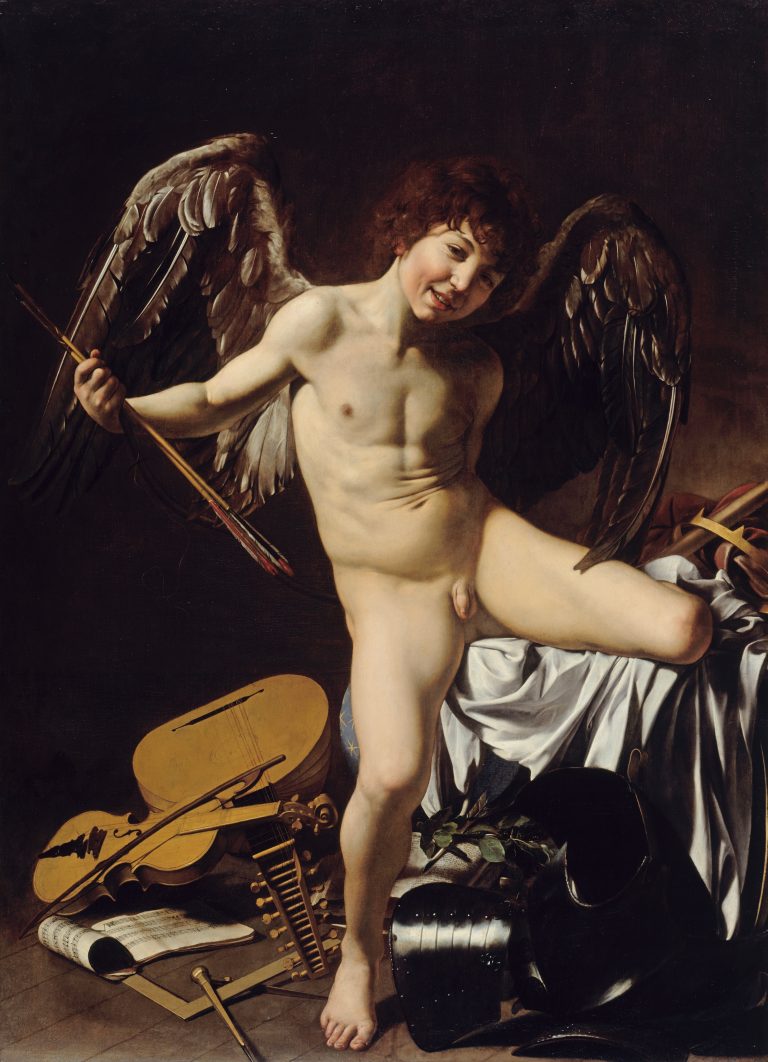
Caravaggio,
Cupid as Victor,
1601-1602
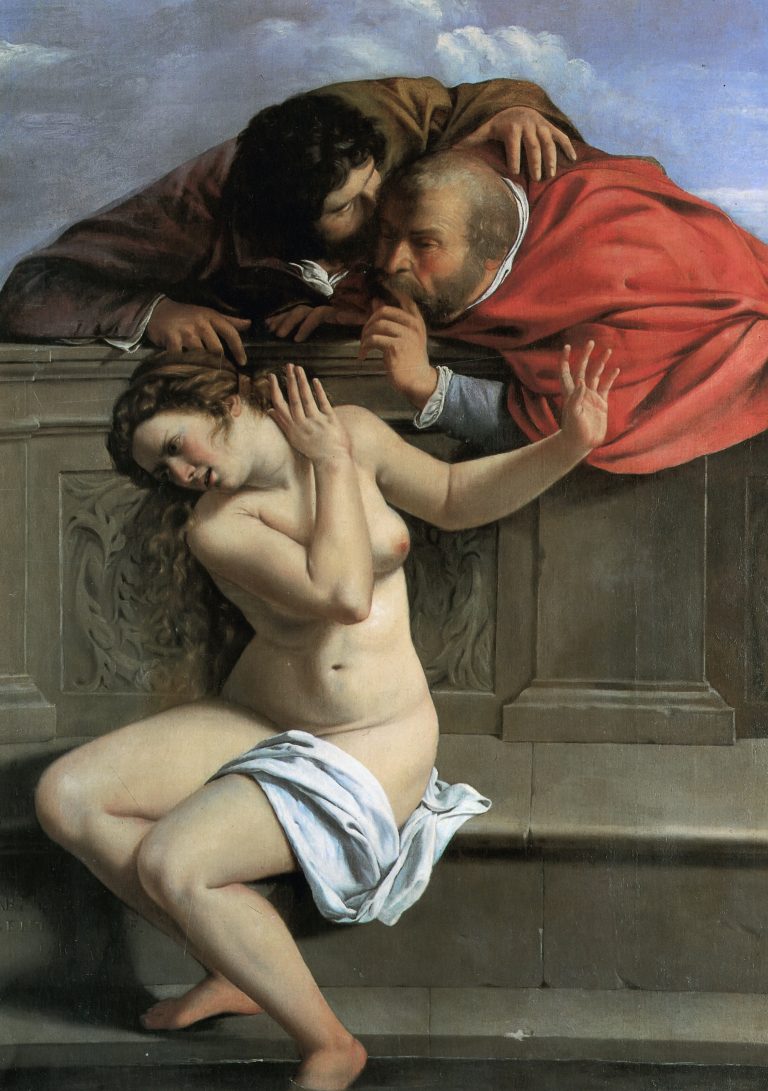
Artemisia Gentileschi,
Susanna and the Elders,
1610
The Body in Motion: Sculpture
Gian Lorenzo Bernini: Transformed sculpture into theatrical action. His works, such as Apollo and Daphne, capture the peak of a narrative moment through twisting poses and virtuosic texture, making marble appear fluid and alive.
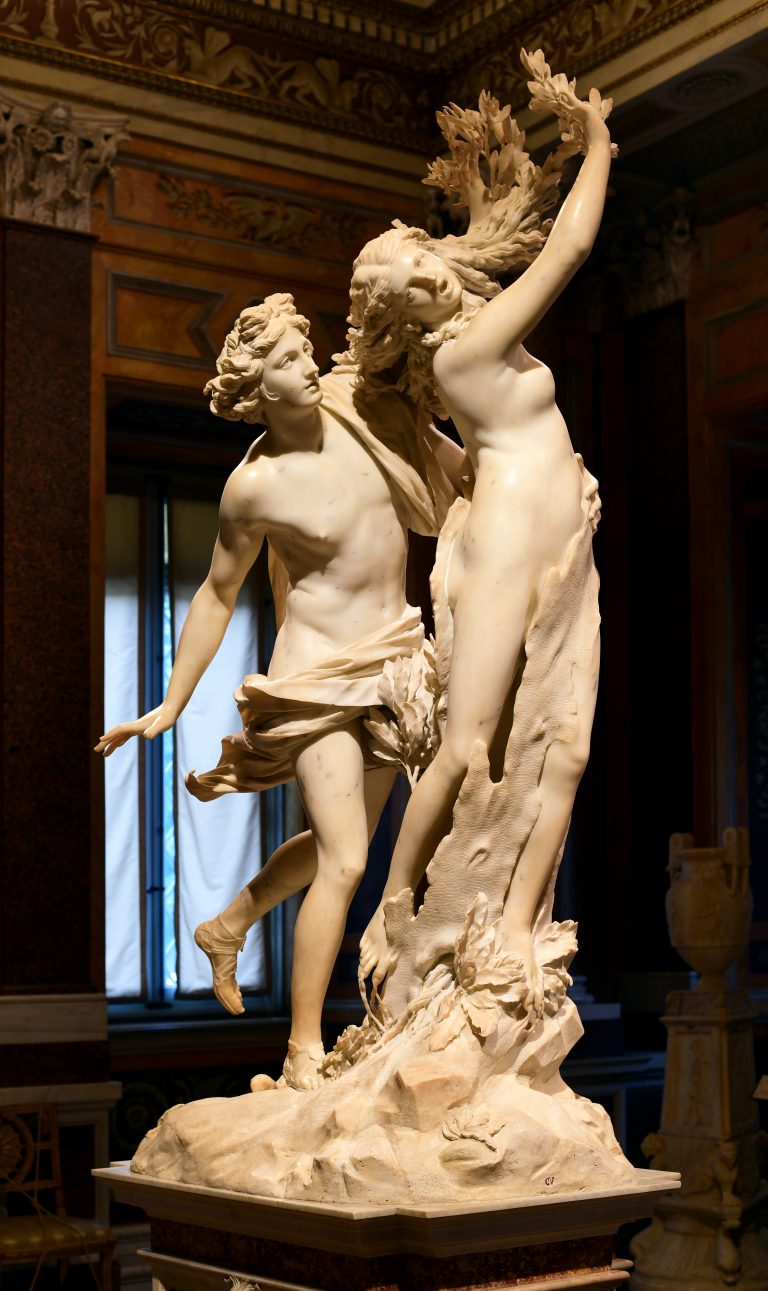
Gian Lorenzo Bernini,
Apollo and Daphne,
1622
The Spanish Exception: Velázquez
In Spain, the Inquisition made the nude almost impossible to paint. However, Diego Velázquez, protected by the King, created the Venus at her Mirror (The Rokeby Venus). By showing Venus from the back, looking into a mirror, he bypassed the censors while creating one of the most intimate and enigmatic nudes in history.
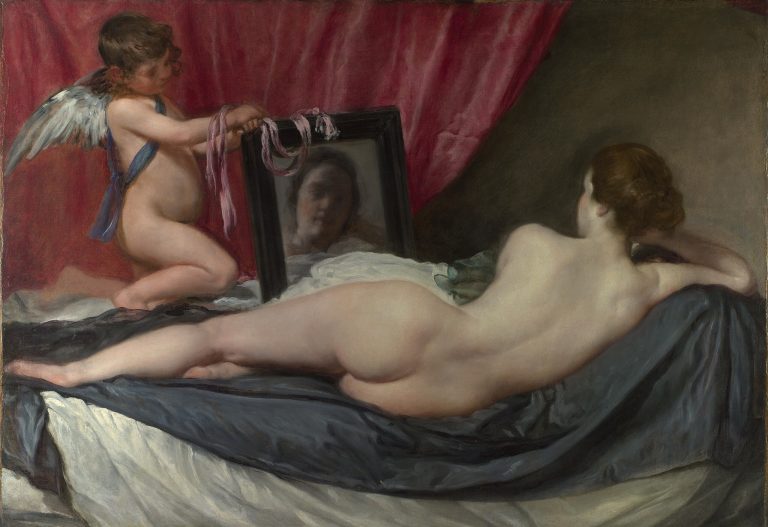
Diego Velázquez,
Venus at her Mirror,
c. 1647-1651
From Rococo Sensuality to Neoclassical Order
As the 18th century progressed, the frivolous elegance of the Rococo gave way to the moral and formal rigor of Neoclassicism, fueled by the Enlightenment and the rediscovery of Antiquity.
Late Rococo Sensuality
François Boucher defined the mid-18th-century ideal, moving away from heroic allegory toward intimate, provocative eroticism. His nudes are characterized by soft, pearly skin tones and decorative playfulness.
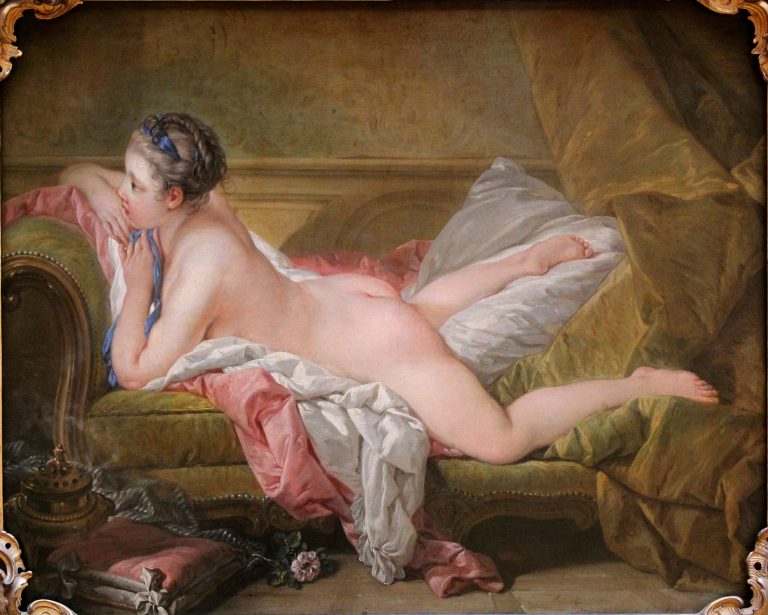
François Boucher,
Resting Maiden,
1751
The Neoclassical Rebirth
Neoclassicism rejected Rococo excess for “noble simplicity” and anatomical precision.
- Jacques-Louis David: The movement’s leader, David used the heroic male nude as a symbol of civic virtue, moral strength, and patriotic resistance.
- Antonio Canova: The era’s preeminent sculptor, Canova balanced the purity of white marble with a fluid, soft sensuality inspired by Renaissance grace.
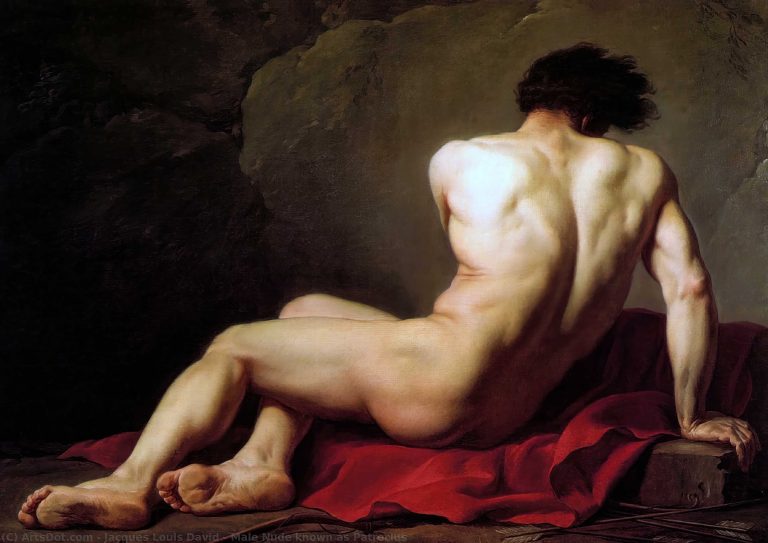
Jacques-Louis David,
Patroclus,
1780
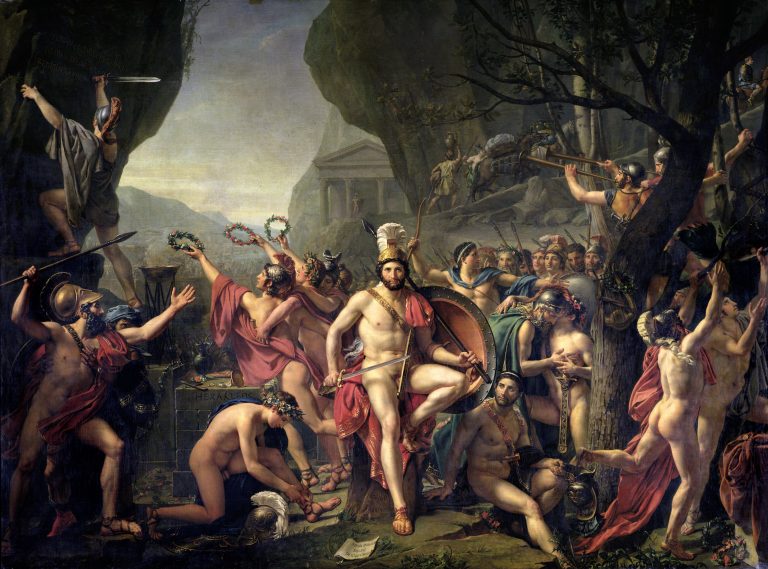
Jacques-Louis David,
Leonidas at Thermopylae,
1814
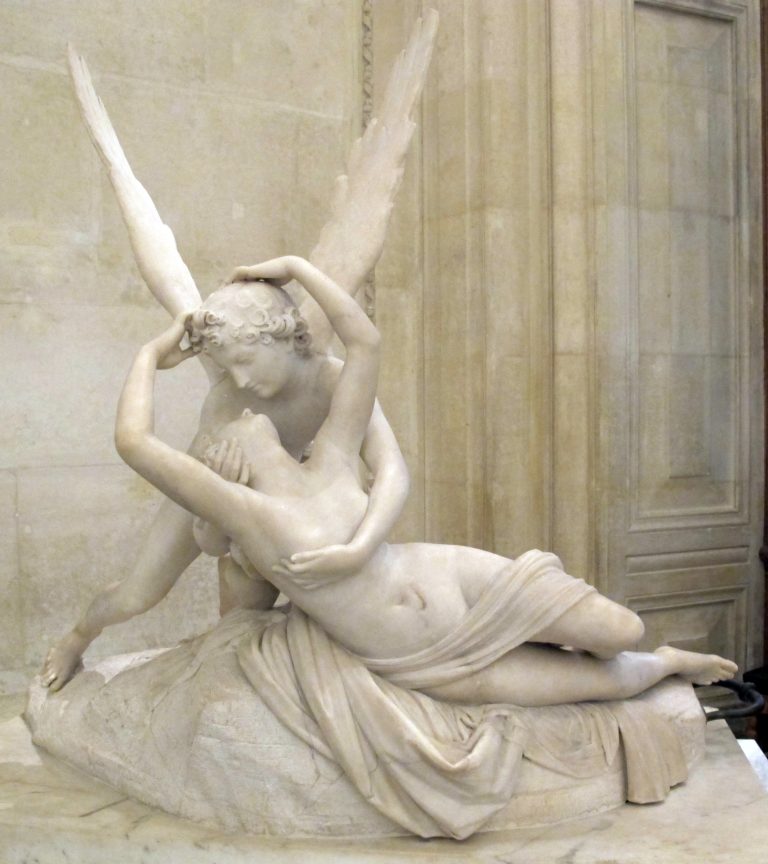
Antonio Canova,
Psyche Revived by Cupid’s Kiss,
1787-1793
Softening the Line: Gérard and Girodet
By the late 1790s, some artists shifted toward a more poetic and atmospheric style.
- François Gérard: He pursued an ethereal beauty, using smooth, porcelain-like skin and soft lighting that anticipated Romanticism.
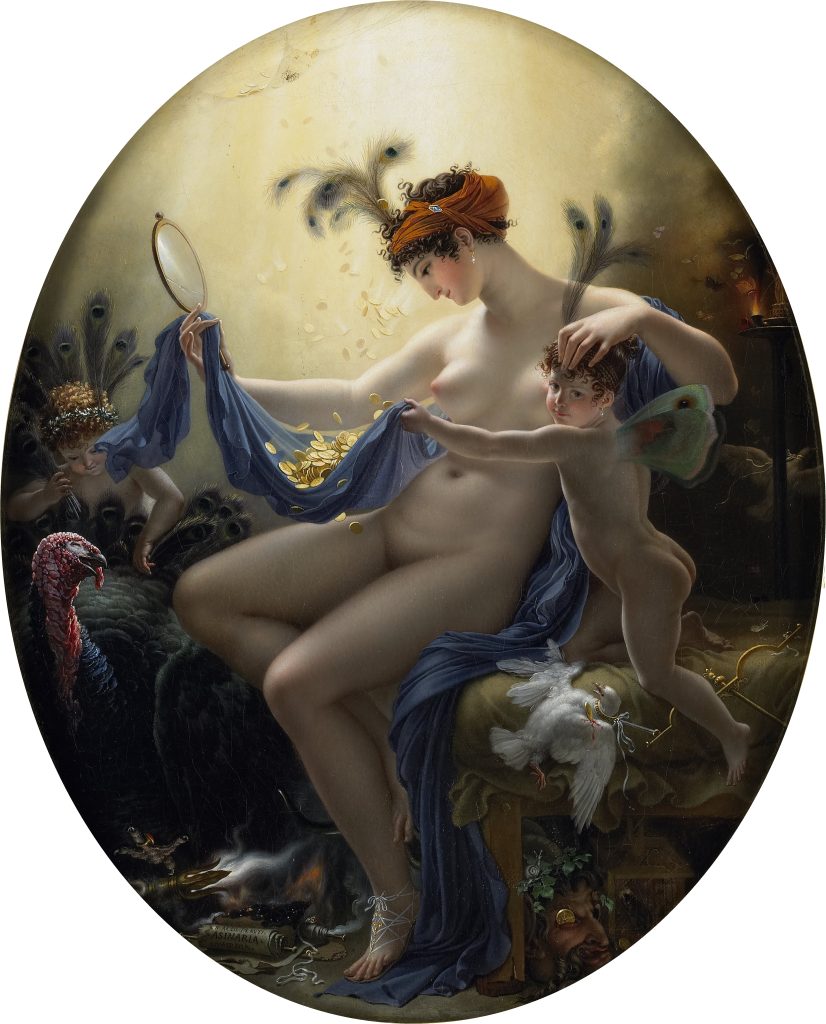
- Anne-Louis Girodet: A rebel within the school, Girodet broke with Davidian vigor, often depicting elongated, androgynous bodies and using the nude for social and personal satire.
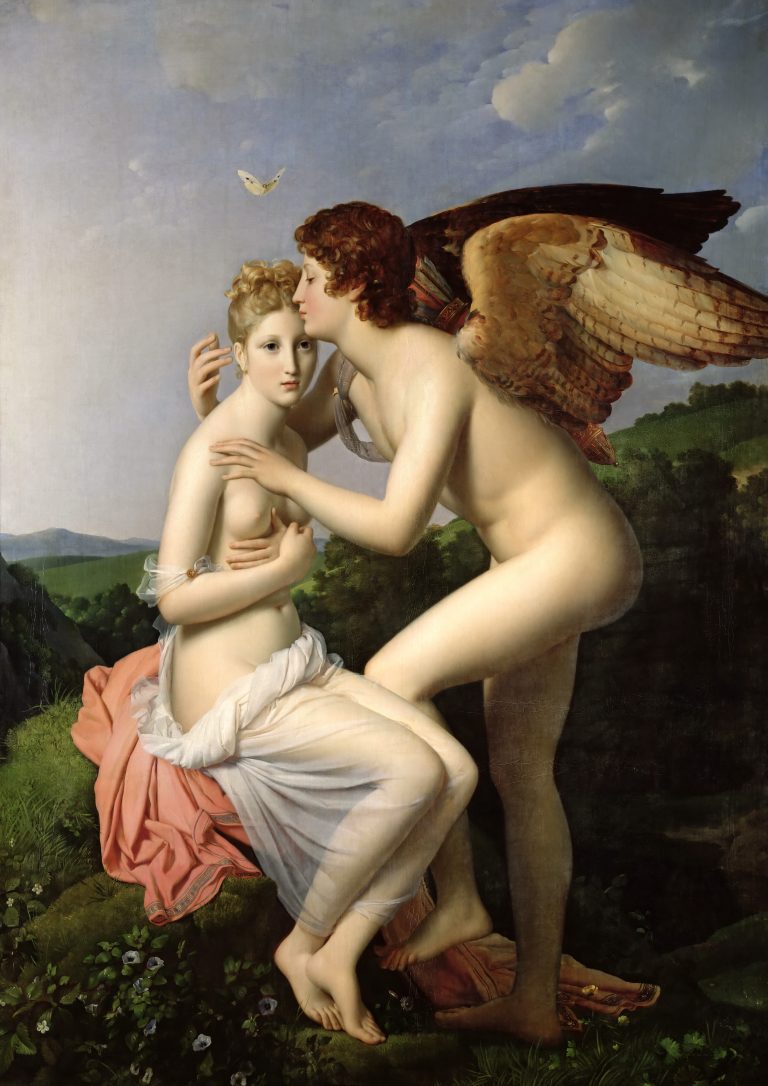
François Gérard,
Cupid and Psyche,
1798
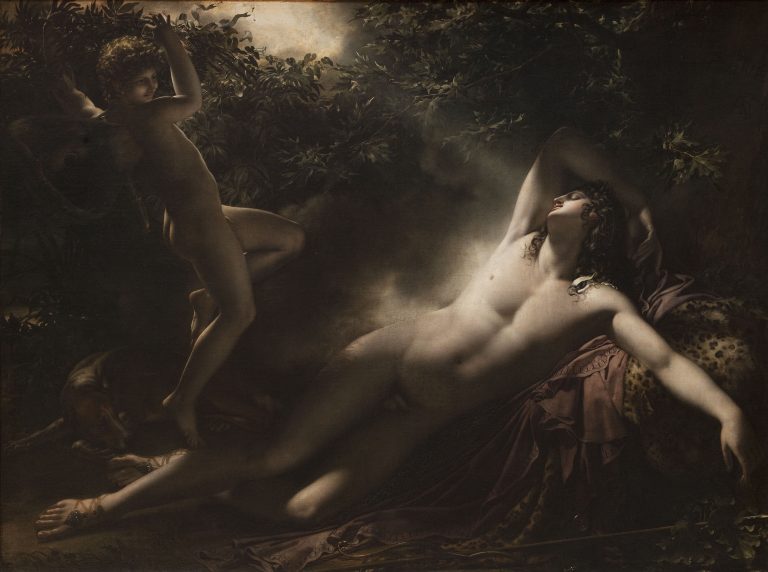
Anne-Louis Girodet Trioson,
Sleep of Endymion,
1791
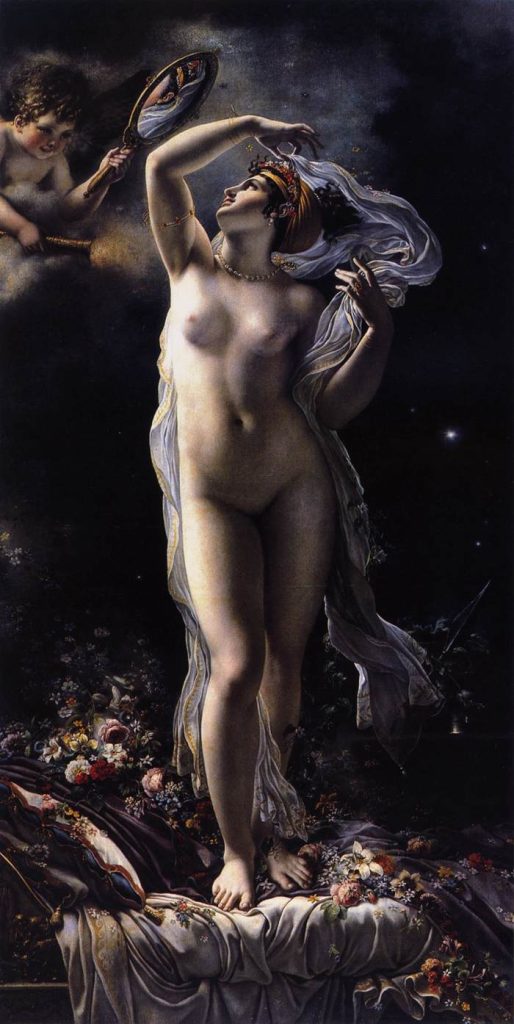
Anne-Louis Girodet Trioson,
Mademoiselle Lange as Venus,
1798
Anne-Louis Girodet Trioson,
Mademoiselle Lange as Danae,
1799
Radical Breaks: Goya and Benoist
- Francisco de Goya: Goya bypassed academic tradition by depicting an anonymous, “real” woman. By including pubic hair—forbidden by the Inquisition—he broke the taboo of the “ideal” to show the reality of the flesh.
- Marie-Guillemine Benoist: In 1800, Benoist placed a Black subject in the position of a “Classical Nude,” using academic language to assert the dignity of the universal human form following the abolition of slavery.
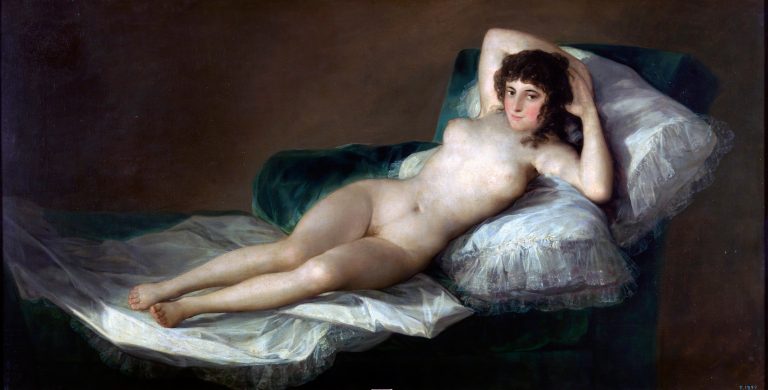
Francisco de Goya,
The Nude Maja,
c. 1795-1800
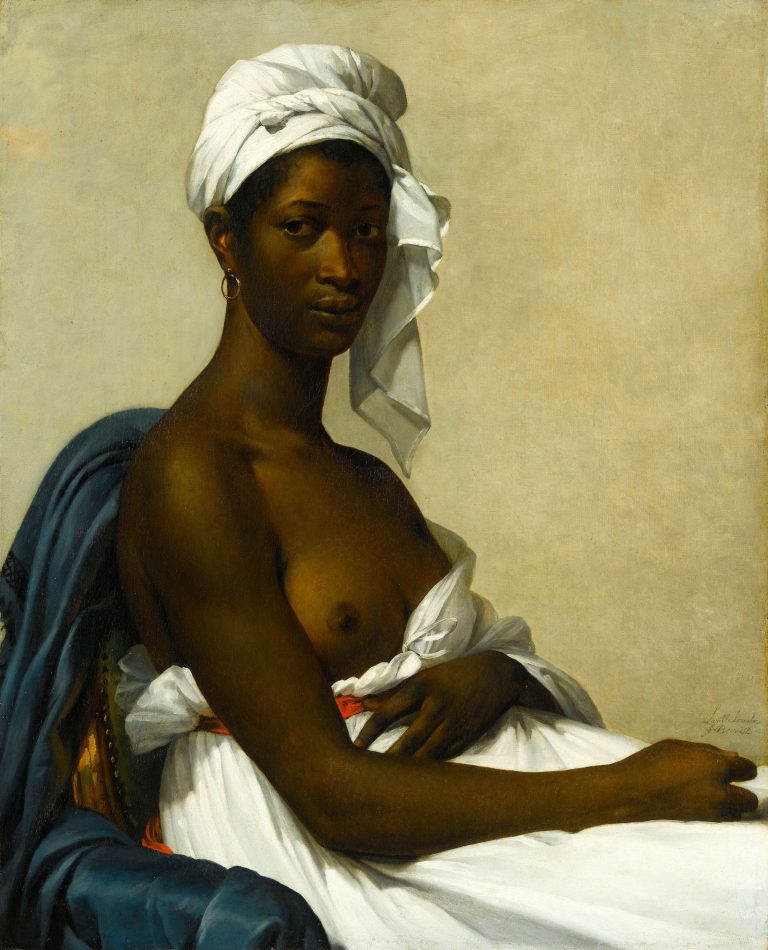
Marie-Guillemine Benoist,
Portrait of a black woman (Portrait of Madeleine),
1800
Conclusion of Part I
By the late 18th century, the nude had become the ultimate test of technical mastery within the rigid framework of the Academies. It had been a god, a sinner, a hero, and a scientific specimen. But as we move into the 19th century, the “Ideal” is about to be shattered.
In our next article, we will explore the Scandal of the Real, as artists like Manet and Courbet take the nude out of mythology and put it onto the streets of Paris.