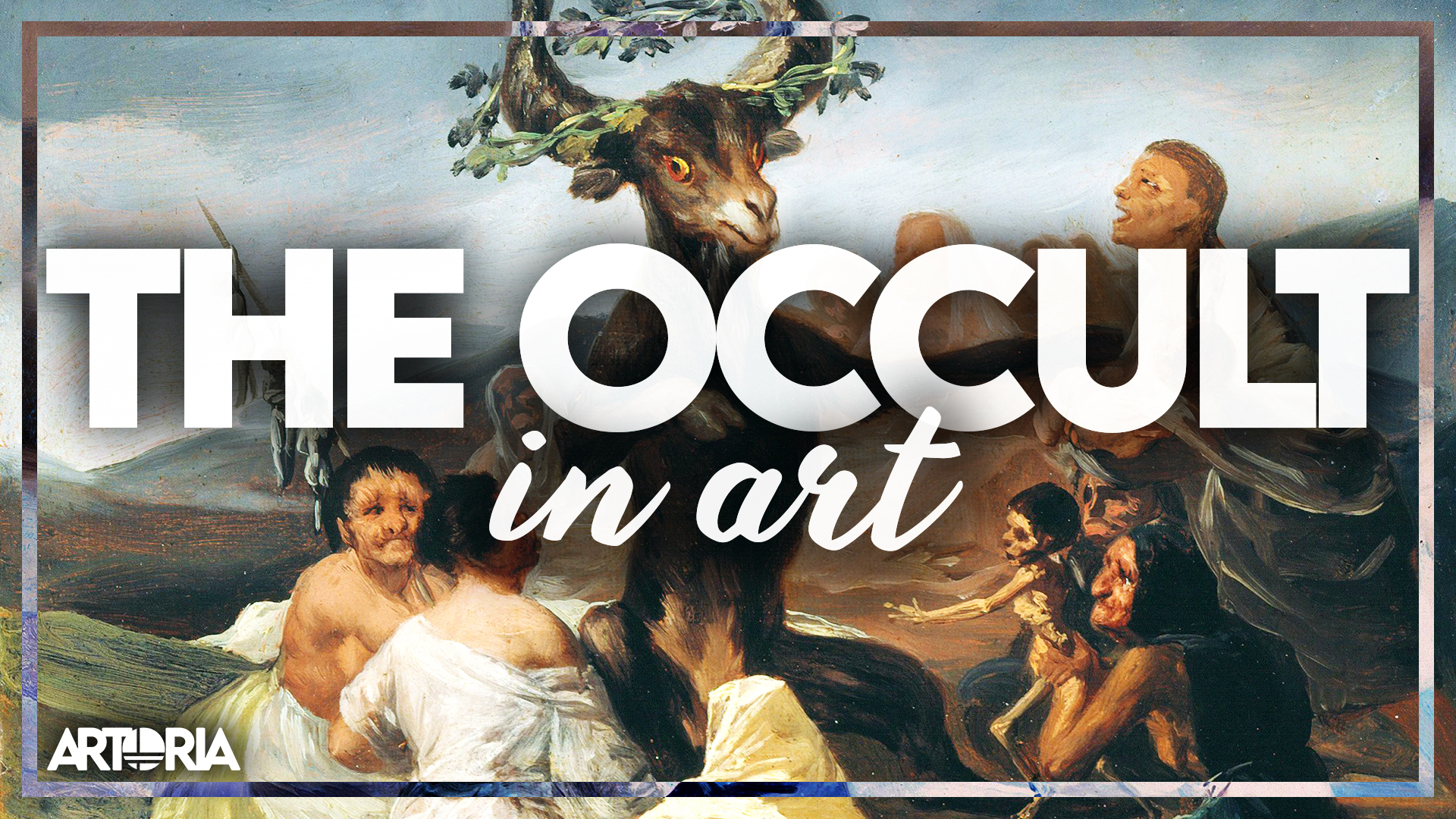
Since ancient times, humanity has tried to depict what lies beyond the visible: gods, mysterious forces, forbidden rituals. Art, reflecting collective beliefs and fears, serves as a unique witness to these hidden imaginations. From the hellish visions of Hieronymus Bosch to the mystical compositions of Hilma af Klint, the history of Western painting reveals how magic, witchcraft, and demons have manifested through the ages. |
👉 Watch the complete video on YouTube.
Origins: Between Sacred Science and Divination
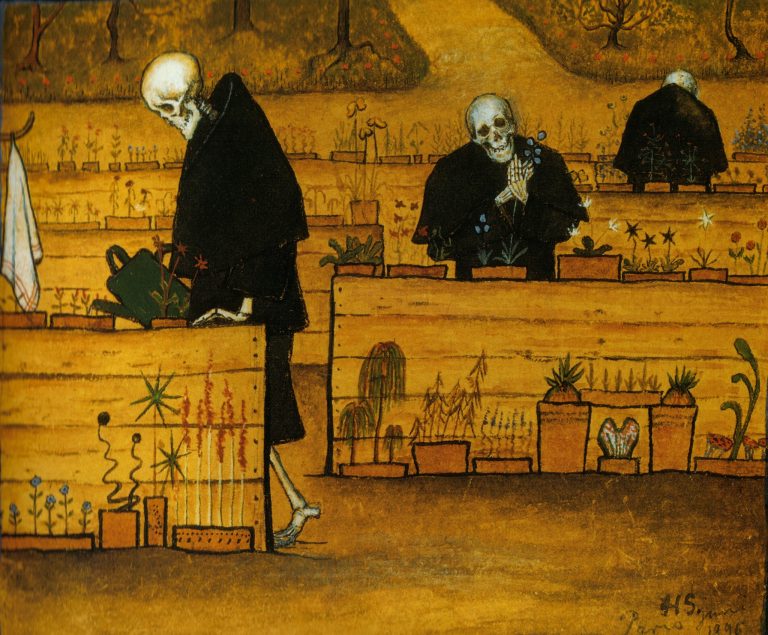
It is important to clarify that not everything evoking death or the macabre necessarily falls under the occult. A painting like Hugo Simberg’s Garden of Death explores human fragility and fear without referring to esoteric symbols.
Hugo Simberg,
Garden of Death,
1896
The term “occult” comes from the Latin occultus, meaning “hidden, secret, concealed.” In modern use, it refers to practices and mysterious hidden phenomena linked to the supernatural, often associated with esotericism and accessible only to initiates. Interestingly, the term “occultism” itself only appeared in 1842 in the French Dictionnaire des mots nouveaux, referring to the theorization of sciences ranging from astrology to the Kabbalah, alchemy, and sacred geometry.
Antiquity and the Mysteries
In ancient Rome, the occult was not separate from science or religion. Wall paintings in the Villa of the Mysteries depict secret initiation rites linked to Dionysian mysteries. Votive objects, amulets, and magical inscriptions show that astrology, haruspicy (reading animal entrails), and necromancy were central to daily religious life.
In these societies, the difference between a priest and a sorcerer was not the nature of the practice, but the context:
- The Priest acted in the public sphere.
- The Sorcerer acted in the private sphere, utilizing knowledge of plants, trance, and the power of the mother goddess.
Villa of the Mysteries, Frescos, Pompeii,
50-40 BCE
The Struggle Between Good and Evil
With the rise of Christianity, the Church viewed the gods of older religions as demons. Ancient shamanism practiced by less-educated classes was labeled witchcraft, becoming the antithesis of Christian values. This era imagined a hierarchy of sorcerers as a dark counterpart to God’s clergy, serving the devil through Black Masses and nocturnal sabbaths.
The Iconography of the Devil
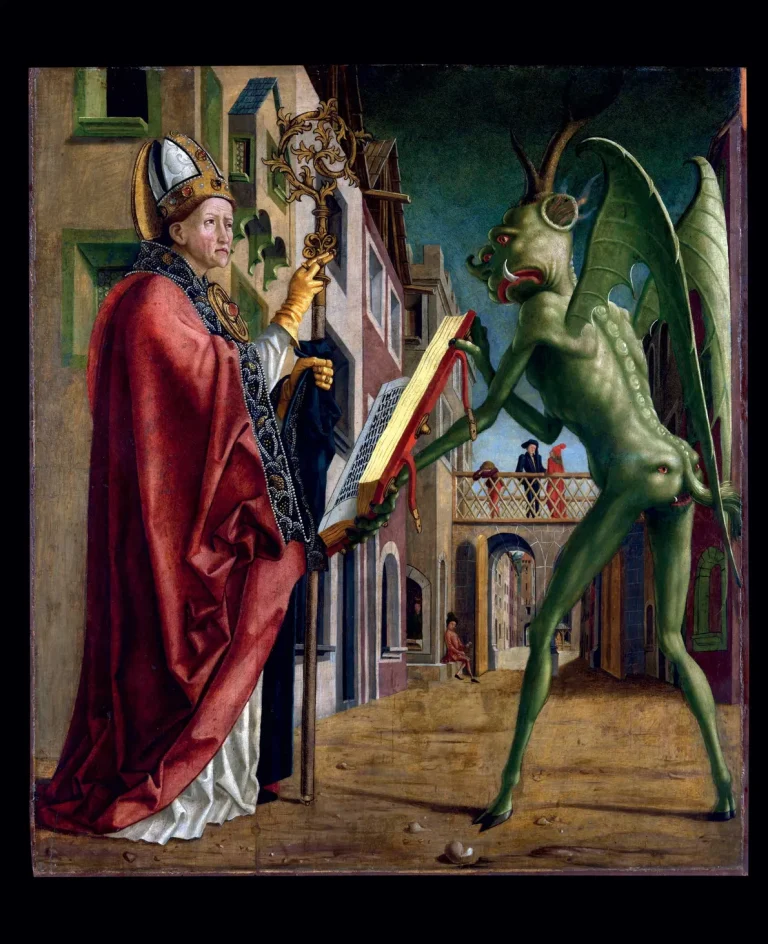
Early Christian authors like Saint Augustine focused on the battle between God and demonic forces. Medieval artists depicted the devil in terrifying forms to convey his menace:
- Early Middle Ages: He was sometimes shown with feathers like an angel.
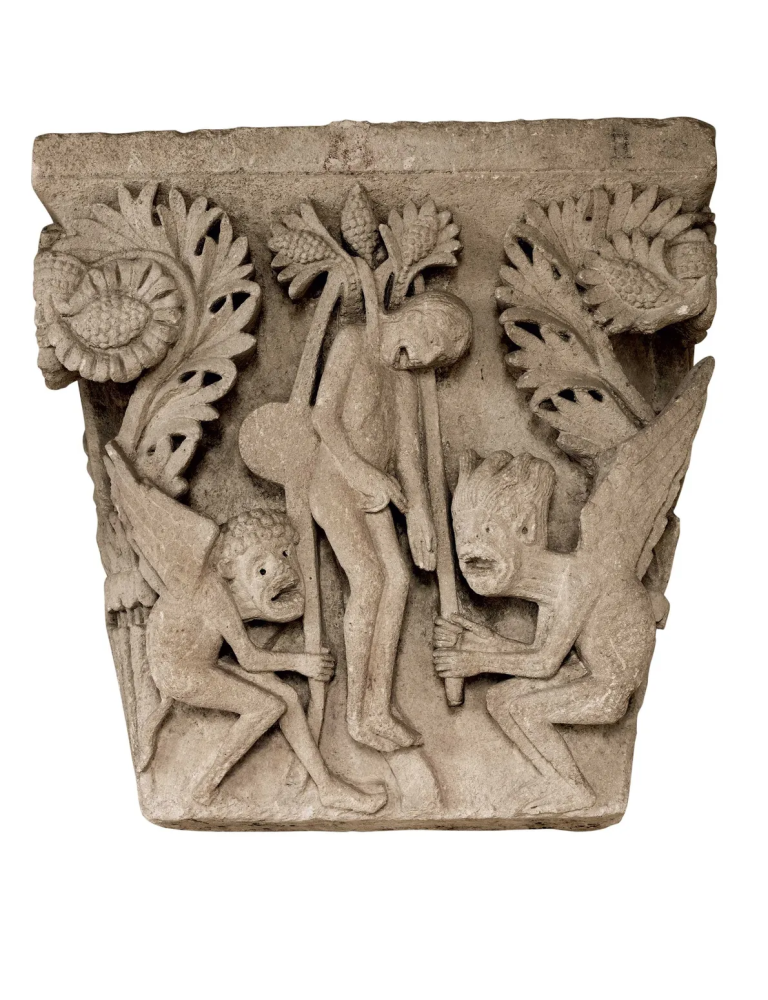
- 12th Century Onward: His skin was imagined as thick leather, with a beast-like body, tail, claws, and hooves, as seen in the Autun capital.
Michael Pacher,
Saint Augustine and the devil,
1471-1475
Gislebertus,
Capital of the Hanging of Judas, Autun cathedral, France,
1120-1135
The Pact and Exorcism
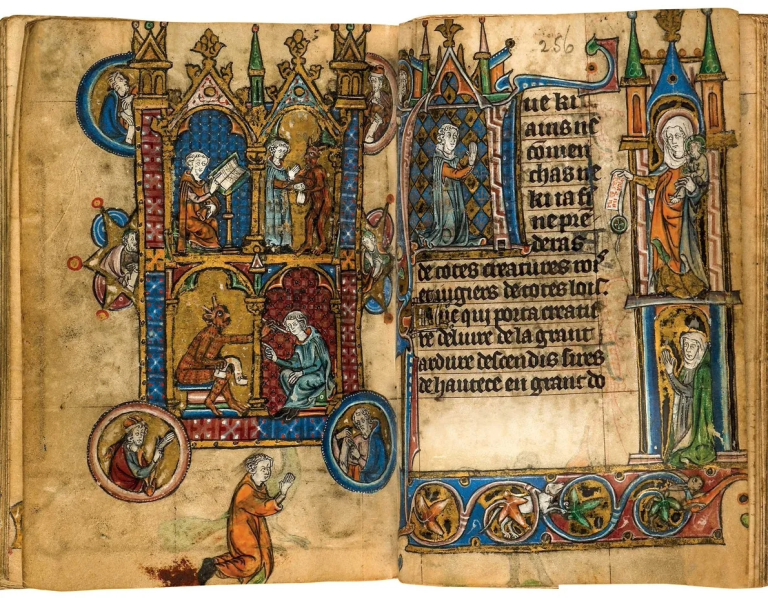
The idea of selling one’s soul fascinated Europe from the 6th to 10th centuries, notably in the story of the deacon Theophilus, who made a pact with the devil for power before repenting. By the 13th and 14th centuries, “abnormal” behaviors like convulsions were interpreted as demonic possession. Exorcism became a strictly regulated ritual involving prayers, holy water, and relics. Around 1450, clergy even began writing manuals to help exorcists study their enemy.
Theophilus and his pact with the devil, in Maastricht Hours
c.1300-1325
Architecture and Chimeras
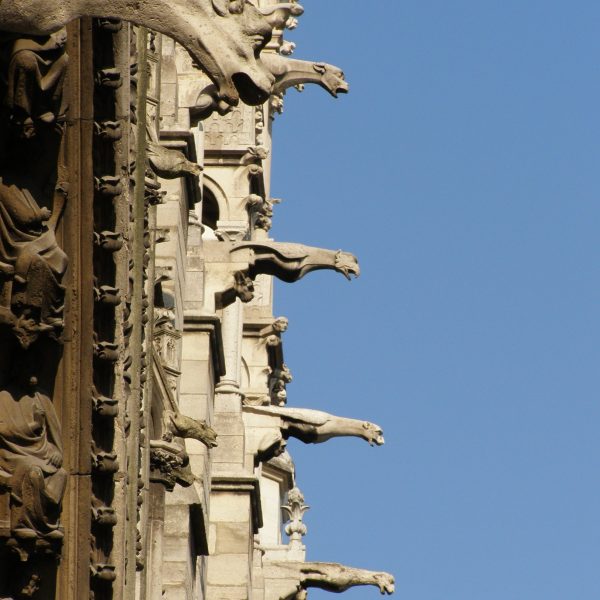
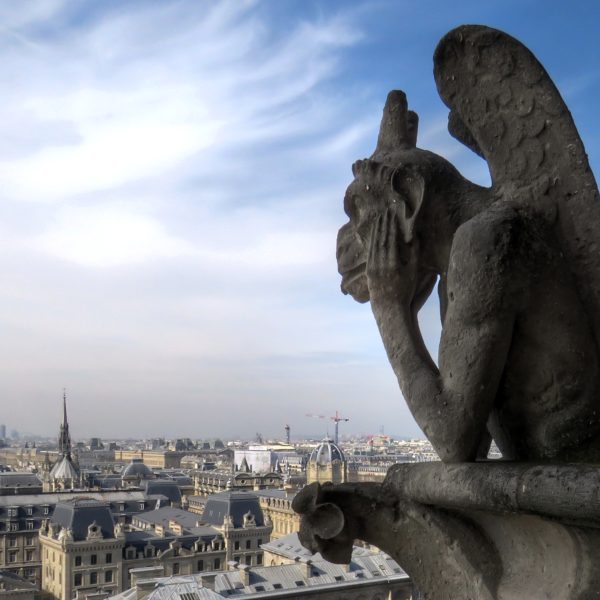
Cathedrals added gargoyles in the 13th century to remind worshippers of dark forces. A quick historical note: do not confuse gargoyles (which serve as gutters) with chimeras. The chimeras of Notre-Dame de Paris were added in a neo-Gothic style by Eugène Viollet-le-Duc during his 19th-century restoration; they did not exist in the Middle Ages.
Gargoyles,
Notre Dame de Paris,
13th century
Chimera,
Notre Dame de Paris,
19th century
Fear and Witchcraft: The Middle Ages and Renaissance
Apocalyptic Visions
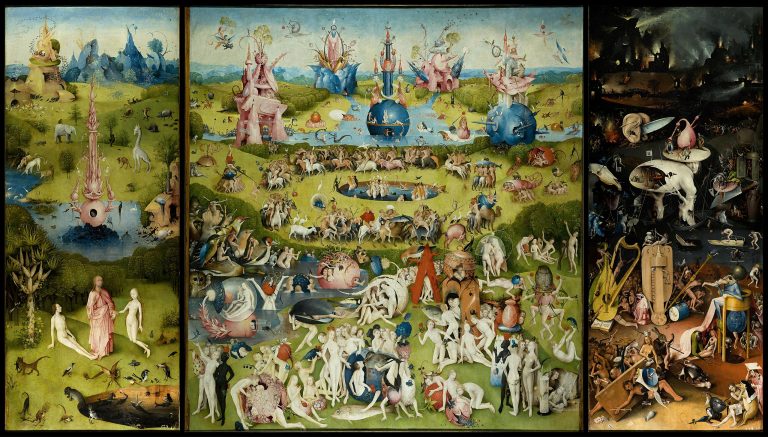
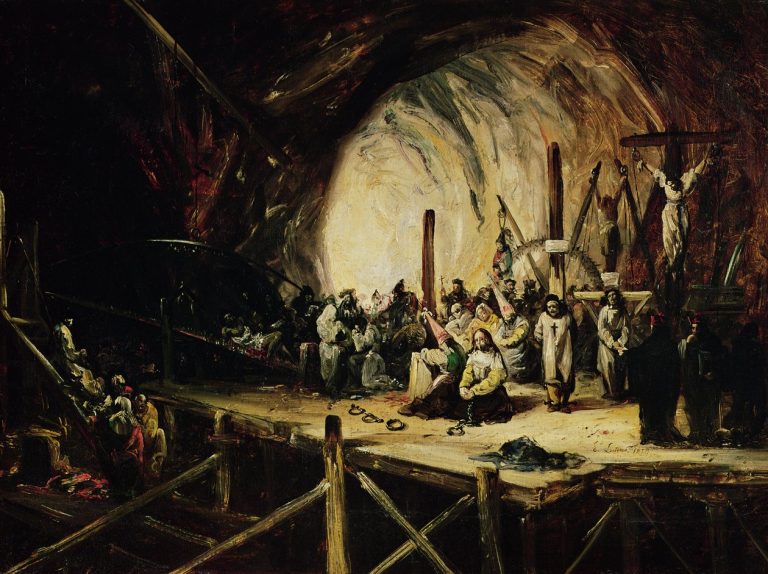
The Middle Ages were a time of strict oversight. The Inquisition, established from the 12th century, hunted practices deemed heretical. In this context, art used demons and monsters as moral warnings. Bosch famously multiplied these visions in The Garden of Earthly Delights, The Temptation of Saint Anthony, and The Haywain Triptych.
Hieronymus Bosch,
The Garden of Earthly Delights,
1490–1500
The True Witch Hunts
While often associated with the Middle Ages, the real witch hunts occurred during the Renaissance. In the Middle Ages, suspected women were often pitied as outcasts; however, actual trials began in the 1430s and peaked in the 16th and 17th centuries. Between 1430 and 1630, Europe saw roughly 110,000 trials, with nearly half ending in execution.
Artists of this period mirrored these tensions:
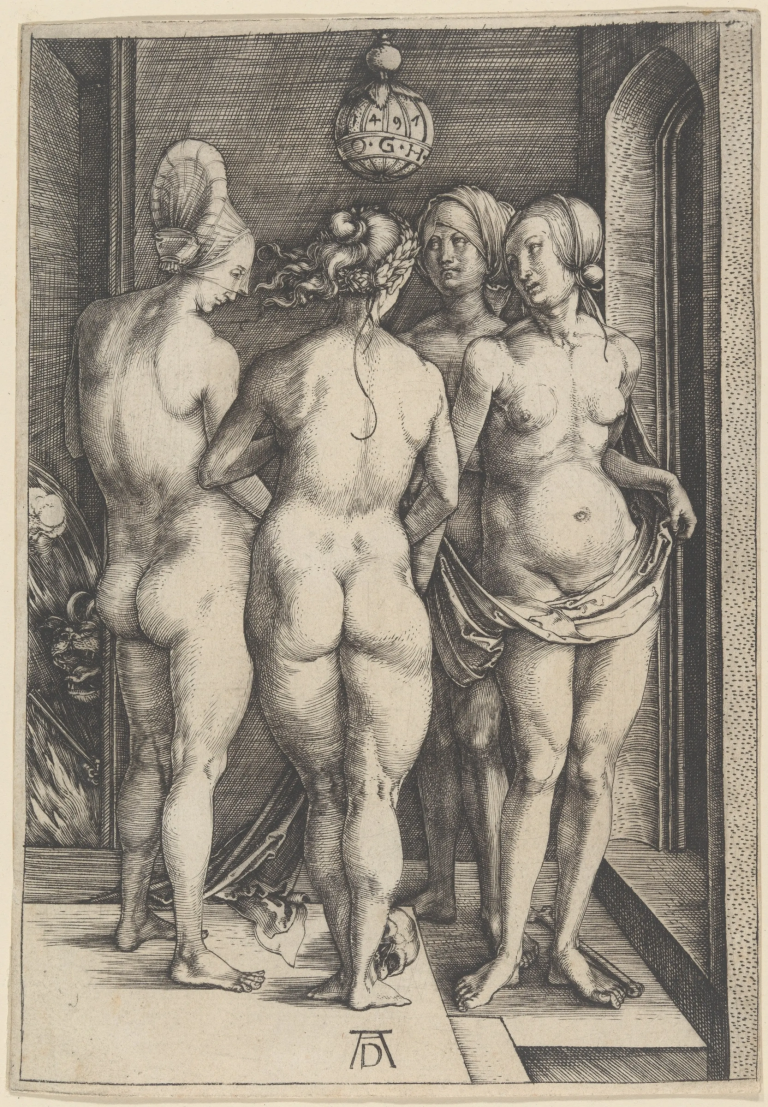
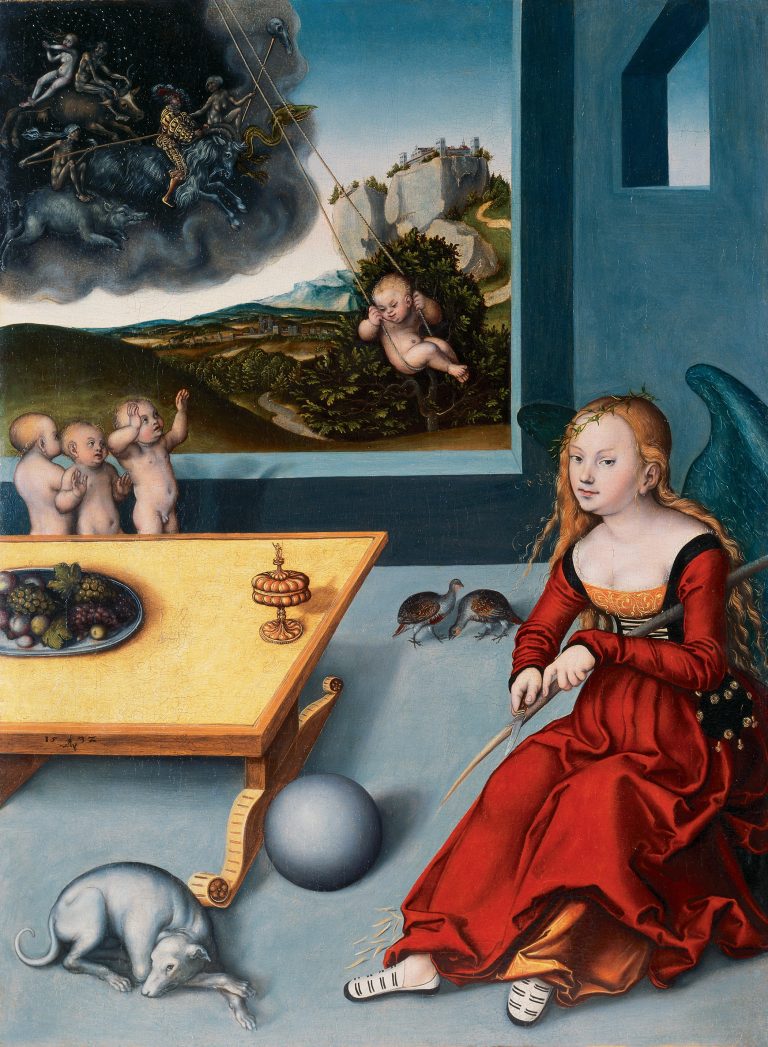
- Albrecht Dürer: Explored hidden symbols in The Four Witches and combined scientific instruments with esoteric symbols in Melencolia I.
- Cranach the Elder: Depicted nocturnal assemblies of witches flying to the Brocken Mountain for a sabbath presided over by the Devil as a goat.
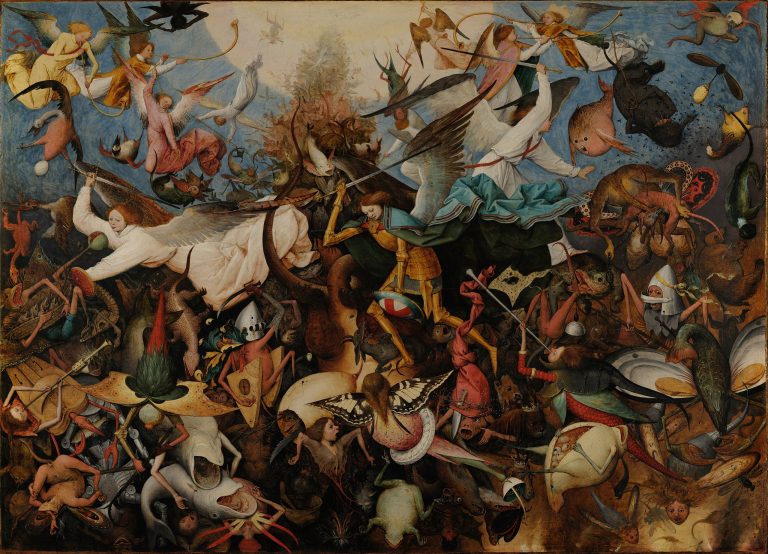
- Pieter Bruegel: His Fall of the Rebel Angels presents a vision of cosmic chaos.
Albrecht Dürer,
The Four Witches,
1497
Lucas Cranach the Elder,
Melancholia,
1532
Pieter Bruegel the Elder,
The Fall of the Rebel Angels,
1562
Eugenio Lucas Velázquez (Padilla),
Inquisition Scene,
1851
The Baroque and the Enlightenment
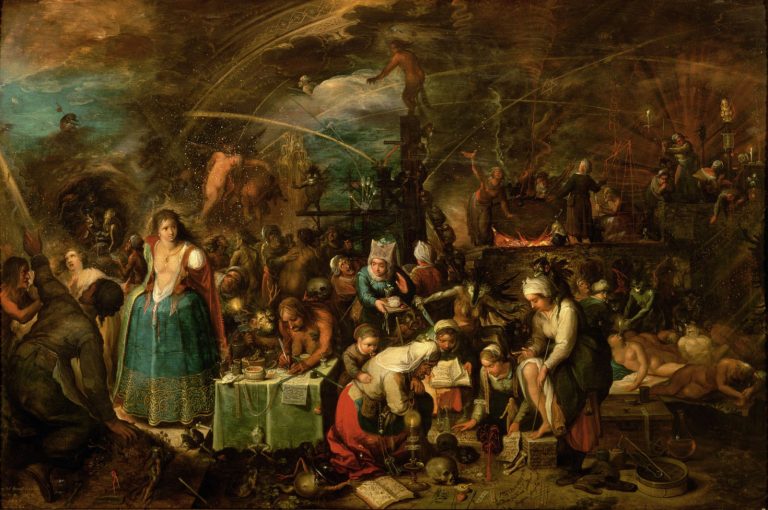
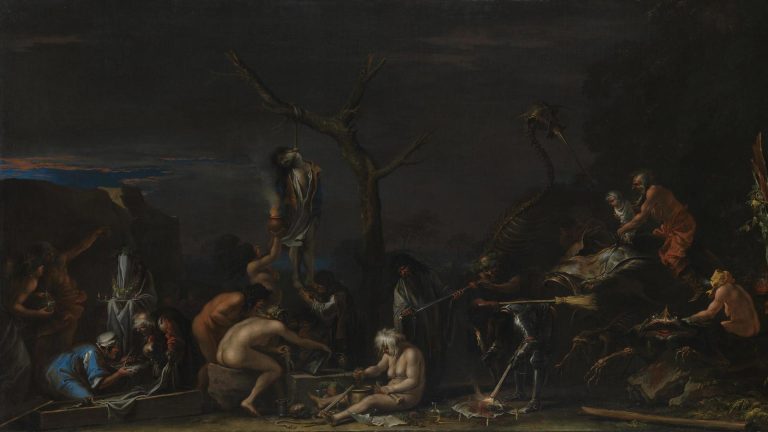
During the Baroque period, artists like Frans Francken and Salvator Rosa used witchcraft to explore the limits of nature and human imagination. However, by the late 17th and early 18th centuries, the rise of the Enlightenment favored reason and science, causing depictions of the occult to decline as supernatural beliefs were relegated to superstition.
Frans II Francken,
Witches’ Sabbath,
1607
Salvator Rosa,
Witches at their Incantations,
c. 1646
Japanese Spirits: The Edo Period
While European interest temporarily faded, the traditions of yūrei (ghosts) and oni (demons) flourished in Japan. From the 17th century onward, ukiyo-e prints depicted these supernatural figures.
- Yūrei: Often shown in white funeral kimonos, linked to vengeance.
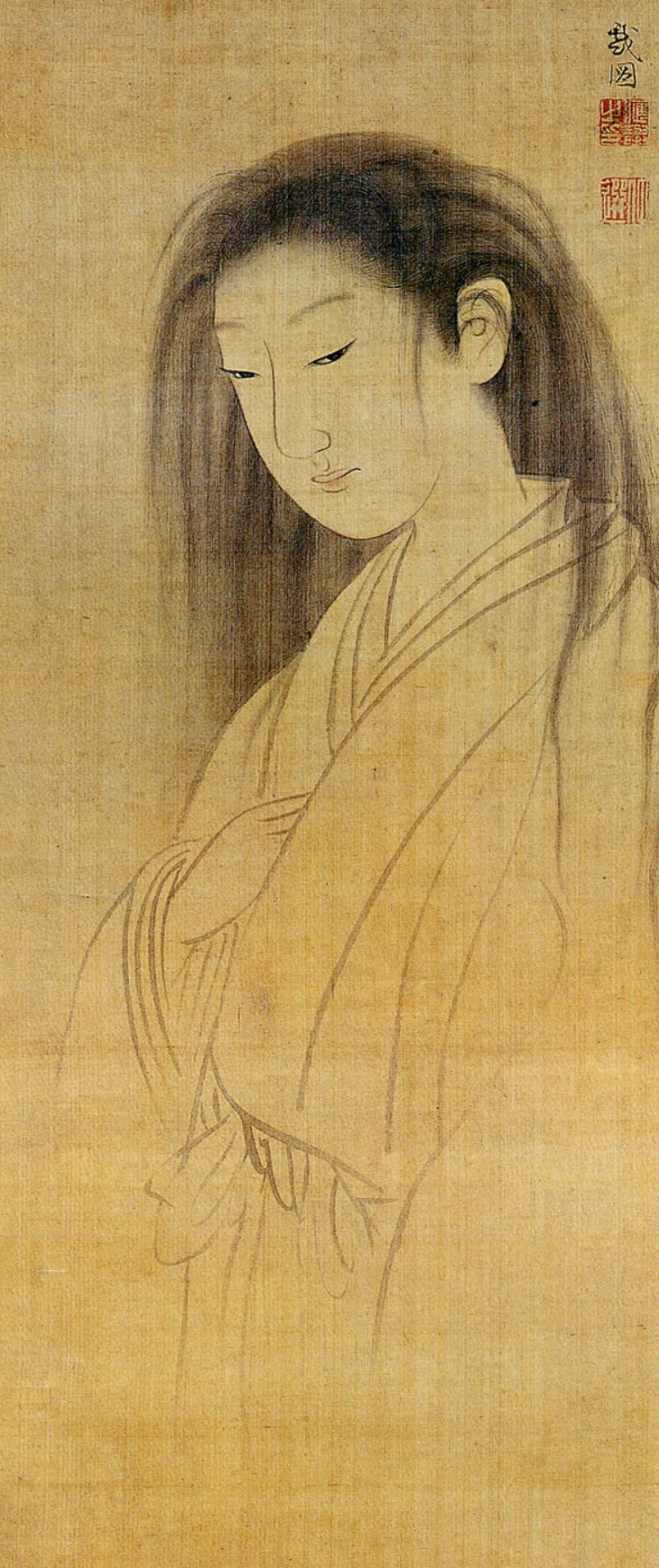
- Maruyama Ōkyo: His late 18th-century silk scroll, The Ghost of Oyuki, set the standard for ghosts: disheveled hair, transparent bodies, and no lower body.
Maruyama Ōkyo,
The Ghost of Oyuki,
c. 1750
The 19th Century: Romanticism and Symbolism
As the Enlightenment failed to provide all the answers, the 19th century saw a return to the irrational.
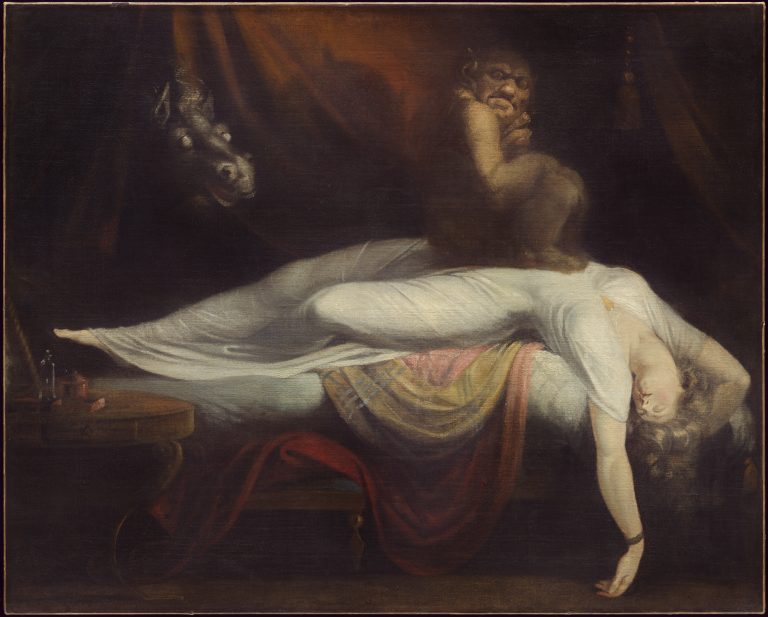
- Fuseli: Paved the way for Gothic imagery with The Nightmare.
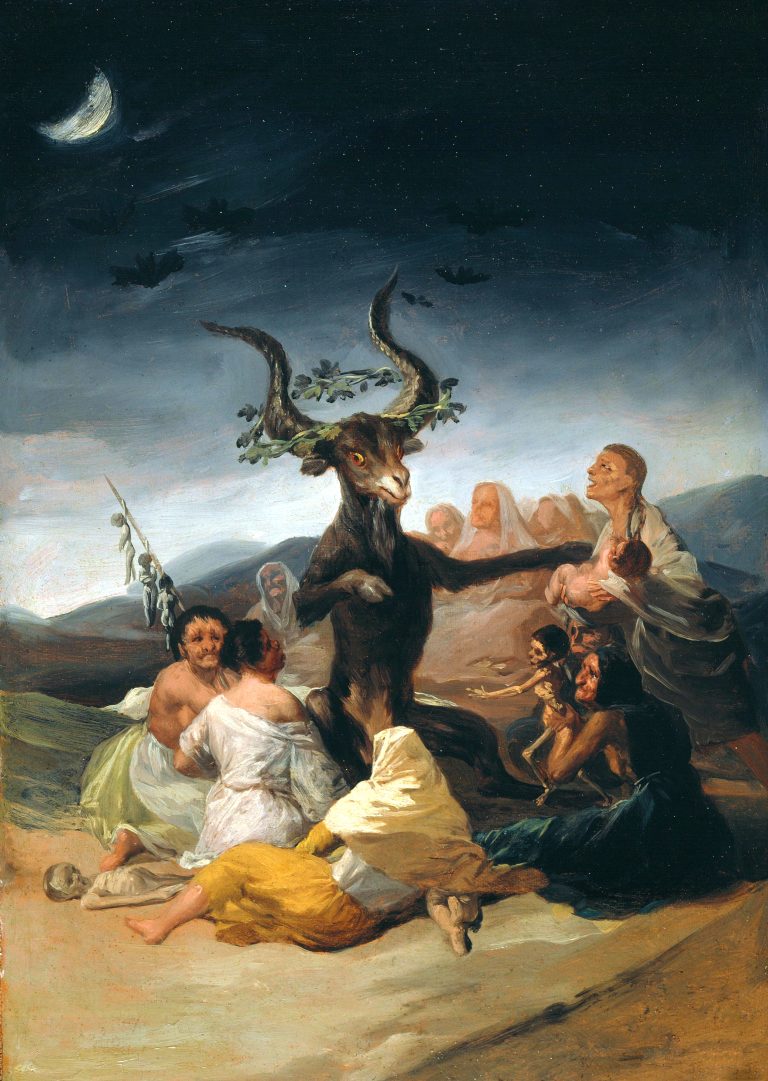
- Goya: Critiqued superstition in Los Caprichos and depicted a witchcraft ritual in Witches’ Sabbath.
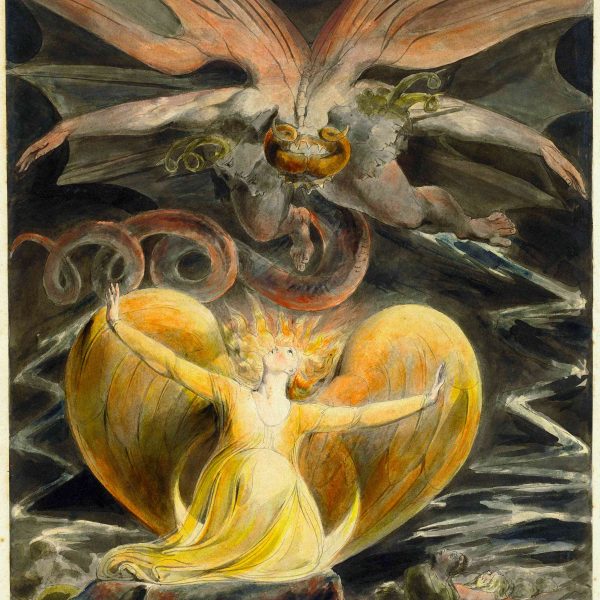
- William Blake: Created The Great Red Dragon series between 1805 and 1810, illustrating the struggle between heavenly and infernal forces.
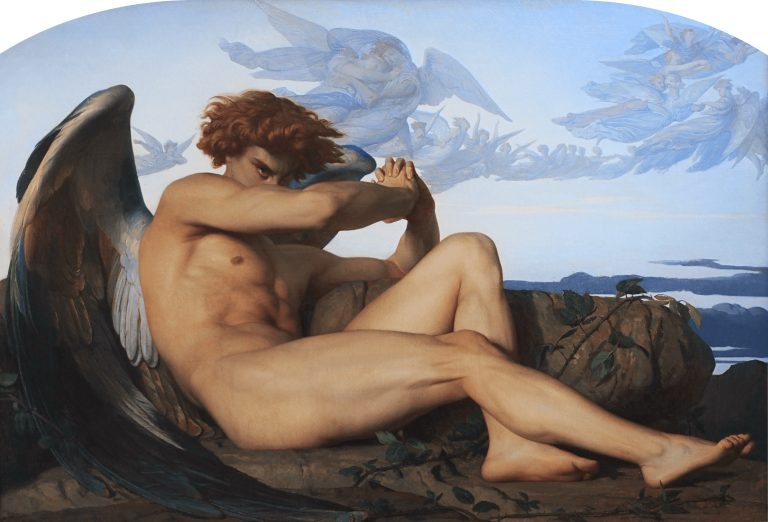
- Alexandre Cabanel: Humanized the demon in Fallen Angel (1847), highlighting pain and wounded pride.
Henry Fuseli,
The Nightmare,
1781
Francisco de Goya,
Witches’ Sabbath,
1798
William Blake,
The Great Red Dragon and the Woman Clothed with the Sun,
1803
Alexandre Cabanel,
The Fallen Angel,
1847
Neo-Occultism and Spiritualism
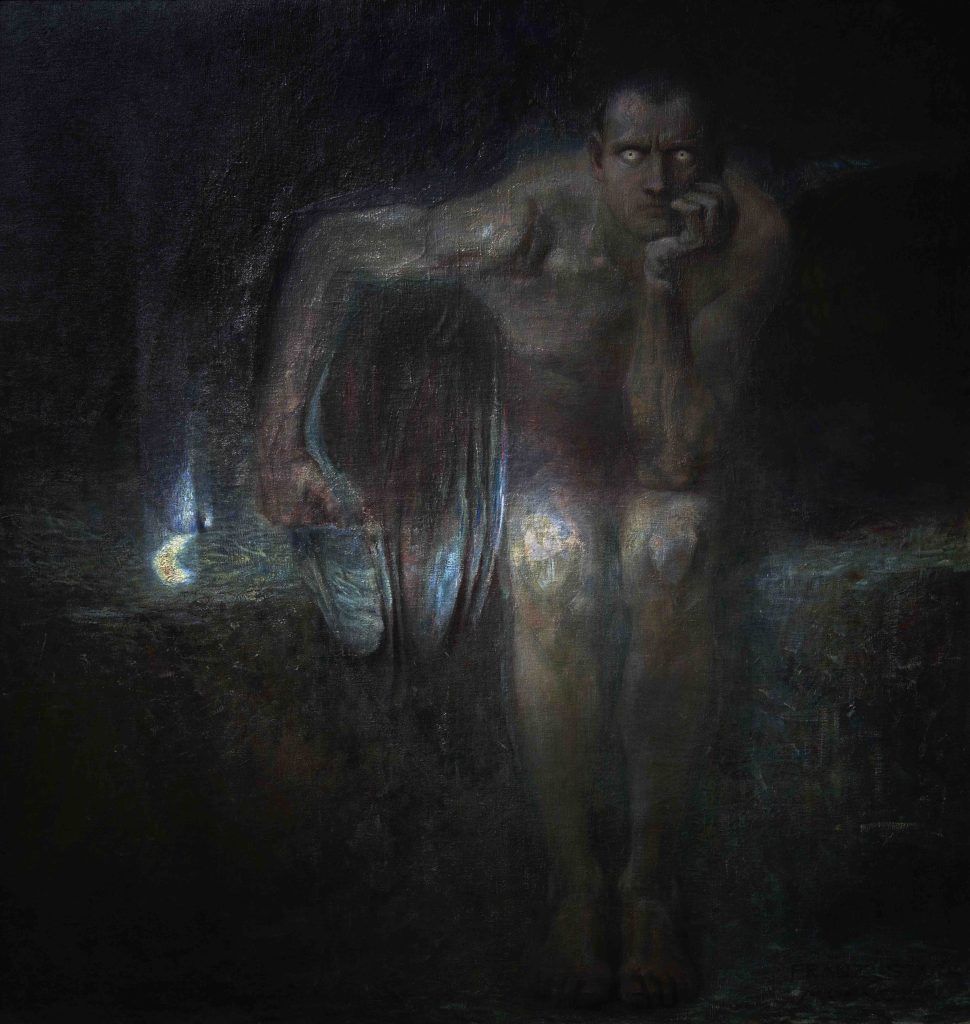
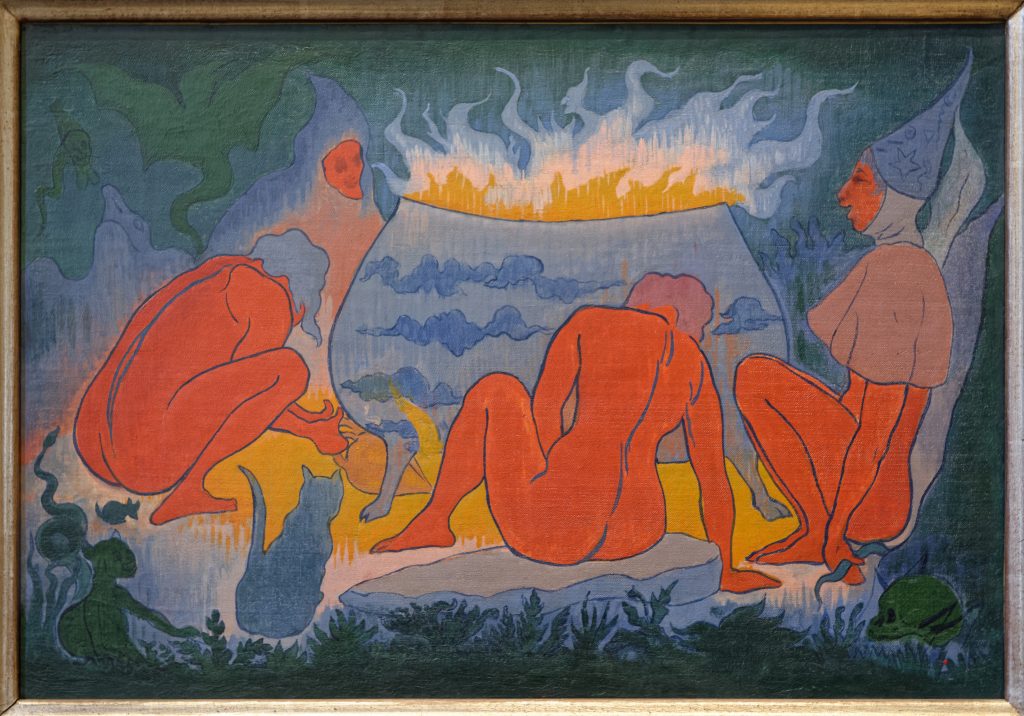
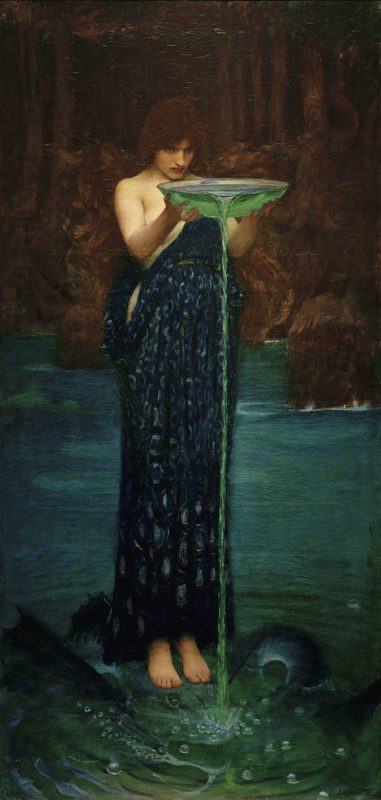
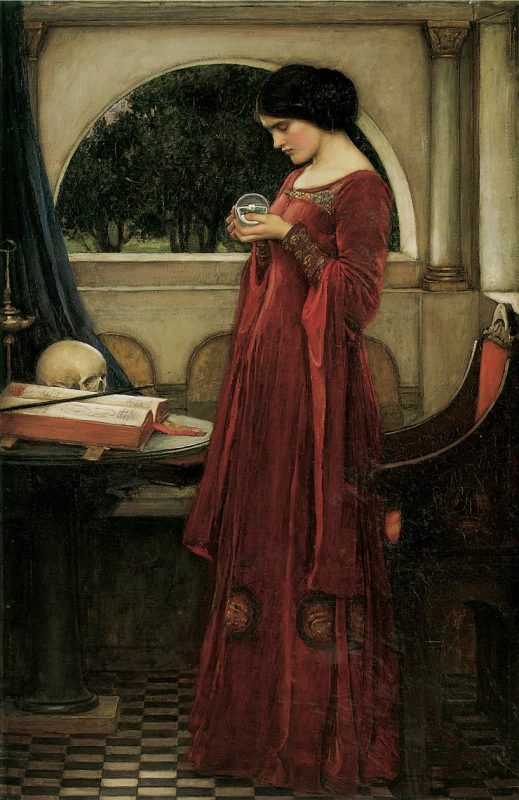
By the late 19th century, a craze for spiritualism—communicating with spirits—gripped the West, popularized by Allan Kardec and figures like the Fox sisters. This era saw the rise of secret societies like the Kabbalistic Order of the Rose-Cross. Symbolist artists made the occult their favorite subject, filling their works with themes of alchemy, black magic, and mystical visions.
Franz von Stuck,
Lucifer,
1890
Paul Ranson,
Witches Around the Fire,
1891
John William Waterhouse,
Circe invidiosa,
1892
John William Waterhouse,
The Crystal Ball,
1902
The 20th Century to Today: Modern Esotericism
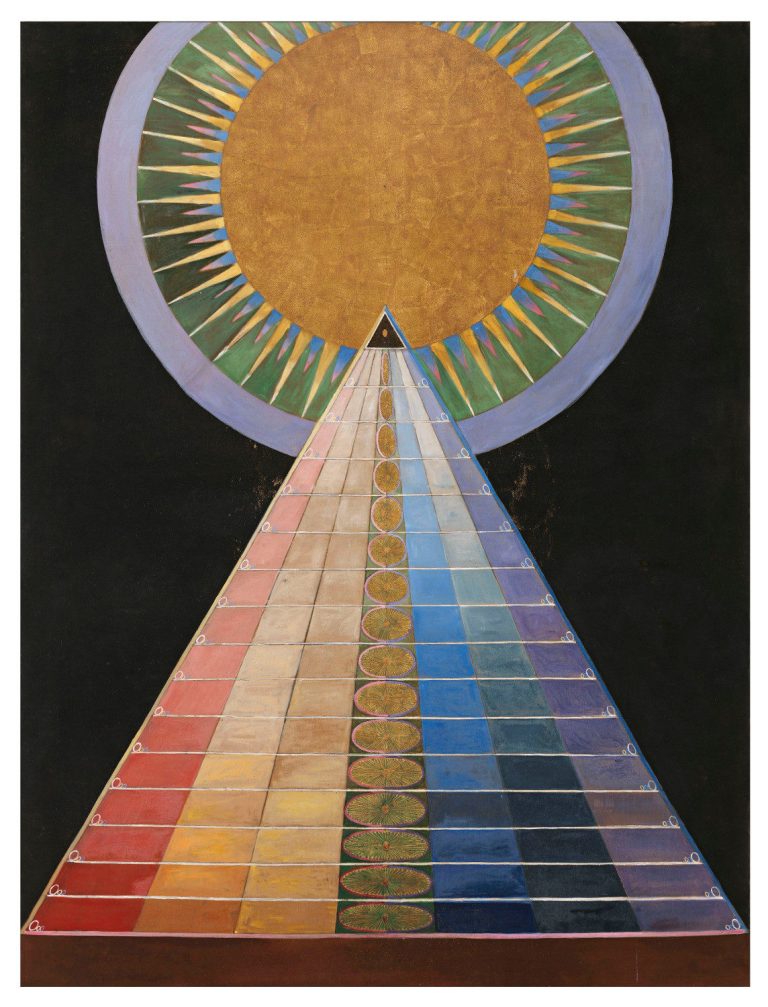
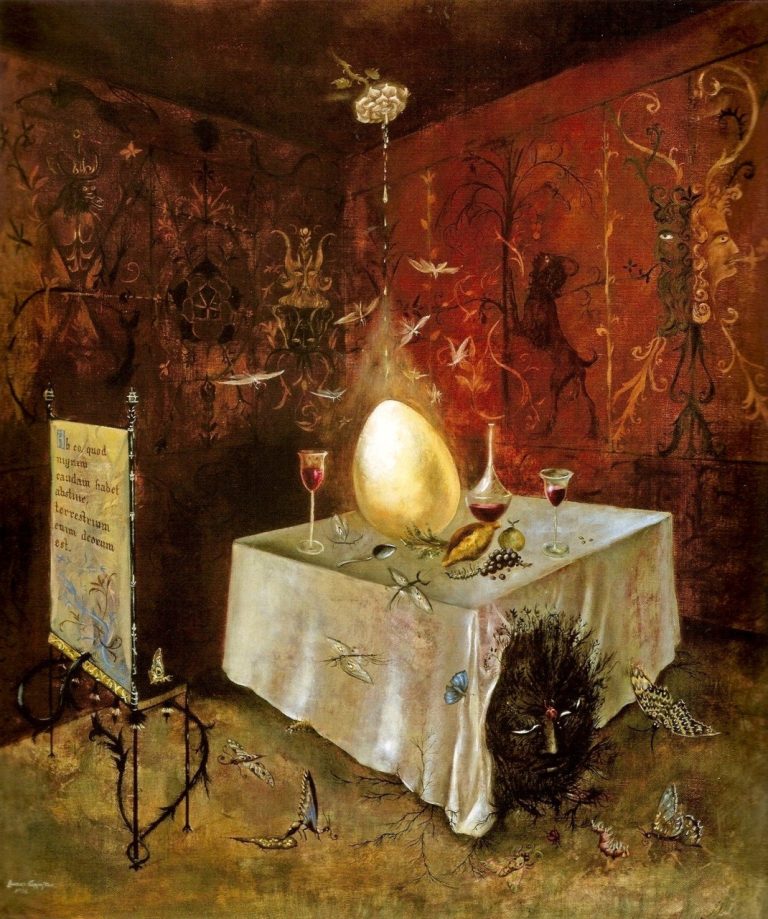
In the 20th century, the occult became a driving force for abstraction, seen in Hilma af Klint’s Altarpieces. Surrealists like Dalí and Max Ernst explored alchemical symbols and dreams.
Hilma af Klint,
Altarpiece, No. 1, Group X,
1904
Leonora Carrington,
AB EO, QUOD,
1956
The Witch as a Feminist Symbol
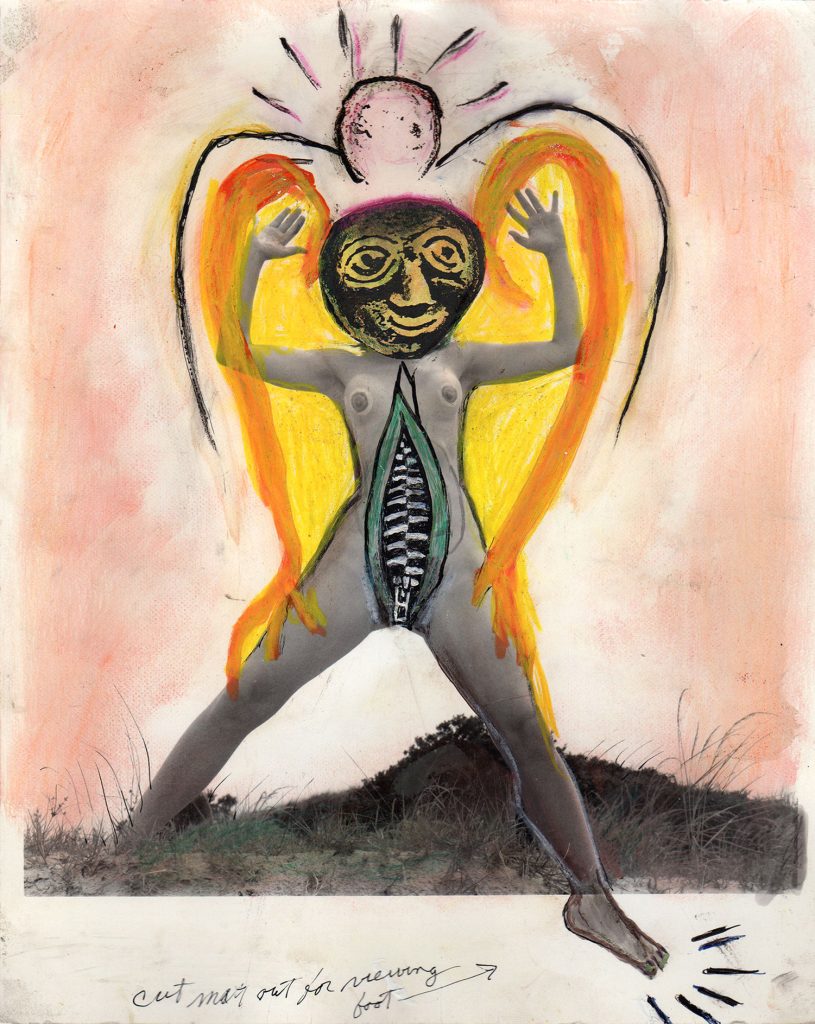
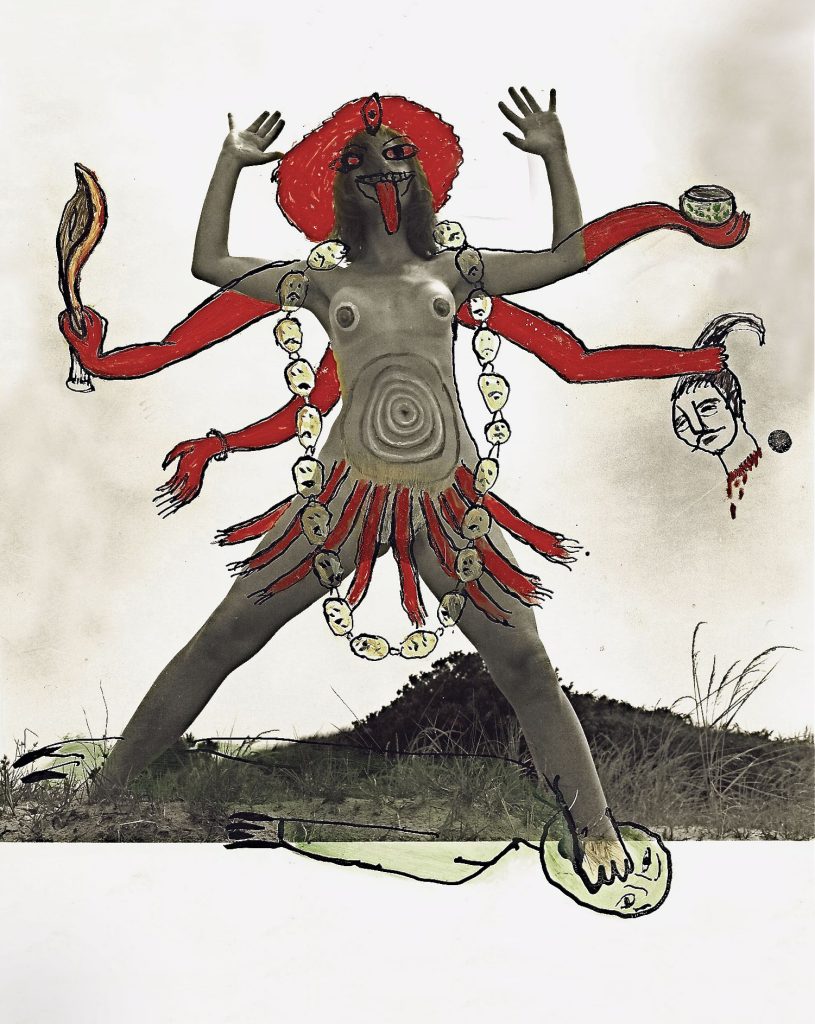
The figure of the witch was reclaimed as a symbol of resistance. In the 1890s, suffragist Matilda Joslyn Gage portrayed her as a powerful woman. This resonated in the 1970s when the witch became a feminist icon representing resistance against patriarchy, notably with the W.I.T.C.H. collective in 1968.
Mary Beth Edelson,
“Red Kali” and “Zipper Sheela: Stepping Out” from the series Trickster Series,
1973
Contemporary Reinterpretations
The occult remains a potent symbolic power in contemporary art:
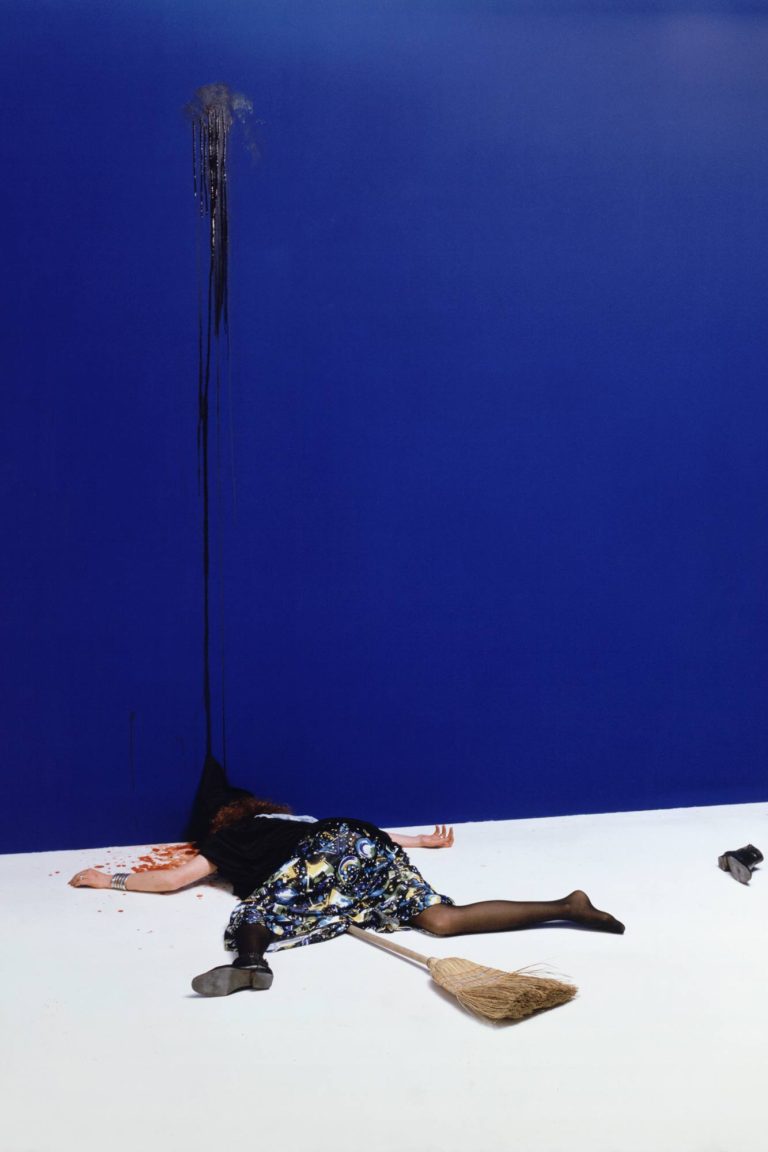
- Pierre Joseph Revisits the codes of the occult with a touch of humor
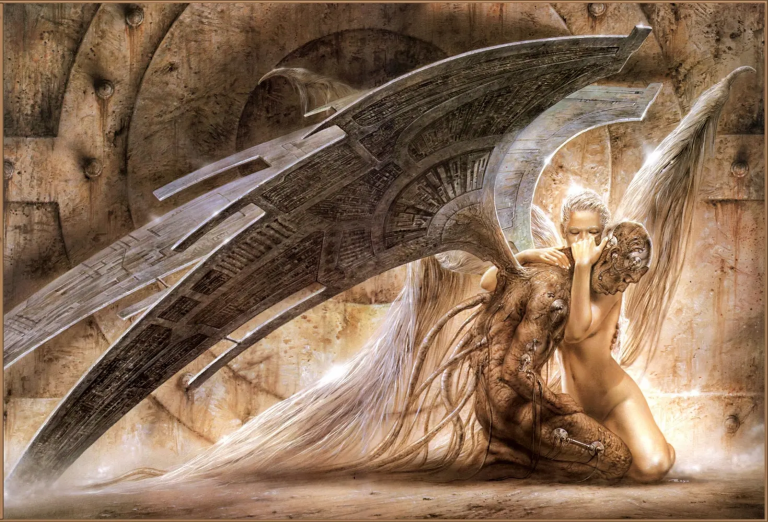
- Luis Royo: Reinvents fallen angels in futuristic, apocalyptic landscapes.
- Luciana Lupe Vasconcelos: Depicts primordial goddesses emerging from the waters of creation.
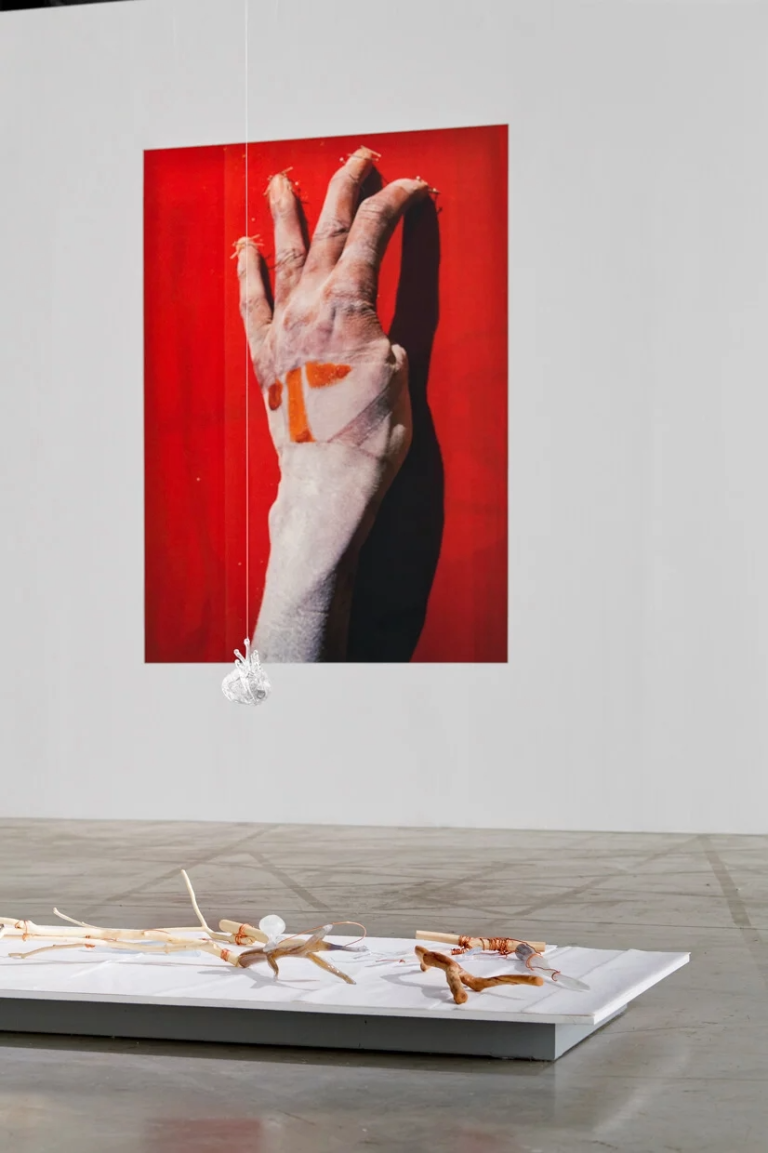
- Myriam Mihindou: Recently explored shamanic traditions and identity in her retrospective Praesentia.
Pierre Joseph,
The Witch (Character to be Reactivated),
1993
Luis Royo,
Fallen Angels,
1998
Luciana Lupe Vasconcelos,
A Noite e uma Vaca Preta,
2013
Myriam Mihindou,
“Praesentia” exhibition,
2024
In the End...
Across the centuries, the occult has fueled the imagination, giving form to the invisible and questioning the limits of human knowledge. It is not just superstition; it is a way of thinking about the world.
What about you? Do you think art can reveal truths that reason cannot grasp? Share your thoughts in the comments!
Sources
Books
Symboles et Allégories, Hazan
Le Petit Larousse des symboles
Marie-Louise Winbladh, The Bearded Goddess: Androgynes, Goddesses and Monsters in Ancient Cyprus, Armida Publications, 2012
General Articles and Videos
Beaux Arts – Cultes: 10 œuvres au poil, The Conversation – Les femmes à barbe dans l’art, YouTube – MAD exhibition “Des cheveux et des poils”
Academic or Specialist Articles
Persée – Medievales, Liber physiognomiae – Wikipedia, Histoire Image – Charlemagne, Tanjand LiveJournal, British Library – Digitised Manuscripts, Psautier de la reine Marie – Wikipedia
Places and Artworks Related to the Topic
Met Museum – Herakles Farnese, Wikimedia – Herakles Farnese, Google Arts & Culture – Venus of Urbino, Pierre & Gilles – Galerie Templon, Pierre & Gilles – Franceinfo, Centre Pompidou – Mykola Tolmachev, Instagram – Zuhra Hilal, Planète Vintage – Gil Elvgren Pin-Up Art, Public Delivery – Andy Warhol Marilyn Monroe
Specific Works Mentioned
Cabanel – The Birth of Venus, Gustave Courbet – L’Origine du monde, Alfons Mucha – Painting 1, Gustav Klimt – Nuda Veritas, Marcel Duchamp – L.H.O.O.Q., René Magritte – The Rape, Suzy Solidor – Portrait, Tessier Sarrou – Rare Bande Fixe Moustache Parisien
Wikipedia (from general to specific)
Æthelstan, Liste des monarques d’Angleterre, Quintessence (philosophie), Le Martyre de sainte Julie, Pouf (coiffure), Madame de Lamballe, Pierre et Gilles