

Insects have always been more than just “creatures” in the eyes of artists. Throughout history, they have crawled, flown, and buzzed their way into jewelry, textiles, and masterpieces. They are the ultimate symbols—representing everything from the divine sun to the rot of the devil.
In this exploration, we’ll track how these six-legged (and occasionally eight-legged) critters evolved from sacred icons to tools for modern political protest.
👉 Watch the complete video on YouTube.
Sacred Beginnings and Radiant Armor
In Ancient Egypt, the insect was a god. The dung beetle (Scarabaeus sacer) was seen as a terrestrial reflection of the sun god, rolling the sun across the sky just as it rolled its ball of earth. Scarab amulets were vital for the deceased, placed over the heart to guide souls through the judgment of the afterlife.
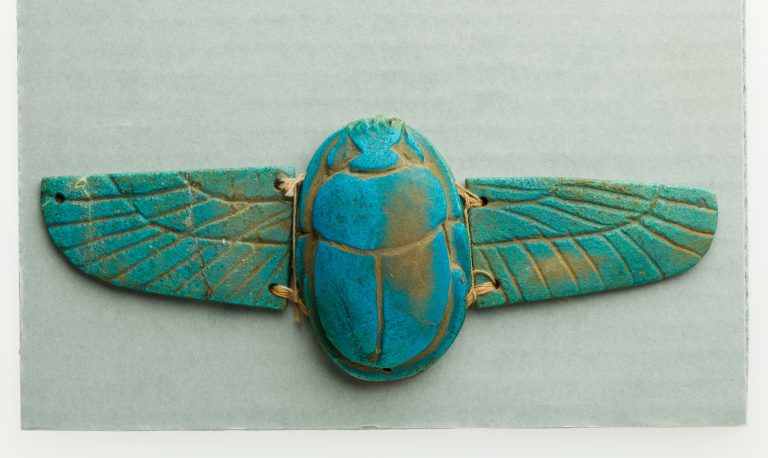
Anonymous,
Winged Scarab Amulet,
c.1070-945 BCE
Moving from the spiritual to the physical, humans eventually began using the “jewels” of nature themselves. Beetlewing art—found across Asia and South America—utilizes the iridescent elytra (wing cases) of jewel beetles. These vibrant, metallic greens were stitched into courtly clothing and jewelry, literally wearing the insect’s exoskeleton as a mark of status.
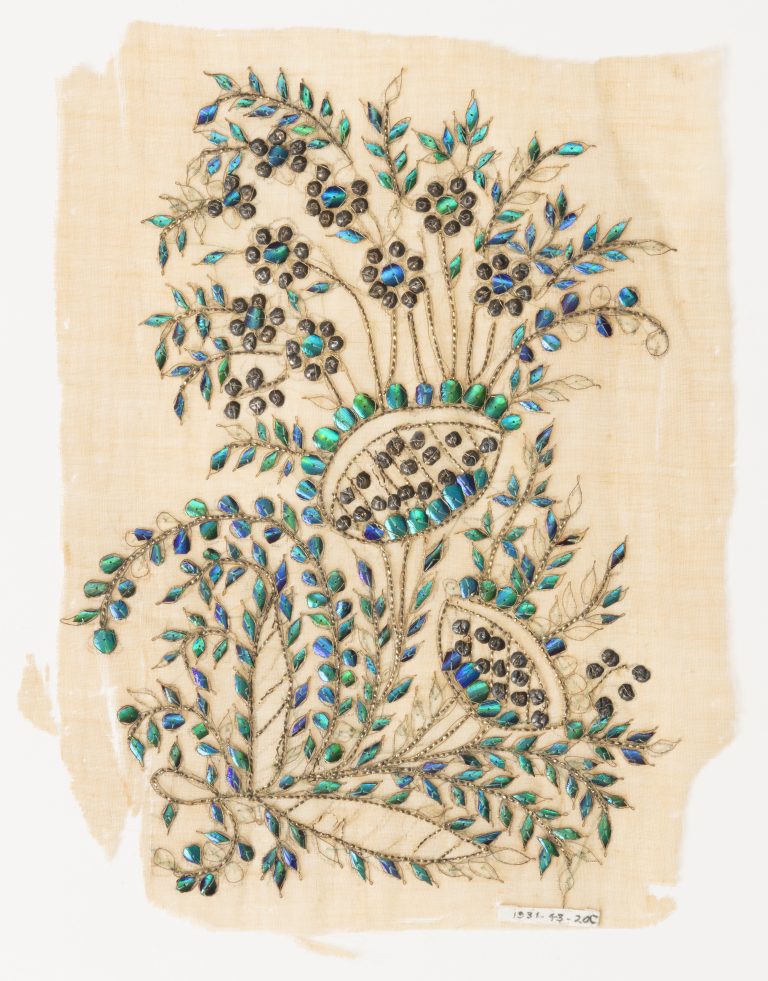
Anonymous,
Beetlewing Art,
example from the 19th century
The Duality of the Divine and the Demonic
As Christianity rose, insects were drafted into a strict symbolic code. The scorpion, with its lethal sting, quickly became a stand-in for treachery, demonic power, and the torments of the desert. You’ll often spot them on the banners of Roman soldiers in Crucifixion scenes—a subtle artistic shorthand for paganism.
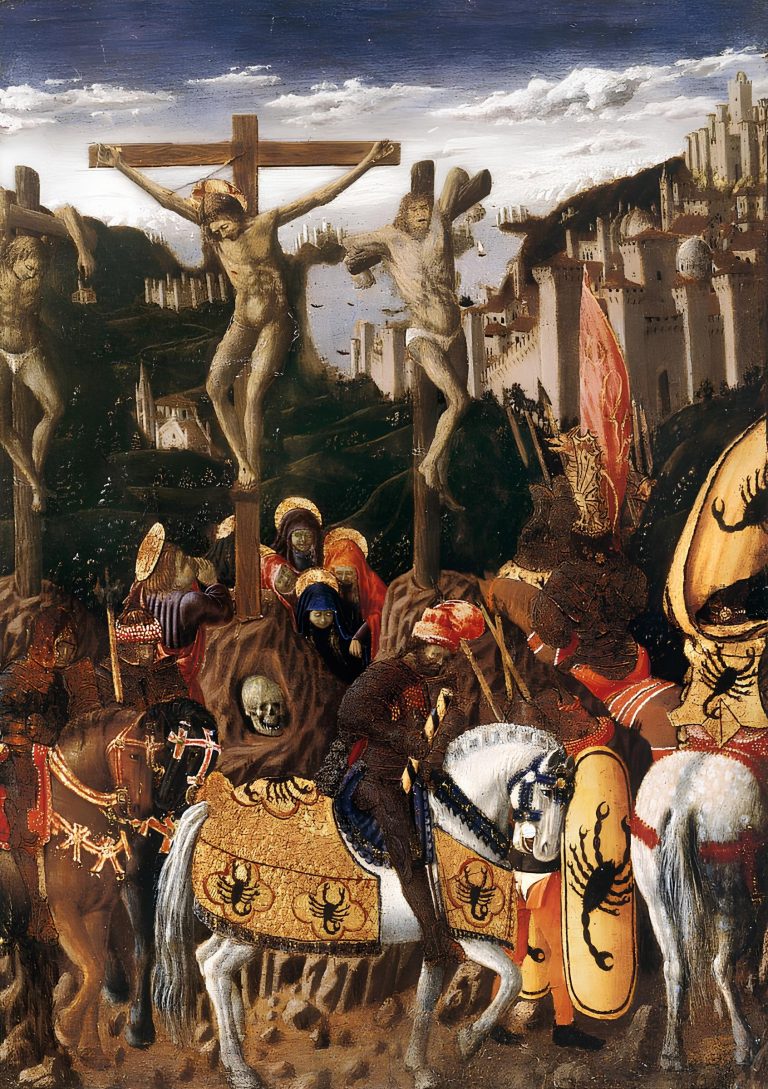
Giovanni Boccati,
Crucifixion,
c.1440
The stag beetle was often viewed as a symbol of evil or the devil. In Northern folklore, people feared the beetle as a ‘fire-starter,’ believing it carried glowing embers in its jaws to burn down houses. In Flegel’s painting, Still Life with Stag Beetle, the beetle attacking the fish (a symbol of Christ) represents the classic battle between good and evil.
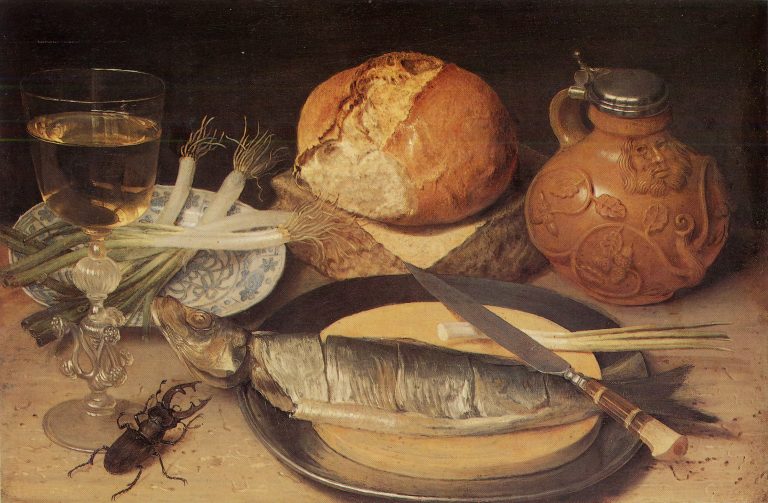
Georg Flegel,
Still Life with Stag Beetle,
1635
Conversely, the fly occupied a strange, “trompe-l’oeil” niche. During the Renaissance, artists began painting the Musca depicta—the “painted fly.” These were so realistic they looked like they had just landed on the canvas.
- The Jest: A way to trick the viewer into swatting the painting.
- The Memento Mori: A reminder of decay. In the Master of Frankfurt’s self-portrait, flies crawl near him and his wife, whispering that death comes for everyone.
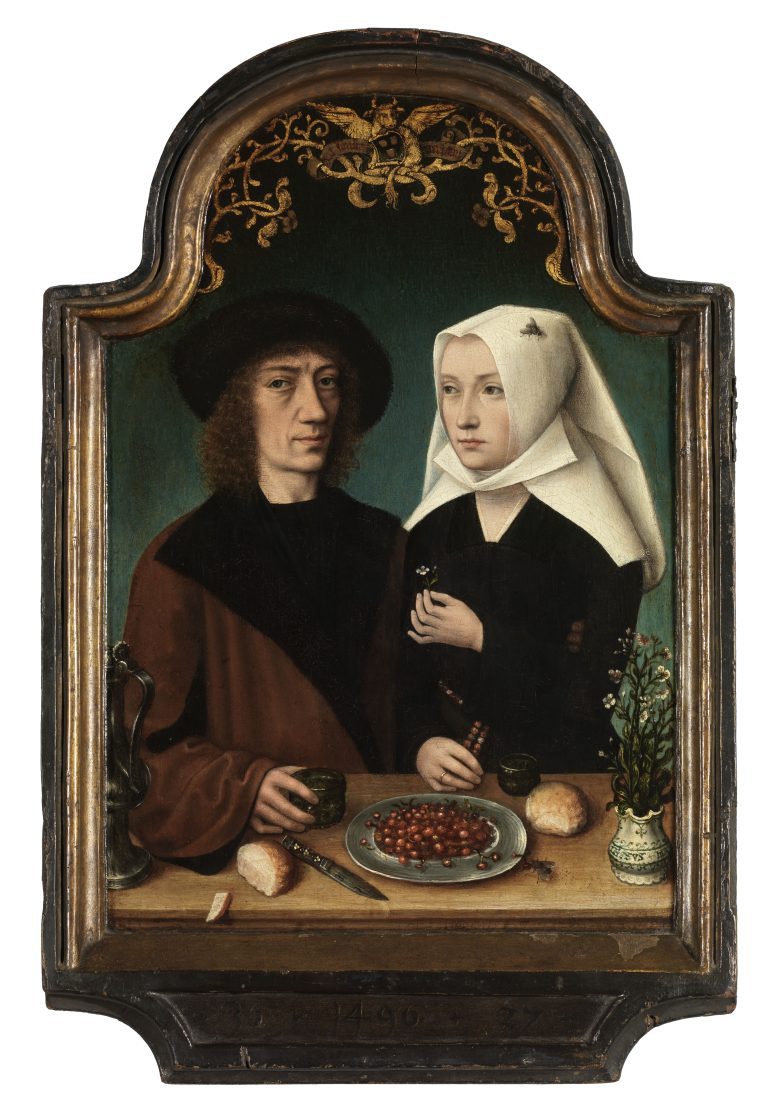
Master of Frankfurt,
Portrait of the artist and his wife,
c.1480
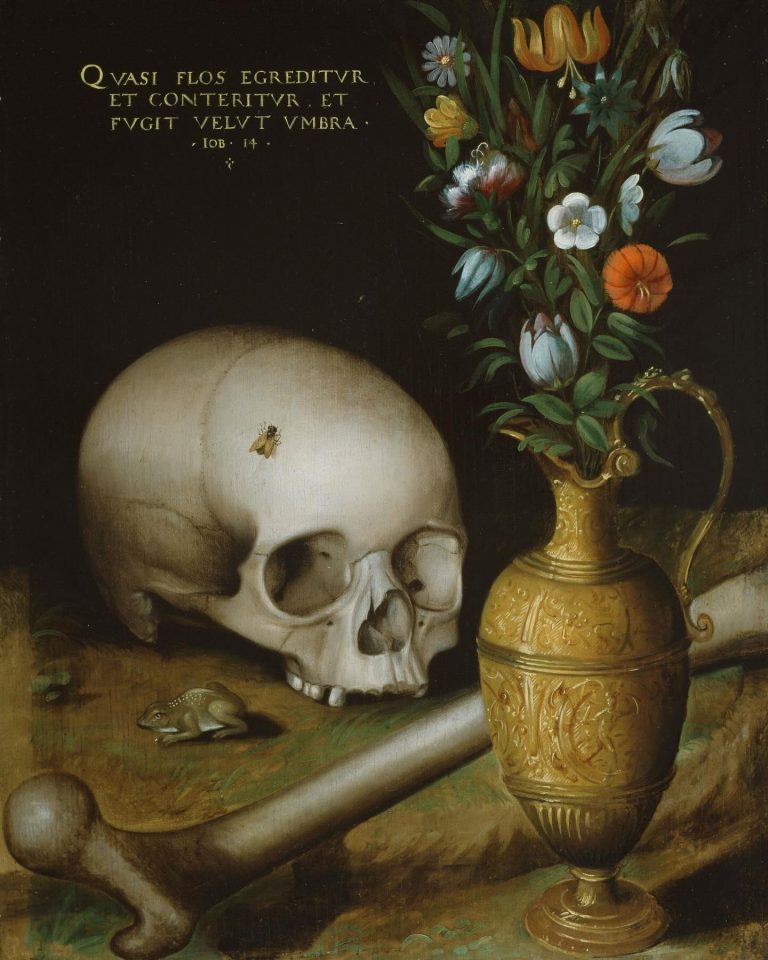
German School,
Vanitas Still Life with Skull and Bouquet,
c.1600
Metamorphosis as Moral Allegory
Few artists used insects as effectively as Hieronymus Bosch. In his Haywain Triptych, fallen angels don’t just fall—they transform. They become monstrous hybrids of humans and insects, representing the “de-evolution” of the soul through sin.
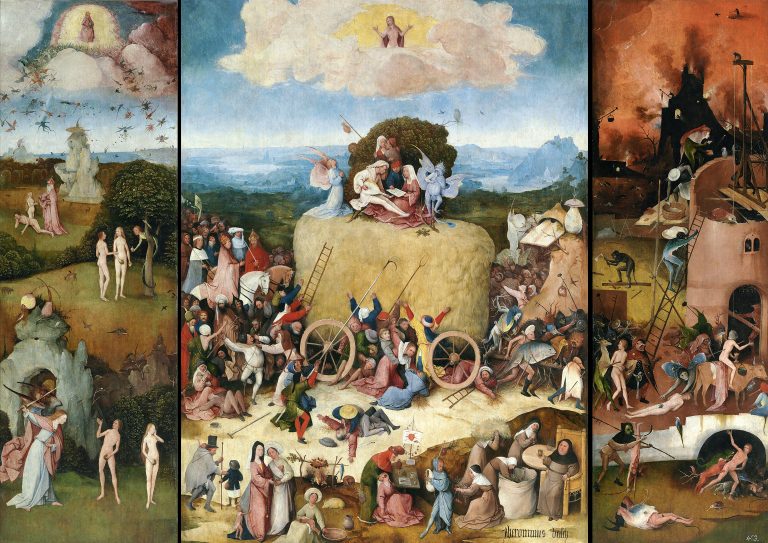
Hieronymus Bosch,
The Haywain Triptych,
c.1502
However, not all transformations were negative:
- The Butterfly: In almost every culture, the butterfly is the soul. Its life cycle—caterpillar (life), chrysalis (the tomb), and winged adult (resurrection)—made it the perfect Christian symbol for salvation. [canova]
- The Bee: Revered for its tireless labor and social order, the bee represented both the sweetness of honey (mercy) and the sting of Christ’s suffering. [flegel sweet]
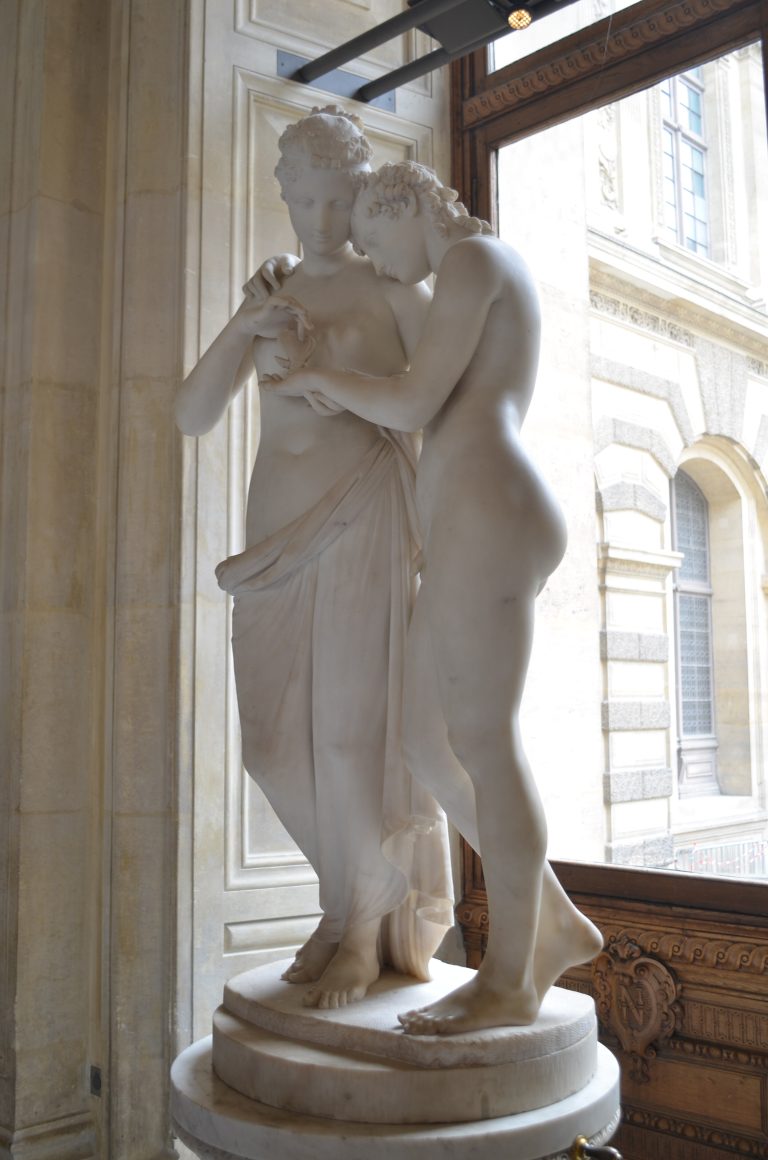
Canova,
Love and Psyché, standing,
1796
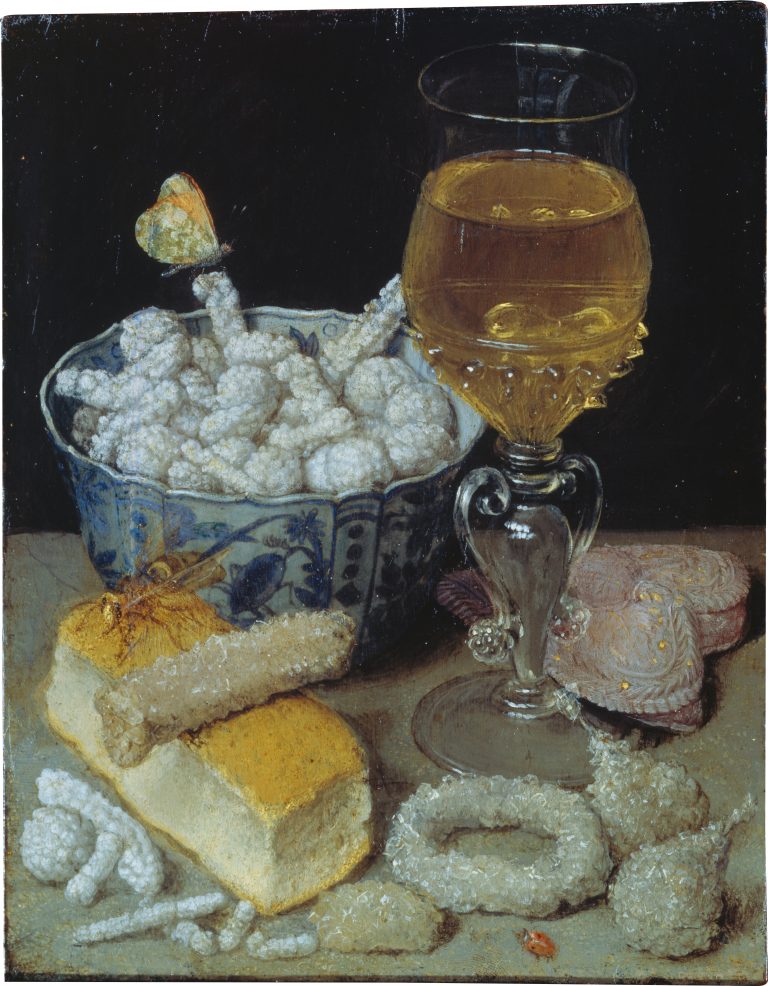
Georg Flegel,
Still Life with Bread and Sweetmeats,
C.1610
Far Eastern Poetry and the Song of Fortune
In Asia, the relationship with insects has often been more poetic and celebratory. In Japan, the dragonfly is a national emblem (once called Akitsushima or “Dragonfly Island”), symbolizing victory and summer.
While Western art often focused on the “gross” nature of insects, Chinese and Japanese artists like Hokusai and Qi Baishi focused on their grace. Keeping crickets or grasshoppers in ornate cages was—and is—believed to attract fortune through their song.
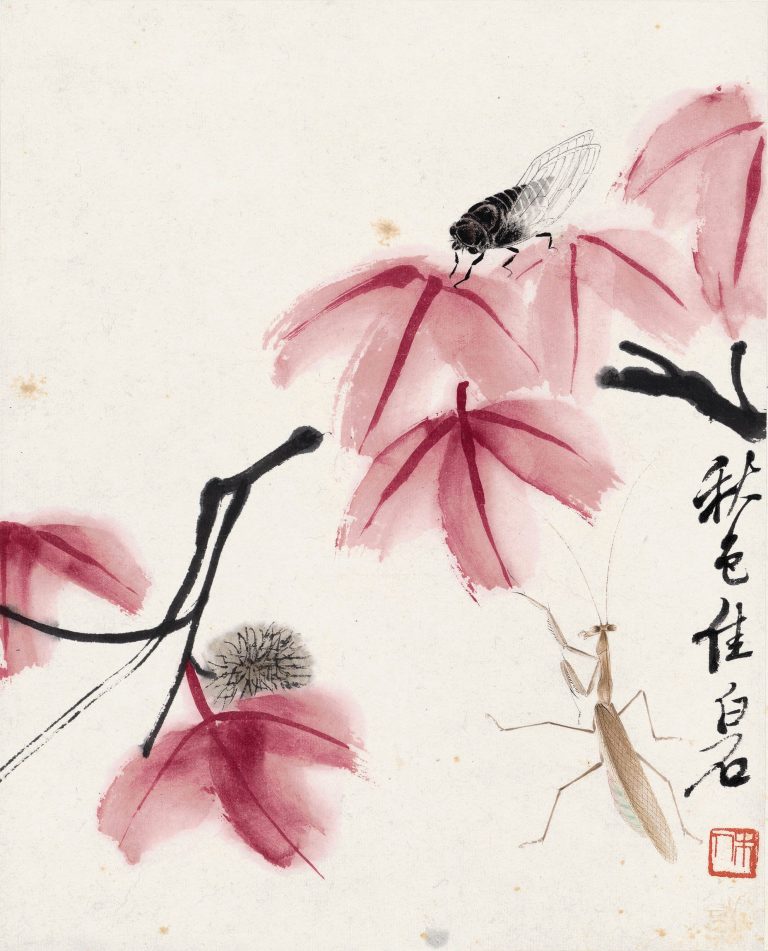
Qi Baishi,
Likvidambra Taiwan and the cicada,
1950
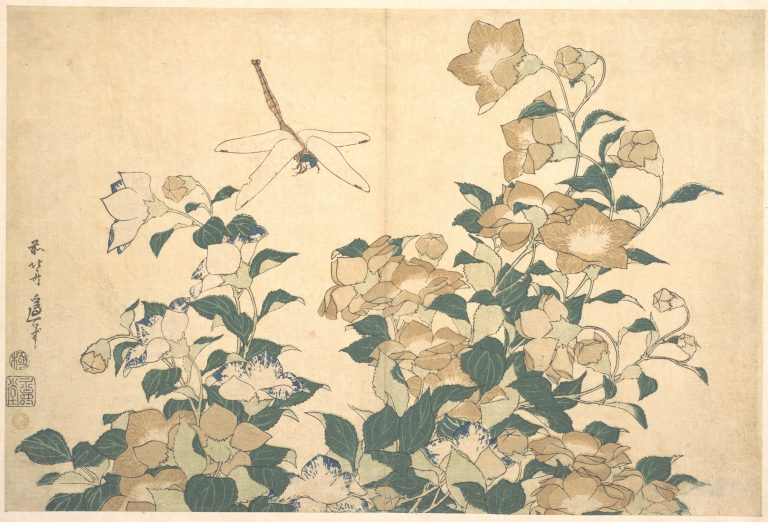
Katsushika Hokusai,
Dragonfly and Bellflower,
c.1825
From Soul to Surrealism: The Psychological Insect
As we move into the 19th and early 20th centuries, insects shifted from religious symbols to tools for exploring the human psyche. In Symbolism, Odilon Redon humanized the spider, giving it a smiling, melancholic face that invites us to look past our primal fears. For Vincent van Gogh, the metamorphosis of the butterfly was a profound metaphor for hope and the human capacity for transformation—a recurring motif in his later, more introspective works.
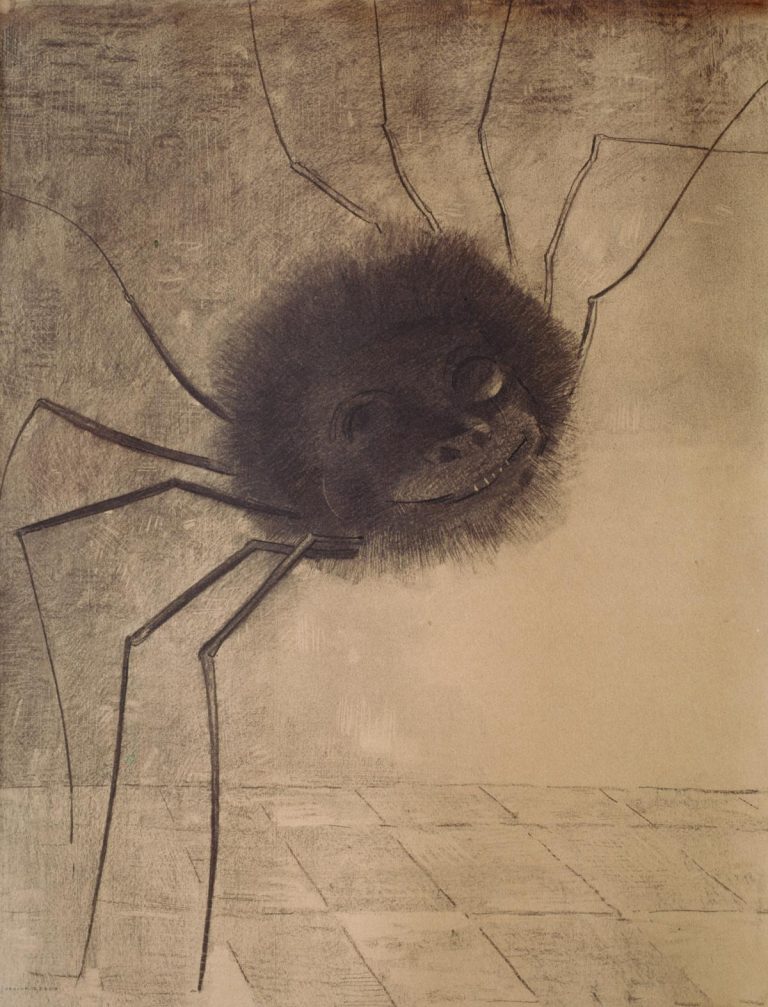
Odilon Redon,
Smiling Spider,
1881
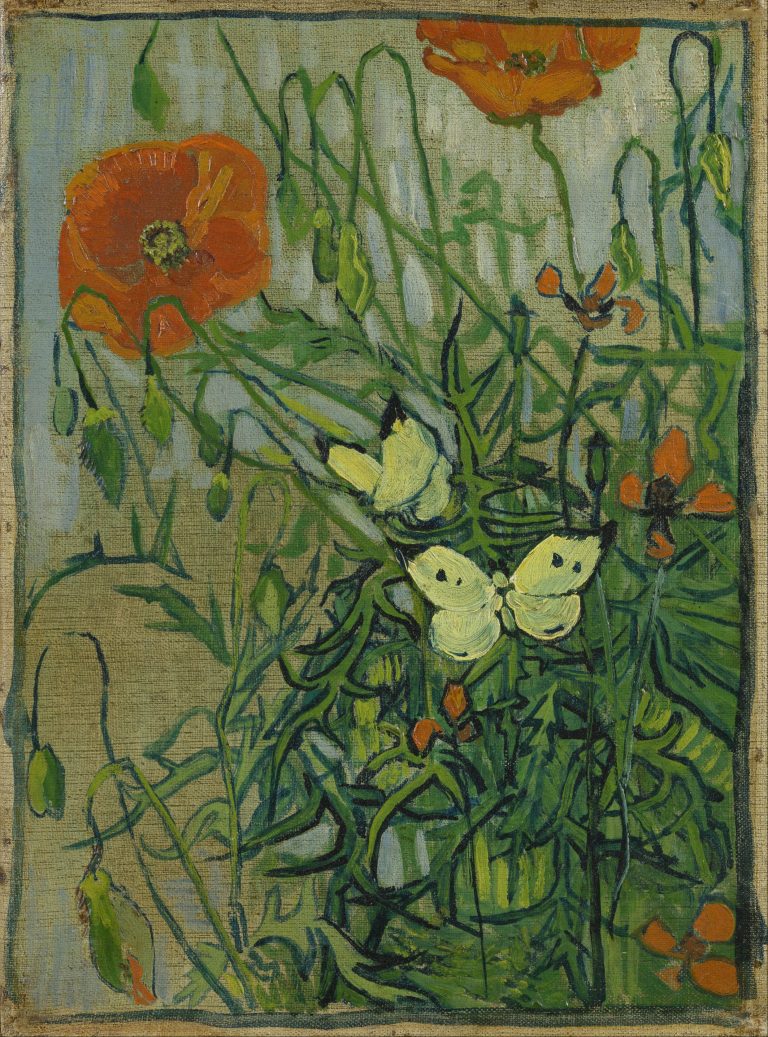
Vincent Van Gogh,
Butterflies and poppies,
1890
This psychological depth paved the way for the Surrealists. Salvador Dalí famously used swarming ants as a visceral shorthand for decay, desire, and the relentless passage of time. Decades later, Louise Bourgeois reclaimed the spider—historically a creature of malice—as a monumental tribute to her mother. Her “Maman” sculptures redefine the arachnid as a protector: a weaver of fabric, memory, and life itself.
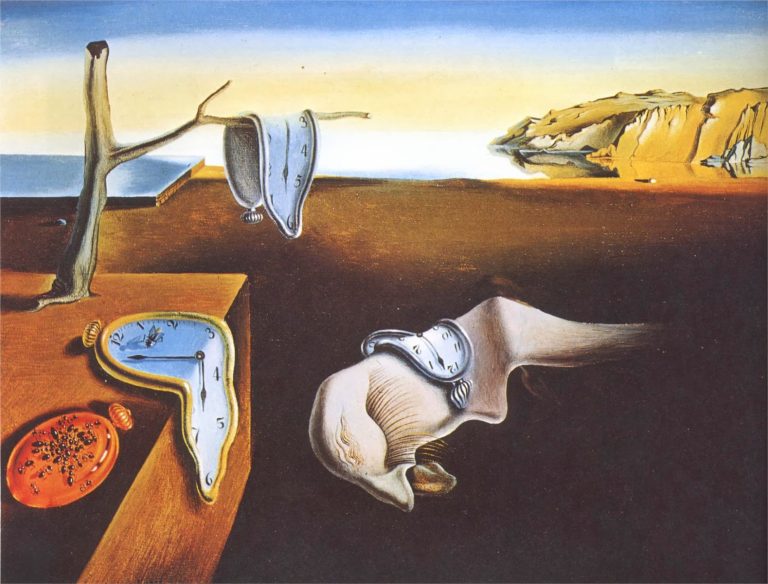
Salvador Dalí,
The Persistence of Memory,
1931
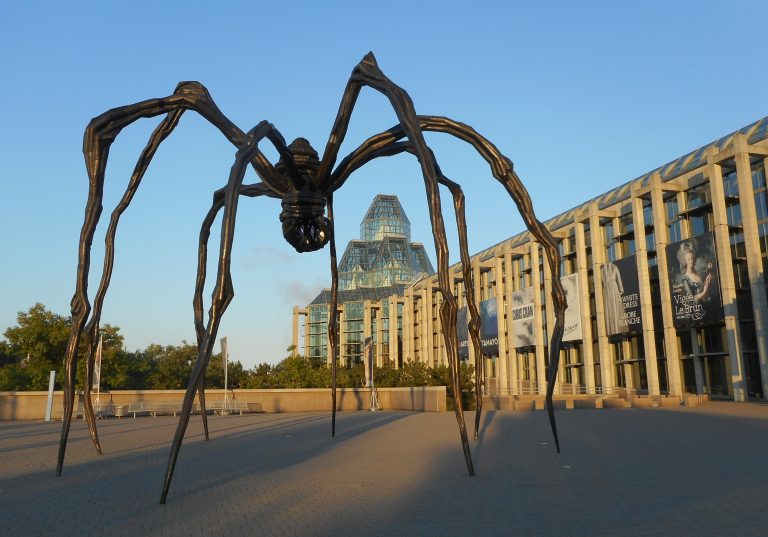
Louise Bourgeois,
Maman,
1996
Modernity: Insects as a Medium
In the 20th and 21st centuries, artists moved beyond mere depiction. They began collaborating with living insects or using their physical remains as the literal “paint” of their masterpieces.
The Aesthetics of the Specimen
For some, the insect body is a source of pure, structural beauty. Christopher Marley creates hypnotic, kaleidoscopic mosaics using ethically sourced carcasses, while Jan Fabre famously clad the ceiling of the Royal Palace of Brussels in 1.4 million iridescent beetle wings. Damien Hirst and Philippe Pasqua both revisit the Vanitas tradition, using butterflies or flies to create stunning yet macabre patterns that force us to confront the fragility of life.
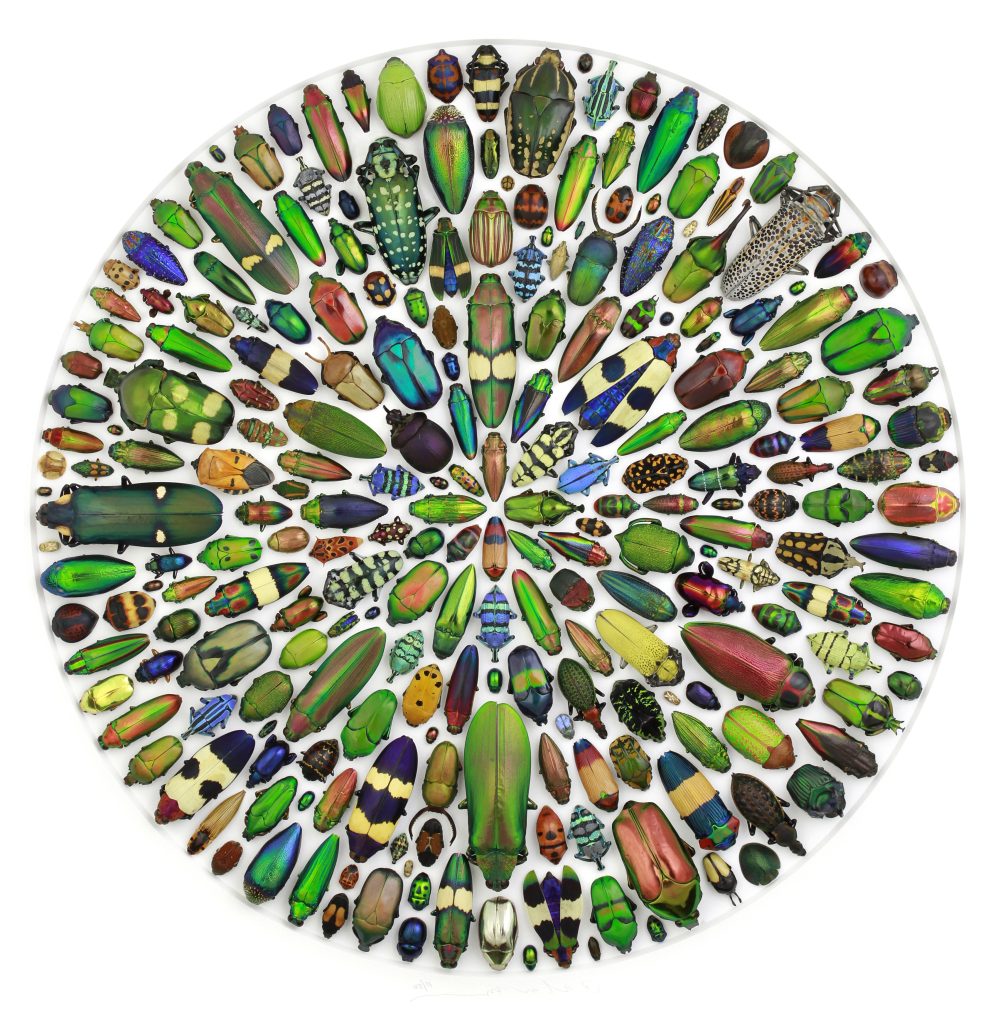
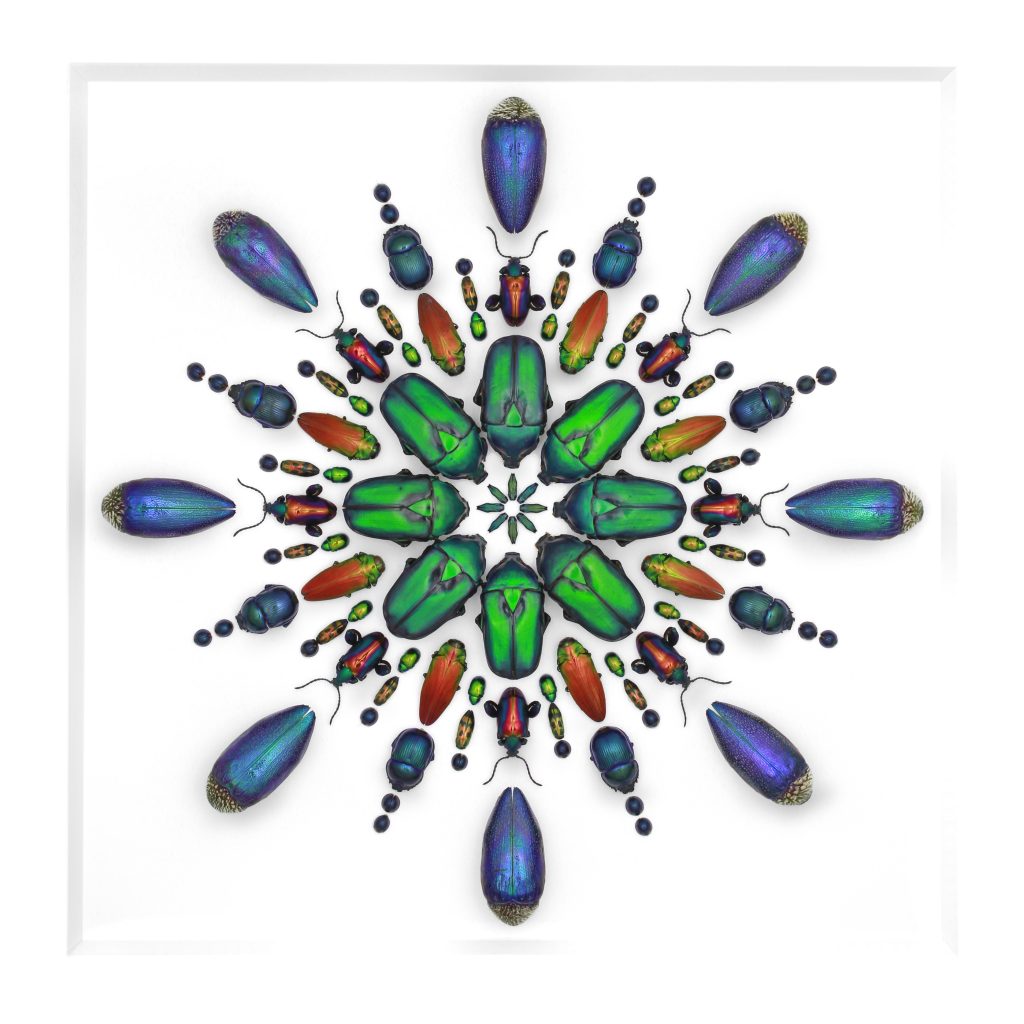
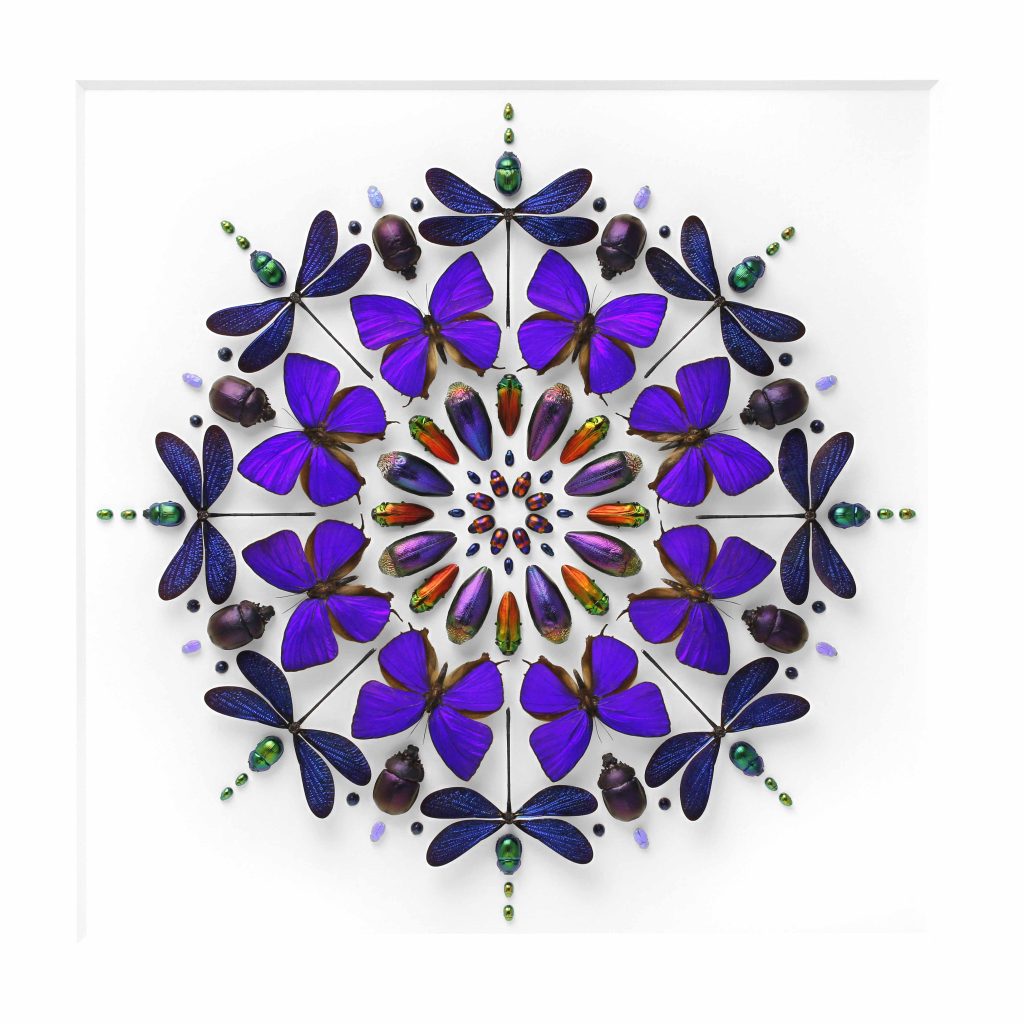
Christopher Marley,
Mosaics,
from 2000
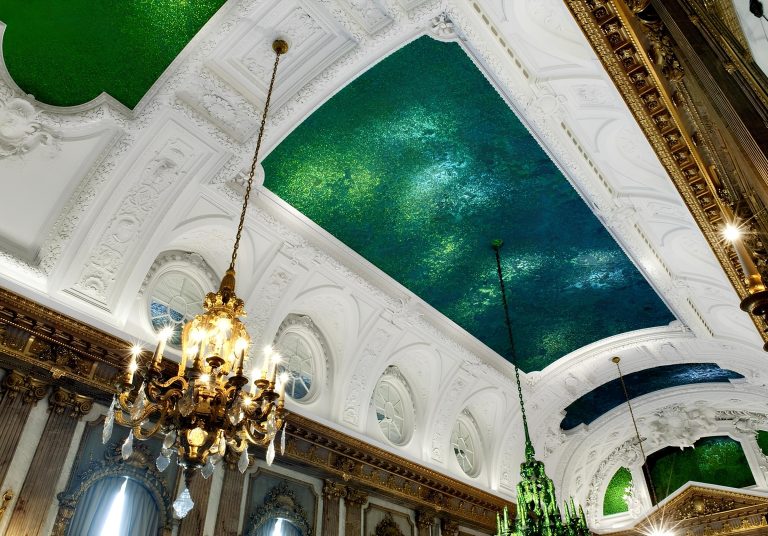
Jan Fabre,
Hall of Mirrors in the Royal Palace of Brussels,
2002
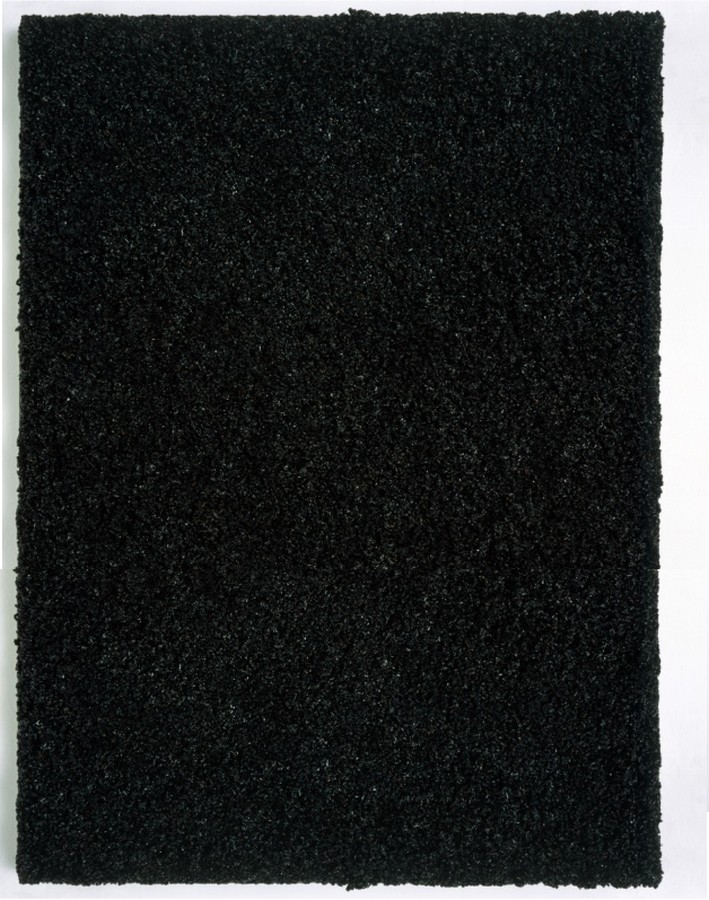
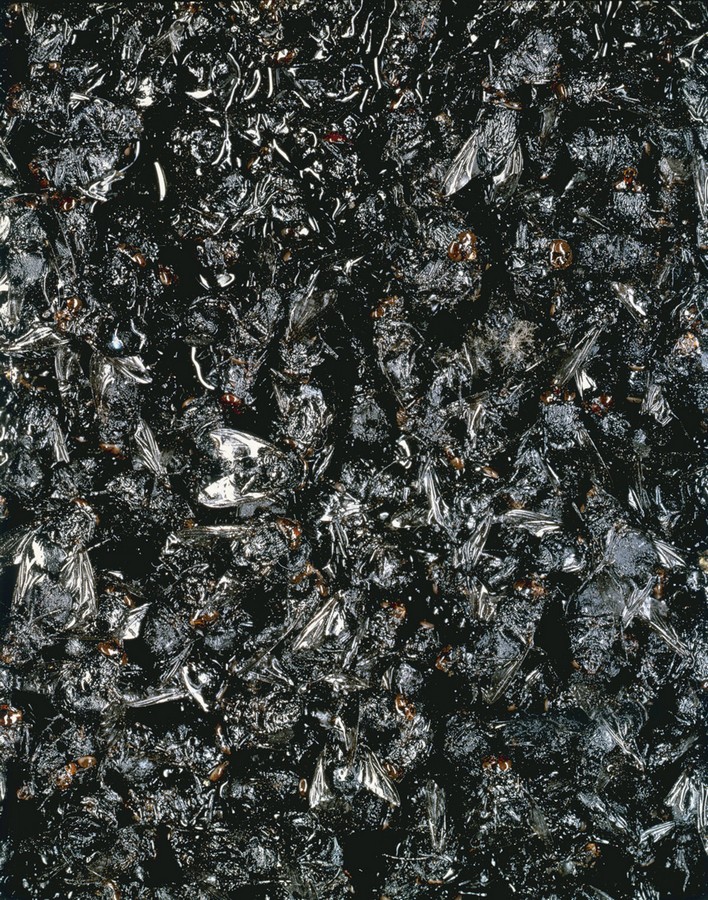
Damien Hirst,
Leukaemia,
2003
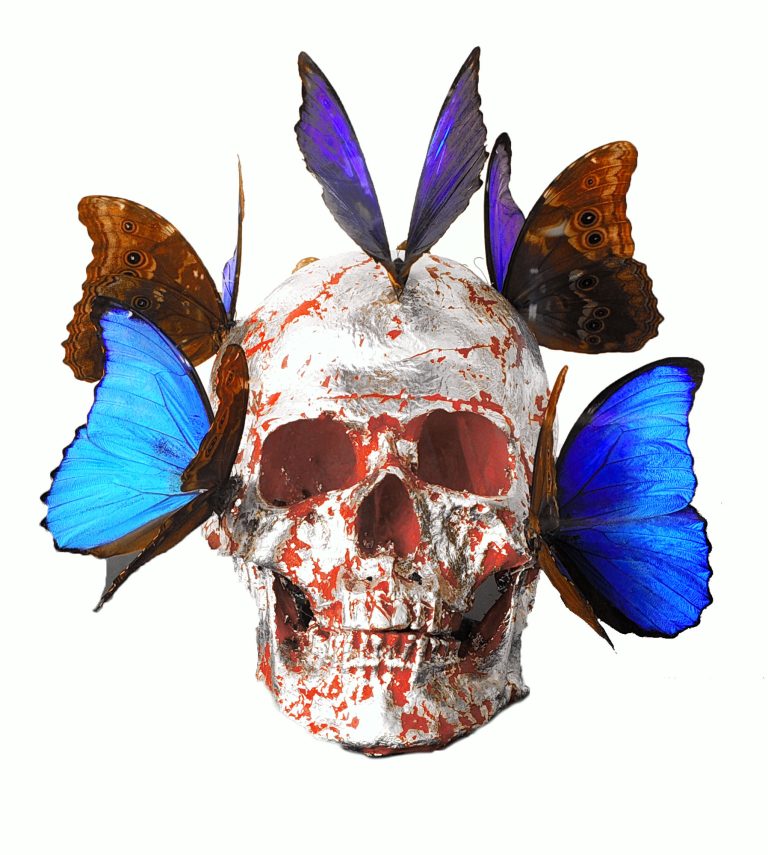
Philippe Pasqua,
Vanité aux papillons,
from 2010
Others blend the organic with the mechanical. Rebecca Horn’s kinetic sculptures simulate the fragile fluttering of wings through wire and metal, and Tessa Farmer constructs dark, “Boschian” fairy tales using roots and insect remains to depict tiny, skeletal humanoids in battle with nature.
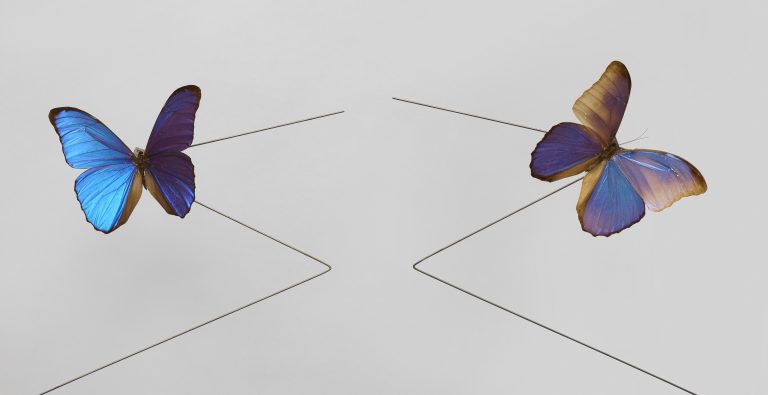
Rebecca Horn,
Butterfly Machine,
1989
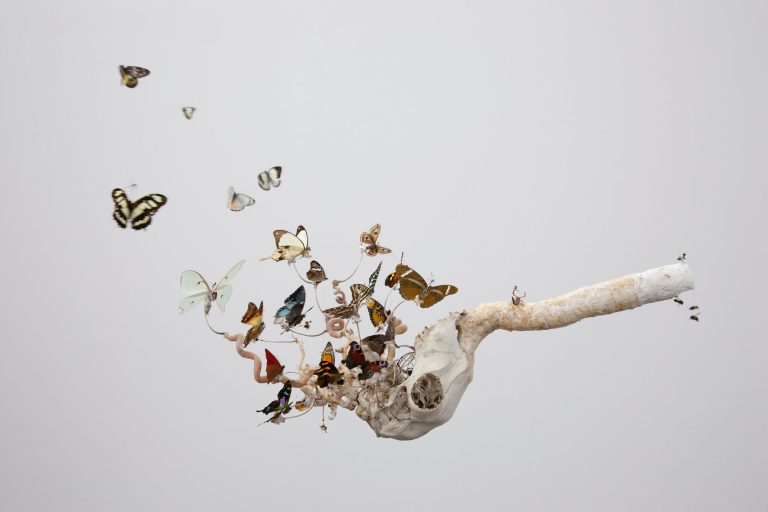
Tessa Farmer,
Installations,
from 2000
Art as Ecological and Social Protest
Beyond aesthetics, the “oppressive” or industrious nature of insects is often used to address urgent human issues:
- Rafael Gómezbarros: His installations of giant ants (with bodies made from human skull casts) serve as a haunting metaphor for the resilience and plight of displaced migrants.
- Henri Sagna: Using repurposed materials to create giant mosquitoes, Sagna raises awareness about the toll of malaria and social injustice in Africa.
- Hubert Duprat: In a unique “collaboration,” Duprat provides caddisfly larvae with gold flakes and pearls, which the insects then use to build jewel-encrusted cocoons—blurring the line between natural instinct and human luxury.
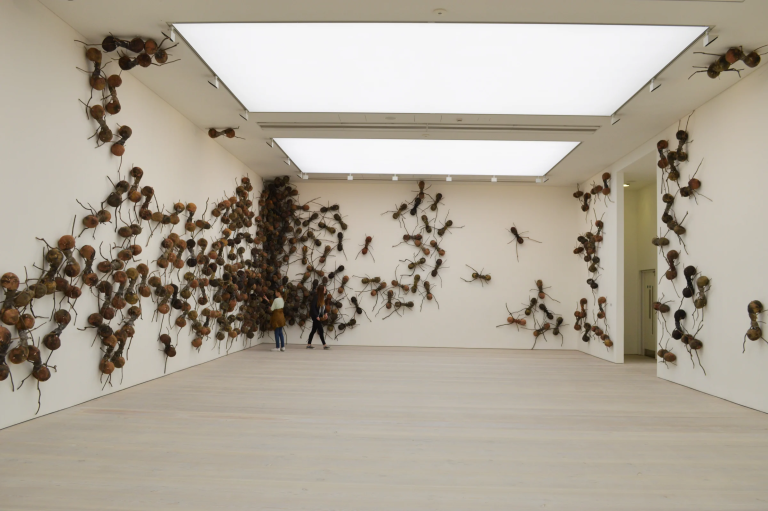
Rafael Gomez Barros,
La Casa Tomada,
from 2010
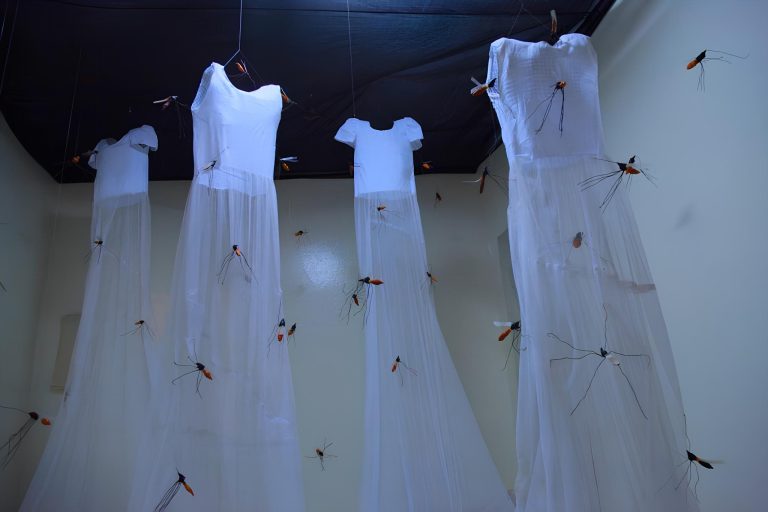
Henri Sagna,
Voleur d’âme II,
2012
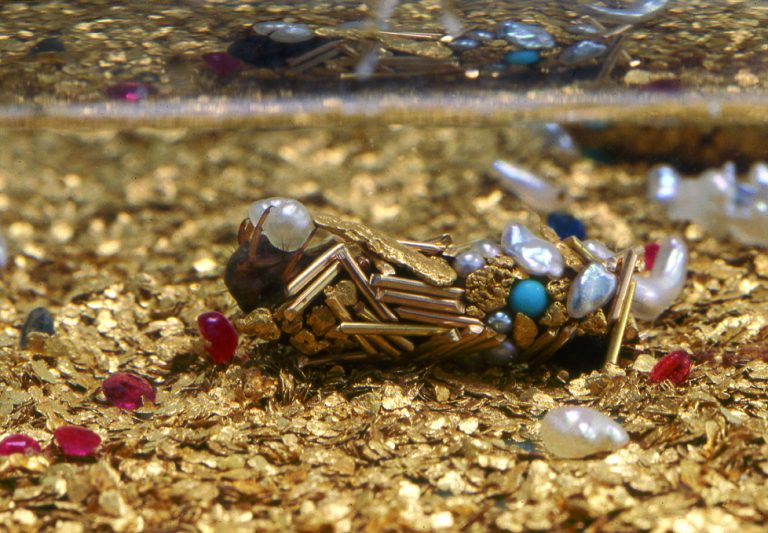
Hubert Duprat,
Les Phryganes,
from 1980
Provocation and Reflection
Finally, some artists use the “disgust” often associated with insects to challenge our perceptions. John Knuth creates abstract paintings using fly excrement, turning a “vile” process into an aesthetic one. In the streets, Louis Masai paints colossal murals of bees to highlight the catastrophic reality of colony collapse, turning urban walls into environmental warnings.

John Knuth,
Ellis Rise,
2019
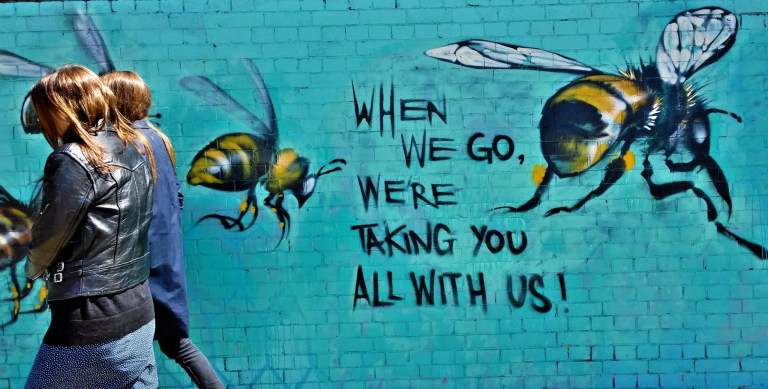
Louis Michel Masai,
Save the Bees,
2015
Conclusion: The Mirror in the Grass
For millennia, we have looked at insects and seen ourselves. Whether as sacred guides to the afterlife, omens of decay, or symbols of social resilience, these tiny creatures have provided art with its most enduring metaphors. By shifting from distant observers to active collaborators, modern artists have closed the gap between our world and theirs.
Ultimately, the presence of the insect in art reminds us that beauty and horror, life and death, are inextricably linked. As we continue to use their forms to decorate our world and express our deepest anxieties, we are left with a final, sobering reflection: our own survival is quietly, yet entirely, dependent on the very creatures we have spent centuries trying to capture on canvas.
Sources
Books
Matilde Battistini, Symboles et Allégories, Hazan, collection « Guide des arts », 2004 (384 pages).
Robert Olorenshaw et Nanon Gardin, Le Petit Larousse des symboles, Larousse, 2011 (réédité en 2022, 804 pages).
Collectif (dir. Hélène Bayou), Images du monde flottant : Peintures et estampes japonaises des XVIIe et XVIIIe siècles, Réunion des Musées Nationaux (RMN), 2004 (399 pages).
General Articles and Videos
YouTube – FHA22 : Le point de vue de l’araignée (Odilon Redon), ArtBite – La mouche en trompe-l’œil dans la peinture de la Renaissance, Mister Prépa – Comprendre la persistance de la mémoire de Salvador Dalí, ArtsHebdoMédias – Henri Sagna : l’art qui pique au vif, Issuu – Espace pour la vie (Programmations)
Academic or Specialist Articles
Cabinet Magazine – The Case of the Caddisfly (Hubert Duprat), Yellow Peacock Blog – Le jade, trésor de l’Asie, Sixth Tone – Ancient China’s Jade Cicadas, Racines & Traditions – 6-legged gales (Scarabées), Voyage en Chine – Peinture chinoise : les maîtres, Art Moderne UTL – Cours du 16 octobre 2017
Places and Artworks Related to the Topic
Met Museum – Winged Scarab Amulet, Walters Art Museum – Heart Scarab of Bak-en-Djehuti, British Museum – Albrecht Dürer : Stag Beetle, Musée d’Orsay – Odilon Redon : L’araignée souriante, Van Gogh Museum – Butterflies series, Rijksmuseum – Rafael Gómezbarros : Casa Tomada, Ronin Gallery – Utamaro : Silkworm Hatchlings, Christie’s – Rebecca Horn : Butterfly Machine, Christie’s – Rafael Gómezbarros (Saatchi Gallery), Phillips – Damien Hirst : Leukaemia, MyArtBroker – Damien Hirst : Mercy, Hollis Taggart – John Knuth, Dortmund Museum – REMIX (PDF)
Specific Works Mentioned
George Flegel – Still-Life with Bread, El Bosco – Le Chariot de foin, Philippe Pasqua – Vanity with Butterflies, Philippe Pasqua – Vanity with Butterflies (Lot 2), Tessa Farmer – Official Site
Wikipedia (from general to specific)
Beetlewing, Maître de Francfort, Musca depicta, Portrait d’Elisabetta Gonzaga, L’Amour et Psyché debout, Utamaro, Qi Baishi