Between the late 18th century and the mid-20th century, the Western world underwent a seismic shift. The fall of absolutism, the Industrial Revolution, and the birth of psychoanalysis redefined what it meant to be human. In art, the nude was no longer a static symbol of divine perfection; it became a battlefield for social critique, psychological introspection, and formal experimentation.
In this second part, we explore the journey of the nude from the refined salons of the 19th century to the fragmented visions of the interwar avant-garde.
The early 19th Century: Between Academic Rules and Romantic Rebellion
The 19th century was a paradox. While society grew increasingly puritanical, the female nude became more ubiquitous than ever—though often through a lens that art historian Carlos Reyero describes as “not naked, but undressed,” catering to a male-dominated, voyeuristic gaze.
The Intersection: Ingres and the Neoclassical Legacy
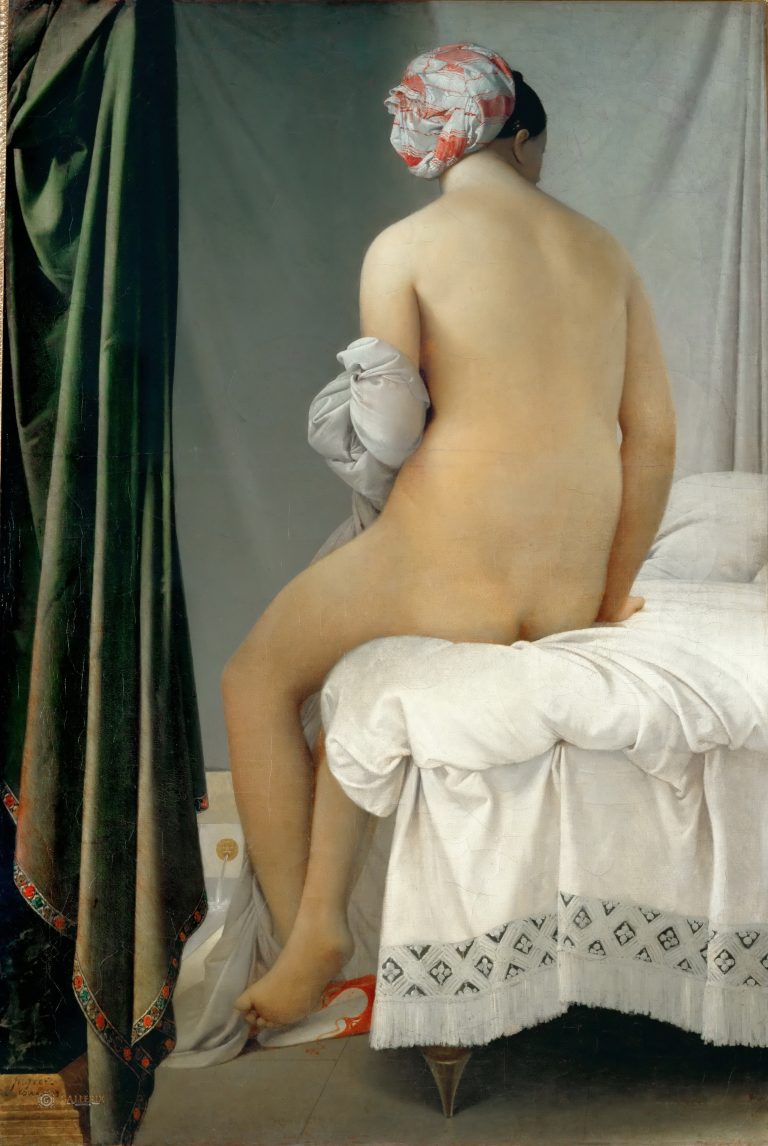
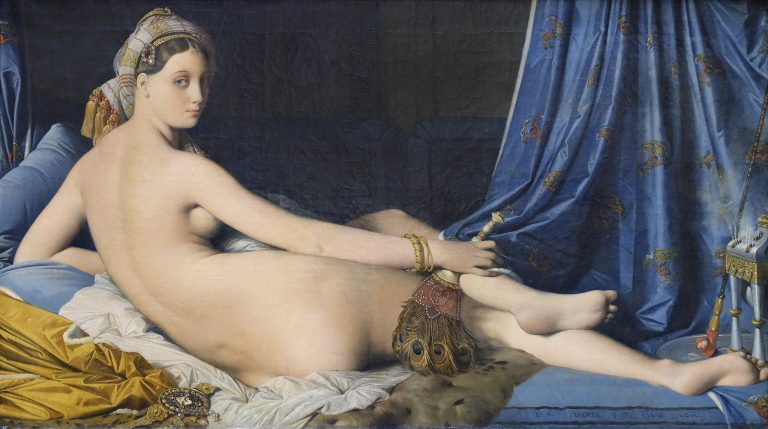
Jean-Auguste-Dominique Ingres stands as the bridge between the old world and the new. His works, such as The Valpinçon Bather, utilize a limited repertoire of classical poses, yet they vibrate with a new, tactile sensuality. His pursuit of anatomical “perfection” often led him to distort reality (adding vertebrae to a back, for instance) to achieve a more harmonious line—a precursor to modern distortion.
Jean-Auguste-Dominique Ingres, The Valpinçon Bather, 1808
Jean-Auguste-Dominique Ingres, Grande Odalisque, 1814
The Romantic Fever: Géricault and Delacroix
Romanticism reacted against the cold rules of the Academy by prioritizing emotion and the “sublime.”
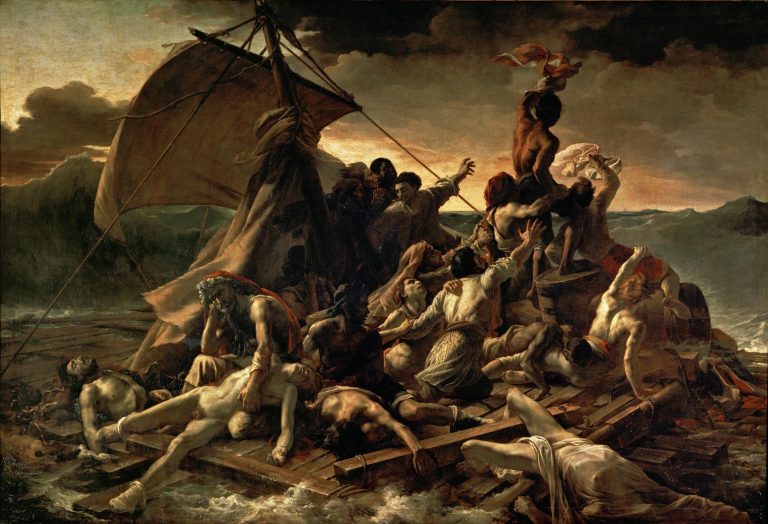
Théodore Géricault: Influenced by Michelangelo’s muscular and heroic nudes, Géricault studied corpses in morgues to capture the raw, physical presence of the body in pain or death.
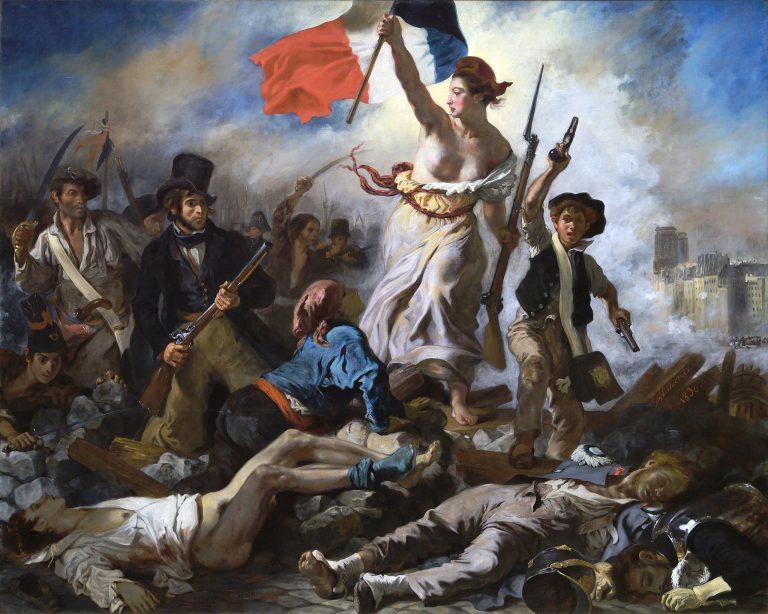
Eugène Delacroix: He broke from linear precision in favor of fluid color and light. In Liberty Leading the People, the heroine’s partial nudity is both a classical allegory and a visceral, revolutionary reality.
Théodore Géricault, The Raft of the Medusa, 1819
Eugène Delacroix, Liberty Leading the People, 1830
Orientalism: The Exotic Pretext
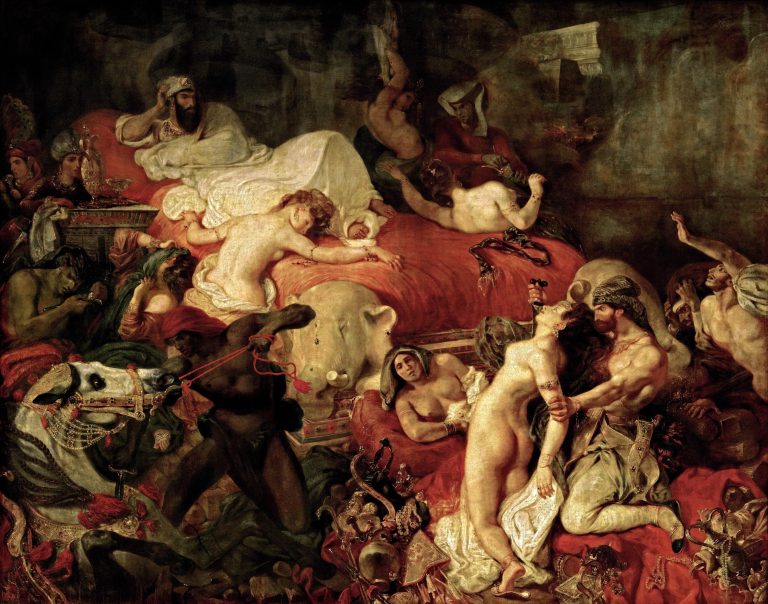
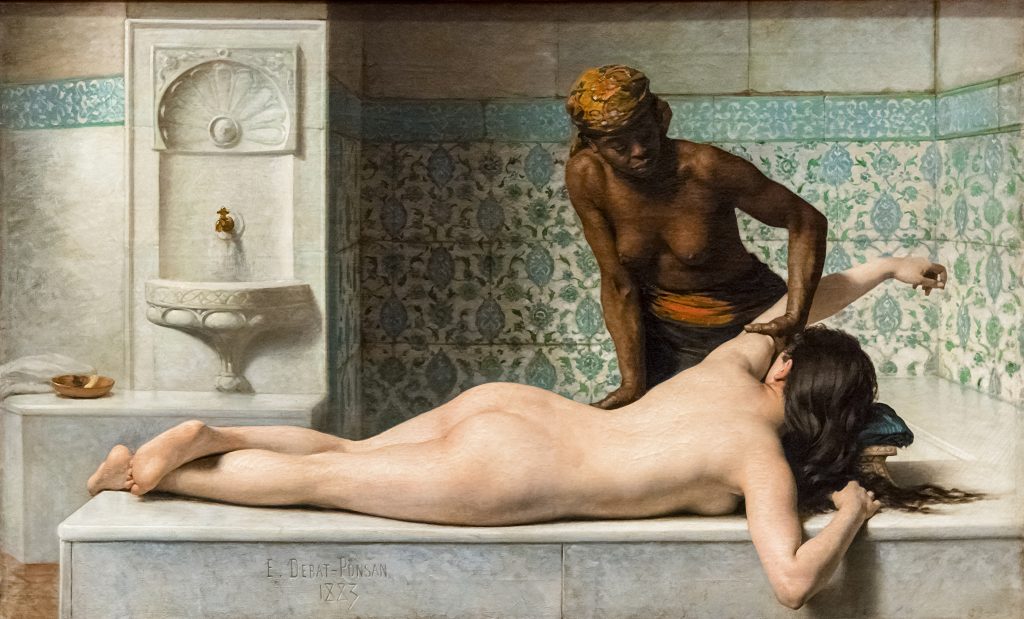
The 19th century was also the era of colonial expansion. Artists like Delacroix and later academic painters used “The Orient” as a stage to depict the nude. By placing naked women in harems or baths, artists justified eroticism as “ethnographic study,” reinforcing Western fantasies of the “exotic” other.
Eugène Delacroix, Death of Sardanapalus, 1827
Édouard Debat-Ponsan, The massage, hammam scene, 1883
The Peak of "L’Art Pompier"
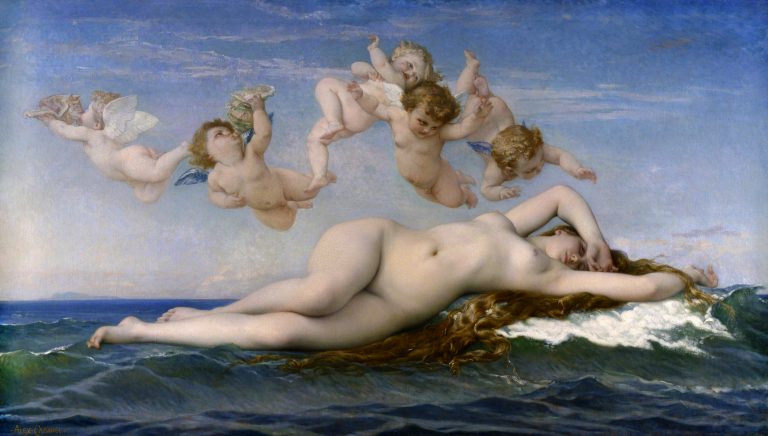
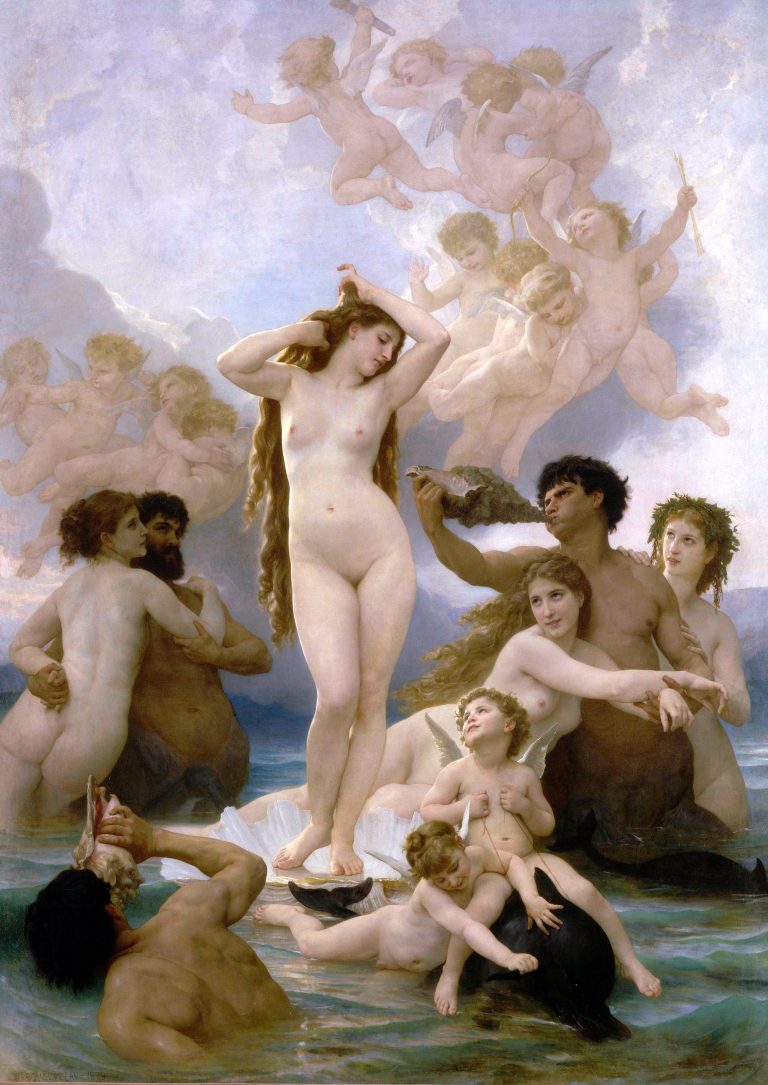
At its height, Academic art (often mocked as Art Pompier) produced nudes with a “waxy, porcelain-like texture.” While prestigious, this tradition was increasingly criticized for being disconnected from the grit of contemporary life.
Alexandre Cabanel, The Birth of Venus, 1863
William-Adolphe Bouguereau, The Birth of Venus, 1879
The Rise of Realism: The Body as Truth
In the mid-19th century, a new generation of artists decided that if a subject wasn’t visible in the streets, it wasn’t worth painting.
The Scandal of Reality
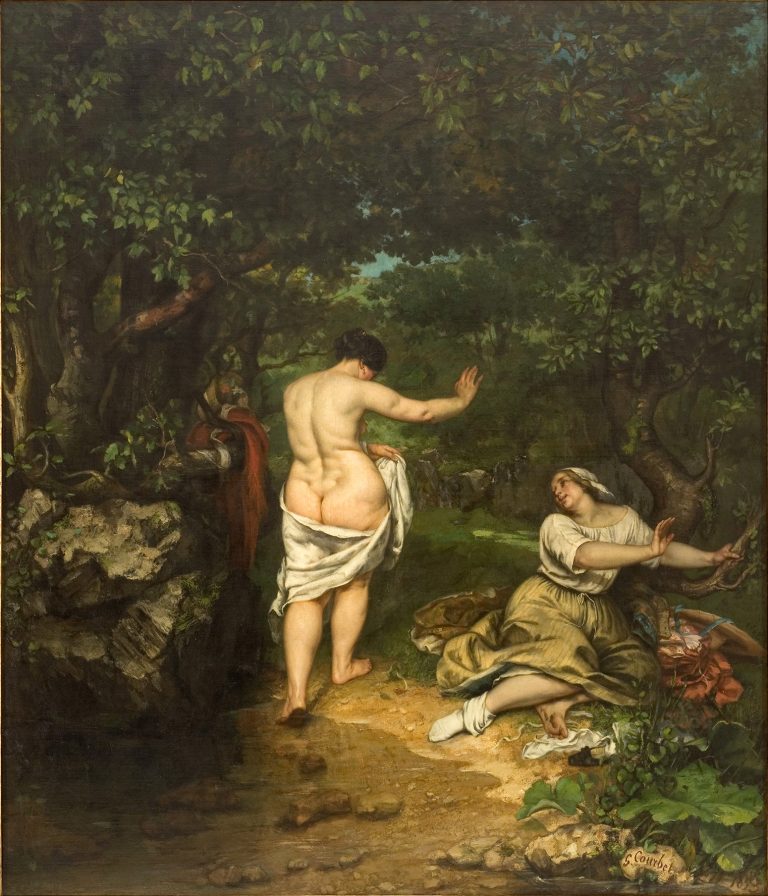
Gustave Courbet was the first to depict the body “as he saw it.” In The Bathers, he presented robust, unidealized women, stripping away the mythological “excuse” for nudity. This was a direct assault on the waxy perfection of the salons.
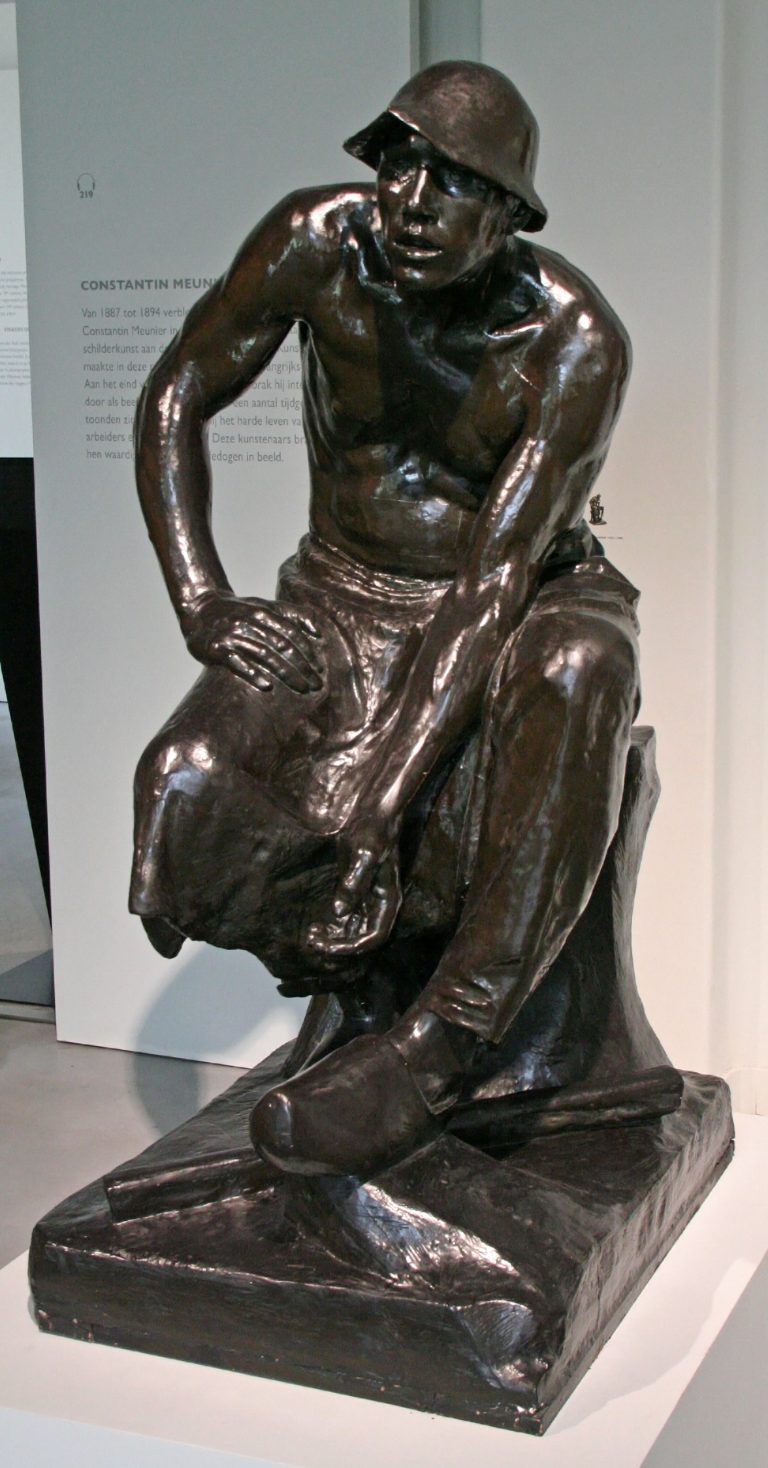
Constantin Meunier followed this path by focusing on the raw, muscular power of the industrial worker, replacing the classical hero with the modern laborer.
Gustave Courbet, The Bathers, 1853
Constantin Meunier, The Puddler, 1886
Manet and the Modern Prostitute
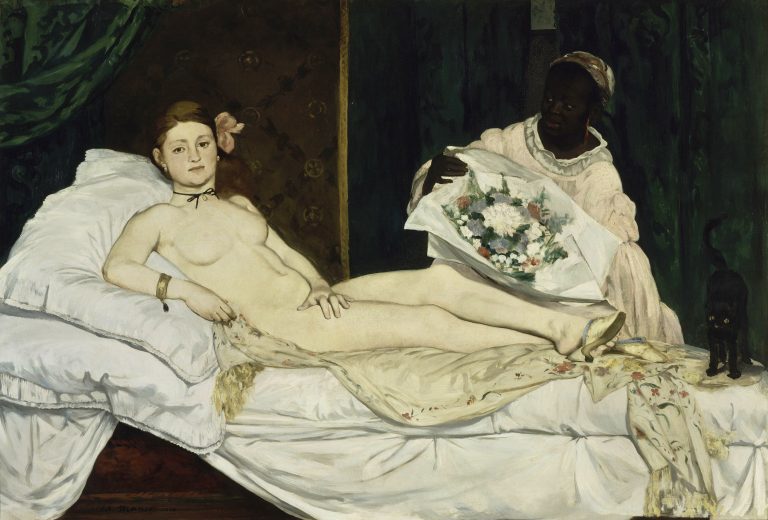
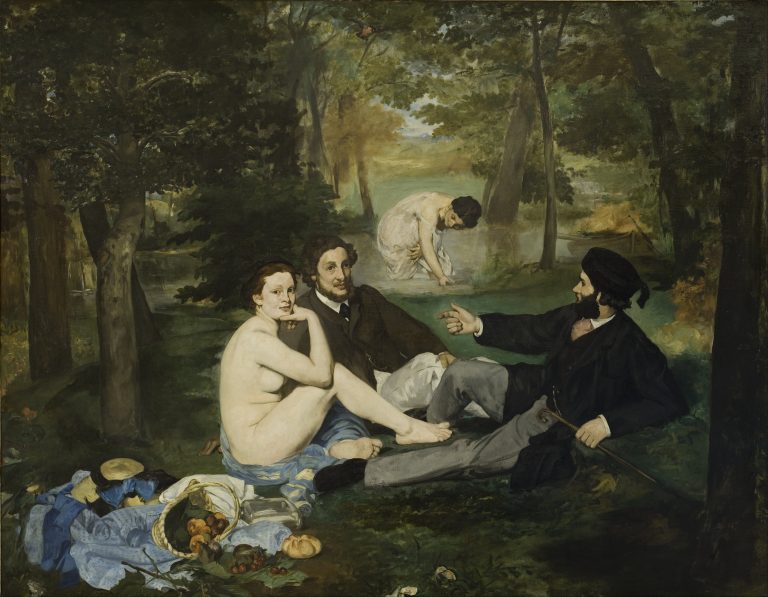
Édouard Manet caused two of the greatest scandals in art history with Le Déjeuner sur l’herbe and Olympia. The outrage wasn’t caused by the nudity itself, but by the context. By depicting anonymous, contemporary women—clearly recognizable as prostitutes—looking directly at the viewer without the shield of allegory, Manet forced the bourgeois public to confront their own reality.
Édouard Manet, Olympia, 1863
Édouard Manet, Luncheon on the Grass, 1863
The Impressionist Gaze: Degas and Renoir
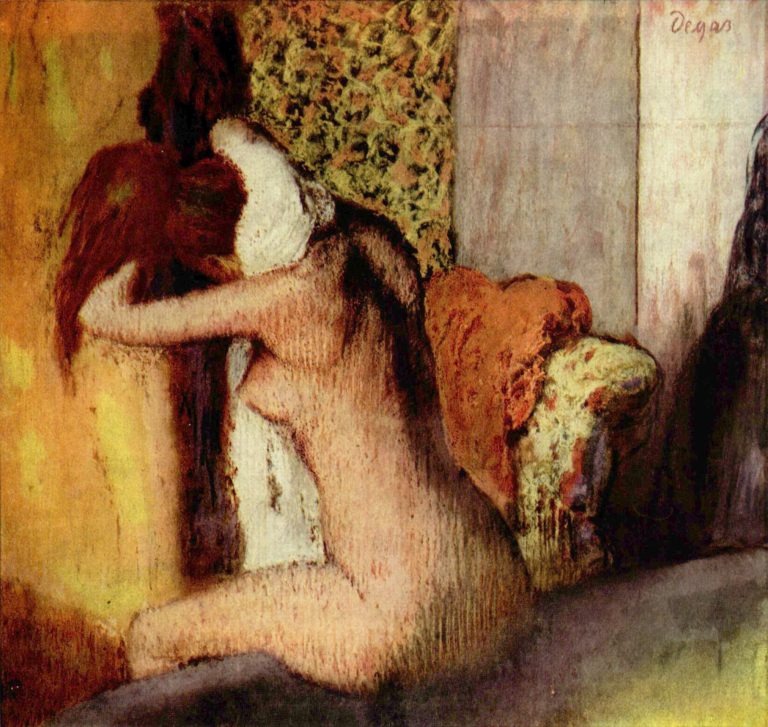
Edgar Degas: He pioneered the “toilette” subgenre, capturing women in private acts of hygiene. His perspective was that of a “keyhole” observer, influenced by the new technology of photography, capturing fleeting, unposed moments.
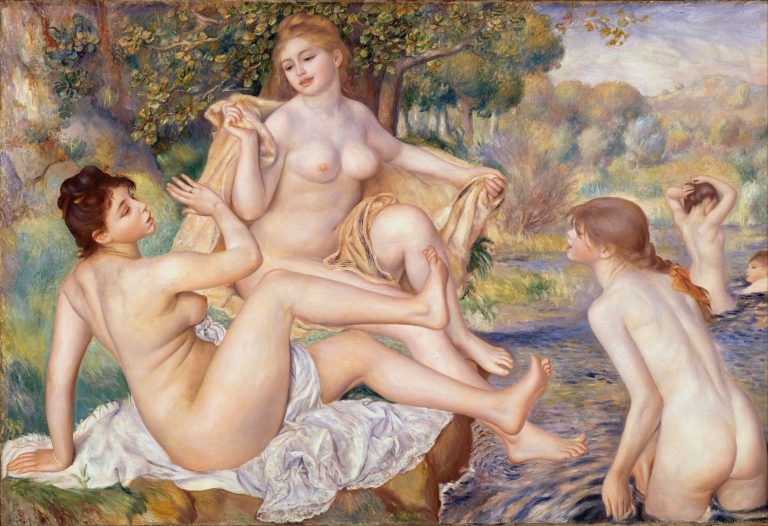
Pierre-Auguste Renoir: Conversely, Renoir used patches of light and shadow to create sculptural, luminous nudes that felt integrated into the natural world, favoring color over rigid lines.
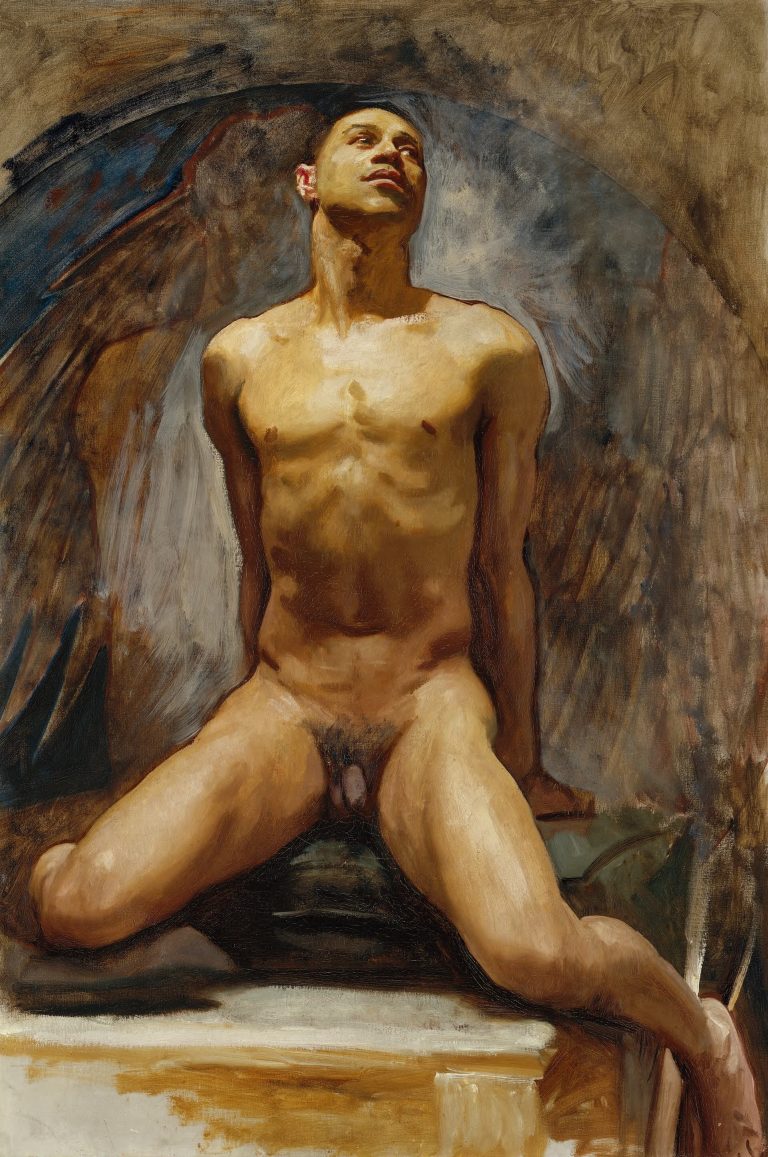
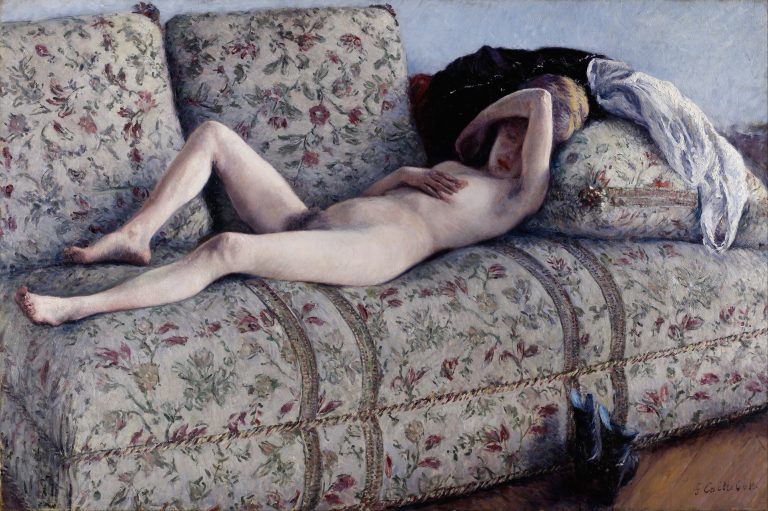
John Singer Sargent and Gustave Caillebotte similarly explored naturalistic nudes, bridging the gap between academic precision and the fleeting light of the modern interior.
Edgar Degas, After the Bath, Woman Drying Her Nape, 1895
Pierre-Auguste Renoir, Les Grandes Baigneuses (The Large Bathers), 1884-1887
John Singer Sargent, Nude Study of Thomas E. McKeller, c. 1917-1920
Gustave Caillebotte, Nude on a Couch, 1875
Post-Impressionism and the Dawn of Abstraction
As the century closed, the “representation” of the body began to dissolve into “interpretation.”
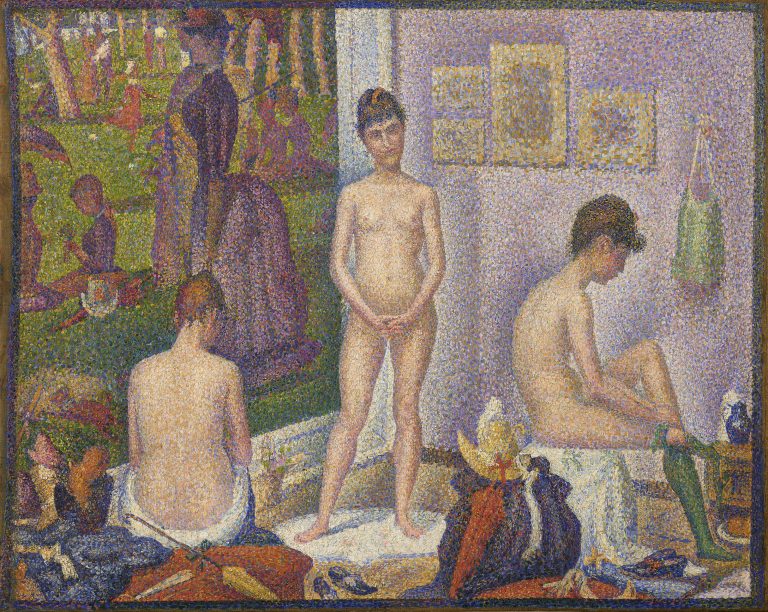
Georges Seurat applied the scientific rigor of Pointillism to the nude, proving that the technique of colored dots could capture human form as effectively as landscapes.
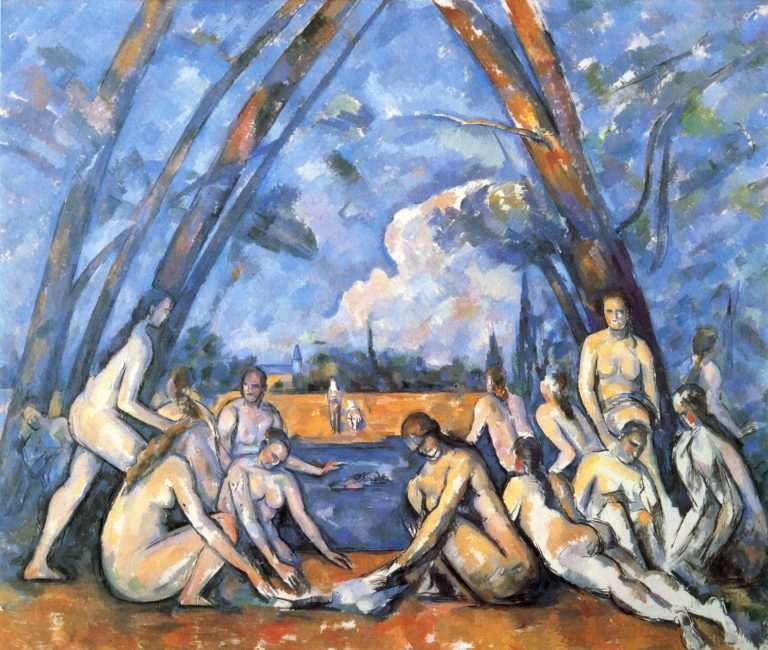
Paul Cézanne: He treated the human figure like a landscape or a still life, reducing his Bathers to an analytical synthesis of cylinders and spheres—the foundation upon which Cubism would be built.
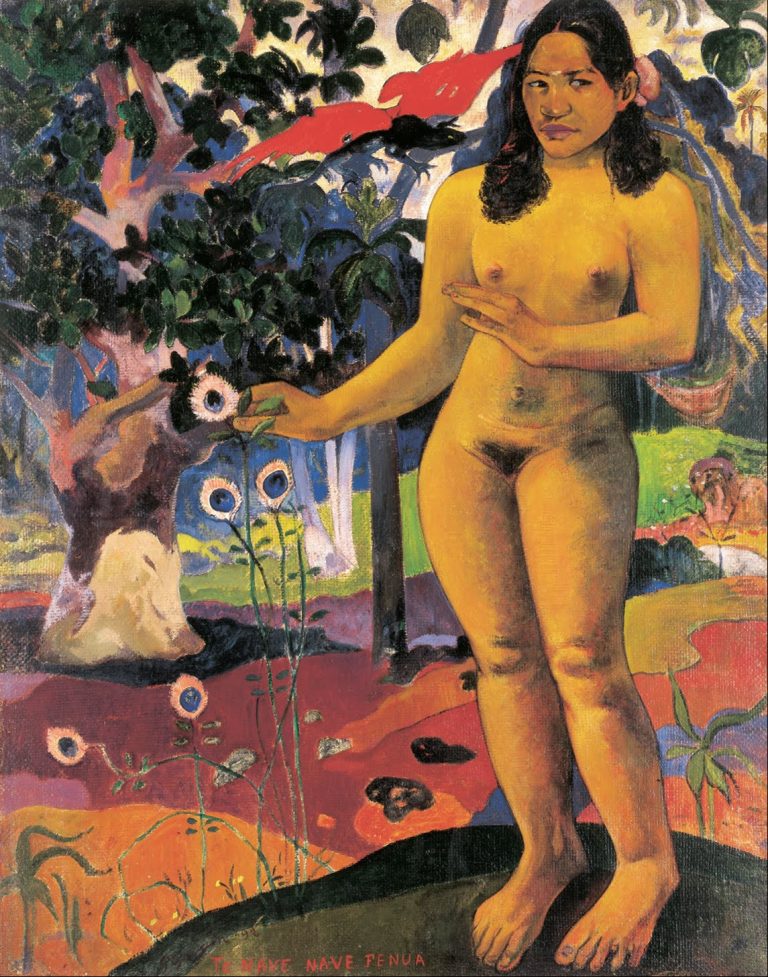
Paul Gauguin: In Tahiti, Gauguin used flat, symbolic colors to portray a world where nudity was natural and unselfconscious, far from European shame.
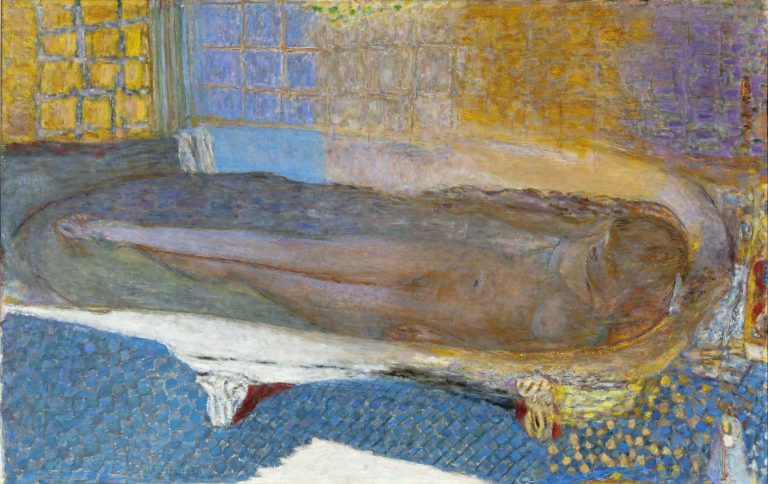
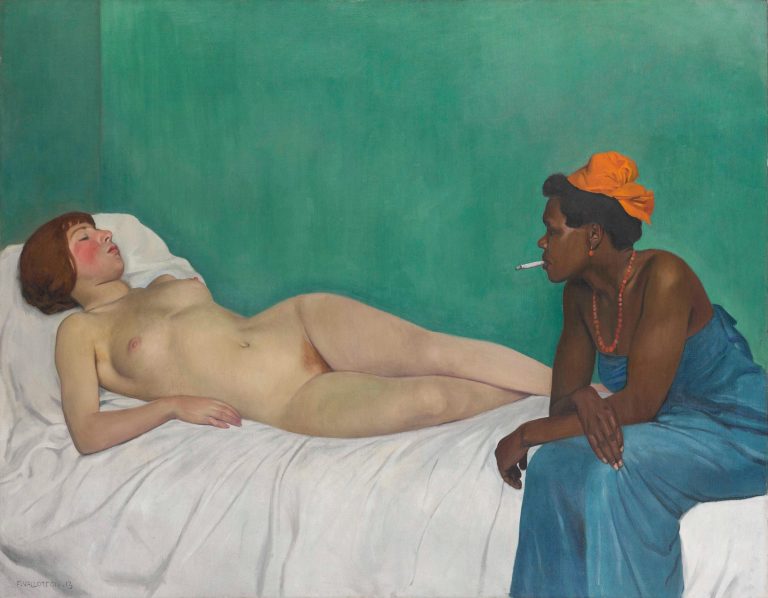
The Nabis: Influenced by Gauguin’s bold colors, Pierre Bonnard and Félix Vallotton brought the nude into the modern domestic interior.
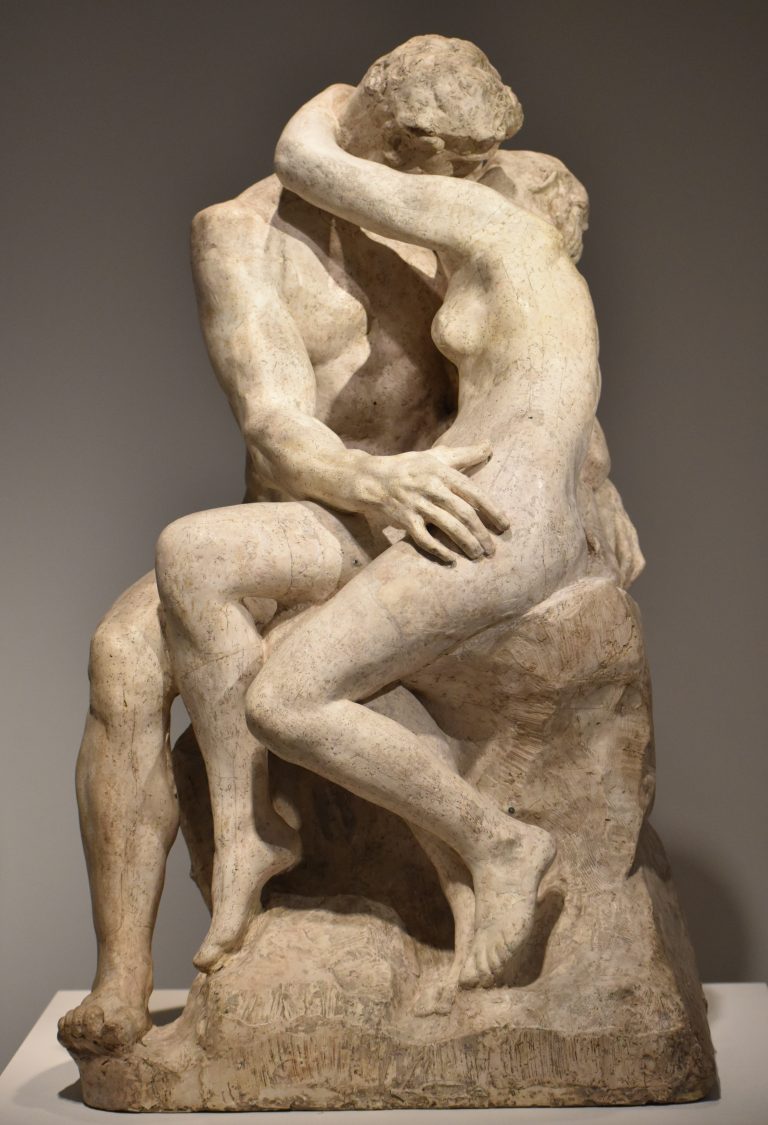
Auguste Rodin: In sculpture, Rodin broke with tradition by allowing models to move freely in his studio. His work captured the “spontaneity” of the human form, often imbued with a tragic, dramatic tension.
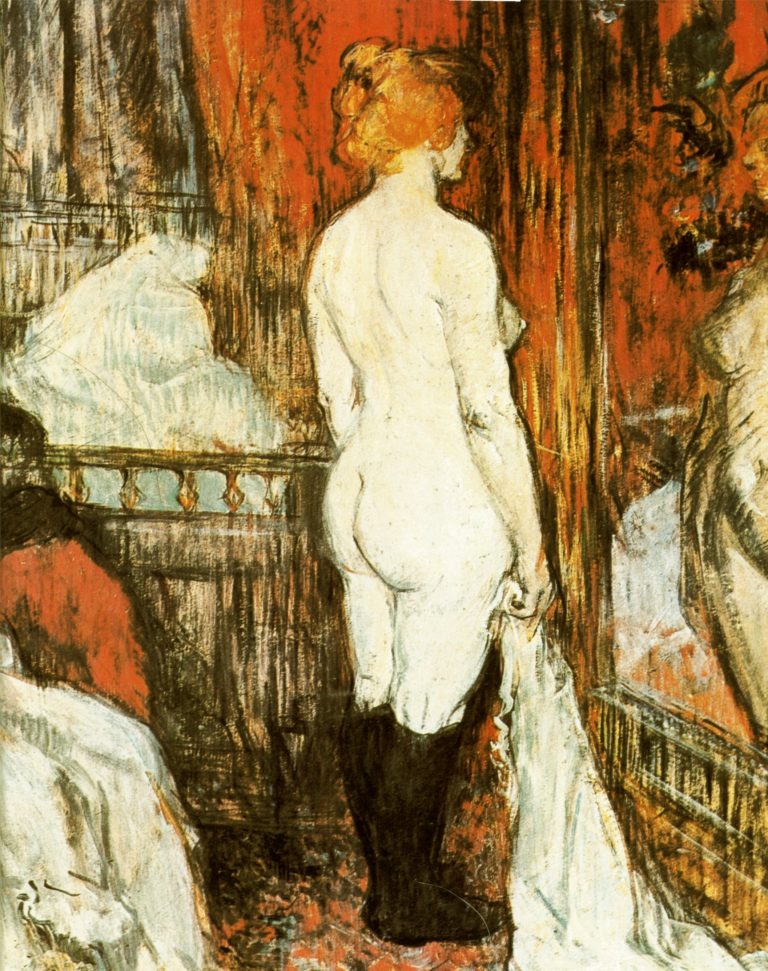
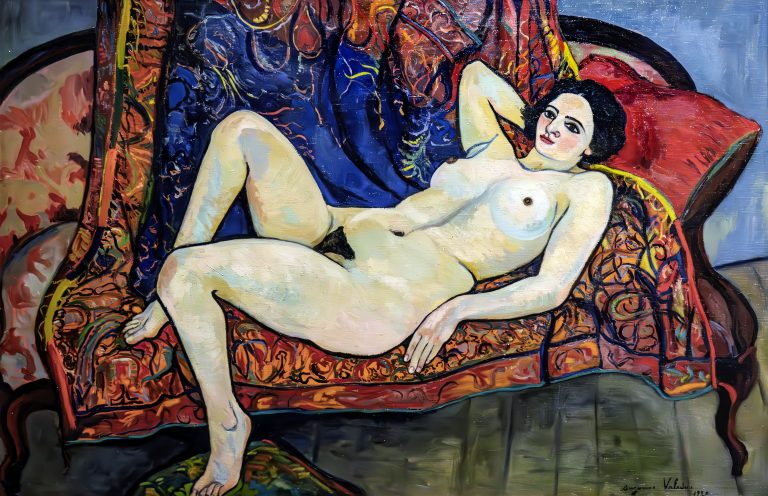
Henri de Toulouse-Lautrec and Suzanne Valadon moved away from idealization entirely, capturing the raw, often unglamorous reality of the body in the private spheres of Montmartre.
Georges Seurat, Models (Small version), 1888
Paul Cézanne, The large Bathers, 1894-1905
Paul Gauguin, Delightful Land, 1892
Pierre Bonnard, Nude in the Bath, 1936
Félix Vallotton, La Blanche et la Noire, (The White and the Black), 1913
Auguste Rodin, The Kiss, c.1881-1882
Henri de Toulouse-Lautrec, Nude Woman Before Her Mirror, 1897
Suzanne Valadon, Naked on a red couch, 1920
Symbolism and the Fin de Siècle
Other artists turned inward toward the dreamlike and the provocative.
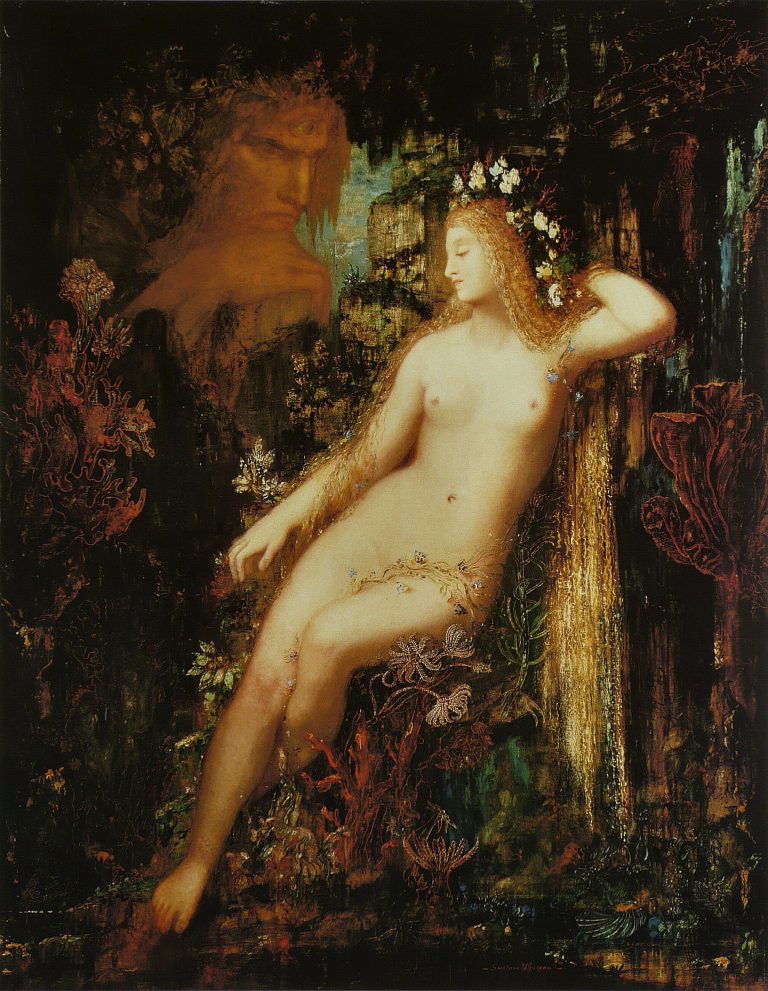
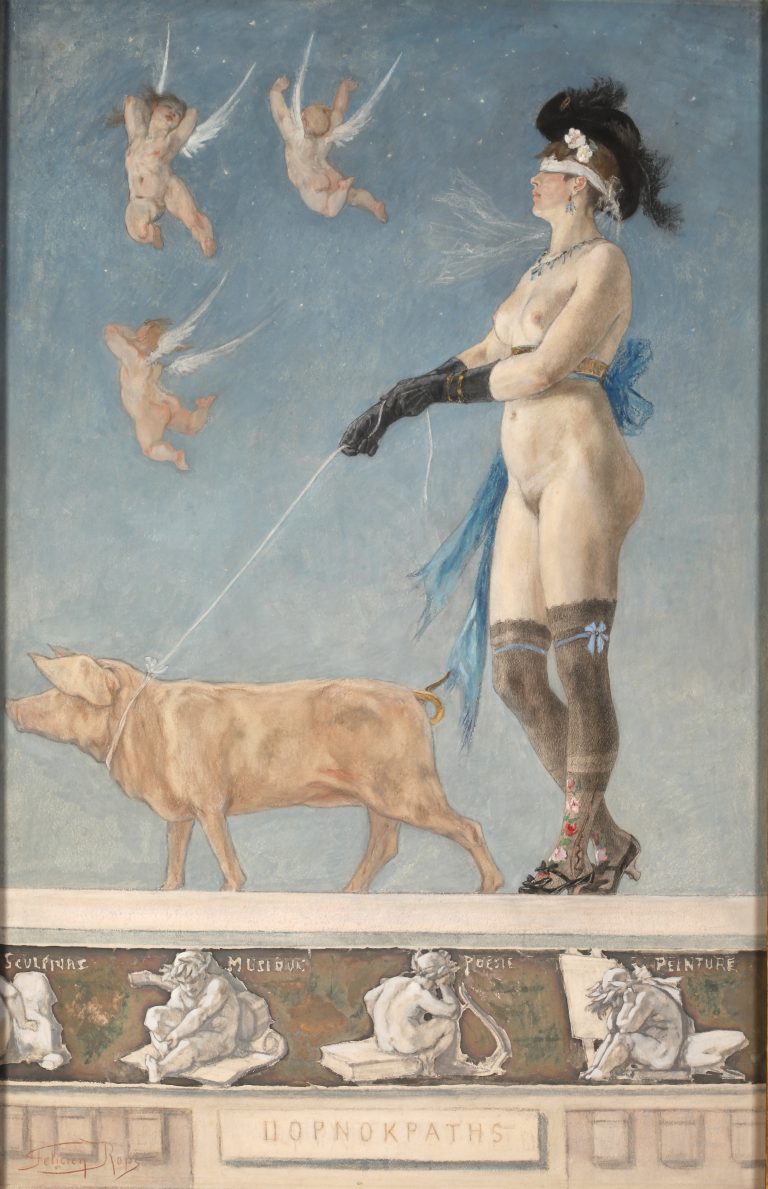
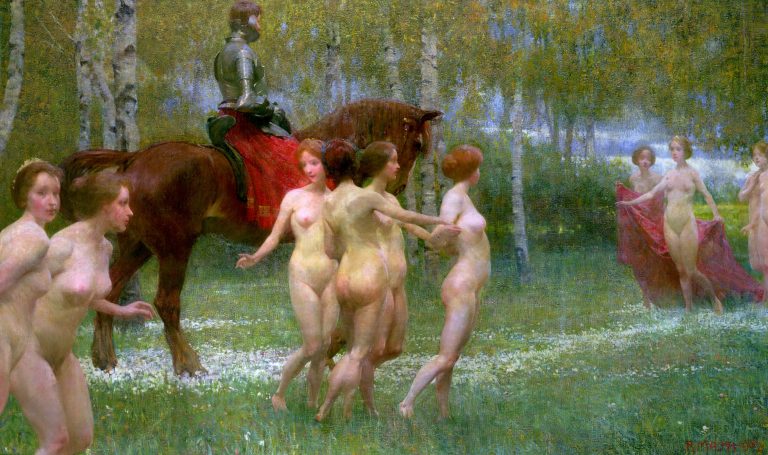
Gustave Moreau and Pierre Puvis de Chavannes created poetic, allegorical nudes, while Félicien Rops and Richard Mauch explored the darker, more erotic and perverse side of the human imagination.
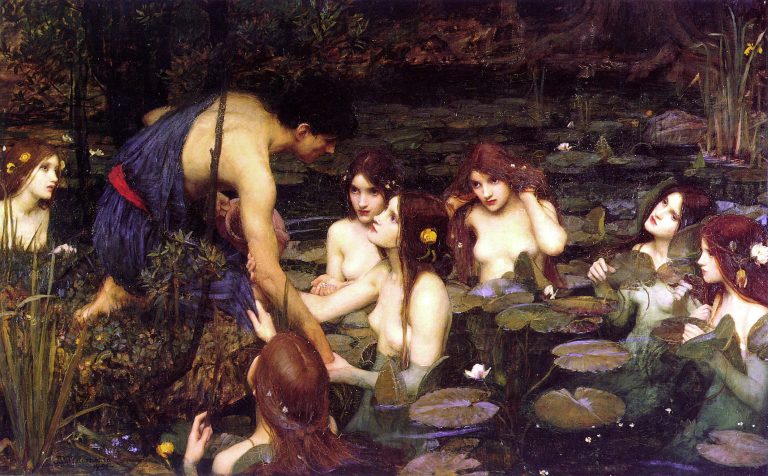
In Britain, John William Waterhouse maintained an academic technique but infused the nude with the romantic, literary atmosphere of the Pre-Raphaelites.
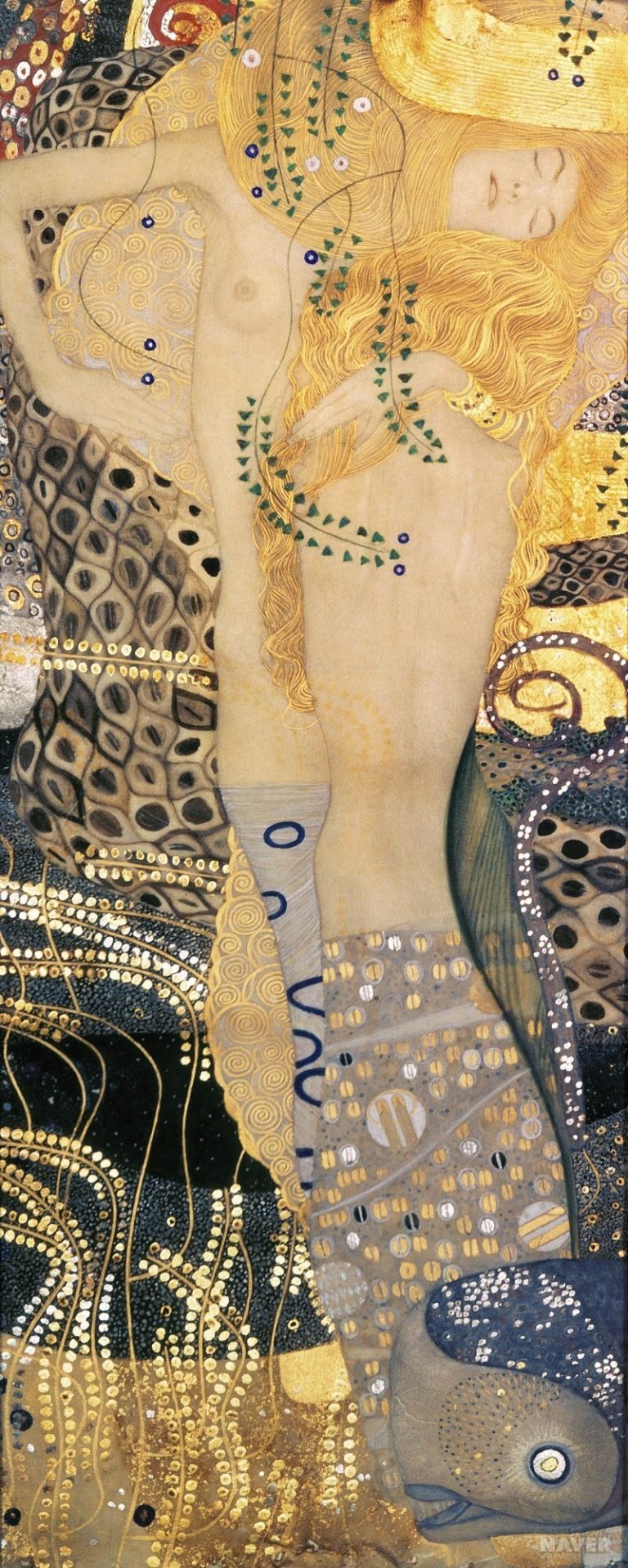
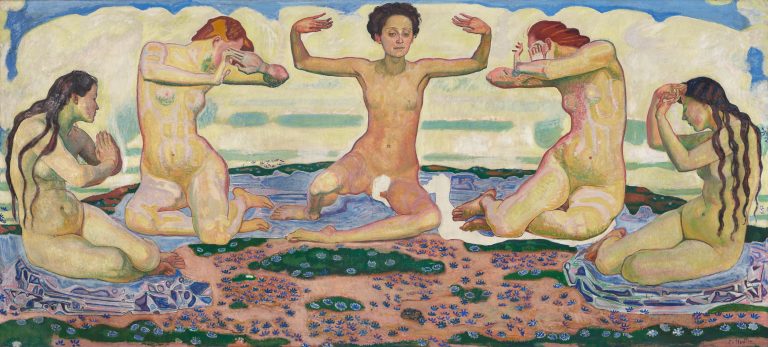
Around the turn of the century, Gustav Klimt surrounded his sensuous nudes with highly ornamental, gold-leafed worlds, while Ferdinand Hodler developed a rhythmic “Parallelism,” using the nude to express monumental harmony and the cycles of nature.
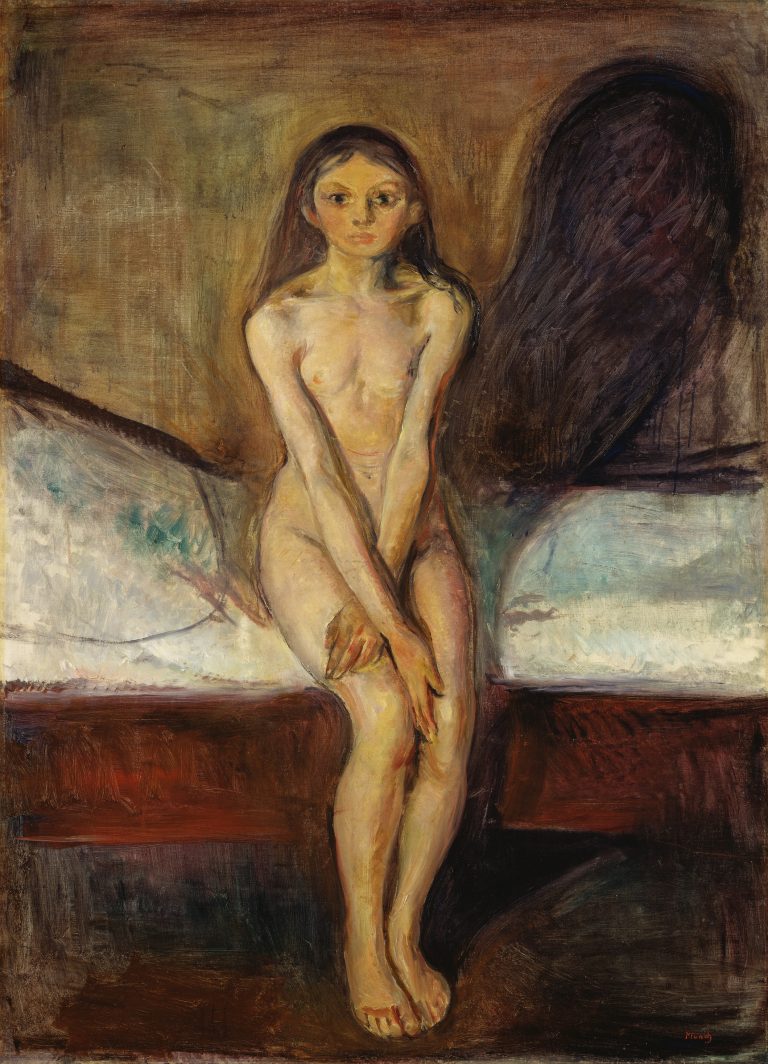
In Scandinavia, Edvard Munch used the nude to express the anxiety of adolescence and the fragility of the soul.
Gustave Moreau, Galatea, c.1880
Félicien Rops, Pornokratès, 1878
Richard Mauch, The Knight’s Dream, 1902
John William Waterhouse, Hylas et les Nymphes, 1896
Gustav Klimt, Water Serpents II, 1904-1907
Ferdinand Hodler, The Day, 1904-1906
Edvard Munch, Puberty, 1895
The Early 20th Century: The Fragmented Body
The 20th century brought a radical transformation. Science (Einstein, Freud) and technology (cinema) changed our perception of reality. The nude became a laboratory for the avant-garde.
1907: The Year of the Revolution
Two works changed art forever:
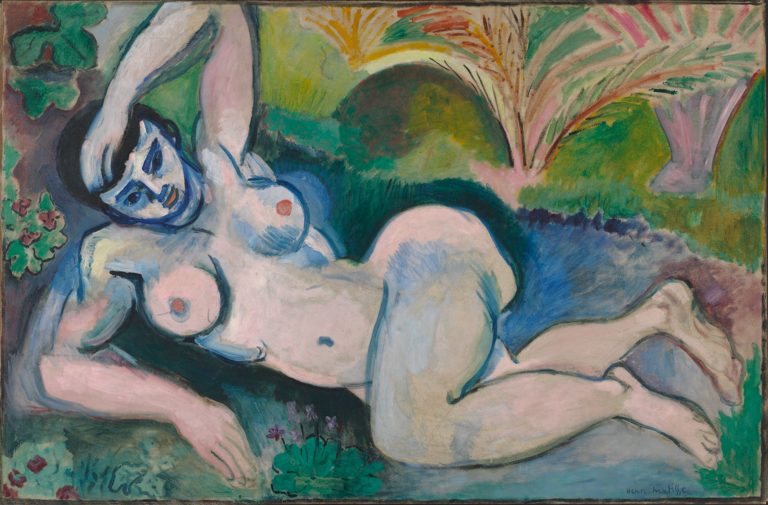
Matisse’s Blue Nude: Where color was liberated from nature.
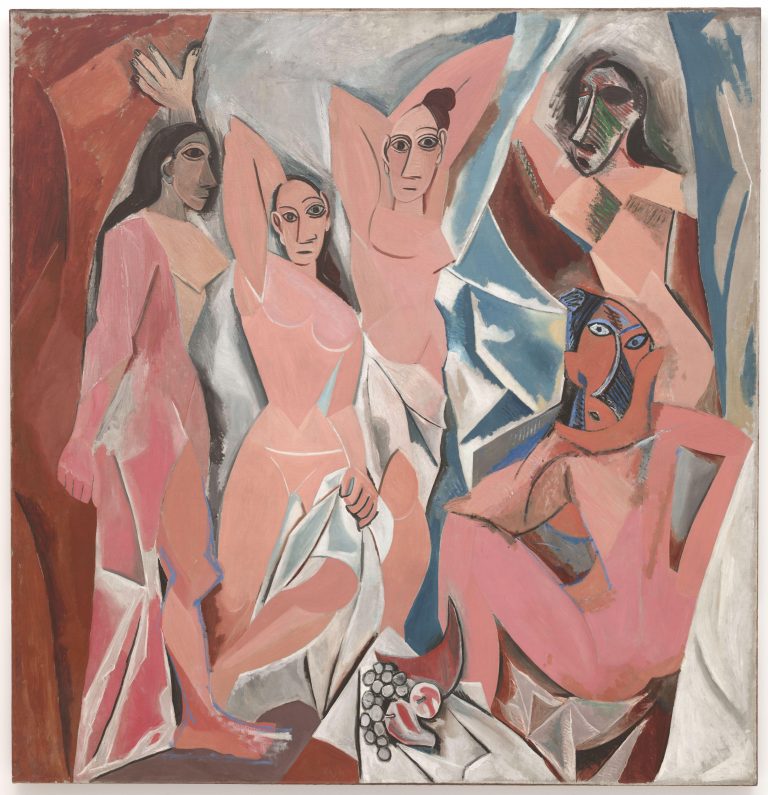
Picasso’s Les Demoiselles d’Avignon: A total break from conventional beauty. By deconstructing the bodies of five prostitutes into jagged, geometric forms and incorporating African mask motifs, Picasso “demystified” the classical nude.
Henri Matisse, Blue Nude, 1907
Pablo Picasso, Les Demoiselles d’Avignon, (The Young Ladies of Avignon), 1907
Expressionism and the Inner Vision
In Germany and Austria, artists used the nude to express psychological states:
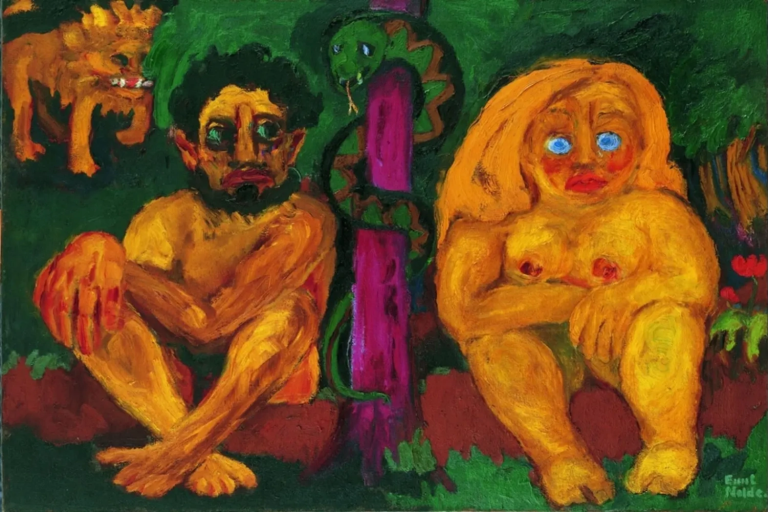
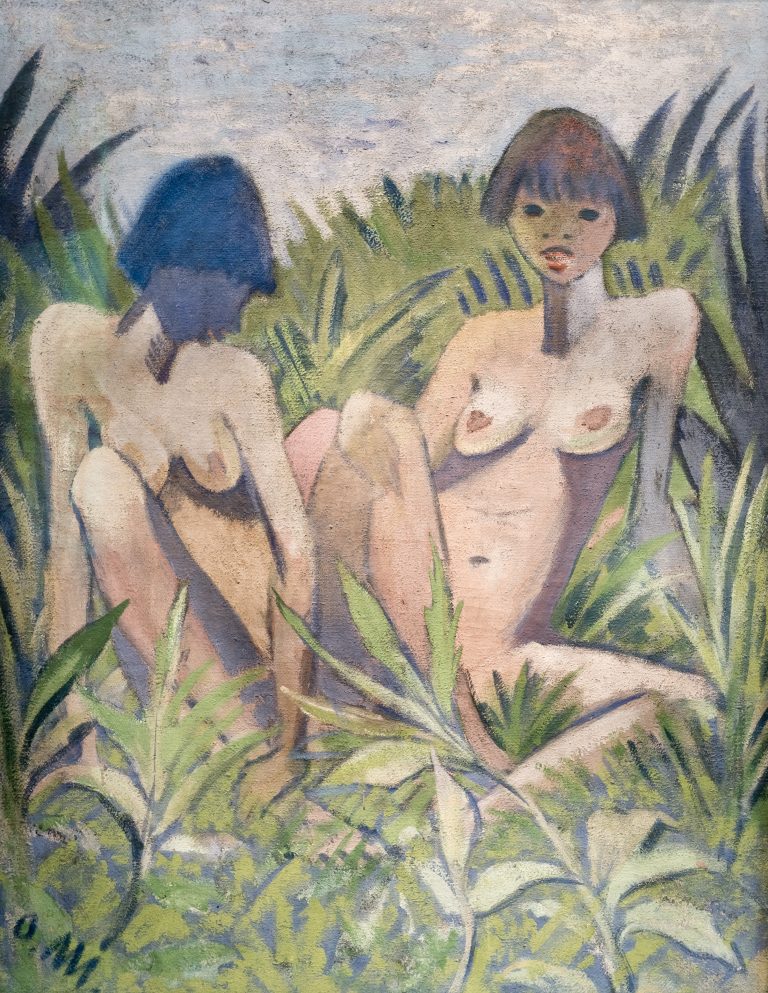
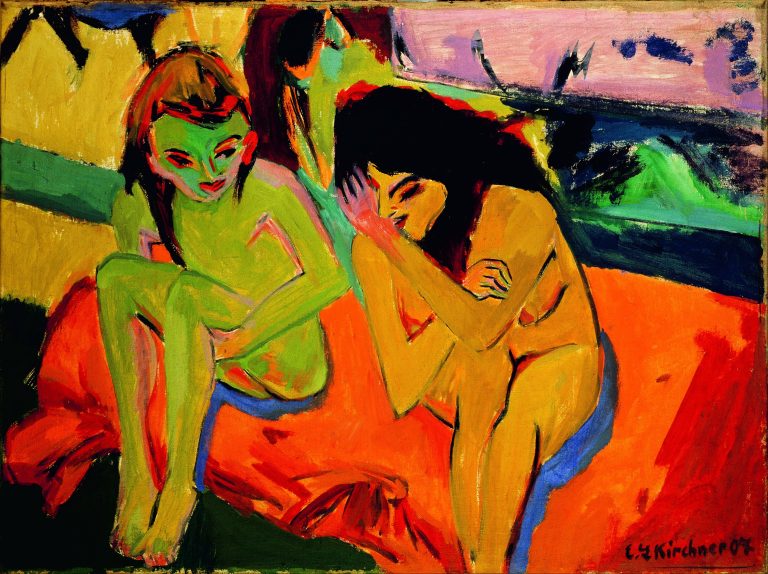
Die Brücke: Artists like Emil Nolde, Otto Mueller or Ernst Ludwig Kirchner portrayed the nude in nature, aiming for a “primitive” and taboo-free honesty.
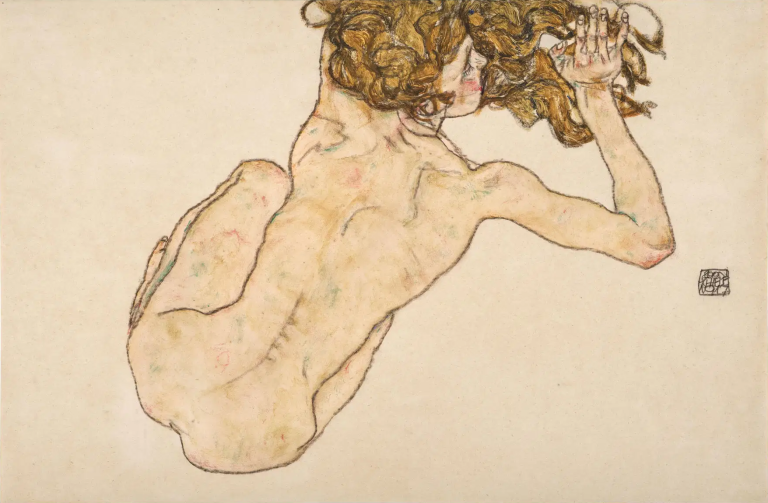
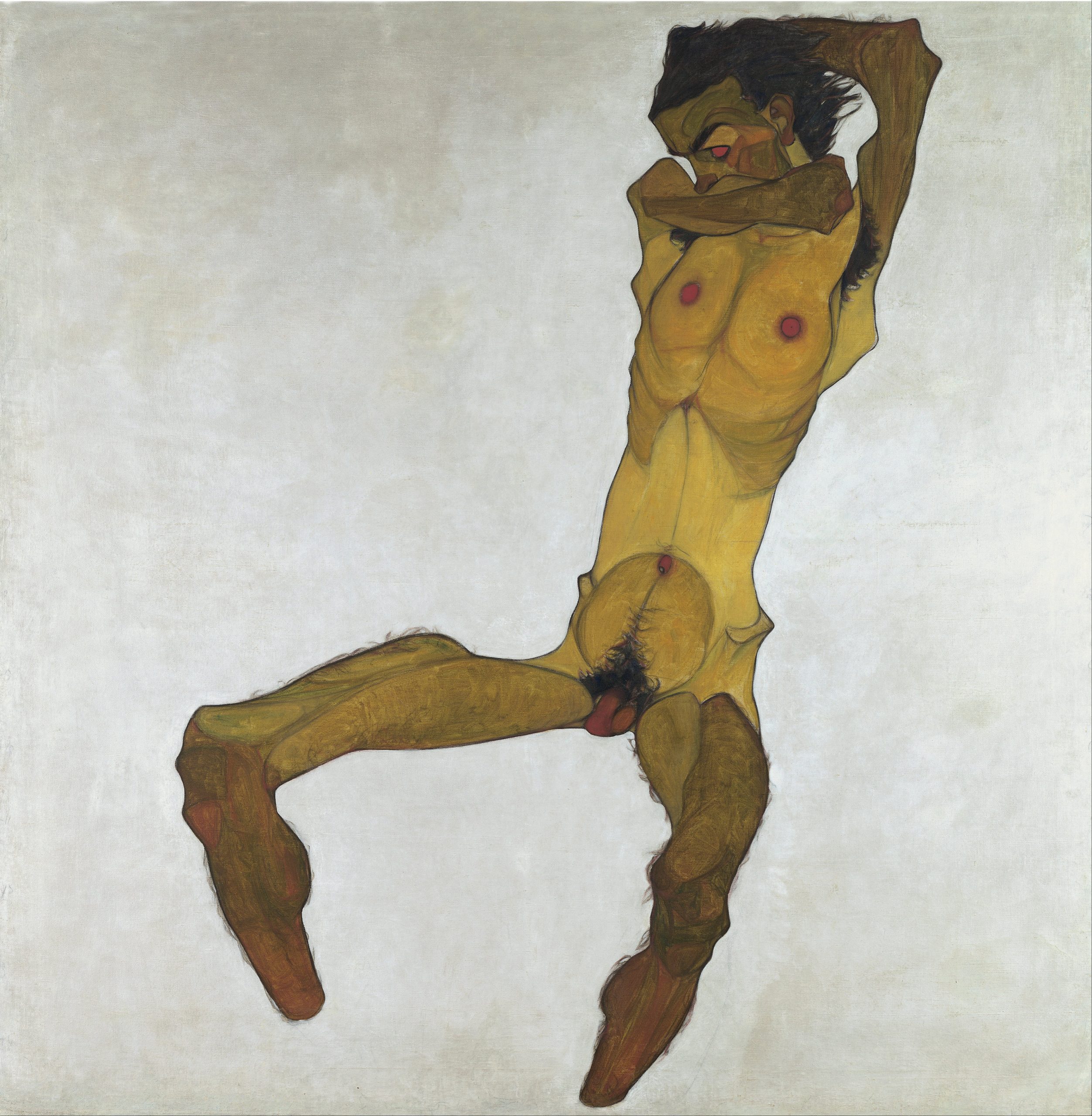
Egon Schiele: A disciple of Klimt, Schiele’s nudes are masterpieces of tension. His elongated, often “ugly” or explicit figures reflect the loneliness and sexual anxiety of the modern soul.
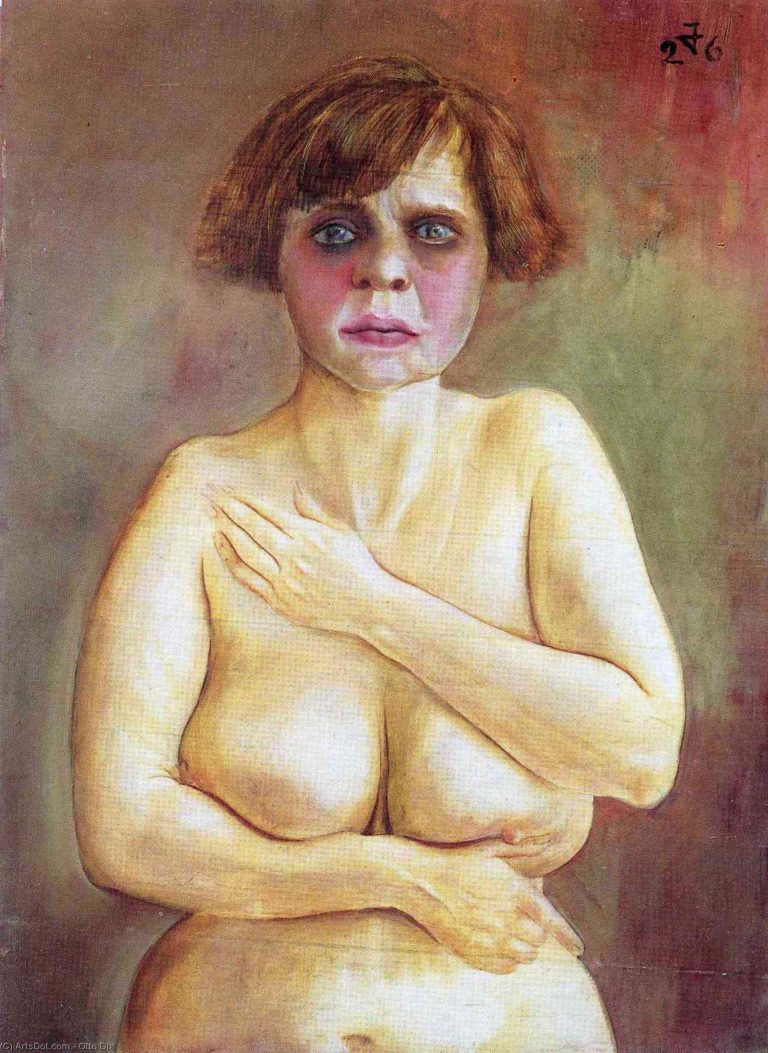
Otto Dix & New Objectivity: Following WWI, Dix used the nude for harsh social critique, depicting the “horrors of the flesh” and the reality of aging and poverty.
Emil Nolde, Paradise Lost, 1921
Otto Mueller, Two Nudes on the Grass, c.1926
Ernst Ludwig Kirchner, Two Girls (Naked Girls Talking), 1910
Egon Schiele, Crouching Nude, Back View, 1917
Egon Schiele, Seated Male Nude, 1910
Otto Dix, Half-Nude, 1926
The School of Paris: Modigliani and Chagall
The interwar period in Paris saw a diverse mix of styles.
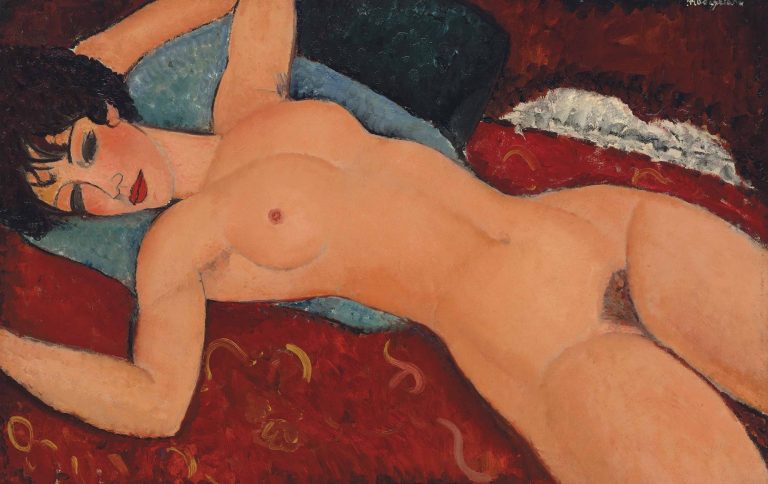
Amedeo Modigliani created a unique signature with elongated necks and almond eyes, inspired by both the Italian Renaissance and African sculpture.
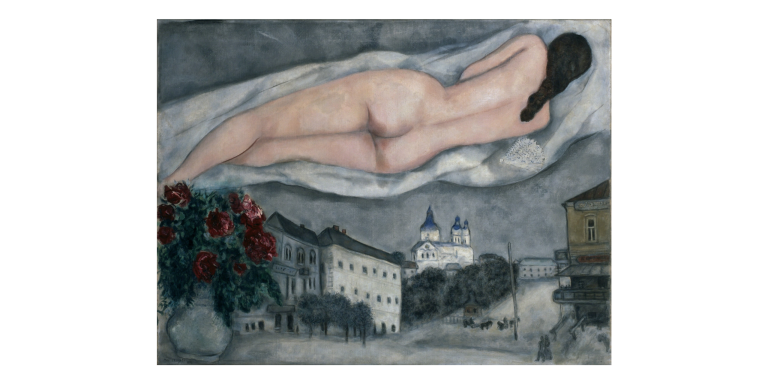
Marc Chagall blended the nude into dreamlike, gravity-defying fantasies.
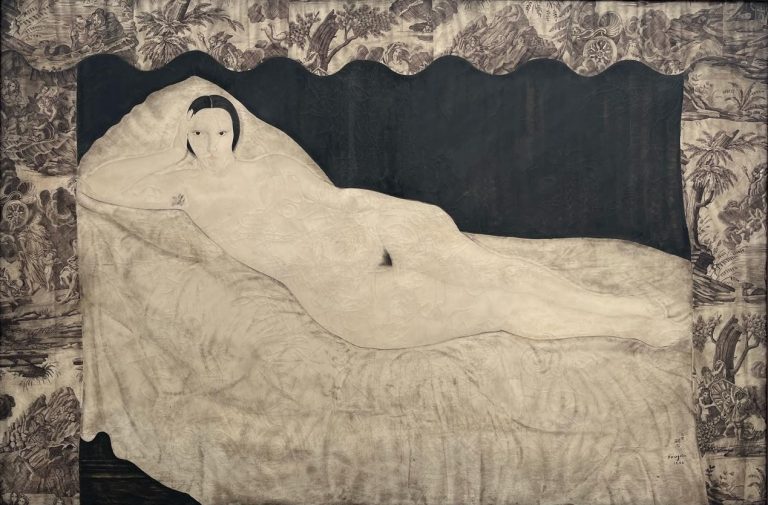
Léonard Foujita brought a delicate, calligraphic line to the genre.
Amedeo Modigliani, Red Nude (Reclining nude), 1917
Marc Chagall, The Nude Above Vitebsk, 1933
Léonard Foujita (Tsuguharu Foujita), Reclining Nude with Toile de Jouy, 1922
Naïve Art : Rousseau and Bombois
Parallel to these movements, Naïve Art emerged as a powerful influence.
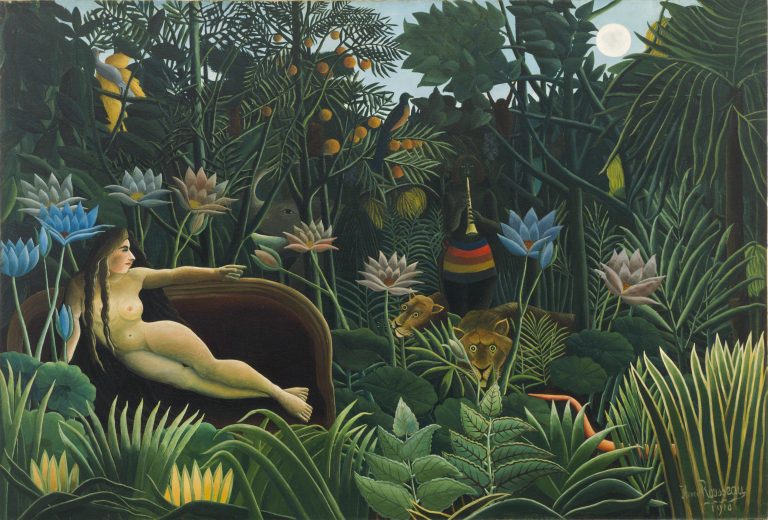
Henri Rousseau, admired by Picasso and the surrealists, presented nudes in lush, dreamlike jungles where the human form felt instinctive and detached from academic rules.
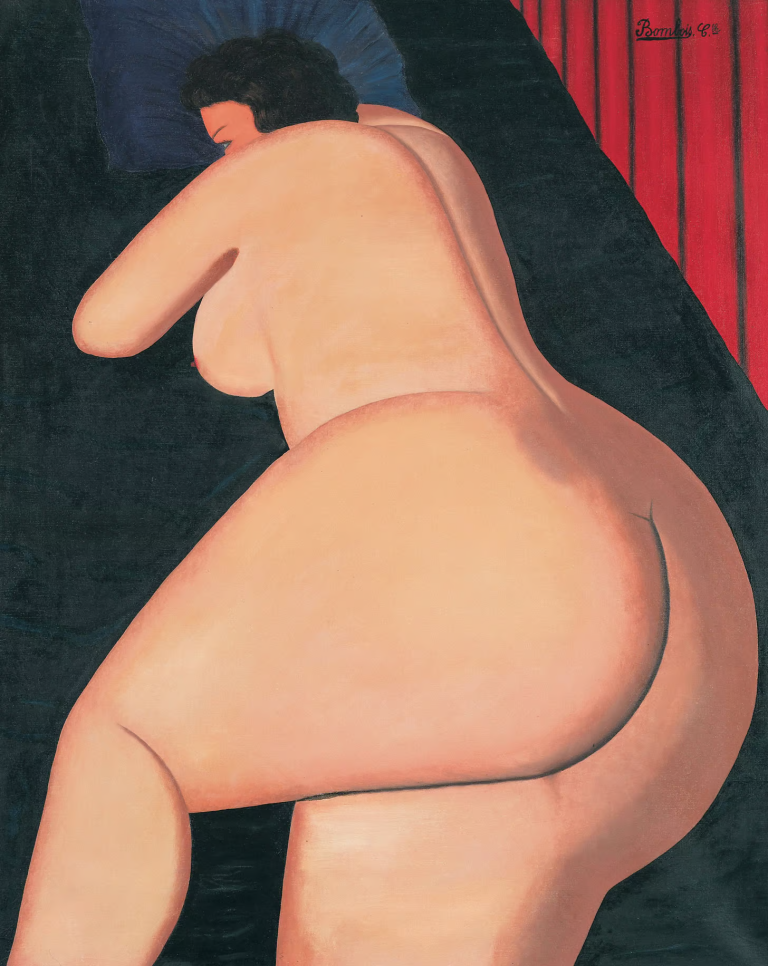
Camille Bombois, a former circus strongman, brought a raw, sculptural weight to the genre, depicting nudes with a bold, unidealized physical presence that fascinated the Parisian elite for its “primitive” honesty.
Henri Rousseau, The Dream, 1910
Camille Bombois, Back View Nude, 1935
Modernity
Surrealism and the Unconscious Body
If the Realists painted what they saw, the Surrealists painted what they dreamed.
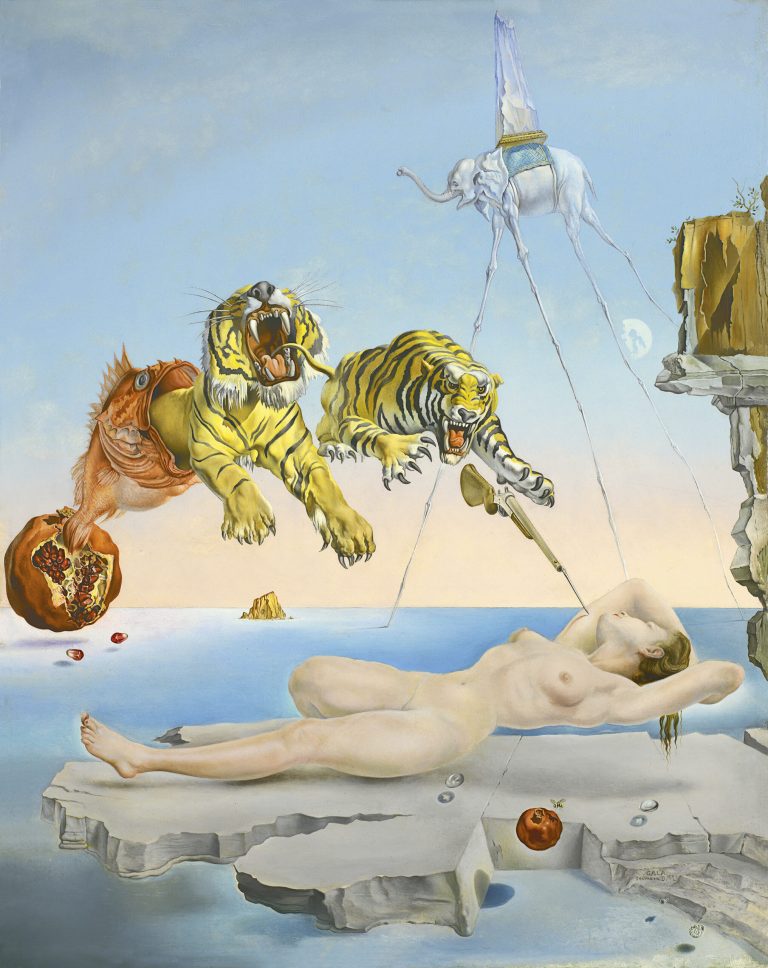
Salvador Dalí: Fascinated by Freud, Dalí’s nudes are often landscapes of the unconscious, exploring the tension between desire and decay.
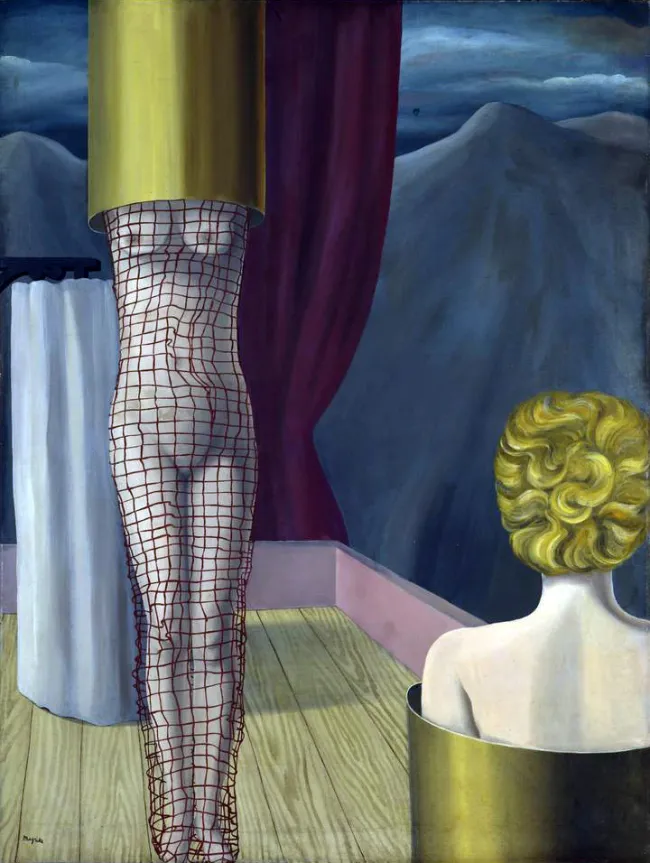
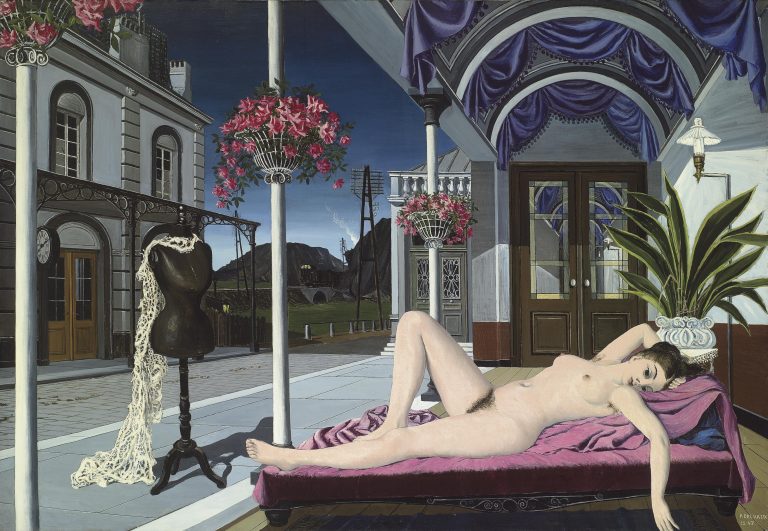
René Magritte & Paul Delvaux: They created “unsettling atmospheres” where nudes coexist with the ordinary or the macabre (skeletons), evoking a dreamlike eroticism.
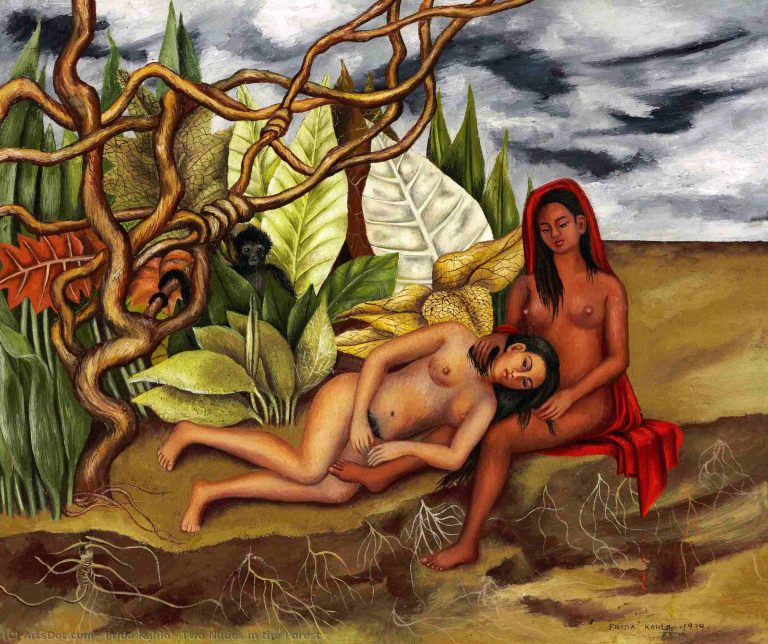
Frida Kahlo: Her work is intensely personal. In The Broken Column, she uses the nude to map her physical pain and psychological betrayal, representing her spine as a fractured Ionic column.
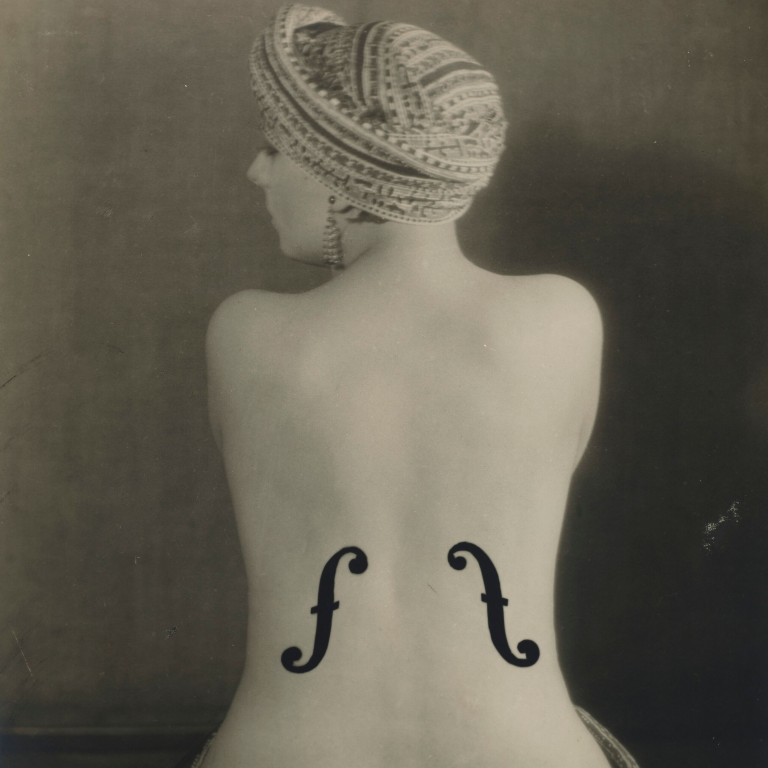
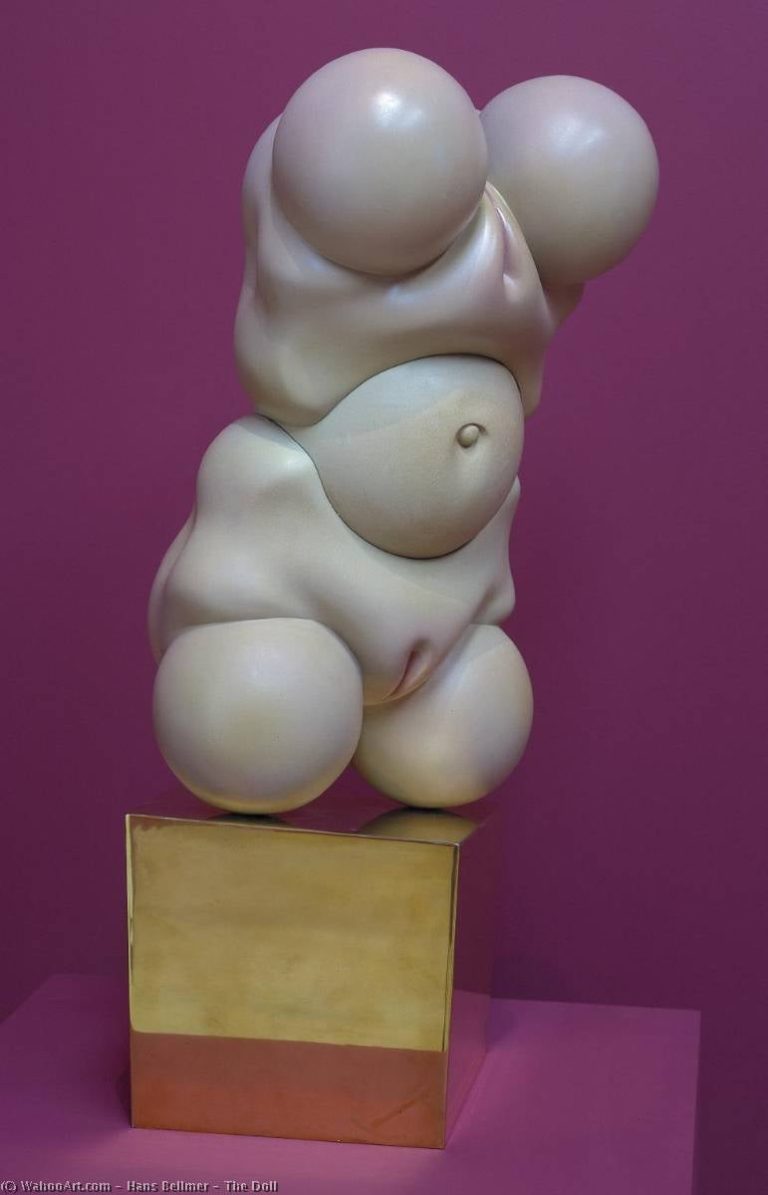
In photography and sculpture, Man Ray and Hans Bellmer manipulated the human form into surreal, often provocative objects of desire.
Salvador Dali, Dream Caused by the Flight of a Bee Around a Pomegranate a Second Before Awakening, 1944
René Magritte, The Magician’s Accomplice, 1926
Paul Delvaux, The Nude and the Mannequin, 1947
Frida Kahlo, Two Nudes in the Forest, 1939
Man Ray, Le Violon d’Ingres (Ingres’ Violin), 1924
Han Bellmer, The Doll, 1936
The Abstracted Form
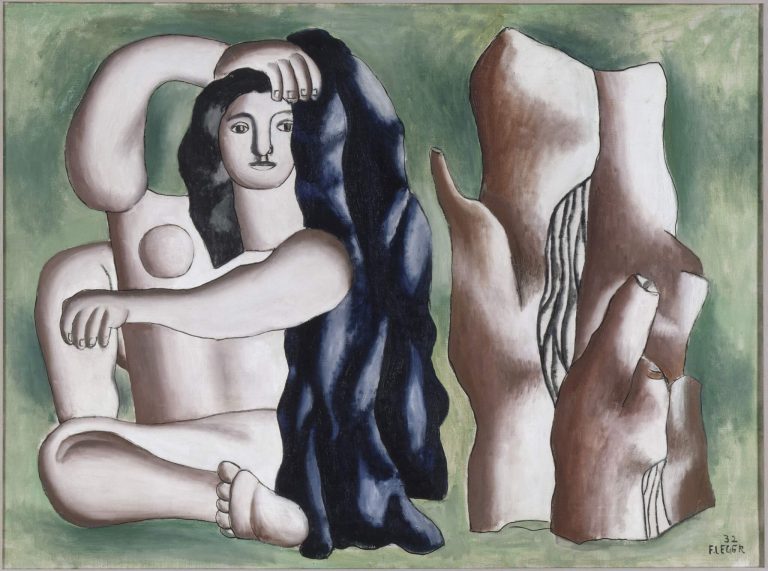
Fernand Léger similarly modernized the figure by treating the body as a series of mechanical, geometric forms.
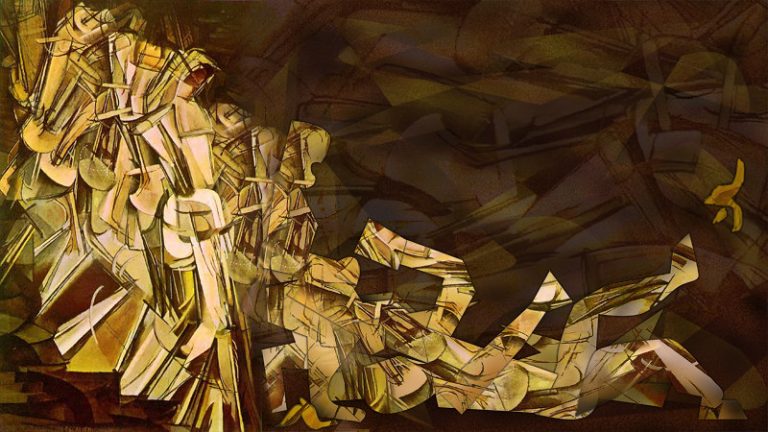
Marcel Duchamp shattered traditional representation by depicting the body not as a static form, but as a fragmented, rhythmic sequence of motion, merging the influence of Cubism with the emerging science of chronophotography.
In sculpture, the body reached near-total abstraction. Constantin Brâncuşi simplified the torso into a sleek cylinder, while Henry Moore used flowing, organic lines to turn the body into something resembling a weathered stone or a landscape.
Fernand Léger, The Bather, 1932
Marcel Duchamp, Nude Descending a Staircase No. 2, 1912
The Nude in the Modern City: Lempicka and Hopper
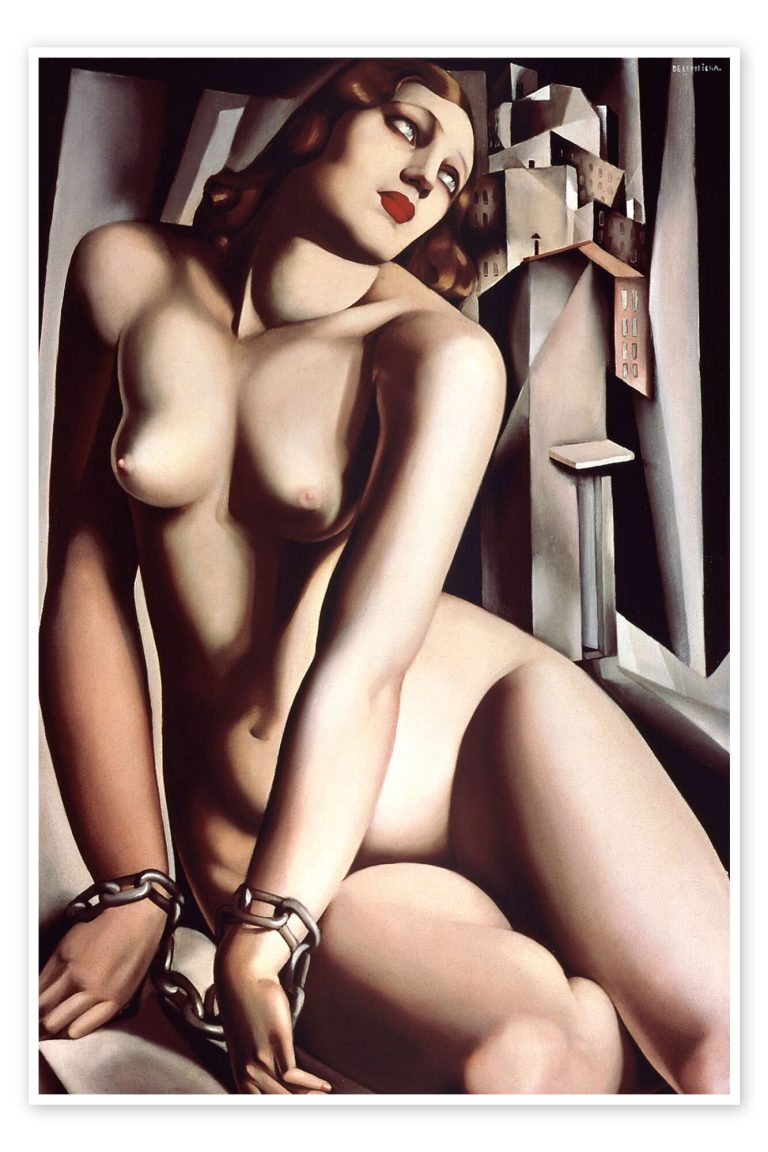
Tamara de Lempicka: Her Art Deco nudes reflected the “New Woman”—glamorous, metallic, and modern.
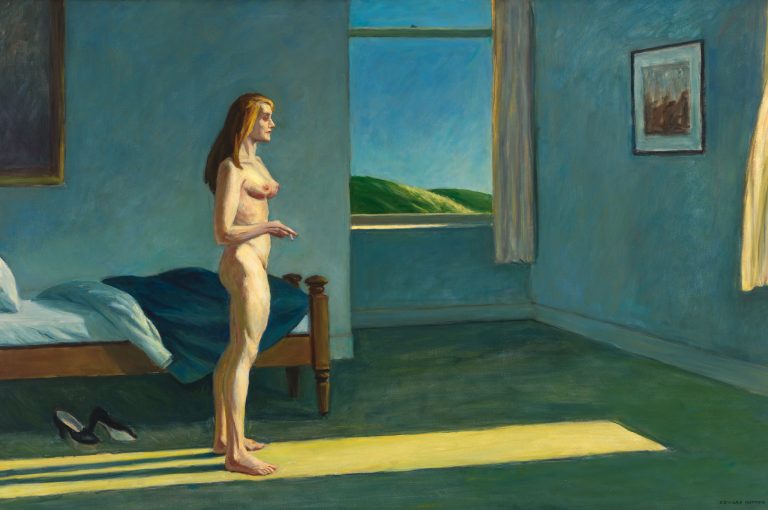
Edward Hopper: In America, Hopper used the nude to convey urban isolation. His figures are often alone in starkly lit rooms, emphasizing silence and psychological tension over sensuality.
Tamara de Lempicka, The Slave (Andromeda), 1929
Edward Hopper, A woman in the Sun, 1961
Conclusion of Part II
Surrealism and the Unconscious Body
By the mid-20th century, the nude had been shattered and put back together in a thousand different ways. It had transitioned from an object of “ideal beauty” to a subject of “subjective truth.” But the story doesn’t end here. After 1945, in a world recovering from total war, the body would become the site of even more radical experiments—eventually becoming the medium itself in Performance Art.
Stay tuned for Part 3, where we will explore the evolution of the nude from the post-war era to the digital age. And until then, make sure you read Part 1.